A Tense Standoff: What Might Unfold Next in Venezuela
The Soft Power Paradigm: sons and daughters of the liberator Simón Bolívar vs the MAGA crowd
As of the afternoon of January 3, 2026, the situation in Venezuela remains highly volatile following the dramatic U.S.-led capture of President Nicolás Maduro. President Trump's Mar-a-Lago press conference painted an optimistic picture of cooperation, claiming that Vice President (now interim leader) Delcy Rodríguez had been sworn in and, after a conversation with Secretary of State Marco Rubio, was "essentially willing to do what we think is necessary" to transition power and "make Venezuela great again." Trump suggested a temporary U.S.-overseen administration involving American officials and Venezuelan partners.
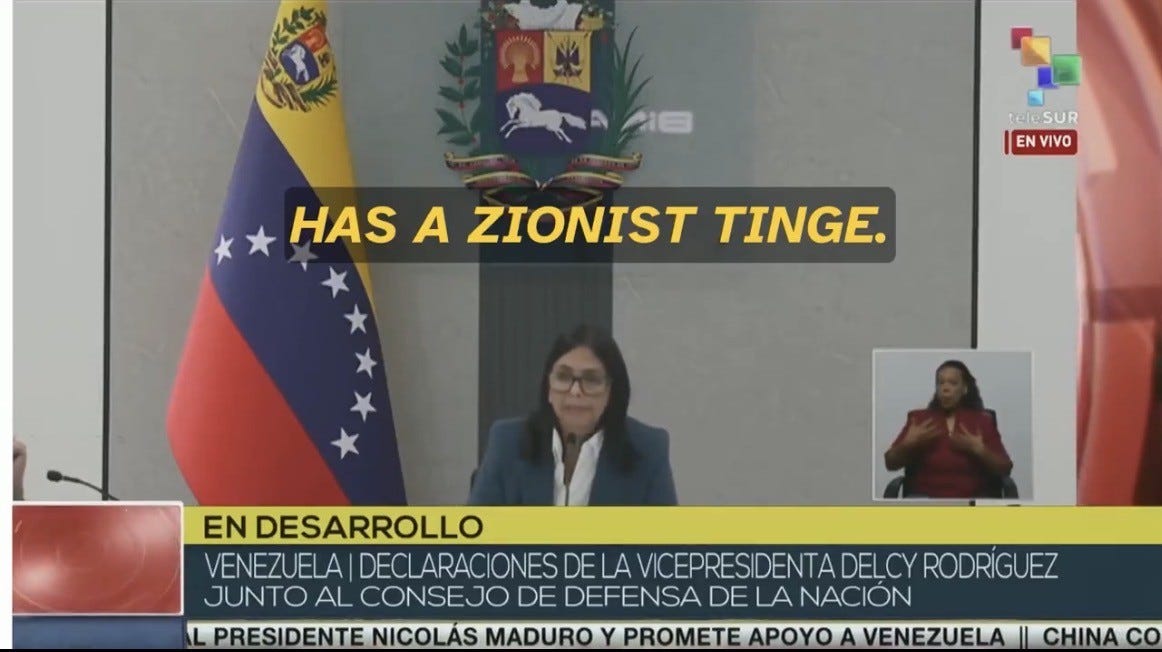
Hours later, however, Rodríguez appeared on state television in a defiant national address—flanked by military leaders and key Chavismo figures—delivering a sharply contrasting message. She condemned the U.S. operation as an "unprecedented military aggression" and "illegal kidnapping," demanded immediate "proof of life" and release of Maduro and his wife Cilia Flores (whom she repeatedly called Venezuela's legitimate leaders), and vowed that the country would "never again be slaves" or a "colony of any empire." Rodríguez affirmed Maduro as the "only president," activated emergency powers under the constitution, and called for national resistance without explicitly rejecting dialogue on respectful terms.
This public rejection directly contradicts Trump's portrayal of a cooperative Rodríguez, highlighting a clear breakdown in narratives—or perhaps a deliberate escalation in the information war. Her tone was one of unity and resolve, projecting strength to loyalists in the military and civilian base while signaling no immediate surrender.
Picturing the Near-Term Trajectory: A Vivid Scenario of Escalating Tensions
Imagine Caracas under a tense dusk: power outages from targeted strikes plunge parts of the city into darkness, with smoke still lingering over military sites like Fuerte Tiuna and La Carlota airfield. Pro-Maduro colectivos and armed forces patrol key areas, mobilizing under Defense Minister Vladimir Padrino López's calls for "national resistance" against "criminal invasion." In the streets, divided Venezuelans react—some celebrate quietly in opposition strongholds, hoping for change, while Chavismo supporters rally in defiance, waving flags and chanting against "imperialism."
Behind the scenes, the Venezuelan military holds the key. Loyal to the Bolivarian revolution and fearing purges or trials, top commanders like Padrino López and Operational Commander Domingo Hernández Lárez dig in, refusing to recognize U.S. demands. Rodríguez, as constitutional successor, consolidates control from Miraflores Palace, issuing decrees to maintain order and perhaps appealing to allies like Russia, China, Cuba, and Iran for diplomatic or material support.
On the U.S. side, Trump—frustrated by the public snub—could interpret this as defiance, greenlighting a "Phase 2" with intensified operations: broader airstrikes on remaining regime loyalist targets, cyber disruptions, or even limited ground incursions framed as "law enforcement extensions" to secure oil fields and prevent a power vacuum. Major U.S. oil companies might be positioned for rapid entry to "stabilize" production, with reimbursements tied to Venezuela's vast reserves. Rubio and Defense Secretary Pete Hegseth oversee from afar, emphasizing no full occupation but heavy involvement to block a "Maduro-like successor."
The risk of chaos looms large: sporadic clashes between regime forces and any emerging opposition elements, humanitarian strains from disrupted services, refugee flows into Colombia and Brazil, and proxy escalations (e.g., Cuban advisors bolstering defenses). Russia and China condemn loudly at the UN, vetoing resolutions while providing covert aid. Latin American neighbors, already wary, protest the precedent.
In a best-case detour, backchannel talks resume—perhaps Rodríguez seeks concessions to save face, or internal military fractures force a negotiated exit. But the current trajectory points toward prolonged instability: a de facto partition of control, with U.S. influence over economic assets clashing against entrenched Chavismo holdouts.
Tying into U.S. Soft Power in the Hemisphere
This bold hard-power move—bypassing multilateralism, prioritizing unilateral action, and risking perceptions of neo-imperialism—exacerbates the "attraction gap" in Latin America, where U.S. favorability has dipped (e.g., Mexico at historic lows per Pew data), this could further erode trust in American democratic values and governance, boosting rivals like China (seen as non-interventionist). Strengths in culture and education persist, but coercive tactics (tariffs, military interventions) reinforce views of "America First" as selfish dominance.
Polls from the 2025–2026 Global Soft Power Index show the U.S. sliding in reputation and "people & values" pillars—being seen as less "trustworthy" or "friendly." Actions like this Venezuela operation, while hailed domestically by some as decisive against "narco-terrorism," risk cementing net-negative regional approval, complicating nearshoring efforts and countering adversarial influence. Recovery could come with successful stabilization and investment, but short-term fallout may widen the divide, making partners diversify away from U.S. reliance.
Domestic Impact - Will GOP retain Congressional Majority?
In the wake of President Trump's audacious military operation in Venezuela, a wave of patriotic fervor swept through MAGA supporters online, with thousands changing their X profile pictures to blended American and Venezuelan flags or images of Trump superimposed over triumphant military motifs, symbolizing solidarity and victory over "narco-terrorism." Elon Musk joined the chorus by updating his profile to feature a stylized American eagle clutching a SpaceX rocket against a starry backdrop, accompanied by a post declaring, "America's strength secures freedom—proud to see justice delivered in our hemisphere! #MAGA #MAVA," echoing sentiments from influencers and everyday conservatives who flooded timelines with chants of "Trump is a hero" and videos of cheering Venezuelans. This digital rally, amplified by memes and retweets, transformed social media into a virtual celebration of U.S. might, blending national pride with calls for reclaiming "stolen oil" and rebuilding alliances.
Such visible enthusiasm could indeed provide a short-term boost for the GOP heading into the 2026 midterms, energizing the base and potentially improving turnout among Trump loyalists, especially if the Venezuela success story sustains high approval ratings for the administration—historically, presidents with above-50% approval lose fewer seats (averaging around 14 in the House) compared to the typical 37-seat drubbing for unpopular incumbents. However, the president's party almost always faces a "midterm penalty" due to factors like voter backlash against perceived overreach, economic discontent, or opposition mobilization, as seen in nearly every cycle since 1862 except rare outliers like 2002 post-9/11. Musk's financial firepower—pouring millions into Republican super PACs and campaigns for 2026, including a reported $200 million war chest for MAGA Inc.—might mitigate this handicap by funding aggressive ads, voter outreach, and candidate recruitment, countering historical trends through sheer monetary advantage as he did in prior cycles. Yet, with affordability emerging as a persistent thorn—exacerbated by tariffs hiking costs on goods, housing shortages, and stagnant wages—critics like New York City Mayor Zohran Mamdani and his allies are amplifying voter frustrations, blaming Trump policies for an "affordability crisis" where over a third of Americans can't afford basic outings or vacations. If these economic pains persist into November 2026, even Musk's billions may not fully offset the backlash, as polls show growing blame directed at the White House, potentially eroding GOP gains despite the patriotic surge.
The world watches closely—escalation could redefine hemispheric dynamics for years.


