AIPAC Put $30 Million on Michigan’s Democratic Ballot
The lobby’s largest intervention in any American race is defending an Israel policy that Democratic voters and half the party’s House caucus have already rejected.
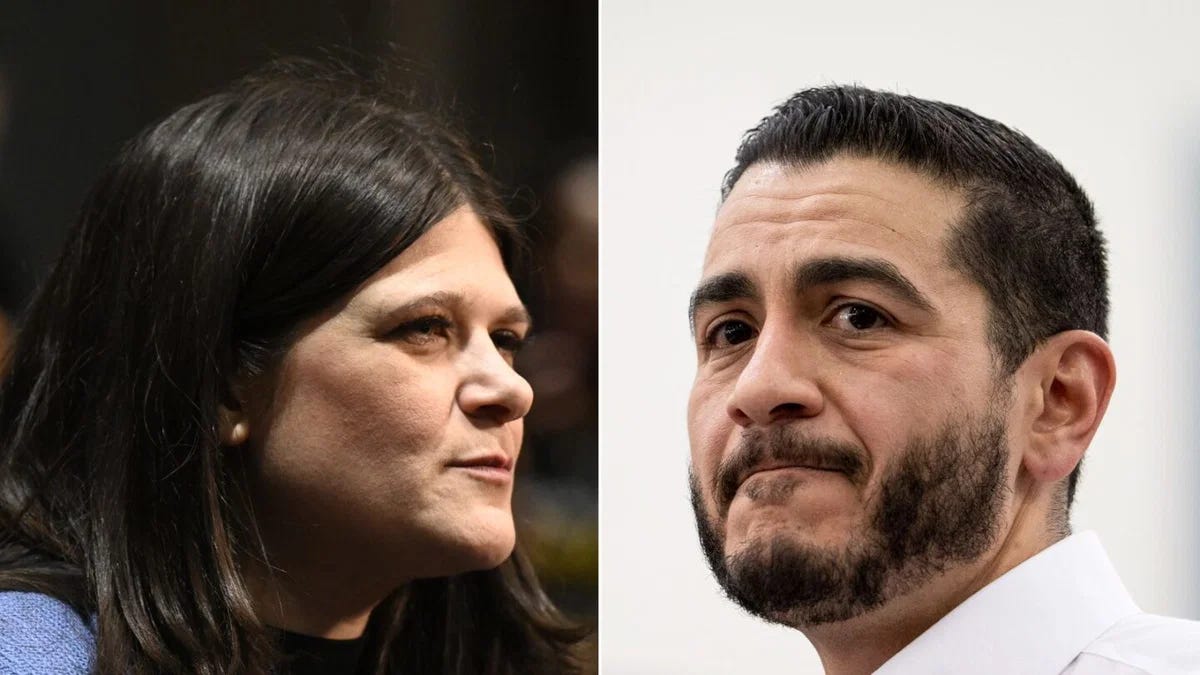
At a campaign stop in West Michigan in July, the Associated Press asked Representative Haley Stevens twice about the organization spending more to put her in the United States Senate than it has spent on any candidate in any race. She answered for more than eight hundred words without saying its name. Israel appeared once, in a passing sentence about rebuilding Gaza, and yet the money reshaping her campaign existed because she had made herself one of Congress’s proudest pro-Israel Democrats.
The name is the American Israel Public Affairs Committee. Its super PAC, the United Democracy Project, and affiliated groups have put close to $30 million into the Michigan Democratic Senate primary. It is the largest sum the organization has committed to one race, larger than the $9.8 million it spent against Jamaal Bowman in the Bronx in 2024 and the $5.2 million against Cori Bush in Missouri that year. AdImpact’s tracking of the closing five weeks shows pro-Stevens groups outspending Abdul El-Sayed on television by more than twelve to one, $26.9 million against $2.1 million, with roughly $19 million reserved by UDP alone.
El-Sayed is a physician who rebuilt Detroit’s health department after municipal bankruptcy, then restructured Wayne County’s health and human services agency for a population of 1.8 million and ran a programme designed to cancel up to $700 million in medical debt for 300,000 Michiganders. He is running on Medicare for All, childcare, rent, insulin, and the removal of corporate money from politics. He has raised $12.2 million overwhelmingly from individuals, with more than $1.2 million from donors giving under $200, against roughly $227,000 in small-dollar money for Stevens. Since July 1 his campaign has taken in more than 38,000 donations, two thirds from first-time contributors. The lobby is spending $30 million because a doctor from Ann Arbor has made opposition to its power electorally viable.
Stevens had spent only $12,000 from her own campaign on advertising through early July. She later raised that figure to about $1 million, while outside organizations poured close to $50 million into advertising that promoted her or attacked El-Sayed. A Stronger Michigan alone spent roughly $12 million without disclosing its donors. The formal rule says these organizations cannot coordinate with the candidate, and yet the practical result is a privately financed campaign infrastructure operating at fifty times the candidate’s own advertising scale.
That arrangement lets the beneficiary claim distance from the content and dependence on it at the same time. The ads praising Stevens emphasize manufacturing, feature Barack Obama, and avoid the policy that brought AIPAC into the race. Former Representative Andy Levin, who lost to Stevens in 2022 after millions in AIPAC spending, gave the Associated Press the operating principle: “AIPAC never runs on AIPAC.” The lobby intervenes over Israel, purchases advertising about domestic biography, and leaves voters to discover the foreign-policy transaction after the ballot has been counted.
Stevens says she supports comprehensive campaign-finance reform. That position costs the outside groups nothing because they are buying the election taking place under the law that exists, and every additional dollar makes her promise to reform the arrangement less relevant to the choice before Michigan. The candidate can condemn the plumbing after the water has reached her house.
For four decades the American position on Israel rarely faced an electoral test because the consensus reproduced itself. AIPAC maintained it with endorsements, donations, access, and occasional spending large enough to remind the caucus what deviation cost. The organization could buy an extraordinary return with limited intervention because few elected Democrats believed a constituency existed on the other side.
That price rose when the electorate moved. In February 2026, Gallup found for the first time since it began asking in 2001 that more Americans sympathized with Palestinians than Israelis, 41 percent to 36. Among Democrats the division was 65 to 17, among independents it was 41 to 30, and among adults between eighteen and thirty-four it was 53 to 23. Gallup separately found Israel viewed unfavorably by 54 percent of Democrats. The national electorate remains divided, but Democratic voters have formed a position their leadership still treats as a factional disturbance.
On July 15 the House of Representatives voted on an amendment from Thomas Massie, the outgoing Kentucky Republican, that would have barred the State Department and national security appropriations bill from funding Israel and stripped $3.3 billion in security assistance. It failed, 104 to 314, with ten voting present. Among Democrats, 103 supported it, 98 opposed it, and ten voted present. Nancy Pelosi voted yes. Katherine Clark, the minority whip, voted yes, saying that the status quo “is not tenable” and that no country failing to comply with American law should receive a blank check. Hakeem Jeffries voted no and announced he would not whip the caucus, which is the closest thing to a white flag available to a floor leader. Greg Casar, who chairs the Progressive Caucus, had circulated a letter the day before arguing that American taxpayers were subsidizing a military that has killed tens of thousands of civilians in Gaza, the West Bank and Lebanon and helped drag the United States into war with Iran, and more Democrats voted to end the aid than preserve it three weeks before Michigan’s primary. The $30 million is an invoice: the price of holding a party line after the party moved.
El-Sayed’s argument is the arithmetic AIPAC’s advertising avoids. Brown University’s Costs of War project, working from congressional notifications, calculated $21.7 billion in American military aid to Israel from October 2023 through September 2025, on top of a cumulative $251.2 billion in inflation-adjusted dollars since 1959. Associated American operations in Yemen and the wider region raised the two-year cost to between $31.35 billion and $33.77 billion. Defence Secretary Pete Hegseth told Senate appropriators on July 21 that the war with Iran had cost another $37.5 billion, while eighteen American service members had died by the end of that week.
Michiganders are voting on rent, insurance, childcare, and the price of a hospital visit in a state where El-Sayed spent his career cancelling medical debt. At the final debate on July 27, he connected the accounts directly, arguing that Michigan’s tax dollars should build its schools, healthcare, and roads instead of killing women and children abroad. Stevens answered by calling him a “celebrity candidate” without practical experience in governing, and yet the supposed celebrity rebuilt a city health department and managed county services while her campaign’s practical infrastructure was being supplied by organizations she would not name.
The federal budget does not create a one-for-one exchange between a missile sent abroad and an insulin prescription denied at home, but every appropriation still records a choice, every emergency war supplemental competes inside the same fiscal state, and every senator votes on both. El-Sayed’s argument has moved beyond Dearborn because voters already understand that foreign policy is domestic distribution with the bodies placed farther away.
Gaza’s health ministry counted 73,326 dead and 173,997 wounded as of July 26. By July 23, OCHA reported 1,180 Palestinians killed and 3,810 wounded since the October 2025 ceasefire, based on ministry figures. Over the same period, according to Israeli figures cited by the Associated Press, five Israeli soldiers died in Gaza. In June, a United Nations commission concluded that Israeli forces had deliberately targeted Palestinian children and continued killing and injuring them after the ceasefire.
American munitions enabled the campaign, American appropriations replenished it, and six American vetoes protected Israel at the Security Council, and yet the voters financing the policy were never offered a direct choice over it. Michigan’s primary became that choice because the organization spending to preserve the policy put nearly $30 million behind a candidate who would not say its name.
On February 27, 2024, 101,436 Michigan Democrats voted uncommitted in the presidential primary, 13.2 percent of the total, in a protest organized by Arab and Muslim Americans against the Biden administration’s conduct in Gaza. El-Sayed, then Wayne County’s health director, backed the campaign publicly, wrote that Trump was an existential threat and that it was folly to force voters to choose between Palestinian lives and American democracy, and endorsed Kamala Harris one day after Biden withdrew. The party’s response was to treat a hundred thousand of its own voters as a public relations problem. In November, Dearborn gave a plurality to a Republican for the first time in two decades, and Michigan went to Trump by roughly a point.
Establishment Democrats now describe this sequence as El-Sayed’s electability problem. Voters were told for a year that their concerns were a distraction, some left the party, and the officials who dismissed them now argue that taking those concerns seriously would endanger the general election.
A Data for Progress survey conducted June 15 to 22 for the Working Families Party found El-Sayed leading Mike Rogers 47 to 46 in a general-election matchup while Stevens trailed Rogers 45 to 46, with Stevens holding the worst net favorability of any candidate in the race at minus twelve and El-Sayed proving more resilient after negative messaging. The sponsor favored El-Sayed, and other primary polling has been mixed: Tavern Research had the candidates within a point in early July, while a Detroit News and WDIV survey taken July 8 to 11 put Stevens ahead 48 to 41. El-Sayed’s campaign suggested AIPAC funded the latter poll, PolitiFact found no basis for the charge, and he should not have made it. Accuracy is part of the case against dark money; it cannot be suspended when a result is inconvenient.
One UDP commercial says El-Sayed “expressed sympathy for a terrorist,” and a mailer repeats the accusation. The Michigan Republican Party called him a terrorist sympathizer while emphasizing his full name. An AI-generated image circulated on X showing him and Ilhan Omar in explosive vests. At a Detroit event for Stevens, a Farmington school-board member complained that the other candidate should not enter a room speaking Arabic while Arabic music played. Stevens repudiated the comment after it became public, but the board member had delivered the attack from inside a Stevens event: the candidate could reject the sentence while continuing to benefit from the political atmosphere that made it available.
On CNN, Jake Tapper questioned El-Sayed about a leaked campaign call on which he had observed, after the assassination of Ali Khamenei, that there were people in Dearborn who felt grief that day. Tapper asked why he had worried about offending supporters of the ayatollah. Nancy Khalil, an anthropologist at the University of Michigan who studies Muslim American communities, called the questioning offensive and said its premise was that a Muslim candidate must hold an opinion and must hold the one demanded of him. Hatem Bazian at Berkeley placed it in a line running back to the 2008 photograph of Barack Obama in Somali dress.
The vocabulary belongs to a wider, funded political strategy. Israel’s 2026 budget allocated roughly $730 million to public diplomacy, more than four times the previous year’s allocation, while Foreign Minister Gideon Sa’ar told representatives of sixty-one countries in Washington on July 16 that the online left had become a bridge to jihadism. Polling commissioned by the ministry and reported by Drop Site News identified radical Islam and jihadism as effective themes for repairing Israel’s standing in Europe and the United States. There is no public evidence that the ministry directed UDP’s Michigan advertising, but the convergence is exact: support for Palestinian life becomes sympathy for terrorism, a Muslim candidate becomes a question of loyalty, and the policy dispute disappears behind his name.
El-Sayed has refused the assigned role. He is running on healthcare, living wages, childcare, and elder care rather than asking voters to elect “the Muslim candidate,” and in June he won the endorsement of Jewish Voice for Peace Action. The endorsement matters because it breaks the lie on which the attacks depend: opposition to AIPAC is a political position shared by Muslims, Jews, Christians, secular organizers, unions, doctors, and voters who resent having their domestic priorities subordinated to a foreign military relationship.
Some prominent Black Democratic leaders in Detroit remain cold toward El-Sayed over the uncommitted campaign, and the resentment from 2024 has not dissolved. Bernie Sanders, Alexandria Ocasio-Cortez, Tina Smith, the UAW, and National Nurses United back him; Gretchen Whitmer, Gary Peters, Debbie Stabenow, Chuck Schumer, and Jim Clyburn back Stevens. Early voting has begun, nearly a third of likely primary voters were still persuadable in one late survey, and no credible observer can call the result.
One question remains open. What does a party do after losing an argument it refused to hold? A hundred thousand Michigan Democrats answered in February 2024, Gallup found nearly two thirds of Democrats sympathizing with Palestinians in February 2026, and 103 House Democrats voted to remove Israel’s military aid in July, and yet the institutional answer in Michigan has been $30 million in outside spending against the candidate who represents that movement.


