America's Disposable Afghans
How the CIA Built a Shadow Army, Evacuated It to the United States, and Is Now Disowning It
The man who saved Davud’s life grabbed him by the body armor and pulled him back from the grenade. An American. A CIA officer. They were somewhere in Afghanistan on one of the two or three night raids they ran most weeks, and the American put himself between Davud and the blast without a second’s calculation.
“He said, grenade,” Davud told NPR, “and he grabbed me from my body armor and pulled me back.”
That was the brotherhood. That was what Davud believed he was part of: something real, something mutual, something that would survive the war. He had spent more than a decade as a combat translator inside a CIA-led Zero Unit, running the Taliban’s toughest terrain on American orders, doing the work American personnel were kept back from doing precisely because the risk was too high for them to absorb publicly.
The Taliban fell. Kabul fell. The CIA got Davud to the United States.
Then they told him his service record was classified and could not be shared with immigration authorities processing his green card application.
“We asked the agency, could you please share our information so that when we submit our forms for our green cards they know who we are, we are vetted, we work with you guys?” Davud recounted. “They said, oh, no, we can’t share this. It’s classified. And I was like, then how would they know who we are?”
That question, asked by a man who carried American weapons through twenty years of American war, has not been answered. It will not be answered. The CIA does not answer questions about programs it has spent two decades pretending do not exist, and it does not answer questions about the men those programs left behind in American cities with temporary visas, PTSD, and no path to permanence.
Four of those men took their own lives.
A fifth, Rahmanullah Lakanwal, is now in a Washington courtroom facing a first-degree murder charge, having pleaded not guilty to shooting two National Guard soldiers on Thanksgiving Eve 2025, killing one and wounding the other. He was 29 years old. He had fought for the CIA’s Zero Unit 03 out of Firebase Gecko in Kandahar for eight years. He had been known, according to Lt. Gen. Sami Sadat, who commanded Afghan special operations forces, as “responsible and professional within his team” with “strong anti-Taliban views.” He had relocated his family from Khost to Kabul to keep them safe from Taliban reprisals for his service to America.
In the United States, he could not find stable employment. He became withdrawn. A volunteer who worked with his family told NPR: “My biggest concern was that he would harm himself. I worried he would be suicidal because he was so withdrawn.”
The Trump administration, which had frozen his asylum case for years along with thousands of others, finally granted him protection in April 2025, nearly four years after he arrived. Seven months later, he allegedly opened fire on two soldiers at a Washington metro station.
CIA Director John Ratcliffe’s response was immediate and precise in its dishonesty. “This individual, and so many others, should have never been allowed to come here,” Ratcliffe said.
This individual had worked for Ratcliffe’s own agency.
What the Zero Units Were
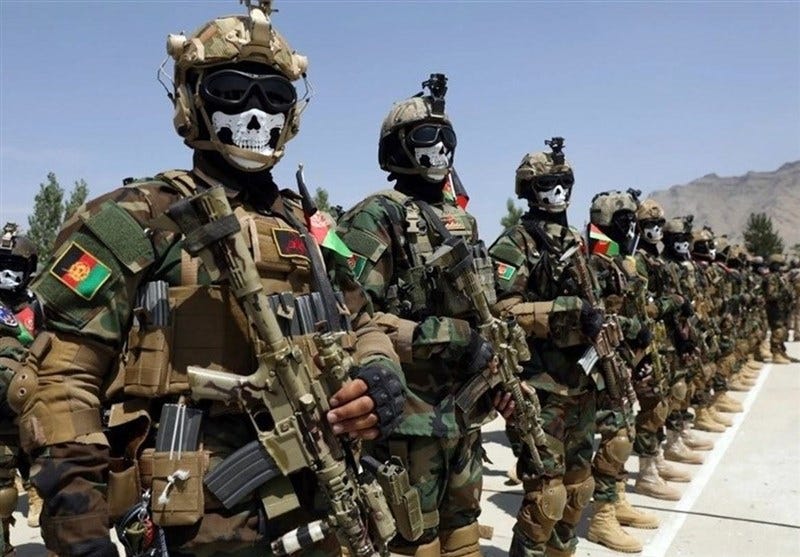
The Zero Units were not an auxiliary force or a partner program in the sense that American military briefings typically deploy that word. They were CIA-created, CIA-funded, CIA-directed combat units operating under the Agency’s direct authority. Their mandate covered night raids, targeted killings, and operations in areas where the conventional US military either could not or would not go. They answered not to the Afghan government, not to the Afghan National Army, not to the NATO command structure, but to American intelligence officers.
Lakanwal’s particular unit, designated “03” and known as the Kandahar Strike Force, operated under the special forces directorate of Afghanistan’s National Directorate of Security, trained and equipped by the CIA. All their operations were conducted under CIA command.
The New York Times Magazine, drawing on interviews with 13 former Zero Unit members and more than 30 veterans of CIA and US Special Operations who served alongside them, documents the full extent of their integration into the Agency’s wartime infrastructure. These were not militias. These were not irregulars. These were trained, credentialed, consistently paid professional soldiers whose chain of command ran directly to Langley.
Geeta Bakshi, a former CIA agent who spent four years in Afghanistan, was direct about what they were. “These guys were the tip of the spear,” she told NPR. “They were out on the front so that American personnel didn’t have to be. They were the ones that were facing the maximum danger on the battlefield and taking the maximum risk due to their affiliation with U.S. intelligence.”
The CIA’s habitual secrecy about programs that operated in open view for years is not accidental. It is structural. The Agency cultivates deniability as both operational doctrine and institutional culture. The Zero Units were useful precisely because their existence could be neither confirmed nor leveraged by the Afghan government, by Congress, or by the public. They could be activated when needed and ignored when inconvenient.
What is happening now is the inconvenient stage.
The Evacuation and Its Conditions
When American forces withdrew from Afghanistan in August 2021, the question of what to do with CIA assets became urgent in a way the Agency had spent two decades not preparing for. The Zero Unit soldiers and their families were at existential risk. The Taliban had detailed knowledge of who they were and what they had done. To leave them behind was not an oversight. It was a sentence.
The decision to evacuate approximately 10,000 Zero Unit members and their families to the United States was made under that pressure. They arrived with temporary immigration status, the legal equivalent of a holding pattern, and efforts to secure permanent residency through congressional action failed.
The vetting these men underwent before and during evacuation was not casual. The Department of Homeland Security’s documentation for the Enduring Welcome program confirms that all those admitted went through a rigorous, multi-layered screening process involving DHS, the Department of Defense, the FBI, the National Counterterrorism Center, and additional agencies. Shawn VanDiver of AfghanEvac called it “the safest, most secure immigration pathway in U.S. history.”
For the Zero Units specifically, the vetting had begun years before 2021. The CIA had been reviewing, monitoring, and directing these men for the entire duration of their service. To describe them as inadequately vetted is not a policy position. It is a fabrication.
Most of them have been in the United States for three years, in administrative limbo, their service to the American government on record in files the government will not open in their defense.
The sense of betrayal and frustration cut so deep that some Afghan soldiers living in the United States began threatening self-harm. Four people took their own lives.
The Blame Architecture
A single incident has become the fulcrum of a political argument that was waiting for exactly this kind of lever. When Lakanwal was accused in the killing of National Guard soldier Sarah Beckstrom and the wounding of Staff Sgt. Andrew Wolfe at the Farragut West Metro station on Thanksgiving Eve, the Trump administration did not treat it as an individual criminal case. It treated it as a validation of a pre-existing narrative: that the Biden administration had evacuated tens of thousands of Afghans without adequate screening, creating a security risk inside American borders.
The argument requires a specific act of erasure. It requires forgetting that the Zero Units were not refugees. They were not among the population admitted through humanitarian channels or resettlement programs. They were extracted from Afghanistan by the CIA because they had spent years working for the CIA, and their exposure to Taliban reprisal was a direct consequence of that service. To fold them into the generic category of improperly vetted migrants is not confusion. It is deliberate.
What makes this architecture of blame particularly efficient is that the CIA cannot publicly defend them without disclosing the programs those men served in. The Agency’s institutional interest in protecting its operational details aligns perfectly with the political interest in treating these Afghans as a threat rather than as a liability. The secrecy that made them useful in war makes them indefensible in peace.
That alignment is not coincidental. It is the design.
The Pattern This Fits
This is not a new story in its structure. The United States has a documented history of abandoning the local populations it arms, trains, and directs in its foreign wars, and then using those populations, when their presence becomes inconvenient, as evidence of their own unworthiness.
The South Vietnamese forces who served in classified operations under CORDS and the Phoenix Program received a version of this treatment. The Montagnard fighters of the Central Highlands received a version of this treatment. The Hmong units in Laos, recruited and commanded by the CIA in a war the American public was never told was happening, received a version of this treatment. The pattern is consistent enough to qualify as policy rather than failure.
What varies is the specific mechanism of abandonment. For the Hmong, it was geographic distance and the physical impossibility of extraction. For the Zero Units, it is administrative. Congress will not pass legislation securing their status. The CIA will not publicly advocate for men whose existence it has spent years denying. The current administration has found it politically more useful to blame them than to protect them.
The Afghan soldiers sitting in American cities with temporary visas and no path to permanence are discovering what it means to have been an asset. The word itself contains the accounting logic of what comes next. Assets are carried on the balance sheet until they become liabilities. Then they are written off.
What the Silence Costs
There are 10,000 of these men and their families. They know things. They know the names of the operations they ran, the handlers they reported to, the methods they used, and the targets they killed. They are living inside American borders with that knowledge and with the full awareness that the government they served is now using one of their number as political cover for a broader argument about immigration.
Davud, who watched this unfold from within the community of Zero Unit veterans in the United States, did not express satisfaction that the broader political machinery had finally noticed their situation. He expressed grief.
“We had worse cases of emotional distress than Lakanwal but we found solutions for them,” he said. “It’s that feeling of like you did something that nobody is appreciating. That promise that was given to you by your employer was a fake promise.”
The question of what these men do with that knowledge, and what the American security state does with them, is not a minor policy matter. It is the central question produced by the decision to evacuate them in the first place.
The Biden administration evacuated them because abandoning CIA assets to Taliban execution was understood, correctly, as both a humanitarian catastrophe and a security problem. The Trump administration has inherited that decision and is attempting to have it both ways: to disavow the evacuation politically while retaining whatever intelligence value these men still possess.
That calculation assumes the men in question will continue to cooperate. It assumes they will accept temporary status, failed congressional efforts on their behalf, and public blame for the actions of a single individual, without their own calculation shifting.
Empires have made that assumption before. It has not always held.
The Newspaper and the Agency
The New York Times Magazine’s reporting represents the first sustained public documentation of what the Zero Units were and how they ended up inside the United States. That the story required 13 former unit members and more than 30 CIA and Special Operations veterans to produce a picture that should have been part of the public record three years ago tells you precisely how the Agency manages information and how long it can sustain the management.
The CIA’s habitual secrecy, even about programs that operated in plain sight for years, points directly to the structural problem: when a government maintains deliberate opacity about programs that involve tens of thousands of human beings, the human beings pay the price of that opacity when circumstances change. The Agency does not pay that price. It never has.
Lakanwal’s badge, images of which circulated after the attack, carried the words “Firebase Gecko,” the name of the CIA and special forces base in Kandahar, previously the compound of Taliban founding leader Mullah Mohammad Omar. His entire history was documented. His service was not in question. His identity as a CIA asset was not in question.
John Ratcliffe, the CIA Director, told the public that he should never have been allowed to come here.
He came here because the CIA brought him here.
The men who carried American weapons in American wars are waiting for a congressional vote that will not come and a CIA that will not speak. In the meantime, they are being used as evidence that the previous administration failed to vet the people it brought to the United States.
They were vetted more extensively than any immigrant in American history. They were vetted by the CIA for two decades. The vetting is not the issue.
The issue is that the American government wants to retain the silence that protected its programs while also retaining the political use of the men that silence is now burying.
That is not a vetting problem. That is an accountability problem. And in Washington, those two things are never confused by accident.


