


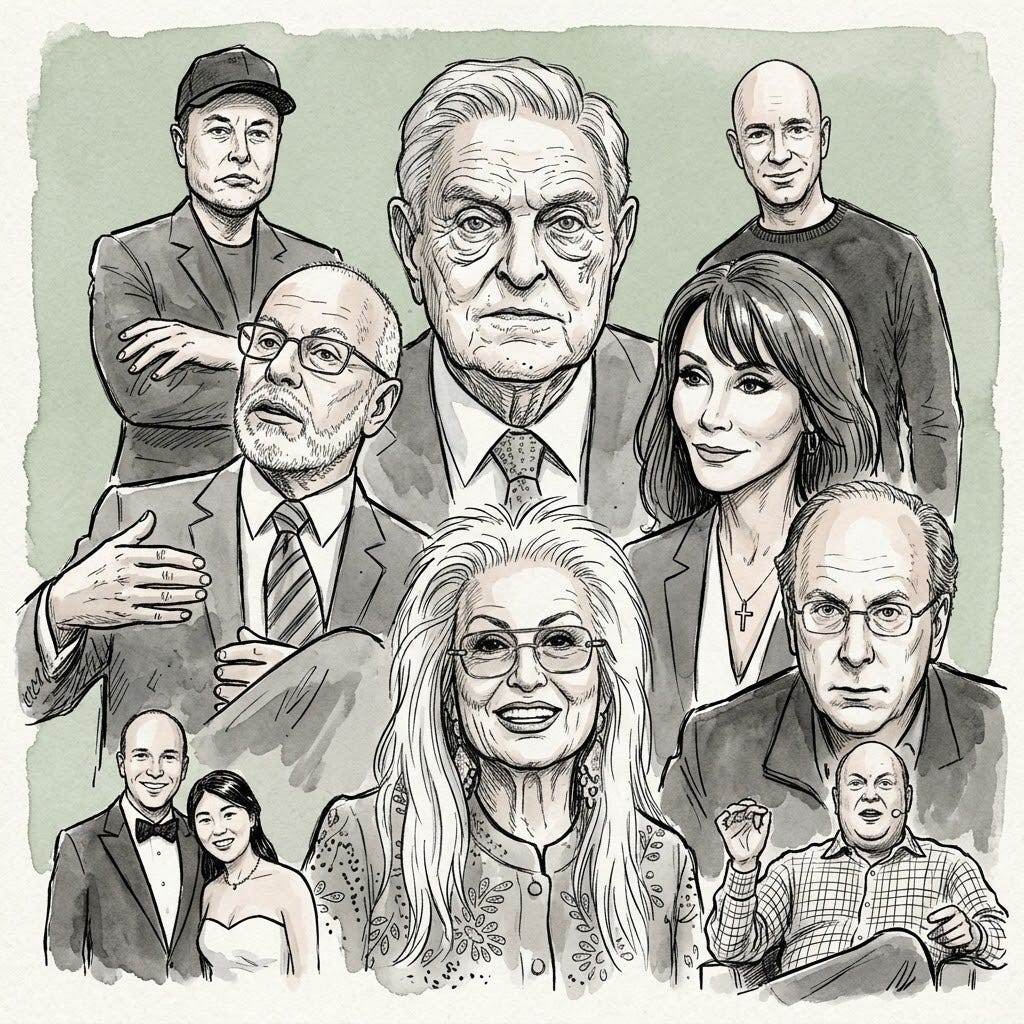
On Tuesday night, Elon Musk’s political spending acquired a result that its receipts could not prevent. He had put at least $445 million into the 2026 election cycle to help Republicans retain power, according to Associated Press reporting based on campaign finance records, and Democrats took the House and Senate. In Michigan, Abdul El-Sayed won a Senate seat after an AIPAC-linked super PAC spent tens of millions against him in the primary and continued to oppose him in the general election. A voter could look at those results and conclude that the money lost. In important races, it did.
SpaceX will still be selling services to the federal government when the new members arrive in Washington, and cryptocurrency firms will still be pressing them to decide who regulates their markets. The investors behind competing artificial intelligence committees have rules to contest as their systems enter workplaces, schools and government offices. AIPAC’s political operation retains its donors, staff and capacity to enter another primary. Tuesday removed candidates those interests supported; it left their businesses and political organizations in place.
The Brennan Center for Justice found that the 40 largest disclosed donor sources contributed more than $2.4 billion by mid-October. To join that group, a donor needed to contribute roughly $25 million. Those sources include people, corporations and organizations; the figure measures contributions, not a pile of separate advertising purchases. The top 40 gave eight times what the comparable group had given at the same stage of the 2014 midterms, after adjustment for inflation. Wealth bought a larger place in the election even as several of its favored candidates lost.
Federal law allows outside groups to make independent expenditures without coordinating with the candidates they support. A contribution alone cannot establish an exchange for a vote. A committee can still select a primary target, pay for weeks of advertisements and help a favored candidate survive, while every other officeholder watches what it cost to oppose that donor. Some of those campaigns failed in 2026; the organizations that paid for them can try again in 2028.
The price of admission
A super PAC raises money, transfers some to an affiliate and spends some on advertising. Add those three entries as if each were a new contribution and one donor’s money appears to multiply. A personal gift blended with a corporate contribution creates another false total. The largest 2026 figures came from organizations with overlapping donors and reporting schedules, making it easy to produce an impressive number that counts the same dollar several times.
Public Citizen identified about $737 million in disclosed corporate political contributions during the cycle. Its underlying analysis used reported contributions of at least $5,000 from for-profit businesses to super PACs and hybrid committees. Cryptocurrency corporations accounted for $233 million within that dataset. Big Tech, AI and data center businesses accounted for $73.1 million. These are contributions to political organizations, not proof that every dollar had been spent by election day, and they exclude personal spending by wealthy executives who own or lead companies in the same industries.
Musk’s personal contributions exceeded $445 million in the pre-election OpenSecrets accounting cited by AP. The Brennan Center grouped him with a company and arrived at a higher figure. Those numbers describe different boundaries around a donor source and cannot be added. His personal political activity was larger than the entire corporate technology category in Public Citizen’s narrower dataset, a comparison that says more about the categories than about what an individual advertisement cost.
Another part of the Brennan Center’s finding is harder to see in a campaign advertisement. Organizations that concealed their original donors supplied $699 million, or 29 percent of the top 40 group’s contributions. Some were connected to the parties’ own congressional leadership. The voter may know the name of the committee responsible for a television spot and still be unable to identify the people whose money entered that committee’s upstream funder. Disclosure can be technically complete at one point in the chain while leaving the source of political power out of view. The 2010 Citizens United decision helped create the present system of unlimited independent spending, but its legal distinction between a campaign and an outside committee remains central to the reporting. A candidate cannot simply direct the super PAC that supports them. A donor can nevertheless fund an organization that chooses the candidate’s opponent as its target. The candidate receives the political benefit of the expenditure without the cash entering the campaign account. Voters see the resulting advertisement and may never encounter the donor’s name in the thirty seconds purchased for their attention.
Technology companies and investors fought over AI rules and the state decisions that shape data centers. Cryptocurrency firms financed friends in both parties because a regulatory vote survives the next presidential election. AIPAC’s committees sought lawmakers committed to the US-Israel relationship. These donors pursued different interests through different organizations, but each can return to a primary with enough money to make opposition costly.
The donor with the worst return
Musk’s contribution total is almost comically large until it is placed beside his actual business interests. SpaceX sells services to the federal government. Tesla depends on rules governing vehicles, batteries and transport. X sits in the middle of disputes about communications, advertising and public information. His AI interests add another set of questions for regulators and legislators. The Brennan Center’s donor analysis identified the range and the federal contracting stake. A donor with businesses crossing that many committees has reason to watch more than one election.
He spent the money overwhelmingly on Republican politics and received a Democratic Congress. AP described the result as an especially poor electoral return, and reports from Texas and Washington showed how the wave cut through races where his money had been committed. People still make choices inside the booth, and yet the donor who failed to elect a majority remains powerful when that majority writes a procurement bill or summons a contractor to explain its work.
Democrats may seek records concerning the former Department of Government Efficiency initiative, federal contracts held by Musk’s firms or conflicts between an adviser to government and a bidder for government business. A hearing that names a contract’s value, the officials who approved it and the service the public received can establish responsibility. A hearing devoted to Musk’s persona while leaving the contract terms untouched would offer the country an antagonist and preserve the underlying arrangement. His election spending did not secure Republican control, and yet the government will continue buying what it has already contracted to buy until someone changes the terms.
Meta outlined a $65 million state-level political effort intended to help candidates sympathetic to AI industry interests, but New York Times reporting on filings found that political organizations later returned $25 million. One recipient, the American Technology Excellence Project, had received $45 million in September 2025 and returned $22 million the next summer. An announced budget and an actual expenditure are different entries in the record. Here the difference matters because Meta sought influence in statehouses as well as Congress, where the rules on AI systems and data center development can be written before a federal debate begins.
Those local contests can seem remote from a national donor analysis until a resident receives notice of a proposed data center near their home. The decision may turn on electricity rates, land use or water supply. The company seeking the project can afford a multi-state campaign to cultivate lawmakers; the household facing a higher bill cannot. The connection between a political contribution and a particular permit cannot be assumed. The imbalance in organized capacity is visible without that assumption.
The AI contest divided its own donors
Leading the Future was built to defend a permissive approach to AI development. Public First Action and its related committees sought stronger safeguards; Anthropic says it contributed $40 million to that effort. Bellingcat’s investigation of the competing networks described funding from OpenAI president Greg Brockman and his wife Anna, from Andreessen Horowitz and its founders, and from Anthropic on the opposing side. The word industry conceals a fight among companies and investors over which constraints they can live with, and which rival might benefit from them.
Public Citizen identified $50 million from Andreessen Horowitz to Leading the Future and $23.8 million to the cryptocurrency super PAC Fairshake. The Brockmans provided $12.5 million each in Leading the Future’s initial disclosed funding. Those gifts belong to them personally; OpenAI saidit did not direct the committee’s activities or have visibility into its operations. A story that labels their contributions as corporate spending by OpenAI would assign the wrong legal actor to the transaction. The personal power of a senior executive is significant enough under its own name.
The AI money moved through committees calibrated to each party. Leading the Future’s network included Think Big, which appealed to Democratic electorates, and American Mission, which worked on the Republican side. Its regulatory rivals used party-specific organizations too. That distribution gives the donor network a route into the next Congress whatever happens to the national party balance. A candidate can receive support in a primary whose advertising is about local crime or the cost of living while the people financing it care most about the candidate’s future vote on model liability or federal preemption of state AI laws.
New York supplied a case with an unusually legible target. State Assemblymember Alex Bores helped develop AI safety legislation and ran for Jerry Nadler’s House seat. Leading the Future’s operation spent roughly $8 million opposing him. Rival technology-funded groups spent heavily in his favor, including an Anthropic-linked network, according to Politico’s account of the primary. Bores lost to Micah Lasher. A committee that set out to defeat Bores could record a victory on election night, and yet Lasher had also supported AI regulation and co-sponsored the legislation at issue. The donor’s target lost while the policy view it opposed survived in the winner.
Lasher’s record makes the committee’s claim of victory difficult to translate into a policy result. Outside money made one candidate more expensive to support and another more viable, but Bores and Lasher had records of their own, and voters had reasons for choosing between them that the expenditure filings cannot measure. The millions altered the conditions of the contest without settling the argument over AI regulation.
What the advertisements hid
Bellingcat inspected 336 online video advertisements paid for by four AI-linked committees and found that only advertisements involving two of 40 candidates mentioned AI. None mentioned data centers. The sponsor’s industry interest was frequently absent from the message shown to voters. Some spots spoke of immigration, some of prices, some of loyalty to Trump or resistance to him; the network could support a Democrat for opposing MAGA and a Republican for embracing it. The slogans contradicted each other, and yet they served the same method of selecting lawmakers who might later be sympathetic on AI policy.
The finding does not establish illegal coordination with any candidate. Bellingcat reported no evidence of such coordination. Public First Action said its candidates favored AI regulation while its advertisements addressed issues voters considered immediate. Both points belong in the account. A candidate may hold many positions; an independent committee may choose which ones to advertise. The problem for a voter is informational. If a local election message never says that its funder wants a different rule for AI developers, the voter must discover the connection by searching committee disclosures and industry records while the ad is already playing.
The procurement trail is another place where a disclosure can stop short of the person who performed the work. Bellingcat identified more than $36 million in payments from Leading the Future’s network to four firms with little visible public presence beyond registrations and political filings. Think Big paid more than $20 million to Lantern Production Consultants, and American Mission paid more than $13 million to Summit Ridge Media. WIRED reporteda Campaign Legal Center complaint alleging the committees used shell entities to obscure subvendors. Leading the Future denied wrongdoing, and the FEC had not adjudicated the complaint. Delaware incorporation and a Nevada mailing address prove no offense. They do show why a voter looking at a committee’s outgoing payments can find another company name instead of the consultants who designed the messages.
WIRED also reported that the FEC lacked the four commissioners needed for a quorum. An enforcement complaint unresolved until after election day can preserve a record for historians and still fail to inform the people asked to vote. The legal merits of the complaint remain open. The timing of disclosure has already done its work.
Crypto bought a place at both tables
Cryptocurrency businesses designed their 2026 intervention to survive a change in party control. Reuters counted roughly $176 million in industry-linked spending across more than 100 races by late October, with about $150.8 million attributed to Fairshake and affiliates. Reuters described a strategy intended to build a bipartisan coalition useful after Trump leaves office. The amount spent is different from the $233 million in corporate contributions Public Citizen attributed to crypto businesses. One number tracks money entering political organizations under a defined method; the other tracks money used in races across a different reporting window. Adding them would count some dollars twice.
Public Citizen’s donor table records $33.1 million from Coinbase to Fairshake and $48.5 million from Ripple Labs to Fairshake and affiliated committees. It records $35 million from Crypto.com to Trump’s MAGA Inc. operation. Coinbase also gave to party-aligned House and Senate super PACs on both sides. Those decisions cannot be flattened into one industry preference for Democrats or Republicans. Some firms bought a route into the governing party of the moment; others built relationships with whoever might hold the committee gavel in 2027.
The subject of those relationships is financial law. Congress will decide which agencies oversee digital assets, how exchanges are regulated, what safeguards apply to customers and how new products gain access to mainstream finance. A company has a legitimate interest in arguing for a law it can comply with. It has a very different capacity to make that argument when it can send tens of millions of dollars into the primaries of the people who will vote on the law. The customer deciding whether to trust a platform with savings has no comparable committee, no television budget and usually no access to the meeting where the bill’s disputed clauses are settled.
Fairshake’s reported pre-election success in primaries was substantial. Reuters cited the committee’s claim that 53 of 58 candidates it supported in primaries or special elections had won. That is a record of selection and support, not a controlled experiment showing that the spending caused all 53 victories. A large committee can choose candidates likely to win; it can also change a close race. Both activities serve its purposes. Supporting the likely winner creates a relationship. Spending against a skeptic creates a warning for everyone else.
The warning failed in some conspicuous contests. Reuters documented more than $10 million in Fairshake spending against Illinois Lieutenant Governor Juliana Stratton and additional millions against state Representative La Shawn Ford, while both survived the attacks. Ohio returned Sherrod Brown, a critic of the industry, to the Senate. Their victories belong in the account because they mark the boundary of the industry’s power. A politician who watches a colleague survive a costly challenge may conclude that the donor can be beaten; another may conclude that surviving requires fundraising they cannot replicate. The FEC records alone cannot tell us which thought governs a future vote.
Maryland showed how an outside campaign can dwarf a candidate’s own. Reuters reported $5.3 million from cryptocurrency interests supporting Adrian Boafo in a Democratic House primary, while Boafo’s campaign had raised $1.9 million. Other outside groups also spent heavily in his favor. AIPAC’s United Democracy Project reported roughly $5.7 million supporting him, according to UDP expenditure records.
The same candidate benefited from overlapping donor interests; the reported expenditures do not prove those organizations planned the race together. They show how a voter can encounter one candidate through a set of advertisements paid for by committees with stakes in entirely different laws. Andreessen Horowitz’s contributions form another crossing point. Its $50 million for Leading the Future and $23.8 million for Fairshake appear in Public Citizen’s corporate accounting. The firm financed two organizations concerned with different regulatory domains. This is a financial link between the AI and crypto operations, not evidence that every company in either field accepted a shared political command. The more durable fact is the firm’s capacity to occupy several policy debates at once, while each voter sees a local race with only part of that financing visible.
AIPAC’s American political operation
AIPAC is an American lobbying organization seeking stronger US support for Israel. Its lobbying arm, political action committee and United Democracy Project serve different functions. The PAC can organize contributions to candidates within the rules governing direct giving; UDP can raise unlimited money and spend independently. AIPAC says its donors and members are Americans, and the records examined here do not establish that the Israeli government financed its 2026 election expenditures. Those facts identify the accountable actors: American donors using American election law to defend a foreign-policy relationship.
The immediate money trail is specific. FEC records for UDP show substantial receipts and independent expenditures during the cycle. The organization’s own transfers supplied $25 million in September 2025 and another $5 million in December, according to transaction summaries. Among the named individual contributors were Paul Singer, Haim Saban and Marc Rowan. Those records show who gave to this committee, not every person whose contribution first entered AIPAC’s wider organization. Treating an organizational transfer as an anonymous foreign payment would misstate what the records prove. Ignoring the transfer because the original contributors require more work to identify would leave the most consequential part of the money trail unexplained. This network uses money to shape who reaches the general election. A primary is a more efficient place to punish a dissident Democrat than a November race in which millions of voters have already chosen a party. In a district where Democratic nomination nearly guarantees election, a committee that changes the primary changes the likely future member of Congress.
The advertising need not mention Israel. It can attack a candidate for an old infrastructure vote or for failing to sound loyal enough to the district. The political interest of the funder is documented in its operations; the public message can be written around a subject thought more likely to move local votes.
The operations also reach beyond a single committee’s own advertisements. The Washington Post documented UDP money moving through other organizations into Democratic primaries, including committees whose names foregrounded Chicago women, progressive politics or affordability. A name can be factually registered and still conceal the interest most relevant to a voter evaluating the advertisement. Late disclosures compound the problem. A committee can place its message before ballots are cast while a full account of its donors arrives afterward. The voter eventually receives a history of the intervention, and yet the information needed for the decision came too late.
Separate campaign-finance reporting identified larger, established groups that received UDP contributions and then spent in contested races. One conduit was Bold America, which took $2.8 million from UDP and spent against Darializa Avila Chevalier in a New York primary. Chevalier defeated incumbent Adriano Espaillat despite the outside campaign. Another chain involved EDW Action Fund and Pro-Choice Majority Action. The latter denied that Israel policy determined its candidate choices and said it worked to elect Democratic women. The transfers establish financial relationships; they cannot, without further documents, assign every advertisement or private motive to UDP. They can be traced transaction by transaction, and that is precisely why their layered structure deserves attention.
An advertisement from a committee named for women’s representation can be paid for in part by an organization focused on Israel policy. The committee may pursue its stated mission while carrying money from a donor with other priorities, and the voter sees its claims about a candidate without seeing that funding relationship on screen. Reading the advertisements alongside the filings is possible after the fact. Before a primary, the money can move faster than the disclosure.
The Kentucky warning
Thomas Massie’s Republican primary showed how several donor constituencies can converge on a target without becoming a single organization. Kentucky Public Radio documented about $37 million in campaign and outside spending in the contest. Massie had angered Trump allies, opposed parts of the military confrontation with Iran and challenged unconditional assistance to Israel. His opponent Ed Gallrein received substantial support from pro-Trump and pro-Israel groups. Gallrein won by ten percentage points.
The amounts identify separate campaigns. MAGA KY spent about $7.4 million; UDP spent roughly $4.1 million; the Republican Jewish Coalition Victory Fund spent about $3.9 million. Donors including Singer, Jonathan Pollock and Miriam Adelson supplied money through different committees. Those facts do not make the candidates’ positions interchangeable or prove that one donor dictated the result. They show that a member who crossed several powerful interests faced coordinated political pressure in the everyday sense of simultaneous attacks, even where the legally independent committees’ private coordination has not been established.
Massie had serious financial support of his own. His campaign and aligned organizations spent more than $18 million, according to the Kentucky Public Radio accounting. A group aiding him raised $6.7 million from a source whose ultimate funders were unclear, prompting a Campaign Legal Center complaint. The allegation has not been adjudicated. The opacity on his side belongs in the record because disclosure rules should not depend on whether a reporter favors the candidate. The result still sent a message beyond Kentucky: challenging a president and the pro-Israel donor network can require a House member to survive a primary whose total spending would once have funded several statewide races. The same case illustrates why an election result cannot be assigned to one cause. Massie offended Trump on multiple issues. Gallrein had his own appeal to voters. Both sides spent millions. AIPAC-aligned money contributed to the pressure and its presence can be measured; the assertion that it single-handedly defeated Massie cannot. The more disturbing question is what the $37 million contest teaches lawmakers who cannot raise $18 million to defend themselves.
Michigan refused the lesson
The donors’ preferred result failed in Michigan. Abdul El-Sayed beat Haley Stevens in the Democratic Senate primary despite an enormous UDP intervention against him and support for Stevens. He then defeated Republican Mike Rogers in the general election, becoming the first Muslim elected to the US Senate. The race absorbed millions in outside advertising, and El-Sayed’s victory did not make that expenditure disappear. It proved that a candidate can survive it.
Stevens later endorsed Rogers, her party’s opponent, at a Detroit church. The endorsement belonged to Stevens; the fact that an outside committee had supported her earlier does not prove its donors directed the decision. The visible result was a party establishment rupture that voters rejected. For El-Sayed’s supporters, the win was more than a symbolic rebuke to a PAC. It placed in the Senate a candidate willing to challenge unconditional US military support for Israel. Whether that stance changes a future arms vote will depend on committee schedules, leadership decisions and the colleagues who join him.
An AIPAC-linked network opposed a prominent critic in Michigan and lost. It opposed Massie in Kentucky and won. AIPAC’s organization can point to successful recipients across Congress; many were incumbents or candidates favored before its money arrived. The clearest evidence of its power lies in contested races where the committee intervened and in the policy conduct of lawmakers afterward, not in a raw count of winners whose names appeared on a donor list.
The Michigan result gives challengers an example and gives donors a reason to adapt. A committee can choose different targets, switch messages or increase spending in the next cycle. El-Sayed can organize colleagues around the record of his victory. Money remains available and the person it tried to stop now has a Senate vote. The future fight begins with both facts.
The public’s smaller checkbook
The most consequential comparison in the Brennan Center’s donor report is not between Musk and another billionaire. Labor organizations, once a substantial presence among the 40 largest sources of midterm money, were absent from that group in 2026. Unions still organize and contribute; workers still canvass, call and vote. Their collective contributions did not keep pace with the escalation at the top. A political system can record every union dollar and every billionaire dollar under the same law while the ability to intervene at scale moves farther away from the people whose wages and working conditions the next Congress will decide. The distance has a practical shape. A worker facing a new scheduling system built on AI has an interest in rules about monitoring, mistakes and appeals. A household considering a cryptocurrency product has an interest in truthful disclosures and protection when an exchange fails. A Palestinian family receiving food aid has an interest in whether Congress finances the weapons or the humanitarian channels that shape daily survival. These people do not form one constituency, and their interests sometimes conflict. Their shared disadvantage is that they meet the consequences of federal policy long after the organizations seeking to shape it have hired lobbyists, selected candidates and purchased the advertising surrounding a primary.
An elected member can sincerely disagree with a donor who helped them. A committee can spend on a candidate who later votes against its preferred bill. Both events occur, and the investigation must remain open to them. The distortion begins earlier than a proven quid pro quo. When a business can spend five times what a candidate raises to shape one primary, it changes what it costs to enter public life. When the 40 largest donor sources put more than $2.4 billion into the cycle, they ensure that a relatively small group of people and organizations can keep their policy concerns present in a way a voter working a double shift cannot.
Many beneficiaries will say they needed outside spending to defeat opponents backed by other wealthy interests. Bores’ race offers evidence for that defense. A technology-funded group supporting stronger safeguards countered the committee attacking him. Yet a competition between rival fortunes does not create equality between the funders and the person in the district who has to live under the resulting rule. The voter receives a wider choice of advertisements; the investor receives another path to a lawmaker. The money can be on opposing sides and still displace the public’s own capacity to set the terms of debate.
Party leadership is part of the structure. Donor organizations that conceal their underlying contributors supplied $699 million to the top 40 group in Brennan’s accounting, and some had ties to congressional campaign operations. A lawmaker trying to understand a donation’s path may need to follow a corporate gift into a nonprofit, from the nonprofit into a super PAC, and from that committee into a vendor that contracts with another firm. The money is recorded at several points. The original person or company, the consultant who designed the advertisement and the policy interest behind it may remain separated in records no ordinary voter can assemble before election day.
The remedy is not a journalist’s larger total produced by adding every recorded transfer. That would reproduce the confusion while making the number look more impressive. The useful account identifies the original funder where disclosed, the intermediary, the actual expenditure, the race and the claim made to voters. It distinguishes a donor’s announced budget from the money spent, a candidate’s victory from a policy delivered, and a committee’s allegation from a regulator’s finding. Those distinctions can sound dry. They are how you see exactly which power was exercised, and by whom.
The bill comes after the ballot
When the new committee chairs take their seats, the organizations that funded the primaries will have lawyers, lobbyists and draft proposals ready for them. Democrats can demand the names behind AI committees and the vendors that carried their advertisements. They can question executives about the political campaigns they financed, write customer protections into digital asset law and examine weapons transfers to Israel. Each step will bring them back into contact with people who have already shown how much they are willing to spend on the next election.
Some of the decisions will be difficult to see from the outside. A chair who declines to schedule a hearing on AI liability has made a choice, even if no vote records it. A leadership office can remove a safeguard from a cryptocurrency bill before the public sees the text. Weapons can continue moving under existing authority while members argue over a resolution. An FEC filing cannot prove why an official stayed silent, and without communications or testimony no reporter can assign that silence to a particular donor. The absence of a hearing or a condition on funding still deserves the same public attention as a recorded vote.
Before a committee markup, executives will seek meetings and lobbyists will offer language. A donor whose committee paid for a primary advertisement may return as an investor or industry advocate, with every title accurate and the prior expenditure easy to miss. Formal lobbying disclosures and campaign filings put pieces of that relationship in separate places. The member who hears the pitch knows who has been in the room; the voter trying to follow it must assemble the trail later.
The $30 million campaign against El-Sayed failed, and Massie’s Kentucky primary became a $37 million contest in which a well-funded incumbent lost. A lawmaker contemplating an arms-transfer condition or a rule that a cryptocurrency exchange dislikes can look at either race. Those results cannot tell us what that member will decide privately, but the cost of becoming a target is now visible to anyone considering the vote. Musk can finance another slate, Meta can invest in statehouses and crypto’s committees can back candidates in either party. All of them have staff and money to adjust after a loss.
El-Sayed’s victory defeated an effort to keep him out of the Senate. The Democratic takeover defeated the national result Musk sought with his spending. Voters did that work, and their choices should be taken seriously. They will have reason to look just as closely at the bills the winners bring forward: the protections included in AI and cryptocurrency law, the conditions placed on military assistance, and the information released before the next primary begins. A check written in 2026 tells us what a donor wanted; the votes and funding decisions in 2027 will show what Congress gave them.