Brief: A Different Picture of Iran
How a diverse, educated and scientifically ambitious society defies the usual narratives of collapse and despair.
Iran is often reduced to clichés, but the country combines social diversity, scientific ambition, and a strong public sector that make it one of the more resilient states in West Asia. Far from being on the verge of collapse, it has built institutions and capacities that many of its neighbors do not have.
Iran is a genuinely multiethnic and multireligious society, home to Persians, Azeris, Kurds, Arabs, Baluch and others, alongside constitutionally recognized Jewish, Christian and Zoroastrian minorities. These communities retain cultural and political space that has endured through war, sanctions and internal tensions, helping to prevent the kind of state breakdown seen elsewhere in the region.
Its political arena is tightly controlled yet still competitive, with presidential and parliamentary elections that draw large turnouts and produce rotating coalitions of reformist, centrist and conservative camps. Civil society groups, from student unions to professional associations, keep pressing for change and accountability, and public debate continues even under pressure.
Over the past half century, Iran has engineered one of the sharpest rises in life expectancy in the world, moving from about the mid 40s in the 1960s to the high 70s today. Primary health care networks, rural clinics, vaccination drives and maternal health programs reach deep into the countryside and have transformed everyday life.
This health system has sharply reduced maternal mortality and expanded access to antenatal and child health services. As a result, more Iranians are living long enough to worry less about basic survival and more about chronic disease, aging and quality of life.
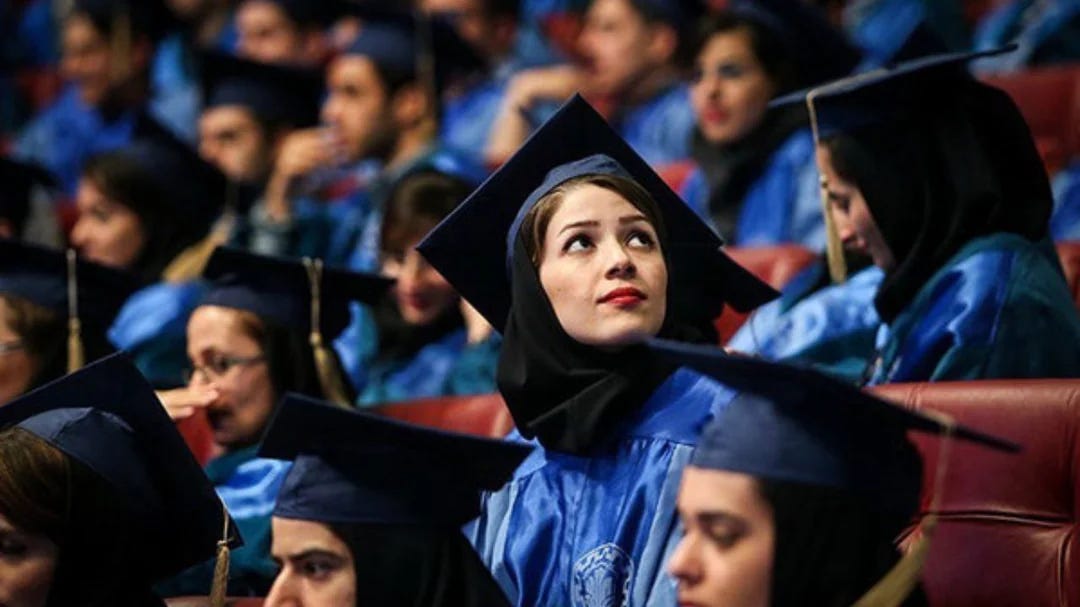
In higher education, Iran has quietly produced one of the world’s most female dominated science and engineering cohorts, with women making up a clear majority of students in many STEM faculties. Advanced education has become a central route to status and mobility for young women, who often outperform men in university entrance exams.
Despite periodic restrictions and political pushback, Iranian women have built strong careers in medicine, engineering and research. Their skills are now deeply woven into the country’s technical workforce and shape fields from biomedical research to industrial design.
Iran has also emerged as a serious scientific actor, ranking near the top globally in nanotechnology research and turning that expertise into real products in construction, medicine and manufacturing. Thousands of scientific papers each year testify to a research community that is active, ambitious and plugged into global trends.
Tehran set up a national environmental authority in the early 1970s and later expanded reforestation and renewable energy programs to confront pollution, desertification and water stress. These efforts face many obstacles, but they show that environmental questions are part of Iranian statecraft rather than an afterthought.
On its eastern frontier, Iran has spent decades trying to block the flow of Afghan narcotics toward Europe and the Gulf, losing thousands of security personnel in the process. That often overlooked effort has made the country a crucial buffer in the wider drug trade even as sanctions complicate cooperation and funding.
Politically, the Islamic Republic began its life by voicing support for the anti apartheid struggle and later hosted Nelson Mandela in Tehran, gestures that resonated well beyond the region. Whatever one thinks of its leadership, many in the global south still see Iran not as a collapsing state, but as a durable and contested republic trying, in its own way, to chart an independent course.


