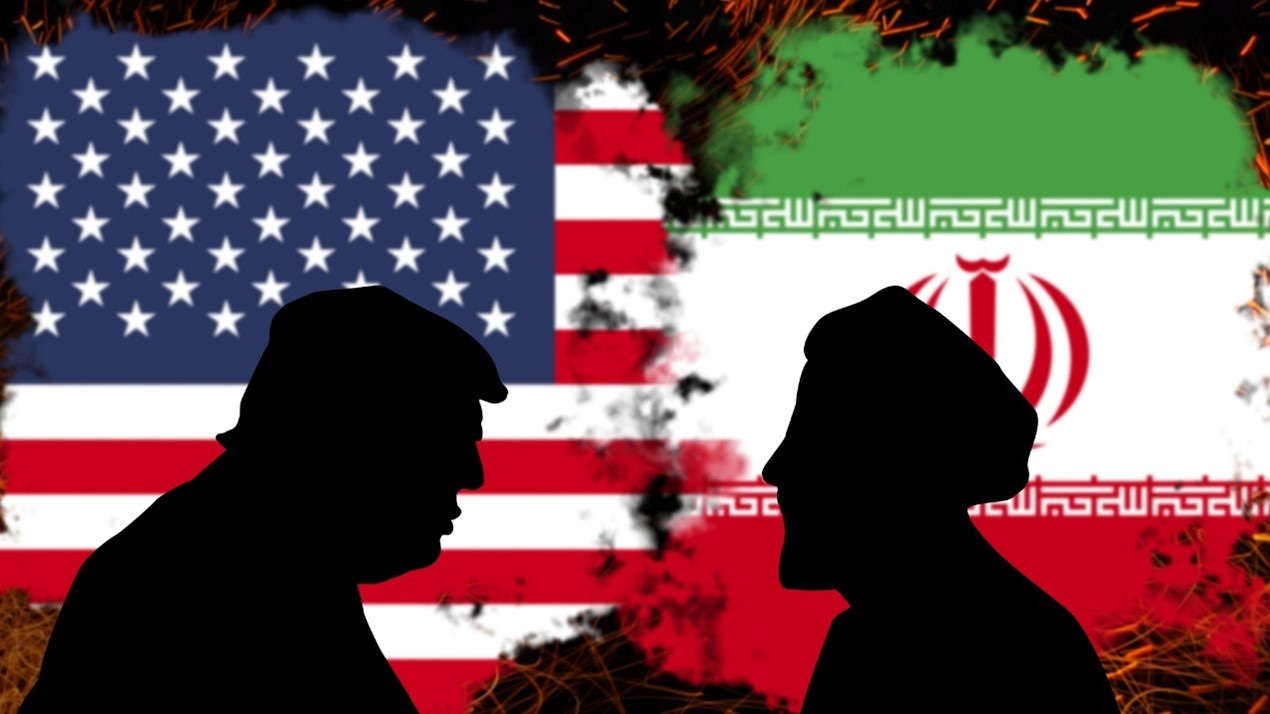
Did the Iran War Come at the Right Time?
America launched Operation Epic Fury while running trillions in deficit, a collapsing petrodollar, and a Congress that cannot agree on a supplemental budget.
The federal government spent $7.01 trillion in fiscal year 2025 and collected $5.23 trillion. The gap was $1.78 trillion. The Congressional Budget Office forecasts it will reach $1.9 trillion by the end of 2026. The Treasury is currently paying $11 billion per week in interest on the national debt, accounting for 15 percent of all federal expenditure. These are not warning signs. They are the terminal readings of a system that was never designed to sustain itself without external subsidy, and the subsidy is ending.
What makes 2026 different from previous American fiscal crises is not the numbers alone. It is the combination: a financial architecture built on a single geopolitical arrangement that is now being dismantled settlement by settlement, an electorate that has separated into two populations sharing no common epistemic floor, a media ecosystem that spent thirty years accelerating that separation for profit, and a legislative class that has passed through a sorting process so complete that consequential bipartisan legislation has become structurally impossible. The sum of those conditions is not a country in a bad political cycle. It is a country arriving simultaneously at the outer edge of five distinct historical eras that each ran on a different clock, and all five are striking at once.
The Fifty-Year Float: How Petrodollars Funded a Nation That Could Not Fund Itself
In 1974, the United States completed a set of arrangements with Saudi Arabia that solved a problem no democratic government had previously managed to solve: how to sustain imperial expenditure without imperial taxation. The petrodollar system required OPEC nations to price oil in dollars, accumulate dollar surpluses, and recycle those surpluses into US Treasury bonds. It turned global energy dependency into a permanent financing mechanism for American deficit spending. Every country that needed oil needed dollars. Every country that accumulated dollars needed somewhere to park them. The United States provided that parking at a yield it could not otherwise have afforded.
The security guarantee ran in the other direction. Washington underwrote the stability of Gulf monarchies whose domestic legitimacy was thin and whose external threats were real. The arrangement was not a friendship. It was a transaction, and it functioned with cold reliability for fifty years.
That machine is being replaced. China launched yuan-denominated oil futures on the Shanghai International Energy Exchange in March 2018. India purchased Russian oil in rupees at scale after 2022, saving an estimated $12.6 billion in that period alone. Russia and China now settle 90 percent of their bilateral trade in yuan and rubles. Saudi Arabia joined Project mBridge, the Bank for International Settlements’ digital currency settlement system, and has made explicit statements about openness to yuan-denominated oil settlements. The dollar’s share of global foreign exchange reserves fell from 71 percent in 2000 to 59 percent by 2024.
The official BRICS position is careful: we are not replacing the dollar, we are reducing dependence. The actions, sequenced from 2018 to the present, say something more precise. BRICS nations controlling 42 percent of global oil supply are constructing a parallel financial infrastructure, institution by institution, that does not require the dollar at any point in the chain.
Ray Dalio, writing in March 2026, described the American position as a debt death spiral: “the phase in the cycle where the borrower must acquire more loans to meet existing debt obligations, which then intensifies. Consequently, lenders become hesitant to hold that debt.” The central bank response is currency depreciation rather than default. The dollar does not go to zero. It goes to a place where the postwar American standard of living, built on cheap imports financed by borrowed money, becomes arithmetically unsustainable. The petrodollar did not just fund the military. It funded the political consensus that kept the country from confronting what it actually costs to run.
The Long Sorting: Sixty Years of Congressional Separation
American congressional polarization is not a product of the last decade and it did not originate with any single presidency. The DW-NOMINATE scoring system, which measures ideological distance between the two caucuses across every congressional session since Reconstruction, shows the divergence beginning in the early 1980s, accelerating through the 1990s, and reaching post-Civil War highs by 2014. The postwar low, roughly the mid-1950s, was a period of genuine ideological overlap: Southern Democrats voted with Republicans, Northern Republicans voted with Democrats, and the centers of both parties occupied the same legislative territory. That overlap did not survive the civil rights realignment, the southern strategy, the culture wars, or the economic sorting that pushed college-educated professionals into the Democratic coalition and non-college voters into the Republican one.
What the congressional record shows is that once the sorting reached a certain threshold, it became self-reinforcing. Safe seats produce ideologically extreme incumbents. Extreme incumbents have no electoral incentive to compromise. Legislative failure produces voter frustration. Voter frustration produces more extreme challengers. The mechanism is not complicated. No intervention over forty years has successfully interrupted it.
The public moved with the representatives. By 2017, the ideological distributions of Democratic and Republican voters, measured by Pew across the full range of political values, had separated from substantially overlapping normal curves into two distinct populations with minimal shared territory. In 1994, the median Democrat and the median Republican occupied adjacent ideological space. By 2017, the medians had pulled to opposite poles, and the overlap between the two populations had shrunk to a fraction of what it had been.
The affective dimension is where the numbers become genuinely alarming. Affective polarization measures not ideological distance but emotional hostility: how much partisans dislike, distrust, and dehumanize members of the opposing party. Research published through 2025 confirms that animosity toward the opposing party now exceeds affinity for one’s own party among both Republican and Democratic identifiers, a threshold no prior measurement had recorded. Fifty-seven percent of Republicans and 41 percent of Democrats describe members of the opposing party as enemies rather than political opposition. Twenty percent of respondents across both parties told researchers that many on the opposing side “lack the traits to be considered fully human.”
These numbers have one prior American referent. The political stress index has two earlier peaks in American history: the period culminating in the Civil War, and the period culminating in the two World Wars. The current reading matches the first.
Two Worlds, One Country: The Media Ecosystem That Made Shared Reality Impossible
The Harvard Berkman Center’s analysis of 1.25 million political stories published between April 2015 and November 2016 produced a map of the American media ecosystem that has not fundamentally changed in the decade since. The network was split. On one side, mainstream outlets with traditional reporting infrastructure clustered together, cross-linked, tethered to common evidentiary standards however imperfectly applied. On the other, a self-contained epistemological world had been constructed. The Columbia Journalism Review described the researchers’ finding as a “mutually reinforcing hyper-partisan” network that combined “decontextualized truths, repeated falsehoods, and leaps of logic” to produce a separate information reality at sufficient scale to govern elections.
The asymmetry matters because it is not simply a story of two partisan tribes reading partisan media. The research found that the right-wing media ecosystem operated with a coordinated agenda-setting function the left-media cluster did not replicate. The hub of that ecosystem was not simply a conservative outlet. It was the organizational center of a network that pulled the information environment of the entire right-wing media sphere, including the largest cable news network in the United States, toward its frame. The downstream consequence is that a large portion of Republican voters in 2026 are not operating with a conservative version of the same factual record. They are operating with a different factual record, constructed over thirty years by institutions whose commercial interest is indistinguishable from their editorial product.
Research published in the Proceedings of the National Academy of Sciences in 2025 identified the structural reason depolarization efforts keep failing: “Polarization in the electorate often reflects strategic incentives for political and media elites to stoke animosity for electoral or commercial gain.” The problem is not misunderstanding. It is incentive. The architecture that produces polarization is the same architecture that profits from it, and it has had thirty years of compound growth.
Five Clocks Striking: The Concurrence That Changes the Calculation
The frame that distinguishes 2026 from previous American crises is not any single failure. It is the concurrence of endings. The unipolar era, the period from 1991 in which American military and financial supremacy faced no serious systemic challenger, is ending. The petrodollar era, from 1974 to the present, is being dismantled settlement by settlement across the BRICS bloc and its energy trading partners. The postwar order built at Bretton Woods, extended through NATO and the UN Security Council, is under active revision by the powers it was designed to contain. The particular form of federal union that has existed since 1865 is being tested by a level of internal polarization its institutional design did not anticipate. The five-century period of Western civilizational dominance over global trade routes, financial systems, and military hierarchies is facing its first serious structural challenge since consolidation.
Each of these endings is real in isolation. A country managing the end of the unipolar moment from a position of internal cohesion, fiscal stability, and shared political reality could negotiate the transition. The United States is managing it from the opposite position across every dimension at the same time.
The specific mechanism connecting internal polarization to external vulnerability is fiscal. The petrodollar suppressed inflation by sustaining artificial global demand for dollar-denominated assets, which allowed the Treasury to borrow at yields no genuine market would have produced. As that artificial demand normalizes, as BRICS local-currency settlements remove the mandatory dollar recycling that financed American deficits, the fiscal constraint deferred for fifty years arrives. It arrives into an electorate already at peak affective hostility, with 20 percent of both parties’ voters having told researchers they consider the opposition not fully human.
The Self-Correction Problem: Why the Institutions Cannot Fix What They Produced
The standard response to polarization research, from political scientists and centrist commentators, is that the problem is solvable through institutional reform: ranked-choice voting, independent redistricting, campaign finance rules, civic education. The research does not support this. Studies published in PNAS in 2025 found that short-term interventions to reduce affective polarization do not affect support for democratic norms and do not affect support for political violence. Partisans become slightly less hostile to each other in a controlled experimental setting and return to baseline within weeks. The drivers are structural, economic, and social, and they are not being addressed by the institutions whose dysfunction they produce.
The media ecosystem is not fixable by media reform alone because the financial model rewarding hostility has been built into the platform infrastructure underneath it. Congress is not fixable by election reform alone because the safe-seat sorting that produces extreme incumbents is a function of geographic self-selection, not just redistricting. The debt is not fixable by fiscal conservatism alone because the political coalition required to impose necessary discipline has not existed since the early 1990s and shows no sign of forming.
What remains is a country whose institutional mechanisms for self-correction are operating inside the same fracture they are trying to repair.
What the Rest of the World Already Decided
Countries that are not inside this argument read the American trajectory differently than Americans do. The dollar’s weaponization through SWIFT exclusion, applied to Russia in 2022, accelerated de-dollarization faster than any theoretical argument for it could have managed. A Treasury sanctioning entire national economies requires a Congress willing to authorize and sustain that posture. A polarized Congress that cannot pass foreign aid, cannot agree on debt ceiling management, and produces a new fiscal crisis every six to eighteen months is not an institution the rest of the world can build long-term financial dependency around.
The BRICS expansion is partly ideological and partly actuarial. The nations joining are calculating the trajectory, looking at the fiscal numbers, the polarization data, the debt service curve, and deciding that the infrastructure underneath American financial hegemony is less stable than the alternative being constructed. India-Russia rupee oil. China-Saudi yuan futures. UAE digital currency pilots. Project mBridge. The sequencing is deliberate and patient. The patient party is not Washington.
The one question the accumulated evidence cannot resolve is sequencing: does the financial architecture fracture before the political union does, or do they arrive together in a compression that neither Dalio’s long-debt-cycle model nor the historical stress index adequately maps. The order matters enormously for everyone outside the United States. A managed dollar depreciation inside a functional republic is survivable. A dollar crisis inside a state already at Civil War-era polarization, with 20 percent of its electorate having already decided the other side is not fully human, is a different category of event entirely.


