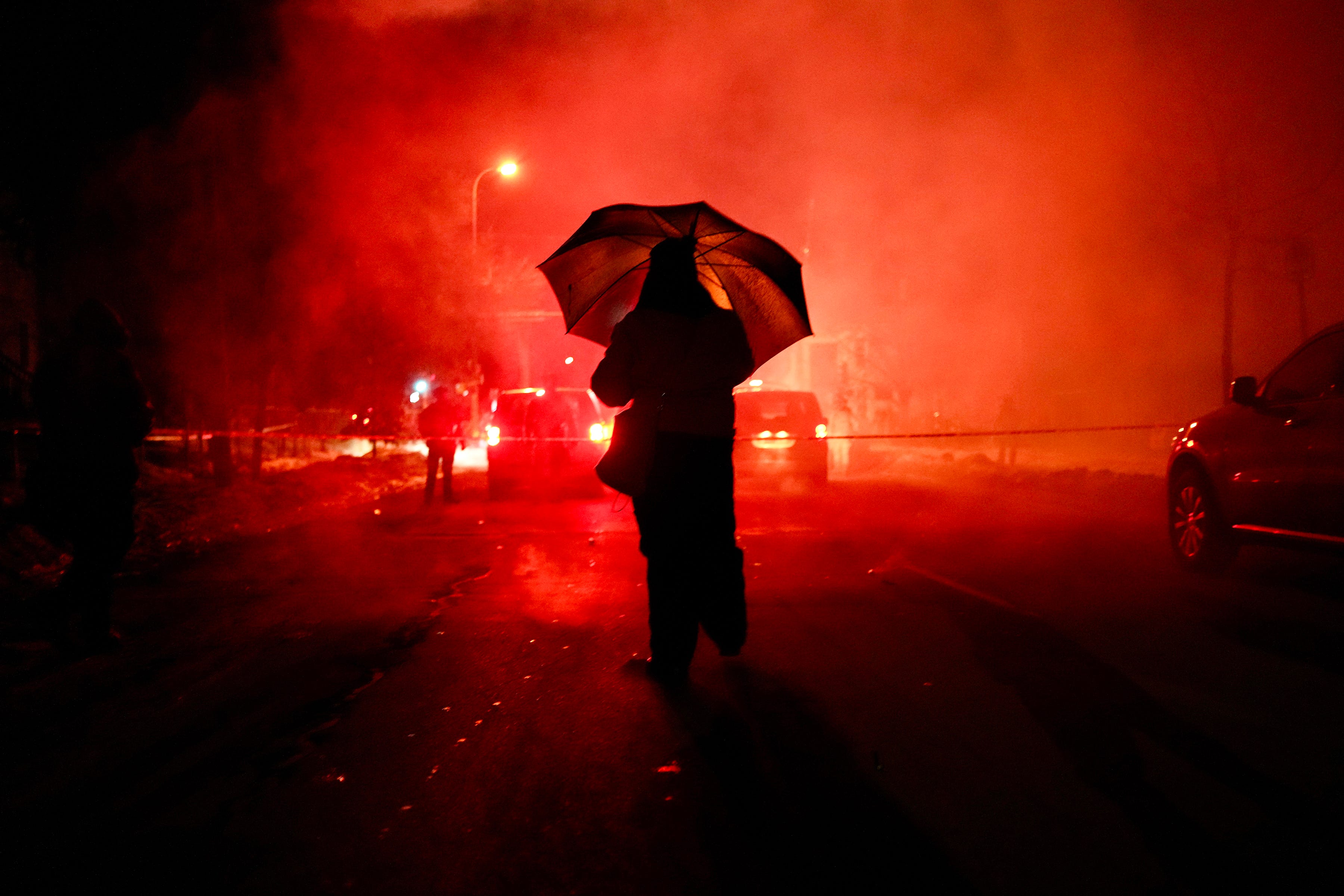
Frozen Frontlines: Minnesota’s ICE War
Neighborhood Watch Turns to Armed Resistance as Federal Agents, National Guard, and 1,500 Troops Collide in Twin Cities Winter Standoff
The snow fell heavy on the morning of January 7, 2026, when Renee Nicole Good and her partner Becca Good dropped off the child they were raising together at school in south Minneapolis. It was meant to be an ordinary Tuesday, the kind where a couple returns home after the morning routine, perhaps sharing coffee before the day’s obligations begin. But on their way back, they noticed something unusual. Federal agents in unmarked vehicles had descended on their neighborhood, and like many residents in Minneapolis, they stopped to observe.
Renee Good, a 37-year-old poet and mother of three, had moved to Minneapolis just ten months earlier with Becca, believing the city would offer a better environment for their blended family. She had recently been approved to work as a substitute teacher and served on the board at her child’s school. The couple, both U.S. citizens, had been growing increasingly concerned about the massive federal immigration operation unfolding around them. They were engaged with their neighbors about the issue. On this morning, they were simply exercising their right to assemble, curious about the activity happening close to their residence.
At 9:38 a.m., the first 911 calls began flooding in. “They just shot a lady. Point blank range in her car,” one witness reported, his voice breaking. “She’s dead.” Another caller described the horror more clinically: “blood all over the driver,” noting that the agent who shot the woman remained at the scene, wearing an ICE tactical vest. A third caller, claiming to represent the Department of Homeland Security, stated: “We had officers in a vehicle and we have agitators on scene. And we have shots fired by our locals.”
Video footage from the scene, including cellphone recording captured by ICE agent Jonathan Ross himself, shows the moments before the shooting. Renee Good sat inside her Honda SUV, which was partially obstructing the residential road. The sounds of honking cars, sirens, and protesters blowing whistles filled the air. Ross approached the vehicle, and Good can be heard saying through the window, “It’s fine dude. I’m not mad at you.” Another officer instructed her to exit the vehicle. Becca Good stood outside, and as more agents arrived, she appeared to urge Renee to “Drive.”
Good turned the steering wheel to the right, away from the officer, and began to drive. Ross, a 10-year veteran of ICE who had positioned himself in front of the vehicle, shouted what sounded like “whoa” before firing his weapon. Multiple gunshots rang out through the quiet residential street. The SUV sped down the road before crashing into a parked vehicle. One witness later told investigators the vehicle wasn’t moving toward the agents when Ross opened fire. He shot three times through the driver’s side window.
When Minneapolis Fire Emergency Medical Services arrived, Renee Good was still alive, suffering from apparent gunshot wounds to her chest and forearm, along with a possible gunshot wound to her head. She was responsive, breathing, with an inconsistent, thready pulse. But witnesses reported that a doctor who had been at the scene and tried to help was refused access by ICE agents. Up to 15 minutes passed before an ambulance could reach her, blocked by ICE vehicles that had occupied the street. The incident reports reflected the chaos: “STILL ATTEMPTING TO FIGURE OUT WHO’S IN CHARGE,” one entry noted around 10:00 a.m. Another called to “FIGURE OUT WHO IS IN CHARGE OF FED AND HAVE THEM LEAVE SCENE.”
By 10:00 a.m., agent Jonathan Ross was no longer at the scene. He had been transported to a federal facility. A DHS spokesperson later confirmed that Ross was taken to the hospital after the incident and has since been released. Homeland Security Secretary Kristi Noem would claim Ross suffered internal bleeding in his torso and had acted in self-defense, labeling Renee Good a “domestic terrorist.” Approximately two hours after Ross fatally shot Good, DHS issued a formal statement making this accusation, claiming the ICE officer had fired “defensive shots” at a vehicle attempting to “run over” agents.
Renee Good died that day, leaving behind three children. In a statement released days later, her parents and siblings described her as “our protector, our shoulder to cry on, and our vibrant source of joy.” They said they missed her “more than words could express.” The family hired Antonio Romanucci, the same attorney who had represented George Floyd’s family, and began preparing legal action against the United States and the agent responsible for the shooting. When asked about the “domestic terrorist” characterization, Romanucci said the family had been “deeply wounded” by it. “Someone who tells an agent just seconds before being shot that ‘I’m not mad at you,’ that does not align with that label,” he stated, noting that some family members had supported Trump in the election.
The Federal Surge
Operation Metro Surge had arrived in Minnesota weeks before with unprecedented force. Between 2,000 and 3,000 ICE agents descended upon the Twin Cities, emboldened by offers of immunity from the Trump administration and tasked with aggressive enforcement tied to a welfare fraud controversy. The agents moved through neighborhoods in unmarked SUVs with tinted windows, stopping people on sidewalks, demanding identification from U.S. citizens, and conducting operations that increasingly drew the fury of residents who had learned to watch for them.


The community response had been building since early December 2025. Flannery Clark, a south Minneapolis resident who had lived in the neighborhood for years, knew the area like only a local could. Just before Friday prayer one afternoon, she steered her family’s station wagon down the congested stretch of East Lake Street, seeking signs of federal agents. The block watches and neighborhood chat groups that had proliferated after George Floyd’s murder in 2020 had now morphed into a large-scale mobilization aimed at defying the federal government’s immigration agenda.
It was an increasingly sophisticated effort. Community nonprofits offered trainings on how to observe ICE operations. Residents wore colorful plastic whistles on lanyards around their necks, ready to alert neighbors the moment agents appeared. Alex Cruz, a housepainter working a construction site in Farmington, showed reporters a Spanish-language group chat that had grown from about 50 members at the start of December to more than 900. The message board constantly buzzed with warnings of ICE sightings and stories of those detained.
The movement extended beyond protests. Residents were hiding immigrant families without permanent resident status from discovery, secretly ferrying immigrant children to and from school, delivering meals to families laying low at home. They stood guard outside mosques, collected cars abandoned after sudden arrests, located people in immigration jail, and helped secure attorneys. At a pop-up food shelf at St. Paul’s East Side Freedom Library, many volunteers had code names in ICE watch group chats, outgrowths of mutual aid networks dating back to the 2020 civil unrest.
When ICE raided a home on Rose Avenue in November and approached the Centromex Supermercado two weeks later, residents materialized en masse through these connections. Protesters and federal agents were learning from each other. Arrests happened swiftly now, before they could become protracted standoffs. But the community kept watching, kept organizing, kept resisting.
On a frigid Friday, January 16, neighbors on a small residential street spotted an ICE vehicle parked in their community. Despite temperatures plummeting and heavy snowfall, residents emerged from their homes, pointing out the vehicle to passersby and shouting at the officers inside: “Get the hell out of here, you bunch of Nazis.” The confrontation exemplified tensions that had been escalating since Good’s death nine days earlier, but which had been simmering for weeks before that.
Flashpoints and Fury
The organized resistance erupted into open confrontation after Renee Good’s death. On Saturday, January 10, approximately 10,000 protesters flooded downtown Minneapolis, marching through streets that had become tragically familiar with mass gatherings. Earlier that same day, a different kind of confrontation played out at a Minneapolis gas station. A group of ICE agents stopped a man pumping gas and began questioning him about his U.S. citizenship without presenting a warrant or clearly stating a reason for the stop. Video from the scene shows an agent approaching the man and demanding, “How do I know you’re a U.S. citizen?”
Bystanders immediately began blowing whistles and shouting “La migra!” and “ICE!” to express their opposition and alert others in the area. Witnesses and nearby people shouted at the agents to leave. The agents ultimately returned to their vehicle and drove away as the crowd continued to yell at them. The incident revealed how quickly residents could mobilize, how effectively the warning systems worked, and how willing ordinary people were to directly confront federal authority.
The massive demonstration later that day converged on the Whipple federal building, where a large contingent of federal officers in riot gear advanced toward demonstrators. The protesters responded with chants and jeers, with some calling for calm and urging the crowd to remain united. Federal law enforcement detained several individuals near the building, though the reasons remained unclear to observers and media on the scene.
But the real confrontations happened at night. Over 200 law enforcement personnel were dispatched to manage protests that resulted in around $6,000 in damages at the Depot Renaissance Hotel. Protesters had learned that ICE agents were staying at various downtown hotels, and more than 1,000 individuals gathered outside the Hilton Canopy Hotel, believed to be housing federal agents. Some protesters vandalized the Depot Renaissance Hotel. Others engaged in what officials called a “noise demonstration,” banging drums and making it impossible for the agents inside to rest.
Minneapolis Police Chief Brian O’Hara reported that 29 individuals were apprehended overnight. One officer sustained injuries from a thrown piece of ice. Some protesters attempted unsuccessfully to enter the Hilton Canopy Hotel. “We implemented a strategy to de-escalate the situation, issued several warnings, declared an unlawful assembly, and ultimately began dispersing the crowd,” O’Hara explained at a press briefing.
On the streets, the confrontations grew more volatile. NPR reporters witnessed immigration officers colliding with a car belonging to a U.S. citizen who refused to stop. ICE agents ultimately released him after checking his license plate. In the same vicinity, immigration officials forcibly removed a woman from her vehicle. She reported that she was en route to a medical appointment when she encountered the agents, who claimed she failed to comply with their orders. Witnesses saw demonstrators blocking the federal agents’ exit and banging on their vehicles, prompting officers to respond with pepper spray and tear gas before retreating after deploying flash-bangs.
Voices from the Streets
Patty O’Keefe, a 36-year-old U.S. citizen, would later testify before Democratic lawmakers at a community hearing on January 15. Her encounter with ICE agents began when she and a friend received a report that legal observers in her neighborhood were being pepper sprayed. They found the agents and began following them in their car while honking their horn and blowing whistles to alert others in the area to the federal presence.
The ICE agents subsequently stopped their vehicle, surrounded the car, and discharged pepper spray into it. Then they smashed the car’s windows and dragged out both O’Keefe and her friend. After being detained, the agents started taunting her. One agent told her: “You guys got to stop obstructing us, that’s why this lesbian bitch is dead.” The reference to Renee Good was unmistakable. O’Keefe told lawmakers: “My U.S. citizenship did not protect me.”
Her testimony revealed the pattern of aggression that had characterized the federal operation. Residents reported being stopped on sidewalks, detained despite being citizens, having vehicles blocked and surrounded. The federal judge who issued an injunction on January 17 specifically barred federal agents from detaining or retaliating against peaceful protesters after hearing accounts of repeated clashes. Homeland Security Secretary Kristi Noem initially denied that officers had used chemical agents limited by the judge’s order, only to backtrack after being confronted with video evidence showing such deployment.
Three congressional Democrats from Minnesota arrived at a regional ICE office near Minneapolis on Saturday morning, January 10, but were denied entry. The legislators deemed this denial unlawful. The refusal to allow elected representatives access to a federal facility in their own state became another flashpoint in what was rapidly becoming a constitutional crisis.
The protests spread beyond Minneapolis to the Broadview ICE facility, where massive crowds returned on Saturday, January 17, continuing to demonstrate against federal immigration operations. The cold weather did little to diminish turnout. Minnesota’s brutal winter became another test of resolve for both protesters and law enforcement, but the residents kept coming.
The Political Firestorm
The crisis arrived at a moment of extraordinary political vulnerability for Minnesota Democrats. Just days into 2026, Governor Tim Walz had announced he would not seek a third term, citing the need to focus on a mounting welfare fraud scandal that had rocked the state. Within 48 hours came the shooting death of Renee Good, creating what some described as a perfect storm of political turmoil.
President Trump escalated tensions by suggesting he might invoke the Insurrection Act, a historic statute that would permit him to deploy military forces to aid federal law enforcement in Minnesota. The administration defended the shooting, asserting that agent Ross had acted in self-defense and characterizing Good as a domestic terrorist. State and local officials robustly contested these claims. Minneapolis Mayor Jacob Frey called the domestic terrorism accusation baseless. The characterization of a substitute teacher and school board member as a terrorist while she drove away from officers struck many as absurd propaganda.
The Justice Department announced on January 19 that it would not investigate the ICE agent despite widespread public outrage and despite the fact that Good was a U.S. citizen killed on a residential street. Meanwhile, federal authorities opened investigations into Governor Walz and Mayor Frey for allegedly obstructing law enforcement activities through their public comments. The move added another layer to what had become a constitutional standoff between state and federal powers, raising questions about whether elected officials could criticize federal operations without facing criminal investigation.
Federal officials also began investigating Renee Good’s partner, Becca Good, focusing in part on whether she may have impeded a federal officer moments before Ross fired. The investigation into the surviving partner of a woman killed by federal agents added to the sense among Minnesota residents that the federal government was more interested in justifying the killing than examining whether it was warranted.
Military Mobilization
On January 17, Governor Walz activated the Minnesota National Guard to assist local law enforcement if necessary. The mobilization order readied guardsmen to support the Minnesota State Patrol amid ongoing protests. Officials emphasized the deployment was precautionary, noting that despite the large demonstrations, the atmosphere on the ground had remained relatively calm in recent days, with no major violence beyond the clashes with federal agents.
But the federal response proved far more dramatic. By January 18, the Pentagon had ordered approximately 1,500 active-duty soldiers to prepare for potential deployment to Minnesota. Defense officials, speaking to multiple news outlets including The Washington Post and ABC News, confirmed the order represented a significant escalation. The troops remained on standby, ready to deploy should the situation deteriorate further. The prospect of active-duty military forces being sent to an American city to confront protesters outraged by a federal agent’s killing of a U.S. citizen struck many observers as dystopian.
The preparations unfolded against Minnesota’s bitter winter conditions, with officials noting that cold temperatures and snowfall had affected turnout at some events. On January 17, a small pro-immigration enforcement rally organized by conservative activist Jake Lang, recently pardoned by President Trump for charges related to the January 6, 2021 Capitol riots, attracted minimal attendance. Lang had vowed to burn a Quran on the steps of City Hall, though it remained unclear if he followed through.
Counter-protesters vastly outnumbered his supporters. As many as a thousand protesters denouncing federal immigration enforcement showed up to where a handful of Lang’s supporters were demonstrating. The anti-ICE protesters pelted the pro-ICE demonstrators with snowballs and water balloons in sub-freezing weather. No injuries were reported. Lang appeared to have sustained bruises and scrapes when he departed the area. The event dispersed quickly, with the pro-ICE faction overwhelmed by the sheer numbers opposing them.
The Coming Strike
As military forces prepared and politicians postured, a different kind of resistance was taking shape. Unions, community organizations, faith leaders, and small businesses across Minnesota began organizing for January 23, a statewide day they’re calling “ICE Out of MN: Day of Truth and Freedom.” The coalition has called for “no work (except for emergency services), no school, and no shopping.”
The organizers have articulated clear demands: ICE must leave the state, agent Jonathan Ross must be held legally accountable for Good’s death, no additional federal funding should flow to ICE, and businesses must sever economic ties with the federal agency. The momentum has grown from the mass protests that drew thousands to Minneapolis streets, with the January 10 demonstration alone bringing 10,000 participants.
The movement represents more than anger over a single shooting. It reflects months of accumulated grievances as residents watched their neighbors stopped on streets, questioned about citizenship, detained despite being documented. It reflects the exhaustion of communities that have been organizing mutual aid networks since 2020, now forced to deploy those same networks to protect immigrants from federal deportation. It reflects the fury of watching a U.S. citizen killed on a residential street and then hearing federal officials call her a terrorist.
Minnesota officials have actively promoted calm among residents in recent days, urging protesters to remain peaceful and orderly. Yet the festering grievances that swelled into national outcry show no signs of abating. Republicans, who haven’t won a statewide race in Minnesota for twenty years, believe they may have found an opportunity in the chaos, with candidates pointing to what they characterize as failures in Democratic leadership. The political implications remain unclear, but the human toll is already evident.
A State Under Strain
As of January 19, Minnesota remains caught between competing visions of federal authority and local resistance. The Justice Department’s decision not to investigate the shooting has further inflamed tensions. Federal officers continue their operations while residents continue their confrontations, pointing out unmarked vehicles, organizing demonstrations, and preparing for what may be the largest coordinated action yet on January 23.
The organized resistance that emerged in the weeks before Renee Good’s death has only grown stronger. The Spanish-language group chats now number in the hundreds of members. The neighborhood watch networks continue to track federal agents across the Twin Cities. The whistles still hang around necks, ready to sound the alarm. The mutual aid networks still deliver food to families in hiding, still transport children to school, still collect abandoned cars and locate people in detention.
The outcome remains uncertain as 1,500 federal troops wait on standby, National Guard members prepare for deployment, and a state that has not voted Republican in two decades wrestles with crises that have thrust it into the national spotlight. In the cold January streets of Minneapolis-Saint Paul, the memory of Renee Nicole Good, poet, mother, substitute teacher, school board member, citizen, has become both a rallying cry and a warning.
Her family awaits the results of her autopsy. No funeral arrangements have been disclosed. They are, according to their attorney, suffering greatly. They described Renee as their protector, their shoulder to cry on, their vibrant source of joy. On the morning of January 7, she dropped off her child at school with Becca, concerned about the federal presence in her neighborhood but not afraid. She told an ICE agent, seconds before he killed her, “I’m not mad at you.”
Those were among her last words, captured on video that has now been viewed millions of times. They have become a kind of epitaph for a moment when curiosity about activity on a residential street, the simple act of observing what was happening in one’s own neighborhood, could result in death at the hands of federal agents. The question facing Minnesota now is whether the planned statewide strike on January 23 will mark an escalation or a turning point, whether federal troops will deploy or stand down, whether the death of Renee Nicole Good will be investigated or forgotten, justified or condemned.
On residential streets where children play and neighbors watch, the answer matters more than any political calculation or federal mandate. It matters to Becca Good, who watched her partner die. It matters to three children who lost their mother. It matters to Patty O’Keefe, who learned her citizenship offered no protection. It matters to Flannery Clark, still driving East Lake Street looking for unmarked vehicles. It matters to Alex Cruz, checking his phone for the latest ICE sighting in a group chat that never stops buzzing. It matters to thousands who have taken to frozen streets in the depths of a Minnesota winter, refusing to accept that this is how federal power should operate in an American city.


