Is Israel The Bankrupt Colony?
A Perspective: How the Gulf States Bought the Region Washington Could No Longer Afford
The ballrooms are full again. In Riyadh, Abu Dhabi, and Doha, the ministers and sovereign wealth fund directors gather under crystal chandeliers to discuss what they euphemistically call “regional stability frameworks.” The air conditioning hums at arctic intensity while outside the temperature climbs past forty degrees. Inside, men in bespoke suits and traditional dress negotiate the future of a region that has known precious little stability in living memory. In Washington, a familiar cast of senators, defense contractors, and think-tank fellows announces “historic breakthroughs” and “pathways to peace.” The language is reassuring, almost soporific, designed to lull rather than illuminate.
What no one says aloud, at least not in official transcripts or press conferences, is that the Middle East’s geopolitical architecture is being quietly restructured not because conscience finally awakened in the imperial capitals, but because the balance sheet no longer closes. The numbers simply do not add up anymore. The debts are too high, the costs too visible, the returns too uncertain. What the world is witnessing is not a moral awakening but a foreclosure. The repossession of a region by creditors who were once clients. The quiet disposal of an asset, Israel, that has turned toxic on every ledger that matters to the men who actually move capital around the world.
This is not a story anyone in power particularly wants told. It cuts too close to the bone, exposes too many comfortable lies, implicates too many respectable institutions. But the numbers, the bond spreads, the capital flight, the downgrades from ratings agencies, and the trillion-dollar deals being signed in desert palaces suggest it is the story being written nonetheless, whether we choose to read it or not.
From Strategic Asset to Stranded Liability
For eight decades, Israel functioned as a military base disguised as a democracy, the anchor of a security model Washington designed not to bring peace but to ensure perpetual leverage over the world’s most energy-rich region. The formula was elegant in its brutality: destabilize, divide, dominate, extract. Keep the region fragmented along sectarian and national lines, ensure no Arab power could ever consolidate enough strength to challenge Western interests, and maintain a forward garrison that could project overwhelming force while providing Washington with plausible deniability for actions no democracy would openly endorse.
The arrangement was profitable for all parties at the center. American defense contractors sold weapons systems to all sides, playing both ends against a lucrative middle. Israeli intelligence and technology firms became indispensable partners to Gulf monarchies who needed surveillance tools, cyber capabilities, and border security systems to manage internal dissent and external threats. Oil flowed westward priced in dollars, and the petrodollar recycling system, the financial architecture born in the smoke-filled rooms of the 1970s, kept the American debt machine running smoothly for half a century. Palestine was the cost of doing business, a slow-motion ethnic cleansing that could be sustained so long as Arab states remained dependent on Western capital and the International Monetary Fund held the keys to their treasuries.
But that model is now structurally finished, and the indicators are everywhere if one knows where to look. In 2024, all three major credit rating agencies, Moody’s, S&P and Fitch, downgraded Israel’s sovereign debt rating. These are not institutions given to political grandstanding or moral posturing. They are in the business of assessing credit risk, of calculating the probability that borrowers will repay their obligations. When all three downgrade a country within months of each other, citing elevated political risk, structurally higher defense spending, and deteriorating fiscal conditions, the message is clear: the war in Gaza is not just a humanitarian catastrophe, it is a financial liability that is eroding the foundation of the Israeli state itself.
The numbers tell a stark story. Israel’s budget deficit has jumped into the high single digits as a share of GDP. Government debt, which was projected to fall steadily toward the mid-fifties as a percentage of output, is now heading toward the high sixties or beyond. War costs in 2024 alone exceeded the borrowing Israel needed during the COVID pandemic, a fact noted with alarm by Israeli strategic institutes tracking the fiscal trajectory. Credit default swap prices, the insurance premiums investors pay to protect against sovereign default, have risen with each renewed round of fighting. Markets are now explicitly pricing a higher risk that Israel will not be able to meet its obligations.
Israeli government bonds, once considered safe harbor assets in a volatile neighborhood, are now trading at yields not seen in over a decade. Rising yields mean falling prices, which means investors are demanding higher compensation for the risk of holding Israeli debt. This is not some abstract financial metric. It is the bond market rendering a verdict on the viability of permanent war as a governing strategy. And the verdict, for those paying attention to capital flows rather than press releases, is damning.
Foreign direct investment into Israel dropped by nearly a third in 2023, even before the full economic impact of the Gaza war became visible. Real estate markets in Tel Aviv and Jerusalem, buoyed for years by diaspora capital and foreign investors treating Israeli property as a stable Middle Eastern play, have begun to show cracks. Insurance premiums for operating in Israel have spiked as actuaries recalculate the risks of doing business in a country conducting military operations that the International Court of Justice has described as plausibly constituting genocide.
That legal overhang is not some distant theoretical concern. It represents trillions in potential liability for every Western corporation, defense contractor, and financial institution that facilitated the occupation. Pension funds, sovereign wealth managers, and university endowments face growing pressure to divest from companies involved in settlement construction, weapons sales, or financing for projects in occupied territories. The reputational and legal risks are beginning to outweigh the returns. When the world’s largest asset managers begin quietly reducing exposure to Israeli securities, it is not because they discovered a conscience in their portfolios. It is because the risk-return calculation has shifted, and what was once a profitable relationship is becoming a liability that cannot be explained to fiduciaries or defended in court.
October 7 and the War That Stopped Making Financial Sense
The war that began on October 7, 2023, can be read not only as an act of armed resistance and a catastrophic failure of Israeli intelligence, but as the trigger for a long-planned strategy to complete the ethnic cleansing of Gaza and reprice the territory for redevelopment. The logic was straightforward, if monstrous: provoke or allow a large-scale attack, use it as justification for total war, drive the population into Egypt, and leverage IMF debt obligations to force Cairo’s compliance. Empty Gaza of Palestinians, raze the infrastructure, then invite international capital to rebuild a Mediterranean city-state under Israeli sovereignty.
The business model was clear to anyone who cared to look. The land, newly cleansed and legally ambiguous, would be repriced. New developments would attract Gulf money once normalization was achieved, Western technology firms setting up innovation hubs, tourism conglomerates building beachfront resorts. The debt incurred fighting the war would be rolled into reconstruction bonds, underwritten by the usual suspects in New York and London. War as urban renewal. Ethnic cleansing as economic opportunity. It was not the first time such a playbook had been tried in the region, and it would not be the last.
But the plan collapsed at every critical juncture. Egypt, despite facing its worst economic crisis in decades and intense pressure from the IMF, refused to open the Rafah crossing to a mass population transfer. Abdel Fattah el-Sisi, whose military regime is hardly known for its humanitarian instincts, understood that accepting two million Palestinian refugees would be the end of Egypt as he governs it, socially, politically, and economically. The Egyptian street would erupt. The military’s patronage networks would strain. The Sinai, already restive, would explode. So Cairo held the line, absorbed the pressure, and said no.
Jordan made the same calculation. King Abdullah, whose grandfather lost the West Bank in 1967 and whose legitimacy rests in part on Hashemite custodianship of Islamic holy sites in Jerusalem, could not afford to accept another wave of Palestinian refugees without risking the stability of his own kingdom. Arab public opinion, inflamed by live-streamed atrocities in Gaza broadcast on Al Jazeera and shared across social media in real time, forced even the most pliant regimes to hold the line.
More importantly, the Palestinians themselves refused the script. Despite fifteen months of bombardment that reduced entire neighborhoods to rubble, starvation sieges that left children eating animal feed, and displacement that turned the majority of Gaza’s population into internal refugees, Gaza did not empty out. The population stayed, absorbed the blows, buried their dead in shallow graves and soccer fields turned into cemeteries, and in doing so rendered the financial logic of the war incoherent. You cannot reprice land for development when the people you intended to expel are still living in the rubble, and you cannot attract international capital to a territory where war crimes trials loom and insurance is unwritable.
This is the moment the war stopped being profitable for the broader financial system, even if individual defense contractors continued to extract revenue from the violence. The military-industrial complex, the forever-war lobby that profits from continuous conflict, could sustain the killing indefinitely. Bombs and missiles are consumables. Every strike creates demand for the next shipment. But the financial-industrial complex, the private equity firms, sovereign wealth funds, insurance companies, and central bankers who govern global capital, began to see the war as a liability eroding the broader business environment in a region they intended to dominate in the coming decades.
The divergence between these two power centers, between those who profit from war and those who profit from stability, is the hinge on which the region’s future now turns.
The Gulf’s Long Game: From Clients to Creditors
To understand how the Gulf states moved from supplicants to sovereigns, one must return to the 1970s and the figure of King Faisal of Saudi Arabia. The 1973 oil embargo broke the old fifty-fifty profit-sharing arrangement between Western oil companies and producing states, redistributing wealth on a scale that, for a brief moment, gave Arab capitals real geopolitical leverage. Faisal understood that oil was not just a commodity but a weapon, and he used it to punish the West for its unconditional support of Israel during the October War.
But Faisal was assassinated in 1975 by his own nephew, under circumstances that have never been fully explained and in a palace intrigue that bore all the hallmarks of deeper forces at work. Within a few years the Gulf monarchies were corralled into the petrodollar recycling system, a bargain in which they priced oil in dollars, parked their surpluses in U.S. Treasury bonds, and accepted Washington’s security umbrella, and its regional policeman Israel, in exchange for protection and market access. The Safari Club, an intelligence-sharing network formalized in the late 1970s between Western and Gulf security services, ensured the region’s autocrats would never again use oil as a weapon against the West.
For five decades, that arrangement held. The Gulf states got rich beyond the wildest dreams of their Bedouin ancestors. They built gleaming cities in the desert, universities, hospitals, airports that rivaled anything in Europe or America. They bought influence, skyscrapers in London and New York, English football clubs, luxury hotels on the Riviera. But their wealth was locked inside a system designed in Washington. They could buy assets, but they could not rewrite the rules. Palestine remained occupied, Israel remained untouchable, and any Arab leader who spoke too loudly about justice found his country on the receiving end of an IMF structural adjustment program, a color revolution, or in the worst cases, a military intervention dressed up as humanitarian concern.
What changed, fundamentally and irrevocably, was China. Over the past decade, Beijing quietly became the primary buyer of Saudi, Iranian, and Russian oil, paying in yuan and offering an alternative clearing system outside the dollar. The Belt and Road Initiative pumped infrastructure investment into the Gulf and North Africa, building ports, railways, power plants, and providing the economic ballast Arab states needed to say no to Western conditionality. Chinese construction firms, unburdened by human rights concerns or transparency requirements, delivered projects on time and under budget in countries where Western firms demanded political reforms as a condition of investment.
And then in March 2023, China brokered the normalization deal between Saudi Arabia and Iran, a geopolitical earthquake that reconfigured the region’s security architecture without Washington’s involvement or even its prior knowledge. The Saudis and Iranians, who had spent decades fighting proxy wars across Yemen, Syria, Iraq, and Lebanon, sat down in Beijing and agreed to restore diplomatic relations. It was a humiliation for Washington, a signal that the old rules no longer applied, that new power centers were emerging, and that the Gulf states now had options they did not have before.
Suddenly, Saudi Arabia, the linchpin of the petrodollar system since 1974, no longer needed to price all its oil in dollars. The BRICS coalition, now expanded to include Egypt, the UAE, and Saudi Arabia as formal or de facto members, offered an alternative governance structure that did not require subservience to the IMF or the World Bank. Most importantly, Gulf sovereign wealth funds, flush with decades of accumulated oil revenue, had amassed financial firepower that rivaled the GDP of entire continents.
By 2024, Middle Eastern sovereign wealth funds controlled just under five trillion dollars in assets under management, with projections pointing toward seven trillion or more in the coming years. Individual funds like Abu Dhabi Investment Authority, Saudi Arabia’s Public Investment Fund, Kuwait Investment Authority, and Qatar Investment Authority each controlled hundreds of billions of dollars and ranked among the largest state investors in the world. These were not passive collectors of oil surplus, warehousing cash in Treasury bonds and waiting for instructions from Washington. They were active, strategic investors deploying capital into technology, infrastructure, real estate, and equity stakes across every continent, reshaping economic geography from Africa to Asia to Europe.
This is the material foundation of the shift now underway. When sovereign funds of this scale choose to prioritize investments in their own region, in BRICS partners, or in long-term deals that bypass Western financial institutions, they are voting with the world’s largest pool of patient capital. They are deciding which security architecture they intend to live under for the next generation, and increasingly, that architecture does not have Israel at its center.
The Trillion Dollar Pivot
In late 2025, details emerged of a comprehensive package between the United States and Saudi Arabia worth roughly one trillion dollars. The scale alone was staggering. The commitments spanned nuclear energy, critical minerals, artificial intelligence infrastructure, advanced weapons systems including F-35 fighter jets, hundreds of American tanks, missile defense batteries, and access to cutting-edge semiconductor technology that Washington had previously restricted even to close allies.
On the surface, this looked like business as usual, another arms-for-oil arrangement in a region built on them. But read more carefully, the deal represents something more fundamental: a restructuring of the regional order with Saudi Arabia, not Israel, as the primary American partner. The Saudis committed to massive investments in American infrastructure, technology sectors, and energy projects. In return, they received not just weapons but the formal designation as a major non-NATO ally, a status that places Riyadh in the same category as Japan, South Korea, and until recently, Israel as a unique strategic partner.
The timing is critical. This deal comes at precisely the moment when Israel’s creditworthiness is declining, its diplomatic isolation deepening, its legal exposure expanding, and its strategic value to the powers that created it steadily diminishing. The contrast could not be sharper. On one side, a state facing rising borrowing costs, capital flight, and ratings downgrades. On the other, a kingdom with trillions in sovereign wealth signing multi-decade technology and defense compacts with both Washington and Beijing, positioning itself as the essential bridge between East and West.
The deal reflects a deeper realignment between two factions of American power that have long been aligned but whose interests are now diverging. The military-industrial complex, the defense contractors and forever-war lobby, profits from continuous destabilization. Every bombing campaign, every missile defense system, every reconstruction-and-destruction cycle generates revenue. War is the product. Instability is the market.
But the financial-industrial complex, the private equity firms, sovereign wealth managers, technology giants, and central bankers, profits from stability, from long-term infrastructure investments, from predictable regulatory environments and legal frameworks that protect property rights and contract enforcement. They want to build data centers in Riyadh, sell AI services to Dubai, finance nuclear plants and desalination projects, turn the Gulf into a hub for the next phase of global capital accumulation.
For that vision to work, the region needs to be pacified. And Israel, in its current form, conducting what international legal bodies have described as plausible genocide, is the obstacle. Its refusal to allow a Palestinian state makes normalization with the broader Arab world impossible, blocking the trade corridors and investment flows the financial-industrial complex needs to build. Its military adventures destabilize neighbors whose cooperation is required. Its status as an active defendant in genocide proceedings at The Hague makes it untouchable for exactly the kind of institutional capital, pension funds, sovereign wealth, development banks, that drives large-scale, long-term investment.
So the financial-industrial complex is doing what capital always does when an asset becomes a liability: it is restructuring the deal. Washington gets desperately needed capital inflows to stabilize its own debt spiral. Saudi Arabia gets advanced weapons, nuclear technology, and the formal great-power recognition it has sought for decades. In exchange, Riyadh becomes the regional security manager, the role Israel has played since 1948, but with one critical difference: Saudi Arabia’s legitimacy in the Arab world requires progress on Palestine, while Israel’s entire political model depends on preventing it.
This is why the trillion-dollar deal strategically weakens Israel, even if no one in Washington or Riyadh will say so publicly. Not because Trump or Mohammed bin Salman care about Palestinian rights in any meaningful sense, but because Israel’s utility to the system has expired. The serious money, the sovereign wealth funds, the infrastructure capital, the institutional investors managing trillions, is moving to the Gulf. And the Gulf’s price for full cooperation, for opening its markets and aligning its security policy with American interests, is Palestinian statehood. Not as justice, but as the political cover required to unlock the investment capital that will define the region for the next generation.
The Scapegoat and the Sovereign
If this analysis is correct, we are living through the early stages of a deliberate narrative restructuring, a slow-motion rewriting of history to prepare Western publics for the abandonment of Israel. The mechanics will involve attributing eight decades of dollar-financed ethnic cleansing solely to Israel, allowing Washington and London to pose as honest brokers who were misled by a difficult ally. Conveniently timed declassifications, scandals involving Israeli lobbying operations, intelligence activities on American soil, financial crimes, will be used to shift blame and provide political cover for the divorce.
This is the pattern familiar from prior American imperial retreats. Find a local proxy to hold the bag, declare the mission accomplished or regrettably unwinnable, and move on to the next theater while rewriting the history of the old one. Israel was always a proxy state, granted sovereignty on the condition it performed the dirty work of regional control. When that work stops being profitable, when it starts generating liabilities that exceed returns, the proxy is left to face the consequences alone.
Meanwhile, the Gulf states are positioning themselves not as liberators but as the region’s new arbiters of power, and they are doing so with the same unsentimental pragmatism that characterizes every sovereign power protecting its interests. They are not offering the Palestinians justice in any revolutionary sense. They are offering recognition on terms the Gulf capitals can afford politically and financially. They are not dismantling the structures of imperial control. They are buying them out, rebranding them under new management, and ensuring that when the dust settles, it is Gulf capital, Gulf security forces, Gulf diplomatic networks that will determine who governs, who trades, and under what terms.
This is what decolonization looks like in the twenty-first century. Not revolutionary transformation, not the triumph of justice over power, but a leveraged buyout executed by the formerly colonized, who spent decades accumulating the capital required to purchase their own sovereignty from the system that once ruled them. Whether that sovereignty extends to ordinary Palestinians in Gaza or the West Bank, or merely to the governments and sovereign wealth funds doing the negotiating, remains the open question that no amount of financial engineering can answer.
The Region After Israel
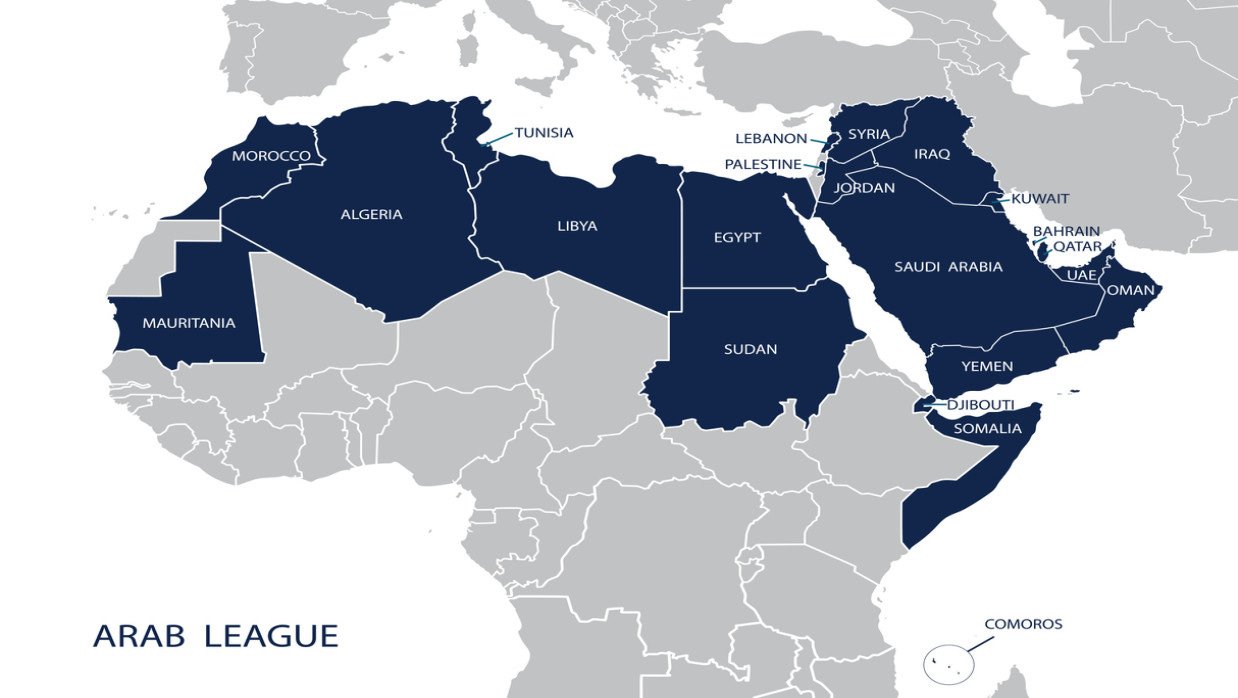
What emerges from this analysis is a Middle East whose power center has shifted decisively from the Mediterranean coast to the Arabian Peninsula, from military dominance to financial leverage, from the logic of permanent war to the logic of managed stability in service of profit. The Gulf states, long dismissed by Western analysts as petro-rentiers with more money than vision, have quietly assembled the tools of twenty-first-century statecraft. Sovereign wealth funds that can move markets and reshape entire sectors. Energy supplies that Beijing, New Delhi, and even a desperate Europe require. Diplomatic networks spanning BRICS, the Shanghai Cooperation Organization, a restored Arab League, offering alternatives to Western-dominated institutions at every level.
Israel, by contrast, finds itself in the historically familiar but politically novel position of a colonial garrison whose empire has moved on. Its debt is rising, its diplomatic isolation deepening, its legal exposure expanding, its strategic value to the powers that created it steadily diminishing. This does not mean Israel will disappear, or even that its military capacity will erode quickly. Empires in decline are often at their most dangerous, lashing out to preserve relevance, fighting wars they can no longer afford because the alternative is admitting obsolescence.
But it does mean the financial and political architecture that sustained the occupation for eight decades is being dismantled by forces larger than any single state can resist. The bond market does not care about historical narratives or biblical claims or the sincerity of anyone’s trauma. It cares about risk-adjusted returns, about the probability of repayment, about whether the underlying asset generates more value than it destroys. And by that measure, the cold, unsentimental measure that governs capital allocation in a world where twelve trillion dollars in sovereign wealth is sloshing around looking for stable returns, the verdict is increasingly clear.
What comes next will be shaped by actors in Riyadh, Abu Dhabi, and Beijing far more than in Washington or Tel Aviv. The Saudis are signing trillion-dollar deals, building cities, hosting global sporting events, positioning themselves as indispensable to both American and Chinese strategic planning. The Emiratis are deploying capital across three continents, mediating conflicts, offering themselves as the Switzerland of the new world order. The Qataris, despite their size, punch above their weight through Al Jazeera’s media reach, massive natural gas reserves, and a willingness to talk to everyone from the Taliban to Hamas to the U.S. State Department.
These are not revolutionary states. They are not interested in upending the global order or redistributing wealth to the global south or any other utopian project. They are interested in preserving their wealth, expanding their influence, and ensuring that when the current American-led order finally buckles under the weight of its own debts and contradictions, they are positioned to thrive in whatever comes next.
For the Palestinians, this offers neither justice nor closure. Recognition achieved as a line item in a trillion-dollar infrastructure deal, as a bargaining chip traded between sovereign wealth managers in air-conditioned conference rooms, is not the liberation that generations fought for in the streets, in the camps, in the long decades of exile and resistance. But it may be the only liberation the current global order is capable of delivering. Not a moral reckoning with the crime of dispossession, but a spreadsheet adjustment in which their oppression is finally priced as too expensive to continue, too destabilizing to the regional investment climate, too risky for the institutional capital that wants to build data centers and desalination plants and luxury resorts along the eastern Mediterranean.
And perhaps that is the final, bitter lesson from a century covering this region, from watching empires rise and fall and reinvent themselves in new configurations of power: that justice rarely arrives because it is right. It arrives, if it arrives at all, when the cost of injustice finally exceeds the profit. When the bond spreads widen, when the capital flees, when the credit agencies downgrade, when the men in the ballrooms in Riyadh decide that a different arrangement would serve their interests better.
The region is being restructured. The bills are coming due. The old guarantees are being quietly withdrawn. And in the air-conditioned offices of Gulf financial capitals, the men who once had to beg for loans from Washington and plead for weapons to defend themselves against neighbors are now deciding which assets to acquire, which partnerships to deepen, which outdated arrangements to let fail. If that represents a form of justice, it is justice refracted through the ledger, cold, transactional, utterly unsentimental.
But after eight decades of blood and accounting, after promises broken and hopes deferred and children buried in the rubble of homes destroyed by weapons stamped with the logos of respectable corporations, it may be the only kind of justice on offer. The question now is not whether the old order can be preserved. The balance sheet says it cannot. The question is what ordinary people across the region, in Palestine and Israel and Egypt and Jordan and Syria and Lebanon, will do when they realize their futures are being traded like any other commodity, by powers who speak the language of sovereignty and national interest but whose only fluent tongue, whose only real loyalty, is to capital and the returns it demands.


