Is It The Sunni Century?
The Bandar Doctrine, Syria's Century, and the Order Being Built
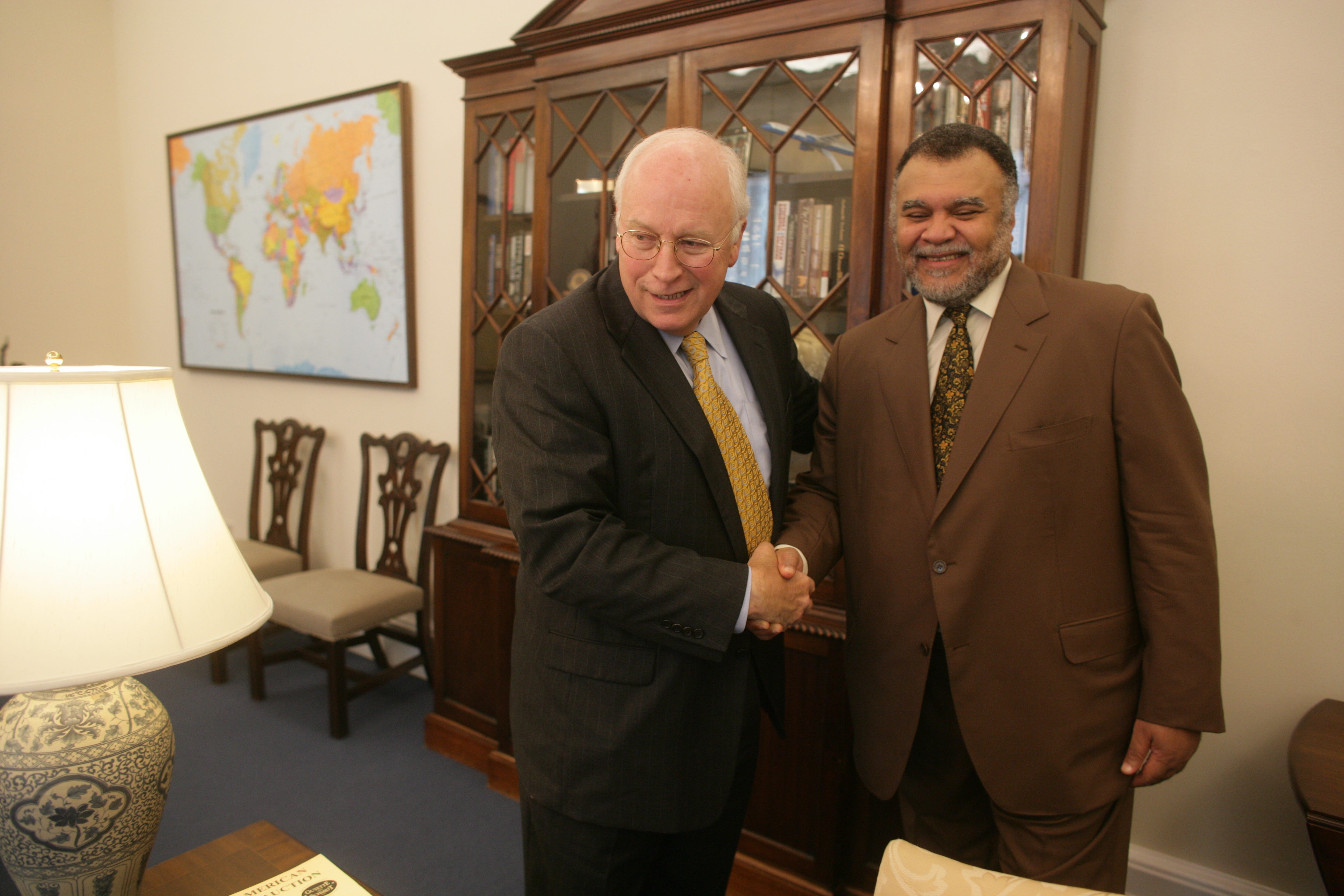
Bandar did not disagree. What he offered instead was a reframe so ambitious that Cheney’s initial response, according to Alastair Crooke’s reconstruction from participants, was scepticism. By the end of the meeting, it had become something closer to elation.
Leave it to me, Bandar said. You don’t have to intervene.
That offer, and what it set in motion across the following eighteen years, is the architecture inside which the Iran war of 2026 is being fought. The foreign ministers of Egypt, Türkiye, Pakistan, and Saudi Arabia convening in Islamabad this weekend are not improvising a ceasefire. They are managing the diplomatic conclusion of a project whose military phase is nearly complete, and whose central prize, Syria, changed hands for the first time in a century in eleven days in December 2024.
The Civilizational Claim
Before the architecture, the claim that justifies it.
Sunni Islam is the majority tradition of Islam by a margin that is not close. Shia Muslims account for roughly ten to fifteen percent of the global Muslim population. The rest practice some form of Sunni Islam, from the Hanafi courts of the Ottoman tradition to the Maliki scholarship of West Africa to the Shafi’i communities of Southeast Asia. The tradition spans fourteen centuries, four major legal schools, and well over a billion people on every inhabited continent.
The Saudi claim to lead this tradition rests on a single non-transferable institutional fact. The Kingdom holds Mecca and Medina. The Haramayn. Every Muslim on earth who prays faces toward one of those cities. The title Khadim al-Haramayn, Custodian of the Two Holy Mosques, belongs to the reigning monarch as an institutional office, not a personal distinction. No oil wealth, military capacity, or diplomatic sophistication replicates what that custodianship confers. Iran does not have it. No other state has it.
What Khomeini constructed in 1979 was not a restoration of classical Islamic governance. The doctrine of wilayat al-faqih, the guardianship of the Islamic jurist, was a specific political invention, contested by leading Shia scholars at the time of its creation. Grand Ayatollah Sistani in Najaf has never accepted it. The Islamic Republic is a constitutional theocracy built on a minority political interpretation within a minority sect, operated by a Persian state that used revolutionary theology as the instrument of a fundamentally nationalist project: the projection of Iranian power westward across Arab lands that did not elect it and did not ask for it.
The Saudi civilizational claim, reduced to its plainest form, is this: the majority tradition of Islam should organize its own regional politics, not be held hostage to a revolutionary minority doctrine imposed by a non-Arab state. The claim is about political order, not communal hostility. Bandar made the arithmetic explicit to Sir Richard Dearlove, head of MI6, in a conversation Patrick Cockburn published in The Independent in July 2014. He said: “The time is not far off in the Middle East, Richard, when it will be literally ‘God help the Shia’. More than a billion Sunnis have simply had enough of them.” The statement was civilizational, not sectarian: a majority announcing its intention to govern itself.
The 2006 Lebanon war exposed what Washington had built. Israel’s campaign against Hezbollah failed to degrade the organization in any meaningful sense. Hezbollah absorbed the assault and emerged with its credibility enlarged across the Arab world, Sunni and Shia alike. In Washington’s post-mortems, the reckoning was grimmer: the Iraq invasion had converted a Sunni-led secular state into an Iranian client. The arc Cheney had described in his opening complaint was now operational geography, not strategic theory.
At the meeting, Bandar did not waste time on diagnosis. Cheney had already delivered it. What Bandar offered was a reframe of the entire strategic logic.
From the 19th century through the Shah, Iran had been the dominant regional power. Chipping away at its influence in one theater accomplished nothing lasting. The correct move was to invert the entire paradigm: isolate Iran, dismantle its Levantine network, and restore the Sunni world to the primacy it had held before colonial-era state construction, Soviet-backed secular nationalism, and Iranian revolutionary patronage disrupted it. As Crooke rendered it in his December 2024 interview with Chris Hedges: “Let’s isolate Iran and make the Sunnis paramount in the Middle East. Give them the primacy.”
Then came the specific promise. Syria, Bandar told Cheney, was the critical node, the geographic and political corridor connecting Iran to Hezbollah. Sever it, and the resistance network lost its spine. He knew what Cheney’s objection would be before Cheney raised it: the Americans could not be seen working with Islamist forces. Congressional exposure, legal liability, the optics of arming the same ideological current that had carried out September 11. Bandar’s answer was precise. None of that would be necessary. Saudi Arabia would provide the money. Saudi Arabia and its Gulf partners would provide the weapons, the logistics, the Islamist networks, and the political management. The United States would not need to send a soldier, authorize a covert action budget, brief a congressional committee, or put its fingerprints on a single weapons shipment. Washington could maintain complete plausible deniability. Saudi Arabia would bear the operational risk, the reputational exposure, and the strategic management of what would look, to the outside world, like an organic Syrian uprising against a brutal secular dictator.
Don’t worry about Syria, Bandar was saying. We will take care of it ourselves. You don’t have to intervene. You just have to not obstruct.
Cheney’s initial scepticism, as Crooke reconstructed it, turned toward enthusiasm as the operational logic became clear. This was the Afghanistan model with a Levantine address: a decade earlier, Saudi Arabia had channeled Islamist movements into a secular Afghan society to bleed the Soviet Union, at American strategic direction but with Saudi operational management, and it had worked. The design had a documented history of success. Bandar was offering to run the same play against Iran’s most critical regional asset.
John Hannah, Cheney’s chief of staff, who was present and later wrote about the exchange, captured what the offer meant to Washington in a single phrase: “Bandar working without reference to US interests is clearly cause for concern. But Bandar working as a partner against a common Iranian enemy is a major strategic asset.” The Saudi king’s own assessment, relayed to Hannah by Bandar separately, framed what Syria’s loss would mean for Tehran: “The King knows that other than the collapse of the Islamic Republic itself, nothing would weaken Iran more than losing Syria.”
The offer was accepted. The terms were precisely as Bandar had stated them. Washington would not intervene. Saudi Arabia would handle it.
Seymour Hersh published the operational framework in the New Yorker in March 2007, citing named former and current American officials. The key players were Cheney, his deputy Elliott Abrams, Zalmay Khalilzad, and Bandar. The clandestine side was guided by Cheney. In Lebanon, the administration had already begun cooperating with Saudi Arabia in covert operations against Hezbollah. In Syria and Iran, separate activity was underway. The blowback risk, that the same Sunni extremist networks being cultivated were killing American soldiers in Iraq, was acknowledged and set aside.
The operational framework crystallized between 2011 and 2013. Qatar hosted the war room and the news room. Al-Jazeera’s Syrian civil war output was an instrument of the same information campaign that Qatari money funded on the ground. Türkiye provided the border and the legitimacy. Bandar, appointed head of Saudi intelligence in July 2012, provided the Islamists and the funding. The Wall Street Journal’s Adam Entous described him that year as jetting between covert command centers near the Syrian front lines, the Elysee Palace, and the Kremlin, carrying different messages to each stop.
On July 31, 2013, Bandar flew to Moscow. He offered Putin a joint Saudi-Russian strategy on oil, safeguards for Russia’s Tartus naval base if Assad fell, and protection for the Sochi Winter Olympics. The protection was the threat. According to the diplomatic account that leaked through the Lebanese newspaper As-Safir and was reported by Ambrose Evans-Pritchard in The Daily Telegraph, Bandar told Putin: “I can give you a guarantee to protect the Winter Olympics. The Chechen groups that threaten the security of the games are controlled by us.” Then: “We use them in the face of the Syrian regime but they will have no role in Syria’s political future.”
Putin named what Bandar had just confessed. “We know that you have supported the Chechen terrorist groups for a decade. That support, which you have frankly talked about just now, is completely incompatible with the common objectives of fighting global terrorism.” He was unmoved. Bandar was removed from his intelligence post in April 2014. The Islamist networks he had assembled fractured and metastasized. ISIS declared its caliphate in June 2014. Russia entered the Syrian war directly in September 2015, and by 2018, Assad controlled most of the country. The subcontract’s first execution had collapsed. The underlying logic of the project held.
To understand what December 2024 was, you have to understand what Syria has been for the entirety of its modern existence, which is a country inside someone else’s orbit. Never its own.
The French Mandate of Syria was declared in 1920, carved out of the collapsed Ottoman territories at San Remo by Britain and France, with Britain taking Palestine and Mesopotamia and France taking Syria and Lebanon. The Syrians had already declared an Arab Kingdom under Faisal bin Hussein in 1920, with Damascus as its capital and independence as its premise. The French army arrived that July, defeated Faisal’s forces at the Battle of Maysalun in a single day, and installed the Mandate. Syria spent the following twenty-six years as a French colonial possession, its borders redrawn, its Levantine coastline separated as Lebanon, its Druze and Alawite communities organized into separate administrative zones by French policy explicitly designed to prevent unified Arab nationalist governance. The French did not leave gracefully. They shelled Damascus in 1945, killing hundreds, in a final assertion of authority as the British pressured them out. Formal independence came in 1946.
What followed was not sovereignty in any stable sense. Syria cycled through coups. Between 1949 and 1963, it experienced more than a dozen changes of government, most by military intervention. The Ba’ath Party, secular Arab nationalist and pan-Arabist in its original formation, seized power definitively in the March 1963 coup. It had Soviet backing, Soviet weapons, and Soviet strategic alignment. The party’s ideology was explicitly anti-imperialist, anti-Western, and opposed to the Gulf monarchies, which it viewed as feudal remnants propped up by Anglo-American oil interests. Syria under the Ba’ath was a Soviet client state in the Cold War architecture of the Middle East.
Hafez al-Assad consolidated personal control in 1970. He was an Alawite, from a heterodox community that practices a form of Islam theologically distant from both Sunni and mainstream Shia tradition, and which accounts for perhaps twelve percent of the Syrian population. The military and intelligence apparatus he built was disproportionately Alawite at its commanding levels. Syria was now a minority-ruled state in a Sunni-majority country, sustained by Soviet patronage externally and by a security apparatus of extraordinary brutality internally. The Hama massacre of 1982, in which Assad’s forces killed between ten and forty thousand people to suppress a Muslim Brotherhood uprising, established the terms of domestic control.
After 1979, the relationship with Iran was strategic logic dressed as solidarity. Two states, one Alawite-ruled, one Persian-Shia, both facing Sunni-majority Arab hostility, both outside the American-aligned Gulf order, found in each other a durable alliance. Iran financed Hezbollah through Syrian territory. Syria provided the geographic corridor without which the resistance network could not function. The arrangement survived the Cold War’s end, survived Soviet collapse, survived Hafez’s death in 2000 and Bashar’s inheritance of the state, survived the Iraq war and the Arab Spring. It survived everything, including the first wave of Bandar’s project between 2011 and 2015, because Russia intervened to sustain it.
In eleven days in December 2024, Hayat Tahrir al-Sham ended it.
Assad fled to Moscow. The Ba’ath state ended. For the first time since the French Mandate was declared in 1920, Syria exited every external orbit it had inhabited: the French colonial one, the Soviet-then-Russian one, the Iranian one. The Alawite security state that had ruled a Sunni-majority country for fifty-four years collapsed. Syria, for the first time in its modern history, came under the effective influence of a Sunni, broadly Gulf-aligned political order.
This is not a routine change of government. It is the single most significant geopolitical reorientation in the Arab world since the Iranian revolution of 1979, and it runs in the opposite direction.
Western analysis misreads the Sunni primacy project as sectarianism. The distinction matters and should be made directly. Sectarianism targets a religious community for its identity. What Saudi Arabia has built is a geopolitical project with a civilizational claim: a revolutionary minority state, operating on Persian nationalist objectives dressed in Shia political theology, imposed itself on Arab populations across the Levant, and the majority order of the Islamic world has the right and the capacity to restore its natural precedence.
The strategic logic beneath the claim is where the project’s real ambition lives.
Saudi Arabia’s oil-for-security bargain with the United States, struck in 1945 and maintained through every subsequent American administration, has always been asymmetric. The Kingdom provides the oil and the regional stability. Washington provides the military umbrella. The Kingdom has never negotiated from equal footing, because it has never assembled the bloc-level weight that equal footing requires.
The quadrilateral now meeting in Islamabad changes that arithmetic. Egypt fields the largest army in the Arab world, 440,000 active personnel, controlling the Suez Canal and Red Sea access. Türkiye is NATO’s second-largest standing military, with demonstrated combat experience in Syria, Libya, and Azerbaijan, a defense industry exporting armed drones and fifth-generation program participation at scale, and bilateral trade with Saudi Arabia that reached eight billion dollars in 2025 with thirty billion in completed construction contracts. Pakistan is a nuclear-armed state with the world’s sixth-largest army. Saudi Arabia and the UAE together hold sovereign wealth funds whose combined scale the United States Treasury market periodically depends on for stability. Combined, this bloc represents hundreds of millions of people, energy reserves that underwrite the global industrial economy, and military capacity that no single regional power can match without American support.
The endgame the 2006 Bandar offer was always building toward: once the Sunni order is established, once Iran is contained or incorporated, and once the Russia-China axis has been denied its regional foothold, this bloc negotiates with Washington on terms that reflect actual leverage. Not individual states cutting bilateral deals from weakness. A coherent regional formation controlling the energy, the waterways, and the diplomatic ground on which any lasting settlement of the Middle East must eventually be reached. The graduation from client relationship to partner.
What the Gulf monarchies have understood, and what the Islamabad meeting makes operational, is that a Sunni regional order wealthy enough, armed enough, and populous enough to manage its own security can dictate terms with Washington rather than receive them. The US-Saudi relationship does not end. It is renegotiated from a position of bloc strength, which is what the 1945 bargain never allowed.
The Islamabad meeting is not a ceasefire negotiation in the conventional sense. It is a surrender framework with a restructured orbit offer inside it.
The framework being relayed to Tehran through Pakistan’s mediation includes the familiar American demands: dismantlement of the nuclear program, curbs on the missile arsenal, effective cession of Strait of Hormuz oversight. Iran has called these one-sided. That is the public position.
What Egypt, Türkiye, Pakistan, and Saudi Arabia are collectively communicating is not only American pressure. They are describing a path. The Axis of Resistance is gone. The Syria corridor is severed. Hezbollah is degraded. The Houthis are isolated. The Iraqi militias are under sustained pressure. The Russia-China backing Tehran counted on has provided diplomatic cover but not military protection. China needs Gulf oil more than it needs Iranian alignment. Russia is managing its own war and could not stop a single American or Israeli strike on Iranian territory.
The path is reintegration: not into the American imperial order as a client, but into a Sunni-led, regionally managed order that itself holds considerable leverage with Washington. The terms: sever the Russia-China strategic alignment, accept the regional security framework, and bring Iran’s demographic weight, educated population, and civilizational depth into a bloc that then negotiates collectively with the West. Türkiye’s Foreign Minister Hakan Fidan framed the broader logic at an Istanbul conference this weekend: the world’s new polycentric system requires a solution to guarding vital energy and trade routes. The solution is regional management by states that have standing.
Iran built its foreign policy on a revolutionary doctrine positioning the Islamic Republic as the vanguard of Muslim resistance against Western imperialism. The doctrine produced a deterrence network that made any attack expensive: Hezbollah, Hamas, the Houthis, the Iraqi paramilitaries. By February 2026, every component had been systematically dismantled. The deterrence model had exhausted itself. What Iran is being offered is the alternative model: stability and regional belonging in an order that has the collective weight to negotiate with Washington rather than absorb its pressure.
Whether the IRGC, which Egyptian intelligence opened a direct channel to this week, can accept terms that dismantle the revolutionary doctrine the institution was built to defend is the genuinely open question. The nuclear program is tradeable in principle. The doctrine that justified its existence is not so easily surrendered, because surrendering it is surrendering the regime’s account of itself.
Conclusion
In late 2006, Bandar told Cheney that the regional order could be inverted, that Washington would not need to get involved, and that Saudi Arabia would take care of Syria. For eighteen years, Washington held to those terms. No American ground troops entered Syria in any declared capacity. The congressional committees were never briefed on the full scope of Gulf-managed Islamist networks. Plausible deniability was maintained. The subcontract ran.
Washington is now involved completely, its aircraft flying strike packages over Iran from Gulf bases, its diplomats relaying fifteen-point proposals through Pakistani intermediaries, its president insisting talks are going very well while Tehran insists there are no talks. The promise lasted exactly as long as the proxy architecture held. When the architecture collapsed, when the deterrence network was dismantled and Iran’s nuclear program crossed thresholds that could no longer be managed by subcontractors, Washington did what Bandar had promised it would never need to do.
The Sunni order has been assembled regardless. Syria sits inside it for the first time since 1920. The original subcontract was for one service: remove Iran from Syria. The service was delivered, by different contractors, eighteen years late. What the contract never included, because it required a full American war to force it, is the larger negotiation now underway in Islamabad: Iran itself, stripped of its revolutionary doctrine, cut from Moscow and Beijing, and offered entry into the order that has replaced the one it built.