Is The Ceasefire Just A Pause Button?
What America’s Iran Ceasefire Actually Bought
We don’t know, but we sure do hope it sticks.
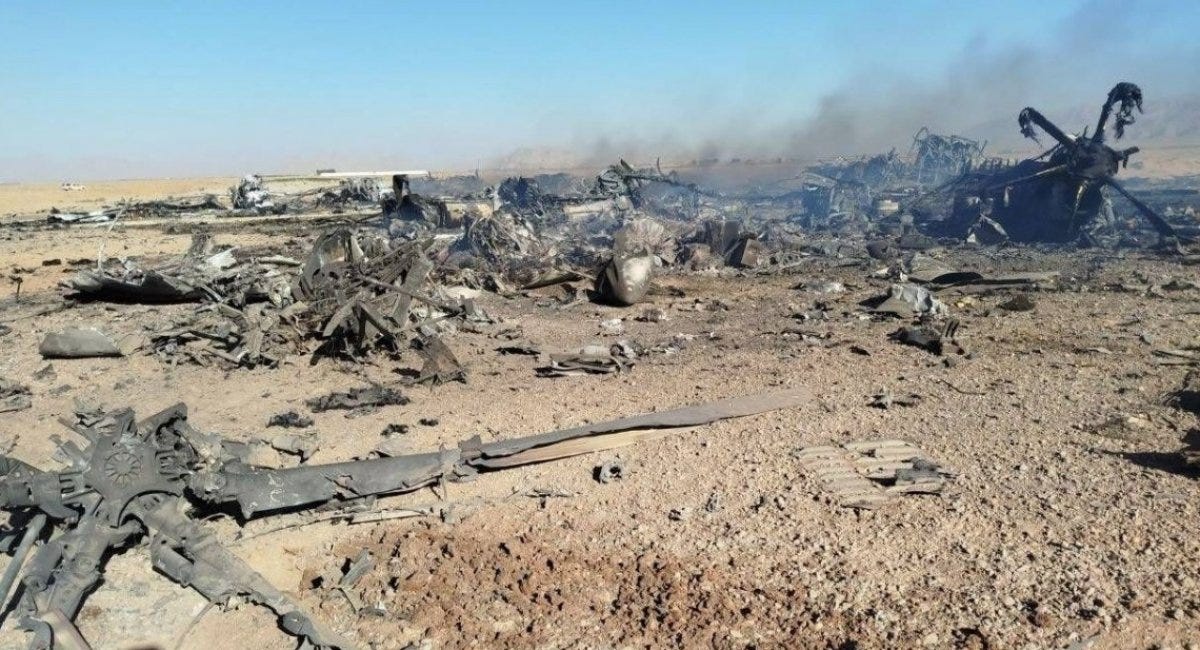
The photograph circulated on Iranian state media on the morning of April 5 without a caption explaining what it meant. It showed the blackened skeleton of an MC-130J Commando II, a long-range special operations transport aircraft, sitting on a strip of dirt that satellite imagery would later confirm was an abandoned agricultural runway in southern Isfahan province. The blades were gone. What remained were the roots of the propeller assembly, the carbon-fiber spars melted rather than bent, which is what happens when carbon resin burns rather than when metal fails from impact. Near the aircraft, recognizable from the tail boom configuration, were the remains of at least one AH-6 Little Bird helicopter, the kind flown exclusively by the 160th Special Operations Aviation Regiment, the unit informally known as the Night Stalkers. The US military said the aircraft had gotten stuck. It said this several days later, at a press conference, with the kind of precision that comes from having practiced the answer.
The official account of what happened in southern Isfahan between April 3 and April 5 is, in the broadest strokes, factual. An F-15E Strike Eagle from the 494th Fighter Squadron, based at RAF Lakenheath in England, was brought down over Iran on April 3. Both crew members ejected and separated on descent. The pilot was recovered within hours. The weapons systems officer, who held the rank of colonel, hid on a mountainside in the Zagros range for more than a day while the United States launched one of the largest search-and-rescue operations in its military history: 155 aircraft, four bombers, 64 fighters, 48 refueling tankers, and 339 munitions expended over fifty hours of operations. Two C-130s were destroyed on Iranian soil. Four MH-6 and AH-6 helicopters were destroyed. A FARP, a forward arming and refueling point, was established on an abandoned airstrip and then abandoned in turn, its equipment burned rather than recovered.
The colonel was pulled out alive. Trump posted about it before dawn on a Sunday, calling it “one of the most daring Search and Rescue Operations in U.S. History.” He called the airman an Easter miracle.
None of that is in dispute. What is in dispute is whether the rescue was the mission, or whether it was the thing the mission became when the original objective failed.
The FARP that US forces established and burned was geolocated by open-source analysts within hours of the first imagery appearing. It sat, as The War Zone confirmed, about 35 kilometers from the tunnel complex at the Isfahan Nuclear Technology Center, where the International Atomic Energy Agency had confirmed, in a report circulated to member states in February, that Iran stores the bulk of its stockpile of uranium enriched to 60-percent purity. IAEA Director General Rafael Grossi, speaking to the AP earlier this year, said he believed “a little bit more than 200 kilograms” of that material remained in Isfahan’s tunnels. The total Iranian stockpile, as of the agency’s last confirmed inspection in June 2025, stood at 440.9 kilograms, enriched to up to 60 percent, a short technical step from the 90-percent threshold required for a nuclear weapon. That quantity, if further enriched, is enough for approximately ten warheads. The tunnel complex itself, Grossi added, appeared largely undamaged despite repeated US-Israeli strikes on surrounding facilities. “The widespread assumption is that the material is still there,” he said.
This was not obscure information. It had been reported by Reuters, Al Jazeera, Foreign Policy, and the Bulletin of the Atomic Scientists before the F-15E went down. On April 1, two days before the shootdown, US outlets reported that the Trump administration was actively developing a special forces plan to seize approximately 1,000 pounds of highly enriched uranium from the Isfahan complex. On March 19, Director of National Intelligence Tulsi Gabbard had told a House hearing that the US intelligence community had “high confidence” that it knew the locations of Iran’s HEU stockpiles. On March 29, Trump had said in a briefing room aside: “They’re going to give us the nuclear dust. If they don’t do that, they’re not going to have a country.”
The sequence matters. The plan was reported before the F-15E was shot down. The FARP was established in the area designated, in planning documents the administration had not denied existed, as the insertion corridor for that plan. The unit that ran the rescue, according to retired special operations officer Anthony Aguilar, who flew MC-130Js in combat and analyzed the wreckage publicly on April 6, was far larger than any single-airman rescue requires. One hundred operators, Aguilar argued, fits a dual objective. Former CIA analyst Larry C. Johnson, writing that same weekend, concluded that the JSOC unit had almost certainly been pre-positioned for an Isfahan raid before the F-15E shootdown, and that the airman’s location, northwest of the FARP, allowed the same unit to fold a rescue into an operation they were already staged for. “Their familiarity with the area, based on their prior planning for the Isfahan raid, resulted in them being tasked to recover the WSO in lieu of the designated CSAR unit,” Johnson wrote.
The United States has not confirmed a secondary objective. The Iranian government has stated, loudly and specifically, the opposite. Iran’s foreign ministry spokesperson Esmail Baghaei said on April 6: “The possibility that this was a deception operation to steal enriched uranium should not be ignored at all,” noting that the claimed location of the airman was “a long way” from the locations of the attempted US landings. Iranian state television’s Press TV, citing high-level sources, described the mission as “a failed attempt to infiltrate nuclear facilities” in which US forces were ambushed, trapped, and forced into a chaotic extraction that required the deliberate destruction of aircraft and intelligence materials left behind. Iran framed the episode as “Tabas II,” invoking the 1980 failure of Operation Eagle Claw, the hostage rescue attempt that ended in the desert when a C-130 and a helicopter collided, killing eight Americans.
Former NATO Supreme Allied Commander James Stavridis had called a potential uranium seizure operation, if it were ever attempted, “the largest special operations mission in history.” The operation launched over the weekend of April 4 to 5 was, by any contemporary measure, extraordinarily large.
Greg Bagwell, a former senior RAF commander now serving as a fellow at the Royal United Services Institute in London, noted on April 5 that the choice of MC-130J aircraft for the insertion was itself anomalous. The MC-130J is a cargo-capable special operations platform, larger and slower than the helicopters typically used for a downed-airman rescue. Its capacity for carrying equipment, fuel bladders, and sensitive cargo has made it central to Tehran’s counter-narrative. Bagwell, who was not advancing the uranium-theft thesis, said the aircraft selection suggested the operation had requirements beyond what a standard combat search-and-rescue package would demand.
The burned propellers. The colonel’s rank. The 155 aircraft. The pre-positioned JSOC unit. The FARP 35 kilometers from the most significant undamaged uranium storage site in the Iranian nuclear complex. Each of these facts is documented. What they add up to is the question Washington has declined to answer.
On March 1, two days after Operation Epic Fury began, loud explosions were reported near Erbil International Airport in Iraqi Kurdistan, which hosts US-led coalition forces. The Islamic Resistance in Iraq, an umbrella coalition of Iranian-backed militias that includes Kataib Hezbollah and Asaib Ahl al-Haq, claimed 67 drone and missile attacks on US forces in Iraq and the region during the first three days of the war alone. These groups have been operationalized by Iran as it takes battlefield losses in a pattern that predates this conflict. Kataib Hezbollah had killed three American soldiers at Tower 22 in Jordan in 2024 with a single drone strike.
The US had drawn down its exposed positions across much of Iraq between 2019 and early 2026, consolidating forces in the Kurdistan region. That calculated withdrawal left a thinner but still substantial American presence in exactly the territory where Iranian-backed militias had the deepest networks and the clearest lines of fire. The Islamic Resistance targeted Harir base and Erbil airport repeatedly after February 28. Impact on US forces was reported as limited, but the geometry of the deployment, with US ground personnel dispersed across positions that Iranian proxy networks had spent years mapping, created a vulnerability that air superiority could not resolve. You cannot bomb your way out of a siege if the siege is made of men with shoulder-fired missiles and drone operators who know the terrain.
This was the operational picture Washington was managing when it sought a ceasefire. It was not the picture being described at the daily CENTCOM briefings.
The ceasefire announced on April 7 carries the names of Pakistani Prime Minister Shehbaz Sharif and Chief of Defense General Asim Munir, both cited by Trump in his Truth Social post. Sharif’s language, posted minutes after Trump’s, was diplomatic to the point of architecture: “Both parties have displayed remarkable wisdom and understanding and have remained constructively engaged in furthering the cause of peace and stability.”
The framing of Pakistan as an independent diplomatic actor in this story is, in the most generous reading, incomplete. Islamabad did not arrive at this role through its own strategic initiative. It was handed the torch by Washington and asked to carry it because Washington had run out of carriers willing to hold it.
The reasons Pakistan was the only available option are structural and not flattering to anyone in the room. The Gulf states that host American bases, which had blocked US military base and airspace access in late January over fears of Iranian retaliation, were not going to front a ceasefire negotiation that made them look like Washington’s errand boys to their own populations. Turkey’s relationship with the conflict was too complicated, Egypt too peripheral to Tehran, and no Arab state was positioned to invoke the kind of fraternal address that Iran’s Foreign Minister Abbas Araghchi used when he thanked Sharif and Munir in his ceasefire confirmation: “my dear brothers.” That language was not diplomatic formality. It was a signal about which channel Tehran was willing to use, and why.
Pakistan’s qualifications for the role were geographic and cultural before they were political. Pakistan shares a 1,700-kilometer border with Iran, the longest international border either country maintains. Its Shia Muslim population, estimated at between fifteen and twenty percent of the country, meaning somewhere between thirty and forty million people, treated Khamenei’s death on February 28 as a civilizational event. Protests erupted in Karachi and across the north the same day the war began, leaving at least 22 dead. That domestic pressure gave Islamabad an interest in ending the conflict that was not purely transactional. The relationship between Pakistan and Iran is old enough, and troubled enough, that the sentimental framing carries real weight in Tehran’s calculus, even when the politics that produce it are managed entirely from Washington.
The US proposal was delivered through Pakistan. The 15-point plan reached Tehran via Islamabad. When the plan was rejected, it was Pakistan that reformulated and resubmitted. When Trump’s deadline approached on the evening of April 7, it was Sharif who made the public appeal for a two-week extension less than five hours before the bombing of Iranian power plants was to begin, and it was that appeal, framed as a brotherly request, that gave both sides the surface they needed to step onto. Trump’s Truth Social post announcing the ceasefire said he was suspending the bombing “based on conversations with Prime Minister Shehbaz Sharif and Field Marshal Asim Munir, of Pakistan, and wherein they requested that I hold off.” He did not say he had accepted a Pakistani proposal. He said he honored a Pakistani request. The distinction is the accurate one.
China’s role ran through the same logic, but operated at a different register. Pakistan’s Foreign Minister Ishaq Dar traveled to Beijing, with a hairline fracture in his foot, in the week before the ceasefire, and the joint China-Pakistan five-point initiative that emerged from that visit was shared with Iran, the US, and regional stakeholders. Chinese social media amplified Islamabad’s ceasefire announcement. Beijing conveyed support to Tehran for Pakistan’s mediation and encouraged Iran to engage with the diplomatic process. None of this was Beijing acting on its own strategic judgment about the war’s resolution. China was requested to coordinate, and it did so in a way that protected its own core interests, which are financial and energy-contractual before they are geopolitical. With the Strait closed, Chinese vessels were transiting Hormuz only through contingency arrangements. The war was costing Beijing in ways it could not sustain indefinitely, and backing Pakistan’s ceasefire framework cost it very little. China pushed gently. Iran felt the push. Pakistan delivered the envelope. Washington wrote what was inside it.
The formal negotiating architecture heading into the Islamabad talks on April 10 contains a gap that is structural, not rhetorical. The US 15-point plan, delivered to Tehran via Pakistan in late March, included a 30-day ceasefire, the dismantling of Iran’s nuclear facilities at Natanz, Isfahan, and Fordow, permanent commitment to no nuclear weapons, immediate transfer of all uranium stockpiles, complete IAEA monitoring, a regional enrichment consortium under external supervision, and the reopening of the Strait of Hormuz. Iran’s foreign ministry spokesperson described the plan as “extremely maximalist and unreasonable.”
Iran’s 10-point counter-proposal, published in detail by Nour News, the outlet affiliated with the Supreme National Security Council, includes guaranteed non-aggression from the US, continued Iranian control over the Strait of Hormuz, acceptance of Iran’s enrichment rights, removal of all secondary sanctions, an end to all UN Security Council resolutions targeting Iran, and the ending of all IAEA resolutions on Iran’s nuclear program. The US has not accepted these terms. It acknowledged the 10-point plan as a “workable basis on which to negotiate,” which is a different thing. Iranian FM Abbas Araghchi said both the 10-point and 15-point plans would form the “basis” of Islamabad discussions, meaning neither has been accepted and the next two weeks are a space for movement, not a settlement.
Iran’s Supreme National Security Council described the ceasefire as an “enduring defeat” for Washington. Trump described it as “total and complete victory.” Those two statements are not contradictory. Both sides needed the pause. Both are describing it through the language of advantage because each has a domestic audience to manage before Islamabad.
The enrichment question is where the architecture of any permanent settlement breaks down. The US position, confirmed by a senior Israeli official speaking to reporters, requires the removal of enriched uranium from Iran, an end to further enrichment, and the elimination of Iran’s ballistic missile capabilities. Iran’s position, stated by Araghchi in a March 15 CBS interview, is that diluting or down-blending the enriched uranium is a possible concession, but enrichment rights as a principle are not negotiable. Between those two positions sits approximately 440 kilograms of material that the IAEA has not been able to inspect since June of last year, stored in tunnels under a city of two million people, that a JSOC unit may or may not have attempted to extract using an airstrip in a wheat field 35 kilometers away.
At least 1,497 people have been killed since February 28, including 57 health workers. The figures cover only what has been counted and confirmed. They do not cover what has not been reported from the thirty-one Iranian provinces struck during forty days of bombardment, or the full human cost across Lebanon, where Israeli strikes continued on Wednesday morning with fresh evacuation orders for parts of Beirut and the country’s south. More than one million displaced Lebanese who had prepared to go home were told by their own authorities to stay where they were.
The Islamabad talks are now confirmed for April 10. Iran’s delegation will be led by Speaker of Parliament Mohammad Bagher Ghalibaf, who has taken on strategic responsibilities since the early phase of the conflict. The United States delegation will be headed by Vice President JD Vance. That pairing tells you something about how each side is positioning itself. Ghalibaf is not a diplomat. He is a former IRGC commander and former mayor of Tehran, a figure whose presence signals that the Iranian side is not sending a foreign ministry technocrat to manage atmospherics. Vance is not a diplomat in the conventional sense either. He is a political actor with a domestic audience and a known preference for ending the conflict, which is precisely why CNN, quoting regional sources, said Iran viewed him as more sympathetic to a settlement than others in the administration.
The gap between the two delegations’ opening positions is not narrow. Iran’s 10-point proposal includes the withdrawal of all US combat forces from Middle East bases, full compensation for war damages, and the ratification of any final agreement in a binding UN Security Council resolution. The US position, confirmed through a senior Israeli official, requires the removal of enriched uranium from Iran, an end to further enrichment, and the elimination of Iran’s ballistic missile capabilities. Those two positions are not the opening stages of a negotiation. They are the announcement of what each side believes it has earned. The Islamabad talks will determine how far that gap can close before the arithmetic of fourteen days runs out.
Iranian officials have been reported to enter the Islamabad talks with “complete distrust” toward the American side, reflecting a scepticism about Washington’s intentions that was formed, in part, by the fact that the US launched its attack on February 28 while nuclear negotiations were still in progress. That history sits in the room regardless of who is sent to manage it.
The markets have registered the pause. International oil fell 13 percent on the ceasefire announcement. S&P 500 futures opened up more than two percent. Markets are the most reliable barometer of what a ceasefire is actually designed to produce, which is not peace but stability: the restoration of the conditions under which capital can move and plan. Two weeks is exactly the interval required to demonstrate that those conditions exist, without committing to anything that would require a concession neither government is yet prepared to make.
What happened in those mountains above Isfahan, in the hours between when the C-130s landed and when they burned, is the question that neither government wants asked at the negotiating table in Islamabad. It will be there anyway. The tunnels are still sealed. The uranium is still in them. The IAEA has not been allowed inside since June of last year. And the airstrip in the wheat field, thirty-five kilometers from the complex, is still visible in the satellite imagery that anyone with a laptop can pull up.
The best outcome from Islamabad is a war that does not resume. Whether that outcome is within reach depends on who controls what is in those tunnels, and who is willing to accept not knowing.


