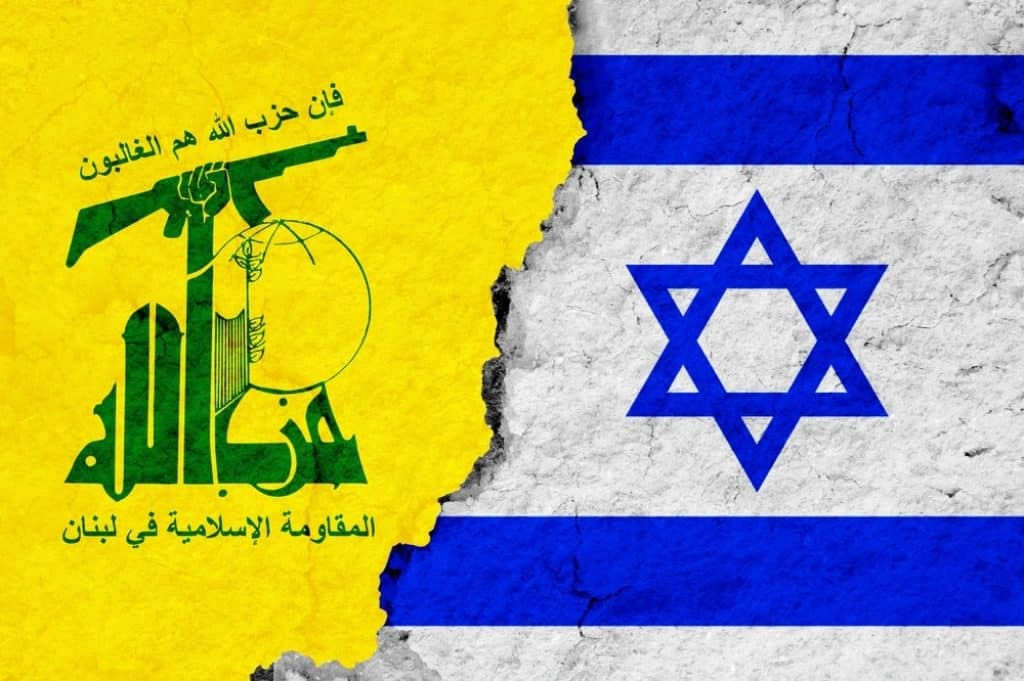
Islamic Resistance in Lebanon
Israel killed Hezbollah's leader, his successor, and most of his command. Sixteen months later, the fight is still on.
Israel did everything right and yet …
In September 2024, it detonated thousands of Hezbollah pagers simultaneously across Lebanon, blinding the organization’s communications in a single afternoon. Days later, 83 bunker-busting bombs fell on a single address in Dahiyeh. Hassan Nasrallah, Hezbollah’s secretary-general for 32 years, died sixty feet underground. His likely successor, Hashem Safi al-Din, was killed days later. The chief of staff, Fuad Shukr, was already dead. The Southern Front commander, Ali Karaki, was already dead. Most of the second-tier military leadership was gone. The Israel Institute for National Security Studies assessed that the IDF had destroyed 80 percent of Hezbollah’s firepower. The group counted 5,000 dead and 13,000 wounded. Its headquarters was a crater. Its finances were gutted. By November 2024, it accepted a ceasefire.
Every intelligence service in the world agreed: Hezbollah had been broken.
On February 28, 2026, the United States and Israel killed Ali Khamenei in the opening minutes of Operation Epic Fury. For the Shia world, this was not a military event. Khamenei was the Wali al-Faqih, the guardian jurist whose religious authority gave Hezbollah’s entire resistance project its legitimacy. His death was a theological rupture that no political calculation inside Hezbollah was going to absorb quietly. Three days later, on March 2, the group fired its first missiles at Israel since the ceasefire. Senior official Mahmoud Qmati announced the era of patience had ended.
What followed surprised everyone who had believed the 2024 assessment.
In six days, Hezbollah has fired over 210 projectiles into Israel, launched drone swarms at Ramat David airbase, struck toward Haifa and the Golan Heights, and forced evacuation orders on northern Israeli cities. On the ground in the eastern Bekaa Valley, its fighters engaged Israeli commandos at close range in Nabi Chit on the night of March 6, forcing the IDF to call in forty airstrikes to extract the unit. Lebanon’s health ministry counted 41 dead when the bombardment ended. Israel required forty airstrikes to leave a town it had just entered.
The IDF has not launched a ground invasion. Its Northern Command said it would not, not yet. The 2,000-strong Radwan Force, Hezbollah’s elite commando unit, is intact in Beirut. The precision-guided missile inventory has not been touched. The 210 projectiles fired since Monday are not a war effort. They are a demonstration.
The organization that absorbed the most sophisticated decapitation campaign in the history of modern warfare came back because it was built to. Hezbollah spent forty years constructing distributed command, compartmentalized logistics, and local operational authority specifically because it knew Israel would keep killing the top. When the top was gone, the middle held. When the ceasefire came, a younger, secret military structure rebuilt from below, documented by French and Israeli intelligence alike, while Lebanon’s government announced disarmament and the Lebanese army claimed control of the south.
Neither claim survived March 2.
Israel has now conducted 250 airstrikes in six days on a military it declared destroyed sixteen months ago. The United States rushed 12,000 bombs to replenish Israeli stocks this week, bypassing congressional review. The supply lines are open. So are Hezbollah’s.


