


Seventeen days before Brazilians finished choosing their president, Benjamin Netanyahu telephoned the candidate he wanted to deal with afterward. Flávio Bolsonaro, the senator and eldest son of former President Jair Bolsonaro, had finished ahead of Luiz Inácio Lula da Silva in the first round, and Netanyahu congratulated him and invited him to Israel; Flávio returned the invitation. According to the Israeli prime minister’s office, Eduardo Bolsonaro, the brother who had spent months cultivating American pressure against Brazil’s judiciary, was also on the call. The statement spoke of renewing the countries’ “deep friendship” within a broader improvement in Israel’s relations with South America, a reconciliation that still required Lula’s defeat.
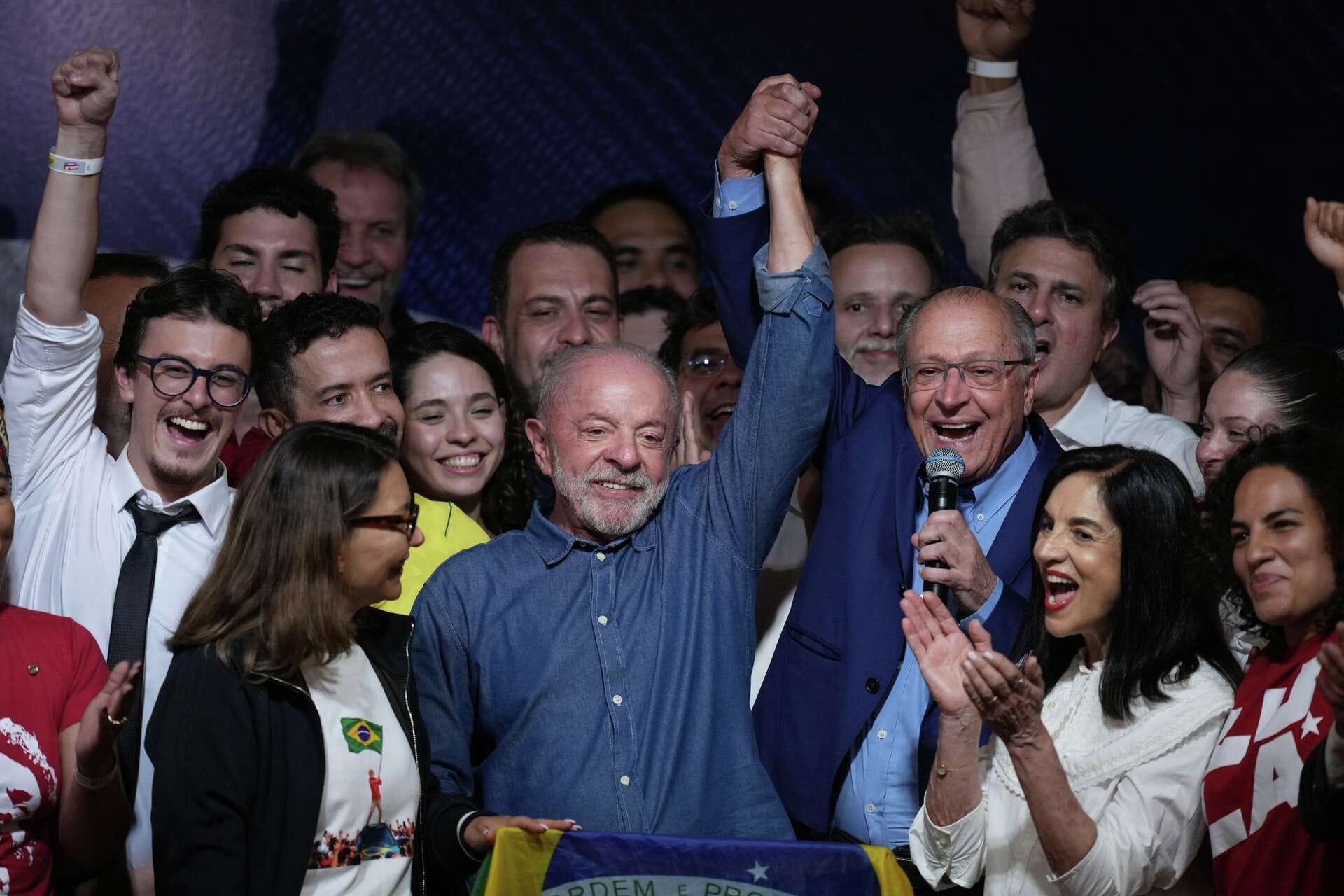
Brazilian voters withheld that condition on Sunday. Lula took 51.79% of the valid vote to Flávio’s 48.21%, winning a fourth presidential term after trailing in the first round.
The result denied the Bolsonaro family its return to the presidency and interrupted expectations in Washington and Jerusalem that Brazil would soon become a more agreeable partner. Flávio refused to recognize the outcome and sought its annulment, so the foreign governments anticipating a change of administration would have to wait. Lula had built much of his campaign around the connection between those foreign expectations and Brazilian political freedom, and on the eve of the vote his argument acquired unusual documentary force. Reuters published an investigation into a campaign inside the United States State Department to restore the Bolsonaro family to power, in which ten current and former American officials with direct knowledge described efforts to weaken Lula, protect the family’s political position and deploy sanctions in its favour. What might have stayed campaign rhetoric now had named officials and an institutional history behind it.
In his victory speech, Lula said Brazil would not accept being anyone’s backyard. The phrase belongs to an old Latin American vocabulary, and this year it had specific referents: American tariffs on Brazilian trade, American sanctions on members of its judiciary, and a Brazilian political family that had encouraged both and presented its relationship with Washington as an asset. The election had become, among other things, an argument over who could enlist a foreign government against domestic institutions and still claim to speak for the nation.
The Family’s Washington Office
Darren Beattie, a senior adviser overseeing Brazil policy, and Ricardo Pita, another senior adviser later promoted to deputy assistant secretary for North America, stand at the centre of the Reuters investigation. According to three people familiar with their instructions, the two told American diplomats in Brazil that restoring Jair Bolsonaro to the presidency was United States policy, and when the former president received a twenty-seven-year prison sentence in September 2025 for plotting to overturn his 2022 defeat, their support shifted to Flávio. Embassy staff were told not to interact with other conservative contenders who could compete with him. An administration concerned with Brazil’s political direction had ample reason to cultivate its conservative opposition, but avoiding alternative conservatives narrowed American diplomacy to protecting one family’s claim to lead it, and the operation went beyond a preference for a government of the right to deciding which faction of the right would benefit. Reuters could not establish how far Beattie and Pita acted on instructions from Donald Trump or Secretary of State Marco Rubio, so the reporting establishes the campaign without settling every question about its command.
Tommy Pigott, the State Department’s spokesman, sidestepped the specific allegations, defending American actions against drug traffickers and in support of free speech and adding that Brazilians had the right to choose their leaders through free and fair elections. The White House referred questions to the department. Orna Blum, who had led the department’s Brazil and Southern Cone office before retiring in opposition to the administration, was more exact. Washington could pursue its economic and strategic interests, she told Reuters, but using foreign-policy instruments to pressure another democracy over the legal fate of a political ally crossed into intervention.
Eduardo Bolsonaro, the effort’s Brazilian participant, visited Beattie at the State Department around April 2025, according to two former American officials, while pressing Washington to sanction Alexandre de Moraes, the Supreme Court justice leading criminal investigations into his father. Beattie then appealed to the Treasury Department’s Office of Foreign Assets Control for sanctions under the Global Magnitsky framework, and Washington announced them in July, citing accusations that Moraes had violated free-speech rights. A law written to punish foreign human-rights abusers and the corrupt had entered Brazil’s dispute over the prosecution of a former president. Moraes defended his actions as necessary to counter false information undermining democratic institutions, while the Bolsonaro family called the proceedings persecution, and the American government adopted the family’s account as grounds for punishment. Eduardo had found a foreign jurisdiction capable of imposing consequences on a Brazilian judge whom his family could not control at home.
Washington went on to announce visa revocations affecting eight Supreme Court justices and tariffs of 50% on Brazilian goods, citing the “persecution” of Jair Bolsonaro. Reuters could not determine Beattie’s or Pita’s role in those measures, whose reach went well beyond the legal dispute used to justify them; exporters, businesses and workers with no authority over the former president’s prosecution paid for its continuation.
Eduardo called the tariffs “bitter medicine.” The Brazilian economy would swallow it, and the recovery it promised concerned his father’s political future.
Lula accused the family of subordinating national interests to American ones, and Washington had handed an incumbent facing substantial domestic dissatisfaction an opposition willing to defend foreign punishment of its own country. Brazilian and American businesses dependent on bilateral trade, including the meatpacking group JBS, pushed back alongside the government, and the tariffs were watered down. Analysts interviewed by Reuters said the pressure had helped Lula’s polling while failing to stop Jair Bolsonaro’s prosecution, and Moraes was removed from the American sanctions list in December 2025 without an official Treasury explanation.
Security With Conditions
Rubio blamed Lula’s government for failing to negotiate in good faith when Washington imposed new tariffs of 25% in July 2026, the Christian Science Monitor reported. Trump stopped short of formally endorsing Flávio, though after the first round he called the senator’s performance a “very, very big victory.” After the sanctions campaign, the family’s lobbying and the public praise, the administration’s sympathies required little interpretation, and a formal endorsement would have added only ceremony.
The Bolsonaro family also pressed Washington to designate Brazil’s two principal criminal organizations, Primeiro Comando da Capital and Comando Vermelho, as foreign terrorist organizations, carrying Flávio’s strongest domestic issue abroad. Pita pursued the proposal with American sanctions officials, according to Reuters, and in May 2026 Flávio met Beattie and Deputy Secretary of State Christopher Landau in Washington to urge the designations, which the State Department announced the following day. Reuters could not determine the two advisers’ precise influence over that decision, but its value to the senator was plain. Flávio campaigned on an aggressive response to violent crime, while Lula confronted the perception that the left lacked resolve on public security, and the designations gave Flávio an external endorsement of his diagnosis. Lula’s government warned that placing Brazilian gangs inside Washington’s counterterrorism framework could open a route toward direct American intervention on Brazilian territory. That remained a warning about the measure’s potential use rather than an established consequence, yet it brought sovereignty into a subject ordinarily fought over through policing, punishment and public fear.
Flávio finished the first round more than 2.2 million votes ahead of Lula, and nearly half the electorate backed him in the runoff. Their anxiety about crime did not originate in Washington, and neither did their frustration over prices, corruption or the failures of established politics. Those voters supplied the domestic strength to which foreign governments attached themselves, and an account that treats them as instruments of American influence would miss the political movement that made the intervention worth attempting. pbs
Flávio also told an American conservative audience that Brazil could help end United States dependence on Chinese critical minerals, according to the Christian Science Monitor, an offer made about a country whose largest trading partner is China. American support promised Flávio an advantage at home; a Flávio presidency promised Washington a different Brazilian posture abroad.
Netanyahu’s Invitation
Netanyahu’s office announced the congratulatory call, the invitations and the intention to restore close relations, a public form of support different in method from the American campaign Reuters documented. What Flávio offered in return was concrete. Ynet reported that he promised to move Brazil’s embassy from Tel Aviv to Jerusalem, deepen military and diplomatic cooperation and receive the credentials of a new Israeli ambassador on his first day in office. The record shows an announced call, promised diplomatic rewards and a shared preference for Lula’s defeat; it shows no covert financing and no coordinated American-Israeli command. Netanyahu’s interest went beyond ideological companionship, because the election offered a route to changing the conduct of a government whose relations with Israel had deteriorated under Lula.
Brazil had carried that deterioration into international law. It filed a declaration of intervention under Article 63 of the International Court of Justice’s statute in South Africa’s genocide case against Israel, and the court’s notice, dated September 2025, said Brazil offered its interpretation of Articles I, II and III of the Genocide Convention. The procedure lets a treaty party intervene on the interpretation of the convention at issue, which moved Brazil’s objections from presidential speeches to a courtroom in The Hague.
In Brazil, the opposition sought to replace the president whose government had intervened at The Hague; in Israel, Netanyahu anticipated a South American realignment. Eduardo’s presence on the call tied it to the family member who had pursued sanctions in Washington, revealing a political network with shared interests, though not coordination between the two governments.
Lula’s victory blocked the reset Flávio had promised, and that blocked programme is what the result means for Israel. Gaza did not decide the Brazilian election. Living costs and security remained the central domestic concerns, and Brazilians chose a president for reasons rooted in their own country, with consequences for foreign leaders who had expected a more accommodating one.
The Result and Its Afterlife
Flávio’s challenge turned to Supreme Court Justice Cristiano Zanin, who extended voting by two hours at the last minute and left confusion about when polling stations should close. Zanin had previously been Lula’s lawyer, a relationship Flávio emphasized in seeking annulment, and Associated Press reporters saw polling places in Brasília and Rio de Janeiro closing shortly after the original deadline, so the extent to which the extension was implemented remained unclear. Those facts warrant scrutiny of how the vote was administered. Both campaigns, however, had asked for more time, Lula’s citing transportation problems affecting voters and Flávio’s citing heavy rain in areas where he had support. Kassio Nunes Marques, the electoral court president and a Jair Bolsonaro appointee to the Supreme Court, said the extension had not affected the result, and João Pedro Pádua, a law professor interviewed by the Associated Press, said annulment would require showing that voters’ freedom to express their will had been impaired. He saw little legal basis for the challenge.
Jair Bolsonaro’s conviction concerned an effort to overturn the previous presidential election, and his son’s challenge must stand or fall on its own evidence. Yet the refusal to accept defeat again places the electoral process under pressure from a family that had sought foreign pressure against the judiciary overseeing it. The campaigns abroad and the challenge at home both contest who decides when Brazilian decisions count.
Lula enters his fourth-term transition with the presidency secured and the opposition’s social strength largely intact. Flávio’s 48.21% represents a constituency that cannot be explained away by foreign sponsorship, and the government still has to answer voters dissatisfied with prices, frightened by violence and exhausted by political conflict. Sovereignty gave Lula a forceful language for defending his presidency, but the material concerns that made his opponent competitive will determine how long that defence holds.
Reuters documented officials, policy instruments and family connections that operated without a formal presidential endorsement, and Netanyahu showed that a diplomatic settlement could be offered before the votes were counted. Both relationships survive their candidate’s defeat, and the two governments, along with the family, now have to adapt them to another Lula presidency.