


On January 29, 2024, a family car left the Tel al-Hawa neighborhood of Gaza City as Israeli armor moved in. Fifteen-year-old Layan Hamada called the Palestine Red Crescent Society to say that a tank was close and that everyone in the car except her and her small cousin, Hind Rajab, was dead; then the line filled with gunfire and Layan stopped speaking. For the next three hours Hind stayed on the phone with dispatchers in Ramallah, asking for someone to come, while the Red Crescent waited for Israeli coordination to send an ambulance along an approved route. The ambulance went, and it did not come back. Twelve days later, when the army withdrew, rescuers found the car with the bodies of Hind and six relatives inside it, and the wreck of the ambulance with its two paramedics about fifty meters away. An investigation by Forensic Architecture, working with the audio group Earshot and Al Jazeera’s Fault Lines, mapped 335 bullet holes in the car and placed the tank that most likely fired them 13 to 23 meters away, close enough that its crew could see children inside; the Washington Post and Sky News reached similar conclusions from satellite imagery. The Israeli army’s position, stated in 2024, was that it had no troops near the car or within firing range. On August 19, 2026, after 934 days, the army acknowledged for the first time that its soldiers had fired on the vehicle, admitted that troops afterward crushed vehicles and covered bodies with metal mesh, and opened a criminal investigation.
The two and a half years between Hind Rajab’s death and that admission show how the press handled evidence of Palestinian deaths. Through all of that time the evidence was public. A child’s voice was recorded, the car was photographed, the geometry of the bullet holes was measured, the tanks were visible from orbit. And yet in most Western coverage the question of who killed her remained formally open, because the army had denied it, and the professional habits of the major outlets required that an official denial be set beside the evidence as one account among two. The structure of a sentence such as “Palestinian officials say she was killed by Israeli fire; the Israeli military says it had no forces in the area” looks like balance. In practice it converted a documented killing into a dispute, and a dispute is something a reader in Ohio or Hamburg can set aside, while a killing of a six-year-old by a tank crew that could see her is something a government that supplies the tank has to answer for. The difference between those two descriptions is the difference between political cost and political comfort, and political comfort is what allowed the war to proceed for as long as it did, at the scale that it did.
Israel’s destruction of Gaza, which by the count of the Gaza Health Ministry has killed 74,022 people as of September 28, 2026, including 1,421 since the ceasefire of October 2025, and which a peer-reviewed study in The Lancet suggests has been undercounted by roughly 41 percent, rested on several conditions outside Israel itself. The first was material: American and German weapons, which continued to flow through the worst of the bombing, interrupted only by a single paused American bomb shipment in 2024 and a partial German suspension in August 2025. The second was diplomatic: repeated American vetoes of ceasefire resolutions at the Security Council, and American sanctions on officials of the International Criminal Court after it issued warrants for Benjamin Netanyahu and Yoav Gallant. The third was public permission in the democracies that supplied the weapons and diplomatic protection. Governments in Washington, Berlin and London did not need their publics to approve of the war; they needed only that disapproval stay diffuse, contested and slow to harden into a cost at the ballot box. The prestige press, through its reporting habits, supplied exactly that condition. Without inventing the war or conspiring with the Israeli government to wage it, the prestige press treated the deaths of Palestinian women and children as claims awaiting confirmation from the army that killed them, and in doing so it extended the period during which the killing could continue without a political price. Remove that condition and the arms and the vetoes do not disappear, but they become far harder to sustain, as the record of a much earlier war shows.
How Permission Is Made
On August 12, 1982, Israeli aircraft and artillery bombarded West Beirut for some ten hours in what became known as Black Thursday. Ronald Reagan, no critic of Israel, telephoned Menachem Begin that afternoon and told him the bombing had to stop. He said, as the transcript preserved in his presidential library records, that American television was showing the symbols of the war night after night and that it was a holocaust, and he warned that the whole future of the relationship was at stake. In his diary that night Reagan wrote that he had chosen the word deliberately, and that the symbol of Begin’s war was becoming a photograph of a seven-month-old baby with its arms blown off. Within about twenty minutes Begin called back to say the bombing had been halted, and the Israeli cabinet stripped Ariel Sharon of the authority to order air strikes on Beirut without its approval. Reagan’s biographer Lou Cannon later explained the president’s freedom to act in simple terms: he had public support for withholding aid because Americans had watched the bombing of Beirut on television. Images of civilian death reached a domestic audience without being filtered through an army’s denial, the audience reacted, and a friendly American president used that reaction as pressure that the Israeli government could not ignore. The weapons and the diplomatic protection were present in 1982 as they were in 2023. What differed was the public’s view of what the weapons were doing.
Now consider the first weeks after October 7, 2023. The attack led by the armed wing of the Palestinian Resistance that morning killed about 1,200 people in Israel, most of them civilians, and took some 250 hostages; it was a mass atrocity, documented by its own perpetrators’ cameras, and nothing in this essay diminishes it. But around the documented crimes there grew within days a set of unverified ones, of which the most influential was the claim, first aired by an Israeli television correspondent and then repeated by Israeli officials, that forty babies had been beheaded at Kfar Aza. It ran on front pages and cable chyrons across the English-speaking world. On October 11 President Biden told a meeting of Jewish leaders that he had seen confirmed pictures of terrorists beheading children; the White House clarified that evening that he had seen no such images and was referring to what Israeli officials and news reports had said. The correction traveled a fraction of the distance of the claim. In those same days the Israeli defense minister announced a complete siege of Gaza, with no electricity, food or fuel, and the bombing reached a tempo with few precedents in this century. Two weeks later, on October 25, Biden said publicly that he had no confidence in the numbers of Palestinian dead being reported from Gaza. An unverified atrocity claim about Israeli victims was amplified at the moment when public permission for a siege and a bombing campaign was being formed, and a verified, name-by-name count of Palestinian victims was discredited at the moment when it might have begun to limit that permission. The press did not originate either move, but it carried both to its readers with the same typography and the same prominence, and only one of them was true.
Three months later, another Israeli allegation led governments to suspend aid funding. On January 26, 2024, the same day the International Court of Justice ordered Israel to take all measures within its power to prevent genocidal acts and to enable humanitarian assistance, Israel accused twelve employees of UNRWA, the United Nations agency that was the backbone of aid distribution in Gaza, of taking part in the October 7 attack. The allegation dominated the next day’s coverage and displaced the court’s order from many front pages. Within days sixteen governments, led by the United States and Germany, suspended funding worth some $450 million to the agency, in several cases, as Middle East Eye established at the time, without having seen any evidence. The independent review led by the former French foreign minister Catherine Colonna reported in April 2024 that Israel had yet to provide supporting evidence for its broader claim that a significant number of UNRWA staff belonged to armed groups; the UN’s internal investigators concluded in August that nine of the accused staff may have been involved, dismissed them, and closed or suspended the other cases for lack of evidence, in one instance because Israel had provided none. By then most donors had quietly resumed funding, but the United States Congress had barred American contributions until at least March 2025, and the months of suspension coincided with the first warnings of famine in northern Gaza. An allegation from a belligerent was reported as news on the day it was made, governments acted on the news rather than on evidence, and the review that might have slowed them arrived after the damage was done and received a small fraction of the original attention. The press created the conditions under which governments could cut funding on the basis of an unexamined dossier and look prudent rather than reckless.
The Closed Loop
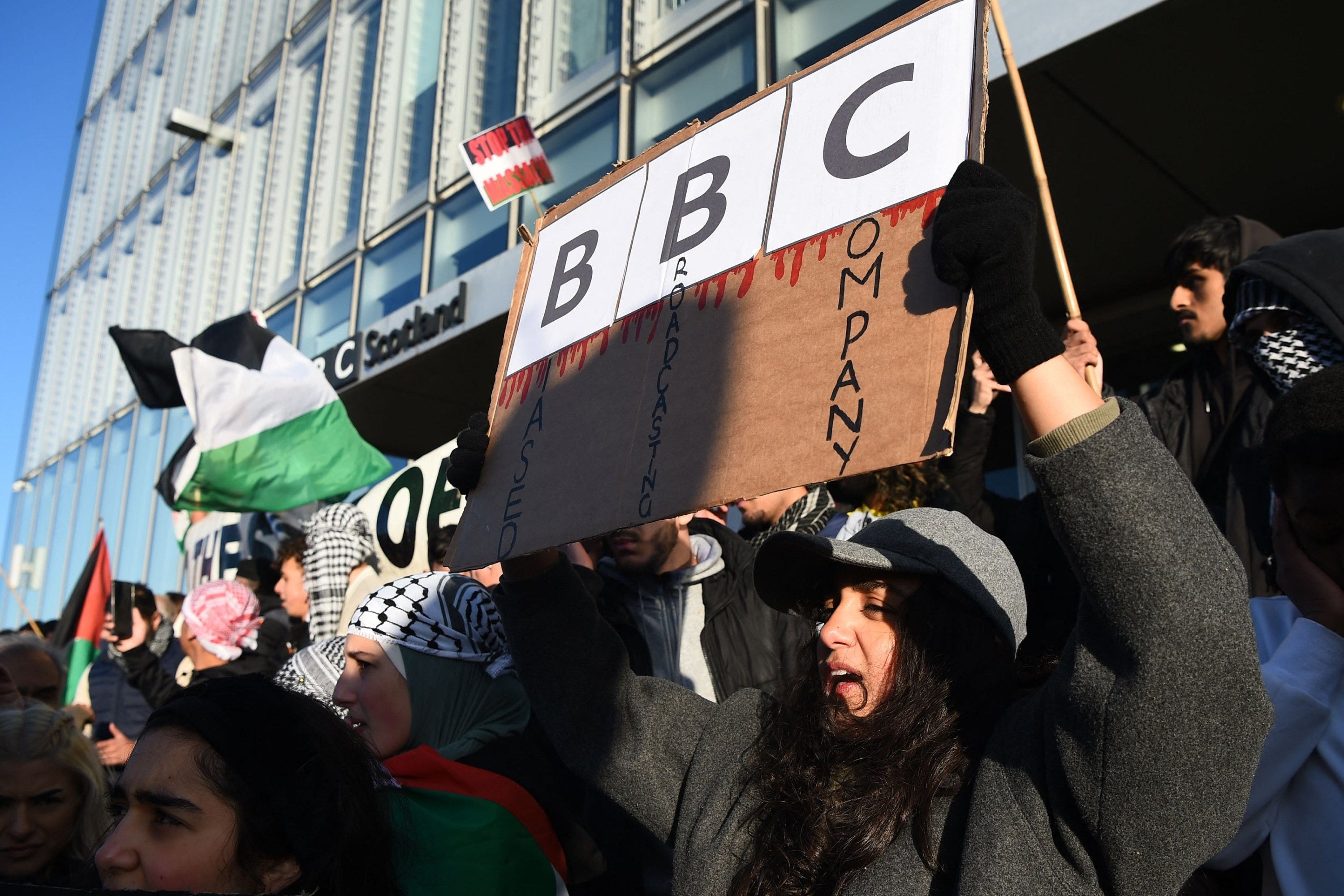
The circular reasoning at the center of the coverage begins with a locked gate. Since October 7, 2023, Israel has barred foreign journalists from entering Gaza independently, admitting a handful only on escorted visits with the army. The Foreign Press Association in Israel, which represents the correspondents of the major international outlets, filed its second petition to the Supreme Court in September 2024. The state asked for extension after extension, and in January 2026, three months into the ceasefire, it told the court that the ban should remain in place for security reasons, citing among other things the continuing search for the remains of the last hostage. In April the association, joined by CPJ, Reporters Without Borders and the Union of Journalists in Israel, filed an emergency motion pointing out that no hostages remained and the ceasefire had held for half a year; at the end of that month the heads of the world’s leading news organizations asked Israel publicly to let them in. I could find no record that the gate has opened since. For nearly three years, then, the firsthand reporting from Gaza has been done almost entirely by Palestinian journalists, and the casualty figures have come from the Gaza Health Ministry, to which Western outlets attached, with the regularity of a liturgical formula, the words “Hamas-run.” That phrase, which named the Palestinian Resistance’s governing party as the author of the numbers, was accurate about who administered the territory and misleading about the numbers themselves. It invited the reader to treat a hospital morgue register, with names and identity numbers, as a party communiqué. Yet the local Israeli outlet Local Call reported in 2024 that Israeli military intelligence regarded the ministry’s totals as reliable, and the most careful outside estimate, the Lancet study, found that the ministry had counted too few dead, not too many.
The second turn of the loop came from the Israeli army’s own files. In August 2025 a joint investigation by +972 Magazine, Local Call and the Guardian reported figures from a database kept by the Military Intelligence Directorate, known as Aman, which listed 47,653 people the army regarded as members of the armed wings of the Palestinian Resistance factions and marked about 8,900 of them as killed or probably killed as of May 2025, when the ministry’s count stood near 53,000. If every one of those 8,900 is counted as a fighter and the ministry’s total is taken as given, at least 83 percent of the dead were civilians. For a year and a half Israeli officials had spoken publicly of a civilian-to-combatant ratio close to one to one. The army did not deny that the database existed and later said that the published figures did not reflect the data in its systems, without saying what those systems contained. A Palestinian killed by an Israeli strike appeared in early coverage as a casualty “according to the Hamas-run health ministry,” qualified at every mention. The army’s statement that the same strike had killed fighters appeared as the army’s account, attributed but rarely qualified, and often in the headline. When the army’s internal count turned out to contradict its public one, the result was a news cycle, not a change in house style. A source with a record of accuracy kept its presumption of unreliability, and a source with a record of inflation kept its presumption of good faith. The press doubted Gaza’s evidence because it could not verify it, it could not verify it because Israel kept reporters out, and it then turned for clarification to the authority that had kept them out.
The third turn concerned the dead themselves, and above all the journalists among them. On August 10, 2025, the Al Jazeera correspondent Anas al-Sharif was killed with colleagues in a press tent outside al-Shifa Hospital. The army announced afterward that he had commanded a cell of the Resistance, an accusation its Arabic-language spokesman had been making against him for weeks, and many headlines that day opened with the army’s description, so that the first thing a reader learned about a dead reporter was the accusation of those who had killed him. CPJ, which had warned publicly of that campaign before the strike, now lists his killing among the cases it classifies as murder. The logic is circular in the strict sense: a killing is justified by a label, the label is published because the party that killed supplied it, and the publication of the label becomes part of the public case that the killing was lawful. Some labels of this kind have proved true, and the argument here has to say so. CPJ’s audit in June 2026 removed nineteen people from its list after evidence, including obituaries issued by the armed factions themselves, showed that they had taken part in combat. After that audit CPJ still counts 189 Palestinian journalists and media workers killed by Israel in Gaza, and it records that Israel has killed more members of the press than any government since it began keeping data in 1992. CPJ changed its list when evidence arrived. The army’s accusations, by contrast, were typically published on the strength of documents only the army could release, about people in a territory closed to the reporters who might have checked them.
Words Reserved for One Side
In January 2024 Adam Johnson and Othman Ali of The Intercept published a count of the language in more than 1,100 articles from the New York Times, the Washington Post and the Los Angeles Times during the first six weeks of the war. Across the three papers, “slaughter” was used for the killing of Israelis sixty times and for the killing of Palestinians once. “Massacre” appeared 125 times for Israeli victims and twice for Palestinian ones, and at the Times alone the ratio was 53 to 1. Two headlines in the entire sample mentioned the children of Gaza, in a period during which several thousand of them were killed. The authors set this beside the same papers’ coverage of the first weeks of Russia’s invasion of Ukraine, when stories about endangered children ran often and with sympathy, and noted that more Palestinian children died in the first week of bombing than in the first year of that invasion. In April 2024 The Intercept published an internal Times memo prepared by the standards editor Susan Wessling and the international editor Philip Pan with their deputies. It told correspondents to restrict their use of “genocide” and “ethnic cleansing,” to avoid “occupied territory” when describing Palestinian land, to avoid “Palestine” except in very rare cases, and to limit “refugee camps” when describing places in Gaza that the United Nations itself calls by that name. It also warned that words such as “slaughter,” “massacre” and “carnage” tend to carry more emotion than information. The Times called this routine guidance meant to ensure accuracy and consistency, and many careful editors would endorse the caution about emotive words in the abstract. The trouble is in the timing and the target. The memo followed six weeks in which those very words had been applied freely to Israeli victims, and it fenced off precisely the vocabulary that international lawyers, United Nations rapporteurs and human rights organizations were beginning to use for Palestinian ones.
The word counts are the most visible part of a grammatical habit that media researchers in Britain and the United States have documented at length. Israelis killed on October 7 were, correctly, described as killed or murdered by named attackers, with an agent acting on a victim. Palestinians were more often described as having died, or lost their lives, or as figures in headlines whose subject was a strike, an explosion or a building. “Strike on school kills dozens” is a true sentence. It also leaves out the air force that chose the target, the officer who approved it and the government that supplied the bomb, and it gives the reader something closer to a weather report than an account of a decision. Hind Rajab’s death was reported for two and a half years in exactly this register, as a tragedy with competing explanations. Multiply that grammar across tens of thousands of headlines, push notifications and broadcast summaries over three years, and the cumulative picture is of a disaster that happened to Gaza rather than a campaign that was conducted against it. Readers who already knew the history of the occupation could correct for this. The much larger audience that forms opinion from headlines and alerts, and whose drift in opinion is what governments watch, could not. I do not think this reflects the private feelings of most of the reporters involved, and the open letters and internal protests by staff at the BBC, CNN and the Times over these reporting habits show that many people inside those institutions saw the problem and said so. A newsroom’s style is a policy, whether it is written down or not. A policy that describes comparable acts in systematically different language, depending on the nationality of the dead, is a decision that its authors can be asked to explain. Until now the major outlets have mostly declined to publish their guidance on the war or to say why a Palestinian hospital director’s statement should carry a heavier burden of attribution than an Israeli military spokesman’s.
The Architecture of Access
Every foreign correspondent in Israel works under accreditation from the Government Press Office and, like Israeli journalists, is legally required to submit security-related material to the military censor, a unit of the Military Intelligence Directorate. Using freedom-of-information requests, +972 Magazine found that in 2024 the censor barred 1,635 articles outright and partially redacted 6,265 more, the highest rate of intervention in the fifteen years the magazine has tracked it, and that in 2025 it barred 753 items and demanded cuts in 4,974, more than fifteen interventions a day. Much of what it removes concerns troop positions and missile impact sites, and some of that is defensible in any war. But the censor’s jurisdiction is set by the army, its individual decisions are secret, and the international outlets that file under it seldom tell readers when a given story passed through it. A reader in Lagos, Toronto or Manchester who sees a Jerusalem dateline cannot know which facts were removed before the copy left the country. The outlets know the system exists, and most have treated it as a condition of doing business rather than as something their readers are owed.
The only route into Gaza that Israel has offered foreign reporters is the embed, a visit under armed escort along a route the army selects. CNN told its viewers in November 2023 that outlets joining such visits had to submit their footage to the army for review before broadcast, and other organizations have described similar terms; many have reported from embeds while telling readers little beyond the fact of the escort. Embedding is not corrupt in itself, and American correspondents embedded with American units in Iraq and Afghanistan did lasting work. In those wars, however, embedded reporting existed alongside independent reporting, so that an editor could set the army’s account of a raid beside the account from the village it passed through. In Gaza, for almost three years, the embed has been the only form of foreign eyewitness reporting there was, on terms set by the party whose conduct was the story. The Palestinian journalists who reported independently were killed at a rate without modern precedent, and CPJ has observed that the destruction of evidence means the full number who were deliberately targeted may never be known.
The Israeli government and its contractors planned a documented campaign aimed at the same audiences that Western newsrooms serve. In June 2025, three months after Israel halted the entry of food, fuel and medicine into Gaza, the Government Advertising Agency, known by its Hebrew acronym Lapam, signed a six-month contract worth about $45 million with YouTube and Google’s Display and Video 360 platform, which the government’s own disclosure labeled hasbara, alongside a campaign of about $3 million on X. Its best-known product was a foreign ministry video asserting that there was food in Gaza, seen more than six million times largely through paid promotion in the weeks before the Integrated Food Security Phase Classification confirmed famine in Gaza Governorate in August 2025. Filings under the Foreign Agents Registration Act show the foreign ministry, through intermediary firms, budgeting about $900,000 to pay American social media influencers for pro-Israel posts between June and November 2025, and a Quincy Institute study published this summer counted more than $100 million in Israeli spending registered under that law since 2023. None of this is illegal, and every government at war tries to shape opinion abroad. The state that controlled physical access to Gaza, and that held a veto over what correspondents in Israel could publish, was also buying space in the feeds where most people now meet the news. A Reuters dispatch on famine and a paid video denying famine could appear one above the other on the same phone with nothing to distinguish them. Journalists, mostly at small independent outlets, gathered the evidence for this campaign. The complicity I am describing lies with the large institutions that accepted the terms of access, said little about them to their readers, and then extended to the architect of those terms a credibility they withheld from everyone else.
When the Frame Cracked
If the argument of this essay is right, then the moments when the coverage changed should be the moments when the political cost of supporting the war began to rise, and the record is consistent with that. Senator Bernie Sanders has forced a series of votes on resolutions to block American arms sales to Israel. In November 2024 his measures drew 18 or 19 senators, depending on the resolution, and in April 2025, after Israel broke the January ceasefire, only 15. Then came the summer of 2025. Israel had sealed Gaza to food since March; the privately run Gaza Humanitarian Foundation opened distribution points where hundreds of Palestinians were shot while waiting for flour; and photographs of skeletal children, taken by Palestinian photographers and distributed by the wire agencies, reached front pages that for a year and a half had preferred the passive voice. Famine is hard to put in the conditional mood. On July 30, 2025, 27 senators, a majority of the Democratic caucus for the first time, voted to block a sale of assault rifles to Israel, and twelve Democrats who had opposed the April measure changed their votes. By April 2026, a resolution to halt a sale of military bulldozers drew 40 votes, with only seven Democrats joining every Republican in opposition. None of these measures passed, and the weapons kept flowing. Votes that had been politically free in 2024 had become costly by 2026, and the cost rose fastest when the public could see the dead without an official denial standing in front of them.
Public opinion moved in the same direction. In February 2026, for the first time since Gallup began asking the question in 2001, Americans did not sympathize more with Israelis than with Palestinians: 41 percent named the Palestinians and 36 percent the Israelis, compared with 46 to 33 in Israel’s favor a year earlier and a gap that had averaged 43 points between 2001 and 2018. Gallup attributed most of the year’s change to independents, who for the first time sided with the Palestinians, and found middle-aged Americans tilting the same way for the first time. Gallup also notes that the drift among Democrats and the young began years before October 2023, which complicates the causal argument. The order in which the images reached readers is still important. The images that moved opinion most did not, in most cases, come first through the prestige outlets. They came through Palestinian journalists’ own accounts on Instagram and Telegram, through Al Jazeera, through the recordings of a child on the phone with an ambulance dispatcher, and then, belatedly, through the newspapers of record. The shift in American and European opinion happened in large part around the major outlets rather than through them. That is the strongest evidence I know for the claim that the outlets’ habits had been holding opinion back: once readers found other routes to the evidence, they reached conclusions the outlets had spent two years presenting as contested.
The timing supports a counterfactual argument, though it cannot prove one. Had the newspapers and broadcasters that set the terms of debate in Washington, London and Berlin reported the evidence from Gaza in the first months of the war with the directness they brought to October 7, by naming the agent in the verb, by treating the ministry’s lists according to their record, by telling readers in every dispatch that they were barred from the territory and why, the political cost of the arms shipments and the vetoes would have arrived in 2024 rather than late 2025. The 1982 precedent suggests that a cost of that kind, once it reaches the White House, can end a bombardment in an afternoon. I cannot prove that the war would have ended sooner. I can show that the conditions that eventually raised its political price were present, in the evidence, from the first weeks, and that the institutions best placed to put that evidence before the public chose, again and again, to present it as one side of an argument.
The Case Against This Argument
The first objection comes from Edieal Pinker of the Yale School of Management, whose study of 1,559 New York Times articles published between October 7, 2023, and June 7, 2024, appeared in September in the peer-reviewed journal Studies in Conflict & Terrorism. Pinker concludes that the paper was biased against Israel. In his account it cast Israel as the sole aggressor and Palestinians as passive victims, carried personal accounts of Palestinian suffering on about two of every three days while seldom doing the same for Israelis after October 7, and largely omitted the Resistance’s own casualties and continuing Palestinian attacks. The Times rejected his findings, as it had rejected The Intercept’s. I take the study seriously, and I think it and the Intercept count measure different things. Pinker measures how often the paper ran human stories and where its overall narrative placed responsibility; Johnson and Ali measured the words attached to deaths and whether victims appeared in headlines. A newspaper can publish many features about Palestinian hardship and still describe Palestinian deaths without an agent and reserve its harshest nouns for Israeli victims, and critics have noted that by Pinker’s own tables the Times ran far more articles per Israeli killed than per Palestinian killed. What his study does establish is that “the media” is not one thing and that bias over a long war is several measurements, some of which point in opposite directions. My claim rests on the measurements that bear on attribution and credibility, and a reader is entitled to weigh his against mine.
The second objection is that the press had good reason for caution. On October 17, 2023, after an explosion at al-Ahli Arab Hospital in Gaza City, the Times and many others led with the Health Ministry’s claim that an Israeli strike had killed about 500 people. American, British and French intelligence later assessed that a misfired Palestinian rocket was the likely cause, and the Times published an editor’s note conceding that its early coverage had relied too heavily on the Resistance’s account. Defenders of later skepticism say, fairly, that this is why qualifiers were attached to Gaza sources afterward. The difficulty is that the lesson ran in one direction. In November 2023 the Israeli army asserted that al-Shifa Hospital sat above a command center, a claim on which it rested a raid on Gaza’s largest hospital, and the claim was broadcast everywhere. When a Washington Post analysis the following month found that the evidence the army had released fell short of supporting it, there was no wave of editor’s notes. Enforcing a verification rule after one side’s error and suspending it after the other’s applies different standards to the two sides. Much of the evidence I rely on was produced by the same mainstream institutions I criticize: the Post’s reconstruction of Hind Rajab’s killing, the Guardian’s work on the intelligence database, the Times’s own later investigations of loosened rules of engagement. That reporting shows the capacity existed, and it raises the question of why the findings so rarely changed the default framing of the daily file.
The third objection concerns the counts. The Meir Amit Intelligence and Terrorism Information Center, an Israeli institute close to the security establishment, argued in December 2025 that a majority of the people described as journalists killed in Gaza had ties to armed factions, and CPJ’s June audit, which removed nineteen names for participation in combat and three for not being journalists at all, gives part of that argument weight. The Committee for Accuracy in Middle East Reporting in America, known as CAMERA, has called the 83 percent civilian figure an artifact of method, since it subtracts only named and confirmed fighters from a ministry total that does not distinguish combatants, and since the database may undercount fighters killed. Both points deserve a hearing. But double the number of fighters in the Aman database and the civilian share is still far above anything Israeli officials claimed in public; strip every disputed name from CPJ’s list and Gaza is still the deadliest place for journalists the organization has recorded. Corrections at the margins of a count do not turn a mass killing into an argument about bookkeeping, and treating them as if they did is itself a framing decision.
The fourth objection is the most serious for my thesis, because it concerns causation. Gallup’s own data show that sympathy for Palestinians among Democrats and younger Americans had been rising since around 2017, well before this war, and Republican support for Israel and for the arms shipments barely moved at all. The weapons kept flowing through every phase of the coverage, including the months when the coverage was at its most direct. One could conclude from this that the press mattered less than I claim, and that the decisive variables were partisan alignment, the strategic relationship and the lobbying power of groups such as AIPAC. I think that reading understates how much partisan alignment is itself formed by what a party’s voters see and read, but I accept that the media was one condition among several and not a sufficient one. The final objection concerns the word at the center of the debate. The International Court of Justice has not ruled on whether Israel committed genocide. It found South Africa’s claims plausible in January 2024 and issued three sets of provisional measures, Israel filed its counter-memorial contesting jurisdiction in March 2026, and the court has given South Africa until November 2027 to reply and Israel until May 2029 to respond. In September 2025 the UN’s Independent International Commission of Inquiry, chaired by the former Rwanda tribunal judge Navi Pillay, found that Israel had committed four of the five acts listed in the Genocide Convention with the required intent, and the International Association of Genocide Scholars reached the same conclusion. Israel called the commission’s report libel, and serious scholars still dispute whether specific intent can be proven. A newspaper that declines to call the events genocide in its own voice while the case is before the world court is making a defensible legal judgment. My complaint is different: that the findings of the commission, the scholars and the major human rights organizations received less prominence than comparable findings receive in other wars, and that the restraint shown toward that word was never matched by restraint toward the words used for Israeli suffering.
What an Even Standard Would Require
Newspapers can apply one standard of evidence to every party and say plainly when they cannot, without taking a side or adopting anyone’s slogans. A newsroom that did so would tell its readers, in every dispatch from Gaza and not only in an occasional media column, that its reporters are barred from the territory by the government whose conduct they are covering, and it would treat that ban as news about the war rather than as background to it. It would disclose when copy has gone to the military censor and when footage has been reviewed by the army as the price of access. It would weigh the Gaza Health Ministry’s figures by their record, which independent epidemiologists have found conservative, and the Israeli army’s statements by theirs, which now includes a public combatant ratio contradicted by its own intelligence files, a hospital command-center claim its released evidence did not support, and a denial in the killing of Hind Rajab that it withdrew after 934 days. It would put the agent in the verb when the agent is known, for Palestinian dead as for Israeli dead. And it would publish its style guidance on the war, so that readers could judge the reasoning instead of learning it from leaks. These are the ordinary disciplines of the profession, applied without exceptions to a war in which the exceptions fell, with great consistency, on the Palestinian side of the casualty count. The deaths continue: the ministry counts 1,421 people killed since the ceasefire, and on September 30 Gaza’s government media office reported that another Palestinian journalist had been killed by a drone.
Several factual questions remain open, and readers should hold this argument to them. The true death toll is unknown: the ministry’s count of more than 74,000 leaves out most deaths from hunger and disease and most of the missing, the Lancet estimate covers only the first nine months, and projections that include indirect deaths run much higher but depend on contested assumptions. The share of fighters among the dead is disputed between the roughly 17 percent implied by the Aman database and the far higher figures Israeli officials have cited, with CAMERA and others arguing that the database undercounts fighters. CPJ’s revised total, the Meir Amit Center’s competing analysis and the Gaza media office’s higher figure of 263 journalists killed rest on different definitions as well as different evidence. Whether the documented acts meet the legal test for genocide, and above all whether specific intent can be proven, awaits the International Court of Justice, whose judgment is not expected before the end of the decade. Whether the American media was biased toward Israel or against it remains contested between studies such as The Intercept’s and Pinker’s, which examined different variables and reached opposite conclusions about the same newspaper. And the size of the media’s causal role, against the weight of arms, alliances, partisan loyalty and lobbying, cannot be measured with any precision. These unresolved disputes leave untouched the narrower finding that the institutions most trusted to establish the facts of this war accepted terms of access dictated by one of the parties to it, and then held the other party’s evidence to a standard that those terms made impossible to meet, for long enough that the killing became a fact of the world rather than a question for its governments.