History has not been kind to states that mistake geography for immunity.
If Pakistan were to formally align itself with Gulf and Arab states in a widening confrontation between Iran on one side and Israel and the United States on the other, it would not simply be issuing a foreign policy statement. It would be stepping onto a geopolitical fault-line that runs directly through its own internal fractures.
Pakistan is not observing this crisis from a position of strategic calm. It is already fighting insurgencies, countering cross-border militancy, navigating economic fragility, and managing intense political polarization. In such an environment, taking sides in a Middle Eastern war would not externalize risk. It would import it.
The Proxy Variable No One Is Talking About
The most immediate and underexplored danger is asymmetric retaliation.
Groups such as Liwa Fatemiyoun and Liwa Zainebiyoun were mobilized under Iranian patronage for conflicts in Syria. Their operational theaters have largely been external. But their recruitment ecosystems, ideological linkages, and social networks intersect with Pakistan.
If Islamabad openly sides with Riyadh and other Gulf capitals against Tehran, these networks do not need to launch large-scale operations to become strategically consequential. They merely need to exist as leverage.
Iran’s regional doctrine has long relied on layered deterrence — signaling through non-state actors rather than direct confrontation. Pakistan could become a low-cost pressure valve.
Even sporadic mobilization, symbolic demonstrations of capability, or heightened recruitment messaging would force Islamabad to divert security resources inward. The activation of proxy ecosystems is not inevitable — but the incentive structure changes dramatically if Pakistan abandons neutrality.
Sectarian Polarization: The Multiplier Effect
Pakistan’s demographic composition has always required careful state management. A Sunni majority coexists with a significant Shia population. Historically, sectarian tensions have flared when regional rivalries seeped into domestic discourse.
An explicit alignment against Iran risks reframing a geopolitical contest into a sectarian narrative. Hardline Sunni organizations could frame it as ideological solidarity with Gulf monarchies. Reactionary Shia mobilization could follow. Urban centers such as Karachi and Quetta have witnessed how quickly rhetoric escalates into violence.
The state would not simply be managing protests. It would be managing identity politics weaponized by external conflict.
Sectarian polarization is not just a law-and-order issue. It is a strategic vulnerability adversaries exploit.
A Western Border Already on Fire
Pakistan is simultaneously confronting instability along its Afghan frontier.
Since the return of the Taliban in Kabul, cross-border militancy has intensified. Islamabad accuses Afghan territory of harboring anti-Pakistan groups. Kabul rejects the charge. Skirmishes and retaliatory measures have become recurring features of the relationship.
At the same time, Pakistan continues counterinsurgency operations in Balochistan against separatist networks and externally supported militant actors.
Now add a potential diplomatic rupture with Iran — a country that shares a long and sensitive border with Balochistan.
The strategic picture becomes stark:
Afghan frontier volatility in the northwest.
Insurgency in Balochistan.
Sectarian mobilization in major cities.
Potential Iranian asymmetric signaling.
Few militaries can sustain multi-front internal stress without institutional fatigue. Overstretch is not dramatic — it is gradual. And it is dangerous.
Political Turbulence at Home
Pakistan’s domestic political landscape remains deeply polarized following the confrontation between the state and Pakistan Tehreek-e-Insaf, and the imprisonment and legal battles surrounding Imran Khan.
Public trust in institutions is strained. Street mobilization capacity has not disappeared; it is dormant.
Foreign policy decisions taken in such an atmosphere rarely remain foreign policy decisions. They are interpreted through partisan lenses. An external alignment could quickly be reframed domestically as submission to external pressure, or as reckless adventurism.
Instead of consolidating the state, war alignment could deepen internal fissures.
Economic Fragility Meets Geopolitical Shock
Pakistan’s economy remains highly sensitive to energy prices, remittances, and external financing. Any disruption in Gulf trade routes, oil flows, or labor markets would hit immediately. Even perception of geopolitical risk can:
Depress investor confidence.
Pressure the currency.
Increase borrowing costs.
Exacerbate inflation.
In a country where economic hardship already fuels political discontent, foreign policy risk quickly becomes domestic instability.
The Strategic Trap of Gradual Escalation
The most dangerous scenario is not an immediate declaration of war.
It is incremental entanglement.
A security deployment here. Intelligence cooperation there. Symbolic gestures that slowly reposition Pakistan within a bloc structure.
Tehran does not need open confrontation to respond. It needs ambiguity. Proxy networks do not need mass mobilization; they need signaling capacity. Sectarian rhetoric does not need to dominate discourse; it only needs to polarize margins.
The accumulation of small escalations can create a systemic crisis.
Pakistan would then find itself simultaneously managing:
Afghan border instability.
Baloch insurgent networks.
Sectarian polarization.
Proxy signaling.
Political unrest.
Economic vulnerability.
That is not one conflict. That is strategic overstretch.
Geography Is Not Neutral
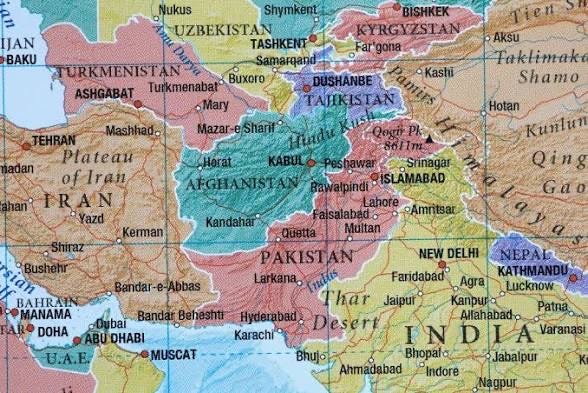
Pakistan sits at the intersection of the Middle East, Central Asia, and South Asia. Geography gives it relevance. But relevance is not immunity.
Choosing sides in a widening Iran–Israel–US confrontation would not merely shift alliances. It would expose domestic fractures to external manipulation.
The wiser course may not be dramatic neutrality for its own sake — but disciplined calibration. Strategic restraint. Diplomatic balancing. Quiet mediation.
In moments of regional upheaval, survival belongs not to the loudest state, but to the most measured.
For Pakistan, the real battlefield may not lie beyond its borders. It may lie within them.


