


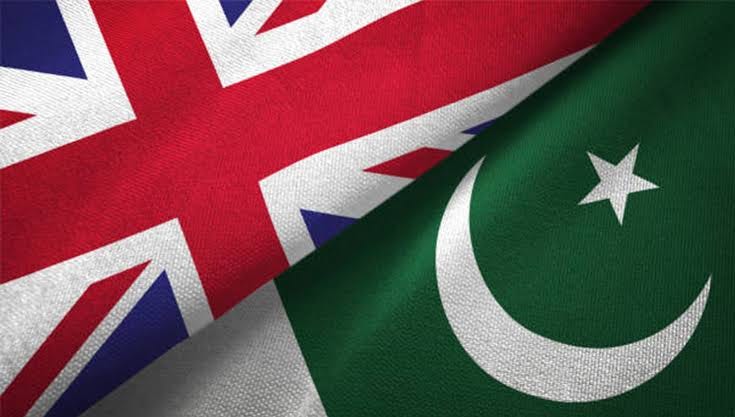
The British flag came down in Karachi in August 1947, and the new state inherited a governor-general, a civil service, a legal code, a military command, and a frontier apparatus built to govern Indians from above. Pakistanis had won a country, and yet the men who governed it kept so much of the machinery with which Britain had ruled them. Soviet writers took the arrangement as evidence that London intended to exercise power through the successor states. They accused Indian leaders of complicity as well, but Pakistan’s subsequent ruling coalition gave their argument particular force by turning the country’s geography into a source of foreign security income.
India’s government has made its claims over Kashmir by decree and force, subordinating Kashmiris’ political rights to a national security doctrine while asking its neighbours to accept New Delhi’s account of regional order. None of this prevents a Pakistani from asking why GHQ decides so much of our country’s future. People here were promised self-government, and yet successive rulers gave them a permanent security emergency in which budgets, territory, and foreign policy could be removed from public control.
Stalin left no documented personal verdict in 1947 predicting eighty years of Pakistani history. The argument came from Soviet writers. Anatoly Dyakov’s June 13 article in New Times attacked the British plan as an effort to divide India into weak and hostile states while preserving British influence; he also accused the Indian National Congress of compromising with imperial power. A September 18 British Commonwealth Relations Office telegram recorded Pravda journalist Yuri Zhukov’s argument that British partition policy had contributed to the communal violence in Punjab. An Australian National University study of Soviet policy traces Moscow’s early hostility to Partition and its criticism of both new dominions. The Soviet charge concerned the survival of imperial power across the subcontinent, including inside the Indian state that later became Moscow’s favoured partner.
“Stalin opposed Pakistan” gives our rulers a convenient foreign adversary and spares them the question the Soviet writers posed: what became of the power Britain built here, and who inherited its uses? Britain’s departure left severe material constraints, but it did not compel Pakistan’s rulers to make the army the arbiter of politics, govern smaller provinces through coercive frontier habits, or seek foreign credit while sparing their own powerful citizens from taxation. The flag marked a victory over colonial rule, and yet the struggle over the colonial state continued after the ceremony.
The partitioned state and the inherited command
Pakistan began with a divided eastern and western geography, an urgent refugee crisis, contested borders, a limited industrial base, and a military confrontation in Kashmir. The division of assets became an immediate political dispute. A contemporary Dawn report on the Partition Council’s decisions recorded a 17.5 percent allocation of uncovered debt to Pakistan and a one-third share of military stores. Cash, liabilities, personnel, ordnance, and the delivery of assets each had to be negotiated, while an impoverished treasury faced the expense of war before the new country had settled its constitutional order.
British Chiefs of Staff weighed Pakistan’s strategic value within the Commonwealth if India rejected the same defense relationship, according to research on the transfer of power. Their calculations are part of the record, alongside the political demands of the Muslim League and Congress, the decisions of provincial elites and Sikh leaders, and the fears of millions who did not trust another community to govern them. Britain could plan for influence without inventing the Muslim demand for a state, and Pakistan’s rulers could inherit a strategic location without being obliged to sell its uses. The choices after independence belong to them.
The Government of India Act of 1935 supplied the provisional constitutional frame. The civil services retained their habits of district command and file-based rule; the army kept its organization, recruitment networks, cantonments, and officers trained to regard political movements as problems of order. British generals initially commanded the armed forces on both sides of the new border while local officer corps were assembled. After Pakistani commanders took over, the army’s institutional autonomy grew, provincial representation narrowed, and civilian governments learned to negotiate with the barracks as though they were dealing with a separate sovereign.
Allama Iqbal’s demand for khudi is often used as a decorative certificate on official nationalism. It is harder to read it alongside a state that cannot trust its citizens with power. Sovereignty requires the capacity to make collective choices and bear responsibility for them. A cabinet that cannot control war, an assembly that cannot examine a foreign deployment, and a citizen whose taxes finance institutions beyond civilian scrutiny do not acquire selfhood by repeating a national anthem. Iqbal did not write a memo about IMF conditionality or military foundations. His language of selfhood is useful here as a question put to our rulers: whose will does the state actually organize?
Liaquat Ali Khan’s assassination in Rawalpindi in October 1951 deepened a struggle already under way among politicians, governors-general, senior civil servants, and commanders. Pakistan’s first constitution did not arrive until 1956; the assembly elected to write it had been dismissed in 1954. Power gathered around Ghulam Muhammad and then Iskander Mirza as executive authority outran representation. By the time the army took formal control in the 1958 coup, it had learned that foreign security ties and domestic political vetoes could reinforce each other.
Pakistan’s foreign ministry dates diplomatic relations with the Soviet Union to May 1, 1948. Moscow invited Liaquat to visit in 1949, and a U.S. State Department paper from April 1950 acknowledged that he had accepted. The visit was postponed indefinitely; Liaquat went to the United States in May 1950. The unrealised Moscow trip became a convenient origin story for Pakistan’s later alignment, although the security establishment spent years turning that choice into a durable relationship with Washington.
A military bargain made in Pakistan
Pakistan joined SEATO in September 1954 seeking support against India, although the treaty’s Southeast Asian defense area did not cover the India-Pakistan dispute. The Baghdad Pact followed in 1955. American planners wanted a state on the Soviet Union’s southern approaches; Pakistani commanders wanted weapons, training, money, and diplomatic weight in the confrontation with India. Both sides got enough to sign, and yet Pakistan’s rulers had accepted obligations inside a Western containment system that offered no guarantee of help over Kashmir.
A declassified U.S. policy document from 1960 tied military assistance to Pakistan’s membership in the Baghdad Pact and argued that American strategic interests would be difficult to maintain without continuing support. Its authors believed U.S. aid encouraged Pakistani governments to pursue policies aligned with the “Free World.” Washington paid for access and influence; Pakistan’s rulers accepted the money and told their population that the resulting alignment flowed from national necessity.
U.S. surveillance operations used facilities near Peshawar, and the Soviet downing of Francis Gary Powers’s U-2 in May 1960 exposed what the alliance meant for a Pakistani city within reach of a nuclear power. Stories about Nikita Khrushchev marking Peshawar on a map circulated afterward; the intelligence facility itself was warning enough. The danger would fall on Pakistanis, while those who had granted American access could call it a strategic gain.
SEATO did not defend Pakistan in its wars with India. American arms strengthened the military, and yet membership could not compel Washington to fight Islamabad’s battles. After the 1965 war, the Soviet Union hosted the Tashkent negotiations and sought influence with both countries before its relationship with India grew closer. Moscow pursued its own regional position throughout. Pakistani rulers had traded political freedom for an alliance whose most important promise, protection against India, its sponsors had never made.
Bengali citizens formed Pakistan’s demographic majority, and yet the western political and military establishment denied them the authority due after the 1970 election. The army’s 1971 campaign in the east brought mass killing, rape, and displacement before the final war with India. New Delhi intervened for its own strategic reasons and Moscow backed it diplomatically, but neither government ordered Pakistan’s rulers to treat their own majority as an enemy. That decision was made at home.
The ballots had been counted. In the first national election based on one person, one vote, held on December 7, 1970, the Awami League won 160 of East Pakistan’s 162 directly elected National Assembly seats and a majority in the chamber as a whole, according to the Library of Congress country study. Its Six Point programme sought far-reaching provincial autonomy, including control over taxation and foreign exchange. The west wing’s political leadership feared what those powers would mean for the central state. The constitution the assembly was supposed to frame became a threat to the people accustomed to issuing orders from it. When Sheikh Mujibur Rahman asserted the elected majority’s authority in March 1971, a U.S. diplomatic account observed that he had grounded the move in the December vote while avoiding an outright declaration of independence. That narrow opening for a political settlement was still there, and yet Pakistan’s rulers answered it with force. The familiar warning that the country could not survive provincial autonomy became the means by which the country was broken.
The rent paid for a frontier
The Afghan war gave the security establishment a second great external market. Following the Soviet intervention in December 1979, Pakistan’s military government became the principal U.S. partner for arming Afghan resistance through Pakistan. Washington, Riyadh, and Islamabad each pursued its own ends. The anti-Soviet war brought weapons and money into the country while giving a dictatorship international standing it could not have won from Pakistani voters. The military had already overthrown an elected government and executed Zulfikar Ali Bhutto; foreign sponsorship gave the regime room to entrench censorship, coercion, and policies whose militant legacy crossed the border back into Pakistan. The people in whose name the bargain was made had no vote on the bargain.
Open U.S. assistance, covert funds, military equipment, refugee support, and money handled by intelligence agencies reached different recipients during the Afghan war. What united those streams was the incentive they gave Islamabad to make the frontier useful to foreign powers while postponing the domestic bargain: tax powerful landowners, build a civilian industrial base, give provinces authority, and fund schools. The frontier produced security income for the state, and yet its residents would bear the violence long after the payments stopped.
After September 11, 2001, Pakistan’s military government supplied Washington with logistical support for the Afghan war while GHQ pursued its own Afghan priorities. U.S. Coalition Support Funds reimbursed costs submitted for military support. A 2008 Government Accountability Office audit found that Pakistan had received $5.56 billion of the $6.88 billion paid to all coalition partners under the program through May of that year, and questioned oversight of some claims. Pakistan could invoice a foreign military power for support connected to the war, and yet the damage in its border districts had no reimbursement schedule.
The Cold War alliance, the anti-Soviet Afghan campaign, and the post-2001 war involved different governments and threats. Each found Pakistani rulers willing to exchange access for external support while protecting land, property, and military privilege at home. Western patrons preferred the reliability of a military interlocutor, and yet the tax exemptions and dismissals of elected governments were also domestic decisions. Foreign demand met an appetite within the state; citizens with the least power to refuse paid for both.
Pakistani officers have trained and supported Gulf militaries for decades; troops were deployed to Saudi Arabia during regional crises, and military cooperation became a durable part of relations with Riyadh. Pakistani forces serve monarchies whose economies rely heavily on migrant labour, including workers from Pakistan. Officers secure the strategic relationship while labourers send wages home to keep families alive, and yet the state speaks far more clearly about the obligations owed to its Gulf partners than those owed to its citizens working there.
Reuters reported in May 2026, citing five sources, that Pakistan had deployed about 8,000 troops, roughly 16 aircraft including JF-17 fighters, and an HQ-9 air-defense system to Saudi Arabia under a defense pact during the Iran war. The International Institute for Strategic Studiesseparately placed the deployment at King Abdulaziz Air Base. Pakistan had committed troops, aircraft, and air defence to a Gulf state while facing a dangerous regional frontier of its own, and yet its citizens still had to learn the scale of the mission from outside reporting. They deserve the terms, costs, command arrangements, and legal authority for sending those forces abroad.
Pakistan had reason to talk to both Washington and Tehran during the war: an expanding conflict threatened its western border and its fuel supply. The public still does not know who set the terms of that diplomacy or what authority its military envoys carried. Reports of shuttle missions and closed-door meetings have not produced minutes establishing the precise demands conveyed over uranium stockpiles or any exchange of Saudi deposits for mediation. Elected officials should have to explain the mandate, the concessions, and the benefit to citizens; GHQ cannot claim to act for the country while keeping the terms from it.
The creditors’ waiting room
War reimbursements dwindled, and Pakistan returned to another familiar appointment. In September 2024, the IMF approved a 37-month, roughly $7 billion Extended Fund Facility. Its executive board completed a third review in May 2026, permitting another disbursement. Each review sent a signal to creditors and depositors watching the Fund’s assessment of Pakistan’s reserves, taxes, and spending. The country needed dollars for imports and debt service, and the decisions that governed those dollars were negotiated abroad before most Pakistanis learned their terms.
Washington holds about 16.5 percent of the IMF vote. That share gives it a veto over certain major institutional decisions requiring 85 percent approval, including amendments to the Fund’s articles, while ordinary lending decisions can pass by simple majority, as a Congressional Research Service account explains. American influence comes through its vote, Treasury diplomacy, and its place in the wider financial system. Pakistani ministers know this when they travel to Washington, but the quieter source of their vulnerability lies at home: a state that has borrowed repeatedly while leaving its most protected forms of wealth lightly taxed.
The Fund’s 2026 staff report put numbers on that protection. Agriculture produced 24.6 percent of the value added in the period it examined while facing an effective tax rate of 0.3 percent; provincial agricultural income taxes had been raised on paper, but implementation lagged. Real estate and other sectors also yielded less than their economic weight suggested. Petroleum levies and electricity charges, meanwhile, arrived on bills that working households could neither postpone nor negotiate. The creditor had power over the program, and Pakistan’s landed and commercial elites retained power over who would meet its targets. Every speech against the IMF sounded a little less convincing when delivered by a government unwilling to collect from its own allies.
The same Fund review recorded a shortfall in federal tax collection at the end of December 2025 that stronger petroleum levy receipts helped offset. The petrol station became a dependable collection point because the state could reach it each time a driver filled a tank; agricultural income still depended on provincial laws and enforcement that remained uneven. A transport worker pays at the pump before he knows whether his next fare will cover the increase, while the owner of a large estate can negotiate through provincial politics. Those positions are then presented in budget speeches as if they describe equal contributions to a common crisis. Karachi’s factories, the truck routes inland, and the households buying flour all absorb higher transport costs, and yet the fiscal ledger records a target met rather than the chain of people made to meet it.
A UNDP study reported in 2021 estimated annual privileges worth $17.4 billion for corporations, landowners, political elites, and the military. The estimate belongs to that year; the habit it measured was older. In Clifton, a subsidy may be buried in the price of land, credit, or a tax exemption. Across the city, a household deciding whether to pay school fees sees austerity in cash. Both are entries in the same public account, and yet only the second household is routinely asked to sacrifice for the nation.
The World Bank counted an estimated 26.09 million children out of school in 2022–23. Behind that dated total are fees paid to private schools, daughters kept home, boys sent to work, and government classrooms without teachers. The army produces readiness tables and the finance ministry reserve tables, and yet neither can show a comparable plan for those children. A country that can calculate the value of its frontier down to the last airfield has allowed millions to grow up without a desk.
Workers in the Gulf, Europe, and elsewhere send wages that sustain households and help finance imports. The worker leaving for a construction site in Riyadh and the officer sent to secure a base both appear in official speeches as Pakistani assets abroad. One returns to an institution ready to protect its interests; the other may return to unpaid wages and a family that borrowed to send him away. A government that celebrates remittances while bargaining timidly over labour protections has found yet another way to make departure pay for failures at home.
Across the border, another inheritance
India retained more of the subcontinent’s industry and administrative capacity after Partition. Its early governments built steel plants with Soviet help, pursued public-sector industrialization, and kept out of the Western pacts Pakistan joined. New Delhi also kept much of the 1935 administrative inheritance, fought on disputed frontiers, and answered political demands in Kashmir with detention and communications controls. Human Rights Watch documented continued restrictions years after India revoked Jammu and Kashmir’s special status in 2019. Moscow could supply steel and weapons to a government that claimed strategic independence, and yet Kashmiri citizens were denied the freedom that claim was supposed to protect.
Moscow supplied India with weapons and diplomatic cover because New Delhi was a major regional partner, sought better relations with Pakistan when that served its interests, and hosted talks after the 1965 war. In 1979 it invaded Afghanistan. Its writers could identify British divide-and-rule in 1947 while their government pursued its own power across Asia. Indian nationalists who cite that Soviet criticism as proof that Pakistan should never have existed mistake an imperial rivalry for a verdict on millions of Muslims’ political claims. Pakistanis can take the question Soviet writers asked about colonial power and put it to the institutions that govern us, where its answer matters most.
When Kashmiris face detention and restrictions imposed by New Delhi, GHQ invokes their suffering to claim a broad mandate at home. Parliament still has to learn of some foreign troop commitments from reporters, military business remains beyond ordinary scrutiny, and Baloch and Pashtun citizens who ask for protection are handled as security files. India’s actions across the border deserve condemnation; they do not collect tax from Pakistan’s landed wealth or authorize the dismissal of an elected mandate here. Our rulers have spent decades using a neighbour’s conduct to avoid answering for their own.
Pakistan’s eastern half heard the promise of future consent until 1971 made a mockery of it. Today officials speak of the western and southwestern peripheries as corridors, buffers, bases, ports, and sources of revenue; the people who live there ask for water, schools, fair trials, and representation. Territory receives a price when outsiders want access to it, and yet its residents are told to wait when they ask what the state owes them. Our rulers have spent decades calling that exchange patriotism.
The election report nobody wanted voters to read
At a polling station in February 2024, a vote began its journey on Form 45, the paper record of the count signed at the station. By the time constituency totals appeared on Form 47, candidates and observers were asking whether the numbers had made the journey intact. The government had suspended mobile service on election day; the Election Commission’s results system failed; counting dragged on. Candidates backed by Pakistan Tehreek-e-Insaf, forced to stand as independents after the party lost its electoral symbol, still won the largest bloc of general seats, according to Associated Press reporting. Their success could not by itself form a government, but it made the public’s choice plain enough to trouble the arrangement being assembled above it.
Pakistan’s Human Rights Commission examined the election and recorded allegations that polling-station Forms 45 differed from the provisional consolidated Forms 47. The Commonwealth Observer Group’s final report later examined documentation in which copies held by party agents appeared to differ from forms used in tabulation, with altered vote totals and turnout figures in some cases. It found that the Election Commission had failed to upload complete sets of the required forms within the fourteen days prescribed by law. The observers did not conduct a nationwide recount and their findings cannot settle every contested constituency, but they inspected enough to make the handling of results a public question requiring an answer. In Karachi, they recorded the case of a Jamaat-e-Islami candidate who said he would give up a provincial seat because the count had been rigged in his favour; the Election Commission still listed him as the winner. The episode gave the country an unusually clear view of a system prepared to keep a result even when its beneficiary disputed it.
The Commonwealth completed its report and gave it to Pakistan’s government and Election Commission before the public saw it. When pressed in September 2025, the Secretariat saidit would publish the document later that month. It did, roughly nineteen months after the vote. Voters, losing candidates, and journalists had spent that time arguing over records to which officials had earlier access. The Commonwealth is a multilateral organisation headquartered in London, rather than a British government department, but its conduct belongs in any account of the old imperial centre’s modern democratic language: an election observer had a report on Pakistan’s vote, and Pakistanis waited while their own government read it first.
The European Union made a different choice. Its Election Expert Mission also produced a report on the 2024 vote. A requester sought it in April 2024, and the European External Action Service refused public access to the entire document, arguing that publication could damage relations with Pakistan. In the resulting European Ombudsman decision, the EU service explained that it had undertaken not to release the report without the Pakistani government’s express consent, which the government had never given. The Ombudsman found the refusal lawful under the applicable access rules. The legal result does nothing to make the political choice less damning: a government accused of restricting electoral competition could prevent voters from reading an external assessment of that competition, and Brussels treated the preservation of the relationship as a reason to keep the assessment closed. No one outside the mission can honestly describe every finding in a report that remains unpublished; the decision to withhold it is itself on the record.
On March 6, 2024, less than a month after the disputed vote, EU and Pakistani officials held their ninth political dialogue in Islamabad. Brussels urged Pakistan to address its election mission’s recommendations while keeping the mission’s report from Pakistani voters; both sides also agreed to advance cooperation on security, migration, energy, and other priorities. The relationship continued to acquire the furniture of normal government. In June 2026, the EU’s foreign-policy chief co-chaired an eighth strategic dialogue with Pakistan’s foreign minister. In October, officials held their tenth counterterrorism dialogue. The United States followed the same practical course early on: after the new prime minister was selected, the State Department said it would continue working with his government on shared interests. None of these meetings by itself endorses a disputed count. Together they gave the government the access, recognition, and routine partnership that its contested domestic mandate could not supply. Western capitals had voiced concern about democracy, and yet the officials who benefited from the election’s outcome remained their accepted counterparts.
Britain took its own course. The British foreign secretary’s statement of February 9, 2024 acknowledged serious concerns about the election’s fairness, the exclusion of parties and leaders, the loss of a recognisable party symbol, the mobile shutdown, delays in results, and allegations of counting irregularities. Its final sentence looked forward to working with the next government across shared interests. The criticism was public, and so was the decision to proceed. London did not need to certify the count to maintain access to the institutions it regarded as useful.
This November, the relationship was visible again in an announcement from the British High Commission. Britain’s security minister visited Pakistan on November 11, 2026, and met civilian ministers, military leaders, and law-enforcement officials to deepen cooperation on terrorism, organised crime, migration, and information sharing. Those are real matters for both countries. The British government described the purpose of the visit in terms of protecting people in Britain, while Pakistan’s citizens were still living with the disputed election and its constitutional aftermath. Britain’s 2025 defence review had already called the relationship historic and grounded in shared security objectives. The phrasing could have been written at almost any point in the long life of a partnership that values Pakistani institutions most when they help manage someone else’s threats.
The damage to representative government did not end when a coalition took office. The Human Rights Commission’s review of 2025 recorded a constitutional amendment that created a Federal Constitutional Court, increased executive influence over judicial appointments, and granted lifetime legal immunity to the president and the chief of defence forces. It also documented the restoration of provisions allowing civilians to be tried in military courts, the loss of reserved seats for PTI, restrictions on assembly, and a law that raised new risks for journalists and political workers. These changes happened through courts and parliament, under the forms of constitutional government, after an election whose disputed records foreign observers took months to disclose or still keep from the public. A ballot could be cast and counted; the institutions deciding what that ballot meant remained in other hands.
Who pays for the arrangement
Britain left an administrative and military inheritance. U.S. governments bought strategic alignment in the Cold War, funded an Afghan war through Pakistani channels in the 1980s, and reimbursed support for another after 2001. Gulf governments built military relationships and drew on Pakistani manpower. China financed infrastructure and became a security and economic partner in its own right. The IMF offered loans under conditions that Pakistani elites negotiated with close attention to which burdens would reach them. These patrons sometimes competed, and Pakistan’s rulers learned to bargain among them while preserving their own position. The country’s dependency has lasted because those bargains have repeatedly worked for the people making them.
No British decree required GHQ to own future enterprises or civilian dynasties to shield estates and real-estate income from effective taxation. The colonial structure made such choices easier, and subsequent governments made them again. Each renewal came wrapped in temporary necessity: another emergency, another alliance, another loan, another restriction on civilian politics until the danger passed. Those who benefited from the emergency were entrusted to decide when it had ended.
The Soviet writers of 1947 saw Britain trying to preserve influence through divided states, and their accusation reached Indian leaders as well as Pakistan’s. They could not know the terms of the bargains Pakistan’s rulers would later make with Washington, Riyadh, Beijing, and the IMF, or that an election observer based in London would one day deliver its report to a disputed government while its voters waited to read it. Pakistanis acquired a state after generations of colonial rule, and yet decisions about their ballots, taxes, wars, and children’s futures still pass through institutions that answer to them last. The garrison remains.