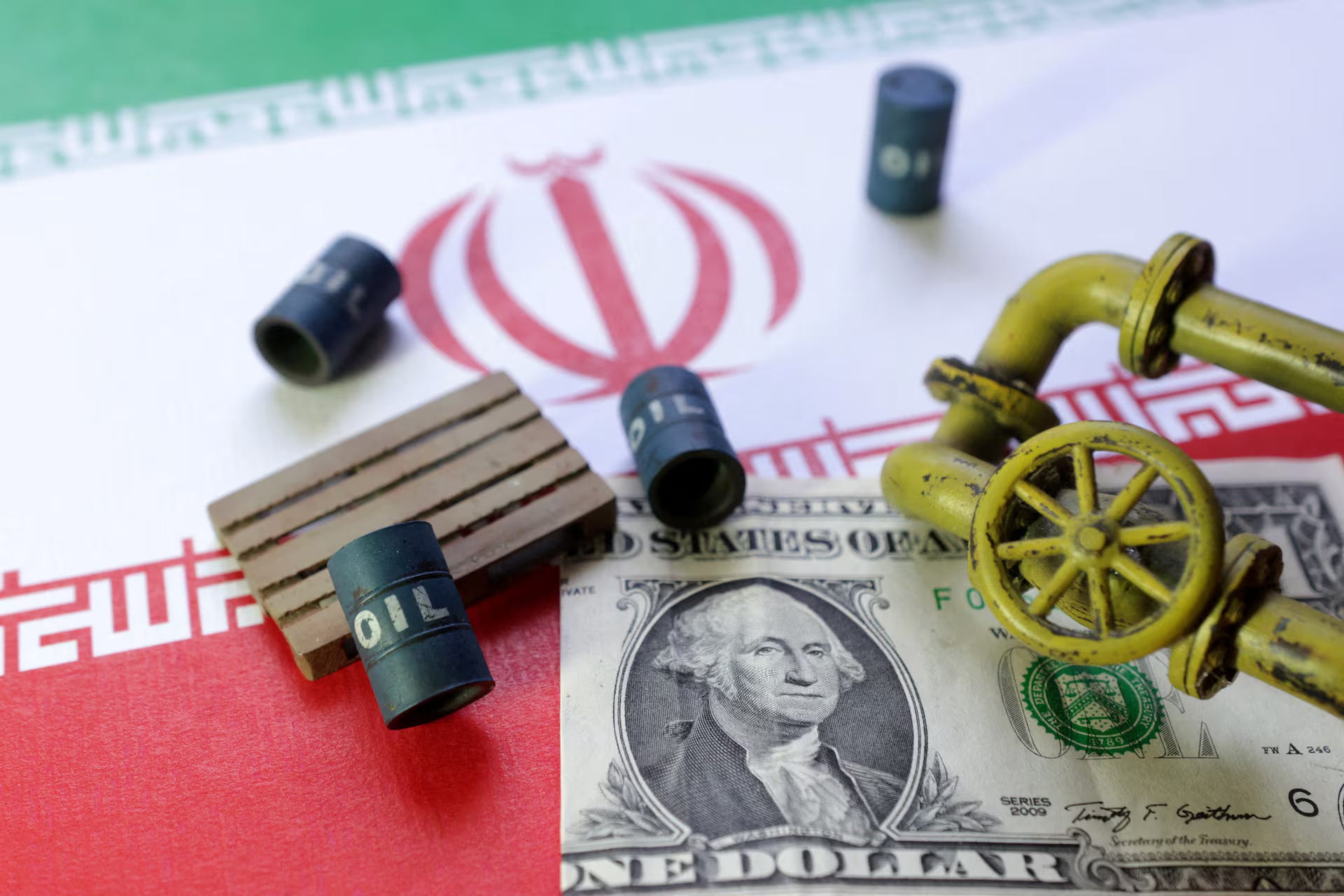
The Architecture of Managed Decline
American Energy Strategy, the 2026 Iran War, and the Transition Tax Paid by Everyone Else
Overview
This paper argues that the February-March 2026 US-Israel military campaign against Iran is best understood not as a security operation with an energy side effect, but as an energy strategy with a security justification. The evidence lies not in classified cables or contested intelligence assessments, but in the publicly documented timeline of American LNG infrastructure construction, the financial positions of Gulf sovereign wealth funds, the geographic precision of strikes against Chinese-aligned overland infrastructure, and the political economy of proxy removal as a precondition for Iranian reintegration into Western-led energy markets. Taken individually, each of these elements reads as coincidence. Taken as a sequence with documented financial beneficiaries and a pre-built infrastructure base already positioned to absorb displaced demand, they constitute a strategy. This paper names the strategy, maps the mechanism, and assesses whether it is working.
The Problem with the Official Frame
Every war arrives pre-packaged with its own explanation. The 2026 campaign against Iran was explained in the language that American military operations have used since 1991: the proliferation threat, the regional stability imperative, the protection of allies, the necessity of deterrence. These explanations are never entirely false. Iran’s nuclear program was real. Israeli security concerns were real. The network of Iranian-backed proxy forces operating across Lebanon, Yemen, Iraq, and Syria had imposed real costs on regional stability and on American and Israeli interests. The security case for the operation was coherent.
The problem is that a coherent security case for an operation does not mean the operation was primarily security-driven. The financial architecture surrounding this conflict was in place before the first sortie. The infrastructure positioned to benefit from Hormuz disruption was already under construction. The regulatory obstacles to that infrastructure’s profitability had already been removed by executive order on January 20, 2025, the first full business day of the Trump administration’s second term. When a policy produces the outcome it produces, and that outcome was financially visible in advance, the question of motive cannot be resolved by looking at the stated justification alone. It requires looking at who built what, when, and what conditions needed to exist for that investment to pay off at scale.
The LNG Architecture and Its Pre-War Timeline
The Biden administration announced a pause on new LNG export permits in January 2024. The environmental lobby celebrated it. European allies complained about it. The American energy industry called it a political gesture designed for domestic consumption. All three readings contained some truth. What none of the commentary focused on was what the pause did not do: it did not halt construction. It did not revoke permits already issued. It did not stop the physical build-out of export terminal capacity that was already underway.
Cheniere Energy’s Sabine Pass facility in Louisiana continued expanding throughout the pause. Venture Global’s Plaquemines terminal in Louisiana kept building. New Fortress Energy’s projects moved forward. The freeze applied to the regulatory queue, not to the shovel already in the ground. This distinction matters because the infrastructure being built during the pause would come online within a three-to-five-year window regardless of whether new permits were issued. The pause was, as one industry analyst described it at the time, a “political hold on paper movement while the physical reality kept advancing.”
The numbers behind this reality are specific. North American LNG export capacity was documented by the International Energy Agency as heading from approximately 11.4 billion cubic feet per day in 2024 toward a projected 28.7 billion cubic feet per day by 2029. That tripling of capacity represents more than half of all projected global LNG additions across the same period. The United States, a net LNG importer as recently as 2016, was positioning itself to become the dominant supplier in a global gas market that had been structurally reorganized by Russia’s 2022 invasion of Ukraine and Europe’s consequent forced departure from Russian pipeline supply.
On January 20, 2025, the Department of Energy ended the permit pause and issued a three-paragraph statement describing the action as “returning to regular order.” The phrase was accurate. The regular order was the plan all along: build the infrastructure during the pause, lift the pause when the political moment aligned, and prepare for the demand surge that would arrive when competing suppliers faced disruption.
The disruption arrived on February 28, 2026.
This sequence does not prove intent. What it establishes is that the financial beneficiary of the disruption had positioned its physical infrastructure before the disruption occurred, and had removed its regulatory obstacles before the disruption occurred. In any corporate fraud investigation, that sequence would be called motive evidence. In geopolitical analysis, it should be treated with the same seriousness.
The Chokepoint as Instrument
The Strait of Hormuz is 33 kilometers wide at its navigable minimum, sitting between the Iranian coastline and the Omani peninsula. On any given day before February 2026, between 17 and 21 million barrels of crude oil and refined products passed through it. Qatar’s LNG exports, which supply long-term contracts to buyers in Japan, South Korea, China, India, Germany, France, and the United Kingdom, transit the same corridor. Saudi Arabia’s Ras Tanura terminal, Abu Dhabi’s ADNOC offshore fields, Kuwait’s export infrastructure: all of it empties into the Gulf and exits through the Strait. There is no functional substitute at the volumes required. The East-West Pipeline from Saudi Arabia to Yanbu on the Red Sea can handle roughly 5 million barrels per day under optimal conditions. The Abu Dhabi Crude Oil Pipeline can move roughly 1.5 million barrels per day to Fujairah, bypassing Hormuz. Both bypass systems combined represent perhaps 38% of normal Hormuz throughput, and neither can be scaled quickly. The physical geography of the Gulf energy system is a single-exit building.
Iran has understood this leverage for four decades. The IRGC Navy has practiced Hormuz closure scenarios since the 1980s. The combination of fast-attack craft, shore-based anti-ship missiles, submarine assets, and the capacity to lay mines across the navigable channel gives Iran an asymmetric capability disproportionate to its overall military power. Tehran’s strategic value in any Gulf conflict is not its ability to win a conventional war against the United States. It is its ability to impose costs on the global energy supply chain that Washington cannot fully absorb without consequences at home.
The crucial analytical point, which neither the security frame nor the humanitarian frame of the 2026 conflict addresses, is this: Hormuz disruption raises the price of oil globally, and that price increase benefits some actors while punishing others. It punishes import-dependent economies: Japan, South Korea, Germany, India, Pakistan, Bangladesh, and most of the Global South. It benefits oil and gas exporters: Saudi Arabia, the UAE, the United States, Canada, Russia, and Norway. Among those beneficiaries, only the United States was simultaneously positioned with tripling LNG export capacity coming online precisely during the disruption window. The others were collecting a windfall from existing production. The United States was collecting a windfall and permanently capturing market share from a competitor whose primary export facility had just been struck.
That is the difference between benefiting from disruption and being structurally positioned to convert disruption into durable market architecture.
Qatar and the Geometry of Loss
Ras Laffan Industrial City represents the most concentrated LNG production infrastructure on the planet. Located on Qatar’s northeastern coast, it has operated for three decades with a safety record and operational continuity that made it the reference benchmark for global LNG supply. The facilities are enormous: multiple trains, each capable of producing billions of cubic meters of liquefied gas annually, connected to Qatar’s North Field, the largest single natural gas reservoir in the world. Qatar’s sovereign wealth fund, the Qatar Investment Authority, is built on Ras Laffan’s revenue. Qatar’s foreign policy leverage, its ability to host the Al Udeid Air Base and maintain relationships with both Washington and Tehran simultaneously, derives from being an energy supplier too important to alienate.
The immediate financial consequence was mechanical: Qatar’s displaced supply volume entered the spot market. Buyers with long-term Qatari contracts either accessed reduced volumes or scrambled for alternatives. The alternatives with available capacity, pre-filed deal structures, and infrastructure already coming online were American. Cheniere Energy’s stock hit $267. Venture Global’s valuation surged more than 60% within a month of the Ras Laffan strike. US LNG exporters absorbed demand that Ras Laffan had serviced.
This is the part of the financial architecture that requires careful attention: the Qatar Investment Authority simultaneously held equity positions in the American energy companies whose valuations rose as Ras Laffan burned. The sovereign wealth fund of the country that lost supply capacity owned shares in the companies capturing its market share. The QIA’s American equity portfolio, structured through its New York and Houston offices, included positions in integrated energy majors and midstream infrastructure companies with direct LNG exposure.
This is not a conspiracy. The QIA holds diversified global equity across most major asset classes. Its holdings in American energy are a natural consequence of portfolio construction at sovereign fund scale. The point is not that someone designed this arrangement to produce this specific outcome. The point is that the financial architecture was in place before the Ras Laffan strike, that the beneficiaries were identifiable in advance, and that the loss suffered by Qatar as a state was partially offset by the gains accrued to Qatar as a financial actor invested in the companies replacing its own supply. The Gulf’s sovereign wealth architecture had become structurally entangled with the interests of the American energy sector it was nominally competing with. When the competition was disrupted, the entanglement cushioned the loss. And the disruption was the policy.
The Iraq Corridor and What It Represented
The Development Road is a $17 billion infrastructure project, conceived by the Iraqi government and financed through a combination of Chinese investment, Gulf capital, and Iraqi oil revenues, that runs from Basra on the Persian Gulf northward through central Iraq, through Kurdistan, and into Turkey, where it connects to European rail and road networks. For China, whose entire energy import architecture for Gulf crude runs through maritime chokepoints controlled or monitored by the United States Navy, the Development Road represents something qualitatively different from a trade route: it represents overland access to Gulf energy that does not pass through the Strait of Hormuz, the Indian Ocean, the Malacca Strait, or any other maritime corridor where American carrier strike groups can interdict supply.
The significance of this is not theoretical. China imports roughly 40 to 50% of its oil from the Gulf region. The route that oil travels runs through US-dominated maritime space for virtually its entire length. The Development Road, if completed, would have given China a land corridor from Gulf production zones to Chinese-connected rail networks, running through a country (Iraq) where Chinese state companies hold significant oil sector positions, into a country (Turkey) that has been strategically repositioning away from its NATO commitments for a decade. The corridor threatened to create a structural bypass of American maritime control over Chinese energy supply, without a single shot being fired, simply by building roads and laying rail.
During the strikes of late February and March 2026, infrastructure nodes along the Development Road corridor were hit with a precision that drew comment from regional analysts at policy institutes in Amman, Beirut, and Istanbul. The targeting was not indiscriminate. It was not the signature of a broad campaign hitting everything of military value. The Development Road corridor nodes were removed from operational condition before the project became functional. The runway was cleared before the plane could land.
Beijing’s public response was calls for restraint. Its private response, readable through the subsequent acceleration of bilateral energy agreements with Russia and the deepening of Central Asian corridor financing through Kazakhstan and Uzbekistan, was to begin recalculating the timeline for alternative routes. The overland path through Iraq was gone. The Caspian-Central Asian alternatives, longer and more expensive, moved up the priority list.
Washington did not need to stop Chinese energy independence permanently. It needed to slow it by five to ten years, long enough for American LNG export infrastructure to lock in contracts that would create structural dependencies before Chinese overland alternatives matured. The Development Road strike, in this reading, was not a military action. It was infrastructure competition conducted through ordnance.
The Proxy Network as Diplomatic Liability
This network served its defensive function. It also, by the mid-2020s, had become the primary obstacle to Iranian economic normalization. European banks, operating under anti-money laundering frameworks that categorized Hezbollah as a terrorist organization, could not re-enter Iran while Hezbollah remained a functioning financial and military entity on the EU and US sanctions lists. American administrations of both parties found it politically impossible to sell sanctions relief domestically while Houthi missiles were striking vessels in the Red Sea and Iranian-backed militias were attacking American bases in Iraq and Syria. The Joint Comprehensive Plan of Action negotiations from 2021 to 2023 collapsed repeatedly not because the nuclear numbers were unworkable but because the proxy network made the political packaging unsellable.
The proxies had become what security analysts call a commitment trap. Iran could not credibly dismantle them voluntarily without appearing to capitulate, which would have destroyed the domestic political standing of every Iranian leader who authorized the network in the first place. The United States and Europe could not offer Iran the economic normalization it needed while the network operated at scale. The deadlock had no diplomatic exit. Every channel of negotiation ran into the same wall.
The February-March 2026 campaign destroyed the wall by force. Hezbollah’s command and communications infrastructure took strikes that compounded the degradation of previous Israeli operations. Houthi capabilities were hit across a compressed timeframe in a campaign that drew on pre-positioned munitions and intelligence developed over years. Iraqi militia leadership was targeted with the kind of precision that requires sustained ISR investment. The proxy network was not eliminated, but it was broken as a coherent strategic force capable of coordinated regional action. Its deterrent value was degraded to the point where it no longer functioned as an effective obstacle to Iranian diplomatic engagement.
The consequence arrived quickly. Within weeks of the campaign’s opening phase, preliminary diplomatic contacts described as back-channel communications were reported in Zurich and Singapore. Iran’s leadership, under significant domestic strain following the death of Supreme Leader Khamenei in the first 24 hours of the strikes, faced a fundamentally altered strategic balance. The liabilities the proxies represented, the sanctions they perpetuated, the diplomatic doors they kept closed, were burning. The assets, among the world’s largest proven natural gas reserves, were intact. For a leadership calculating its next move, the arithmetic had changed.
Washington did not need Iran to surrender. It needed Iran’s leadership to conclude that the negotiation on offer was more valuable than continued resistance. The proxy clearance created the conditions for that calculation. Whether Iran’s leadership draws that conclusion is a separate question. But the condition was deliberately manufactured.
The IRGC Problem: When the Institution Resists Its Own Absorption
Washington’s endgame requires a functional Iran, not a destroyed one. A post-sanctions Iran that can sign energy contracts, host European and Asian investment, sell gas through Western-connected intermediaries, and participate in dollar-denominated commodity markets is worth more than a failed state. Iranian natural gas reserves, among the world’s largest at roughly 34 trillion cubic meters, have been largely inaccessible to international investment since 1979. Reintegrating those reserves into Western-controlled markets would bring trillions in hydrocarbon value back into financial circuits that American institutions intermediate, tax, and profit from. The entire architecture of the operation only makes sense if Iran survives it in a form capable of signing contracts.
The IRGC leadership understands this perfectly. And it does not want what Washington is selling.
The Islamic Revolutionary Guard Corps is not simply a military organization. Through a network of construction conglomerates, import monopolies, logistics companies, and financial entities, the IRGC controls somewhere between 25% and 40% of the Iranian economy. Khatam al-Anbiya, its construction arm, holds contracts across energy, telecommunications, and infrastructure that represent the largest single economic bloc inside Iran outside the direct state sector. The IRGC’s import monopolies thrive under sanctions because sanctions eliminate competition from international firms. Foreign goods that cannot enter through normal channels enter through IRGC-connected networks at premium prices. The sanctions regime that the West designed to pressure Iran’s government has, over four decades, functioned as a subsidy for the IRGC’s economic empire.
A sanctions-free Iran is an IRGC under institutional threat. European banks re-entering Iran means capital flowing through channels the IRGC does not control. International energy companies returning means contracts going to entities that meet transparency and anti-corruption standards the IRGC cannot satisfy. The economic normalization Washington is offering is, from the IRGC’s institutional perspective, a slower version of the destruction the bombs were delivering. The generals who built the organization across forty years of siege economy understand that what Washington calls “opening Iran” means ending the conditions that made the IRGC what it is.
This creates the central contradiction inside Washington’s plan. The strikes that were supposed to weaken the hardline faction by removing its proxy assets have, historically and empirically, strengthened the hardline faction’s domestic position. Foreign military attacks in Iran have not, in modern history, produced popular pressure on the government to capitulate. They have produced nationalist consolidation around the state and marginalization of internal reformist voices who might otherwise have made the case for engagement. The population that might have welcomed sanctions relief, the Iranian middle class that voted for Hassan Rouhani twice and watched the JCPOA collapse without delivering on its promises, is now the population watching its cities absorb strikes. The political space for an Iranian leader to accept Western terms on Western timelines has not widened because of the campaign. It has narrowed.
The IRGC, cornered and stripped of some of its leverage but not its institutional coherence, faces a binary that Washington has not fully accounted for. It can accept the terms on offer, which means accepting the gradual dissolution of its economic empire as the price of ending the military pressure. Or it can use the nationalist anger generated by the strikes to consolidate its position against internal rivals, rebuild its capabilities covertly, and pursue the one deterrent that the strikes demonstrably failed to eliminate permanently: nuclear capability. A nuclear-armed Iran that refused the off-ramp is a worse outcome for every party, including Washington, than the pre-war status quo. The plan assumed the IRGC would calculate that capitulation was preferable to continued attrition. That calculation has not yet been made, and history gives no reason to assume it will be made on Washington’s timetable.
Russia and China: Managed Adjacency
The reflex question when an American military operation begins is what Moscow and Beijing will do. The 2026 campaign produced a specific answer: both restrained their direct engagement while moving aggressively to convert the disruption into structural advantage.
Russia’s position was calibrated with a precision that should be recognized as strategy rather than ambiguity. Moscow issued public calls for de-escalation. It voted for procedural measures at the UN Security Council that produced no binding outcome. Simultaneously, according to reporting from regional outlets with sourcing inside the Iranian defense establishment, Russia maintained a channel of military and intelligence support to Tehran that provided targeting data, helped keep degraded missile systems operational longer than expected, and supplied technical personnel to facilities that had sustained strike damage. The goal was not Iranian military victory. Russia’s interests are not served by Iran defeating the United States. They are served by the United States being bled: munitions stockpiles depleted, naval assets tied up in the Gulf, NATO attention fractured between the Middle East and the Arctic and Eastern European theaters where Russian pressure was simultaneously being applied.
The energy calculation was simpler and more direct. Qatar’s Ras Laffan at reduced capacity and Hormuz disrupted meant Asian LNG buyers who had been balancing their portfolios between Qatari, American, and Russian supply needed to cover shortfalls. Russian Arctic LNG 2 project deliveries, Russian pipeline supply to China through Power of Siberia and its planned expansions, Russian spot LNG cargoes: all of them found buyers who had not been in the market a month earlier. Moscow’s energy revenues increased during a period when its military was drawing down stockpiles it could replace faster than the United States could deploy replacements to the Gulf. The arithmetic was favorable. Russia took no military risk and collected a financial premium for the conflict it did not start.
China’s position was more structurally complicated. Beijing’s immediate vulnerability was real in its specific dimensions. China imports roughly 40 to 50% of its oil from the Gulf region, and the Hormuz disruption raised costs and tightened supply across a market China cannot exit in the short term. Strategic petroleum reserves provided a buffer. Russian pipeline supply, priced in yuan through agreements structured outside dollar denomination, provided partial insulation. The pain was manageable.
The larger strategic damage was structural and medium-term. The Iraq Development Road, financed through BRI architecture and bilateral Iraqi-Chinese agreements, was removed from the near-term operational map. The overland corridor that would have given China Gulf energy access without passing through American-monitored maritime chokepoints was set back by years. China had invested in that corridor precisely because its entire energy import architecture runs through chokepoints that the United States can close in a conflict. The strikes eliminated the most advanced alternative under development without China firing a shot in defense of its own infrastructure investment.
What Beijing did instead was instructive. It deepened bilateral energy agreements with Russia. It accelerated financing discussions for Central Asian corridor development through Kazakhstan. It held conversations with Gulf states about direct investment in refining capacity that would create structural supply relationships independent of spot market exposure. And it watched, with documented attention, the redeployment of American naval assets from the Indo-Pacific to the Gulf theater. The intelligence picture China needed to assess its own timeline on Taiwan was not theoretical. It was visible in carrier strike group order of battle, and what that order of battle showed was that the United States was operating a Gulf campaign with reduced Pacific coverage that it could not sustain indefinitely at both theaters simultaneously.
China’s restraint was not passivity. It was inventory management for a conflict it believed it could time better than Washington could.
Israel’s Divergent Map
Netanyahu’s objectives and Washington’s objectives share an adversary. They do not share a desired outcome. The distinction is not a diplomatic nicety. It is the central structural tension inside the coalition conducting this campaign, and it is the variable most likely to produce outcomes that neither Washington nor Jerusalem planned for.
Washington’s endgame, as this paper has argued, requires a functional Iran: a state that survives the campaign in a condition capable of signing contracts, hosting investment, and participating in Western-led energy markets. A destroyed Iran, one experiencing ethnic and political fragmentation, civil conflict, and the collapse of central state authority, is worse than useless to Washington’s energy strategy. You cannot negotiate a sanctions relief framework with a failed state. You cannot route European and Asian capital through a country in civil war. The entire financial value proposition of the operation depends on Iran surviving it as a coherent, governing entity that can be brought within the dollar-denominated financial architecture on terms Washington controls.
Netanyahu has expressed, through targeting choices and through statements from members of his cabinet, a fundamentally different vision. The objective for the Israeli government is not Iranian reintegration. It is Iranian incapacitation: a military and political degradation so severe that Iran cannot rebuild a nuclear capability, cannot reconstitute its proxy network, and cannot challenge Israeli regional primacy for a generation. An Iran that accepts Western terms but remains intact, governed by a leadership that retains its institutional memory and its long-term strategic ambitions, is not an acceptable outcome from Jerusalem’s perspective. That Iran will, eventually, rebuild. It will, eventually, reconstitute leverage. Compliance is not the same as permanent diminishment, and permanent diminishment is what the Israeli right requires.
These two visions cannot coexist in the same campaign. Washington needs Iran to survive and accept terms. Israel needs Iran to be too damaged to make choices. The operational consequence of this divergence showed up in targeting: Israeli strikes continued beyond the parameters of what American planners had communicated as the campaign’s scope, hitting civilian infrastructure and leadership targets in ways that produced exactly the nationalist consolidation effect that Washington needed to avoid. Gulf states, watching the targeting pattern, began sending messages to the Trump administration asking it to constrain Israeli decision-making within the joint operation. The Saudis and Emiratis need a stable Gulf neighborhood. They do not need a failed state on their northern border leaking refugees, proxy fragments, and radioactive political volatility into a region they depend on for their own domestic stability.
The coalition has a shared adversary. It does not have a shared map of the morning after.
The Transition Tax: Who Pays and How
The financial mechanism by which Global South countries and import-dependent European economies fund American energy infrastructure during a disruption they did not create and cannot exit requires specific description, because it is the part of this story that receives the least analytical attention.
When Hormuz disrupts and Qatari supply is knocked offline and spot LNG prices spike, the cost does not fall on the governments that designed or benefited from the disruption. It falls on the buyers. Germany, which had structured emergency LNG import arrangements after 2022 and had been purchasing spot cargoes to maintain storage, found itself buying at prices elevated by a conflict conducted thousands of kilometers from its borders. Japan and South Korea, both highly dependent on Gulf energy and both with limited domestic production alternatives, absorbed the price premium across every sector of their industrial and residential energy consumption. Pakistan, already paying elevated energy bills that had been restructured through IMF-supervised tariff normalization, added a war premium on top of fiscal adjustment pain. Bangladesh, India, and the smaller economies of Southeast Asia with fossil fuel dependencies and limited financial reserves faced import bills that consumed foreign exchange reserves at accelerated rates.
This price premium, running across the duration of the disruption, flows to exporters. The exporters with available incremental capacity were, disproportionately, American. The LNG terminals coming online in Louisiana and Texas during 2026 and 2027 were absorbing demand that the disruption had created. The capital being spent by German households, Japanese factories, Pakistani electricity consumers, and Bangladeshi industrial users was flowing, through the mechanism of global LNG spot pricing, toward Cheniere Energy’s quarterly earnings, Venture Global’s project finance repayment schedules, and the terminal fee revenues of American midstream infrastructure companies.
This is the transition tax. It is not called a tax because it operates through market prices rather than government collection. But its function is identical: it transfers wealth from energy-importing economies to energy-exporting infrastructure, and the primary beneficiary of that transfer during this specific disruption was positioned to benefit before the disruption occurred. The schoolteacher in Karachi whose electricity bill jumped 34% in one month did not vote on this arrangement. The factory owner in Dhaka who shut production lines because industrial gas became too expensive to run did not negotiate these terms. The informal sector worker in Lagos whose transportation costs rose because diesel tracked the global oil price did not have representation in the decisions that produced the disruption.
Europe bears a version of the same burden, partially buffered by larger financial reserves and partly converted into something more permanent. European energy buyers who found spot LNG unavailable at their expected prices were forced into longer-term forward contracts with American suppliers, at prices above pre-crisis norms, because the spot market during the disruption punished them into commitments. The crisis created the conditions for American exporters to lock in European supply relationships at favorable prices for the medium term, replacing Russian pipeline dependency that had ended in 2022 with American LNG dependency that would now extend into the 2030s. Europe did not exit energy dependency. It changed the address of its supplier.
The Structural Fragility of an Intricate Plan
Everything in the preceding analysis assumes the plan executes as designed. There is substantial evidence that it is not.
The Hormuz Strait had not fully reopened by mid-March 2026. Global shipping companies had rerouted vessels around the Cape of Good Hope, adding between two and four weeks to delivery times and thousands of dollars per voyage to costs that ultimately fell on consumers. Oil prices, briefly above $119 per barrel following the Ras Laffan strike, remained elevated in a range profitable for producers and punishing for import-dependent economies. The Trump administration had described the operation as short. The IRGC publicly stated it would decide when the conflict ended. Both statements cannot be simultaneously true, and the passage of time was not resolving the contradiction in Washington’s favor.
American force posture was thinning in the Indo-Pacific. Naval assets repositioned to the Gulf reduced American presence in waters the Pentagon had been describing as its primary strategic theater for a decade. Japan, South Korea, and Taiwan drew their own conclusions from the order of battle they could observe. The deterrence architecture the United States had been constructing in the Western Pacific against Chinese contingencies was visibly degraded, not permanently, but materially, during a period when China’s leadership was watching with documented attention and recalculating timelines.
Russia’s calibrated support for Iranian defensive capabilities was keeping the conflict longer than Washington’s planning assumptions had accommodated. Not enough support to enable Iranian victory, but precisely enough to ensure American munitions consumption, logistical strain, and domestic political cost kept accumulating. The Russian calculation was that every additional week of Gulf operations was a week of NATO attention fracture that Moscow could exploit in its own theaters. The support was not an act of alliance. It was precision bleeding.
Netanyahu continued striking beyond the parameters of American operational planning. Israeli targeting decisions that hit civilian infrastructure and leadership produced exactly the nationalist consolidation dynamic that made the IRGC’s internal position stronger rather than weaker, and that raised the political cost for Gulf monarchies that needed their populations to remain quiescent. The quiet messages from Riyadh and Abu Dhabi to Washington asking it to constrain Israeli targeting indicated that the Gulf states the operation was nominally protecting were becoming concerned about the operation’s uncontrolled escalation.
Iran did not fracture. The assumption embedded in the operation’s design, that rapid strikes on leadership and proxy assets would produce enough internal political disruption to accelerate the timeline toward negotiation, had not materialized by week three. The IRGC remained institutionally coherent. The political space inside Iran for a leadership willing to accept Western terms had not widened. And the nuclear calculation, the specific calculation Washington needed Iran to abandon, had, if anything, been reinforced by the demonstration that Iran without nuclear deterrence was a country that could be struck freely, while North Korea with nuclear deterrence could not.
A plan that requires precision, speed, a cooperative aftermath, and a specific political dynamic inside the adversary’s domestic politics is a fragile plan. The Strait Theatre required every actor to play their assigned role on schedule. Qatar takes the hit and holds steady. Iran absorbs the campaign and moves toward talks. Israel operates within assigned parameters. Russia bleeds without provoking direct confrontation. China watches and waits. The Gulf monarchies maintain domestic stability. Any single failure cascades into the next, because the financial and political architecture of the operation is constructed on the assumption that those conditions hold.
What Imperial Transitions Actually Look Like
Historical comparison is the final frame this analysis requires, because the language of “imperial decline” is often used in ways that imply catastrophe or surrender. Neither describes what is actually happening. Imperial transitions, in the historical record, are managed processes, not collapses. The entities managing them are acutely aware of what they are doing.
When Rome’s western administration became untenable in the fourth and fifth centuries, the institutional architecture it had built, legal frameworks, administrative procedures, ecclesiastical hierarchy, urban infrastructure, was transferred into successor formations that preserved the essential mechanisms of Roman authority under different names and new political covers. The Bishop of Rome outlasted every western emperor. Roman contract law became the legal foundation of medieval European commerce. The management of the decline was, from the perspective of the institutions involved, not a failure but a form of continuity under changed conditions.
When British imperial dominance gave way to American hegemony after 1945, the transition was governed by specific financial and institutional arrangements that preserved British relevance within the new order. The sterling area kept London as a financial center. Base rights agreements maintained British military presence in territories nominally returned to local sovereignty. Intelligence partnerships, consolidated into what became the Five Eyes arrangement, kept British intelligence agencies inside the information architecture of the new hegemon. Britain managed its retreat into a junior partnership that preserved institutional continuity. It did not simply lose; it negotiated the terms of its reduced position from a position of remaining leverage.
None of this constitutes a defeat. It constitutes a transition. The question facing Washington’s strategic class is not whether multipolarity arrives, because that question has been answered by structural shifts that military operations cannot reverse. The question is on whose terms the transition occurs, and whether American institutions can lock in structural positions inside the new order that preserve American financial and technological primacy even as political unipolarity ends.
The 2026 Gulf campaign, read through this frame, is not a security operation that produced energy side effects. It is a set of coordinated moves to ensure that the multipolar energy architecture forming around Hormuz and Gulf supply is American-contracted rather than Chinese-routed, that the Iranian gas reserves coming back into accessible markets are accessed through Western financial intermediaries rather than through bilateral yuan-denominated deals, and that the overland infrastructure China was building to bypass American maritime control is delayed long enough for American supply chain lock-in to precede Chinese route alternatives.
The Iraq Development Road gets hit before it links Chinese supply chains to Gulf energy without American mediation. Qatar’s LNG capacity is disrupted before American export terminals reach full capacity, creating a window during which buyers dependent on Gulf supply are forced into American contracts. Iran’s proxy network is cleared in a campaign framed as security necessity, creating the conditions for a sanctions framework negotiation that could bring Iranian reserves back into dollar-denominated energy markets. The Strait disruption justifies and accelerates the infrastructure tripling already underway, giving it a demand environment that makes every capital commitment immediately profitable.
Each of these moves, taken individually, is a security or financial decision. Taken as a sequence with documented prior positioning, they describe a portfolio strategy. The geopolitical equivalent of a company that, before selling a division, strips it of its best assets, locks its customers into long-term supply contracts with the acquiring entity, and clears the regulatory obstacles to the acquiring entity’s scale-up before the transaction closes.
The Unresolved Variable
This paper has argued that the 2026 Gulf campaign is best understood as managed imperial transition, executed through a combination of military operations, pre-positioned financial infrastructure, targeted destruction of competing logistical architecture, and the structural conversion of disruption into durable market capture. The argument is supported by the documented timeline of LNG infrastructure construction, the financial positions of the parties that benefited, the geographic precision of strikes against Chinese-aligned overland corridors, and the political economy of proxy removal as a precondition for Iranian engagement.
What this paper cannot resolve, and what the historical record of similar transitions cannot resolve in advance, is whether the execution holds.
Iran’s leadership may conclude that the negotiation Washington is offering is a structured version of the same institutional destruction the bombs delivered, and decide that nuclear deterrence is the rational alternative to terms it cannot accept. An Iran that crosses the nuclear threshold after absorbing this campaign is a worse outcome for Washington than the Iran it started with. Israel’s government may continue striking beyond the parameters of American planning in ways that produce regional escalation the Gulf monarchies cannot politically contain. China’s leadership, watching American force posture in the Indo-Pacific thin while Gulf operations continue, may decide that the moment to act on Taiwan is not when America is strong but now, when its attention is divided and its munitions inventories are being consumed. Russia may cross from calibrated support to material intervention in ways that force a public American response and widen the conflict beyond the parameters the operation was designed to manage.
And inside the United States, the political architecture of a long war is not stable. The administration described it as short. American consumers will notice when pump prices do not return to pre-war levels. The midterm electoral calendar is not an abstraction. The domestic political tolerance for sustained Gulf operations with no visible end state and compounding costs has a ceiling that no strategic document published by the Department of Defense can raise.
The financial architecture is in place. The infrastructure is being built. The contracts are being signed. The Development Road is disrupted and the proxies are burned and the preliminary talks are beginning in Zurich.
Whether what follows is a managed transition that locks American institutions into the energy architecture of the next era, or a compounding failure in which the plan’s elegance encounters the resistance of actors who were not consulted and will not comply on schedule, is the question that history has not yet answered.
Empires that managed their transitions well left institutions. The ones that over-reached on the way out left rubble, and in the rubble, the bodies of people who were not party to the decision.
The Strait is still disrupted. The transition tax is being collected. Whether the architecture holds is the only question that matters now.


