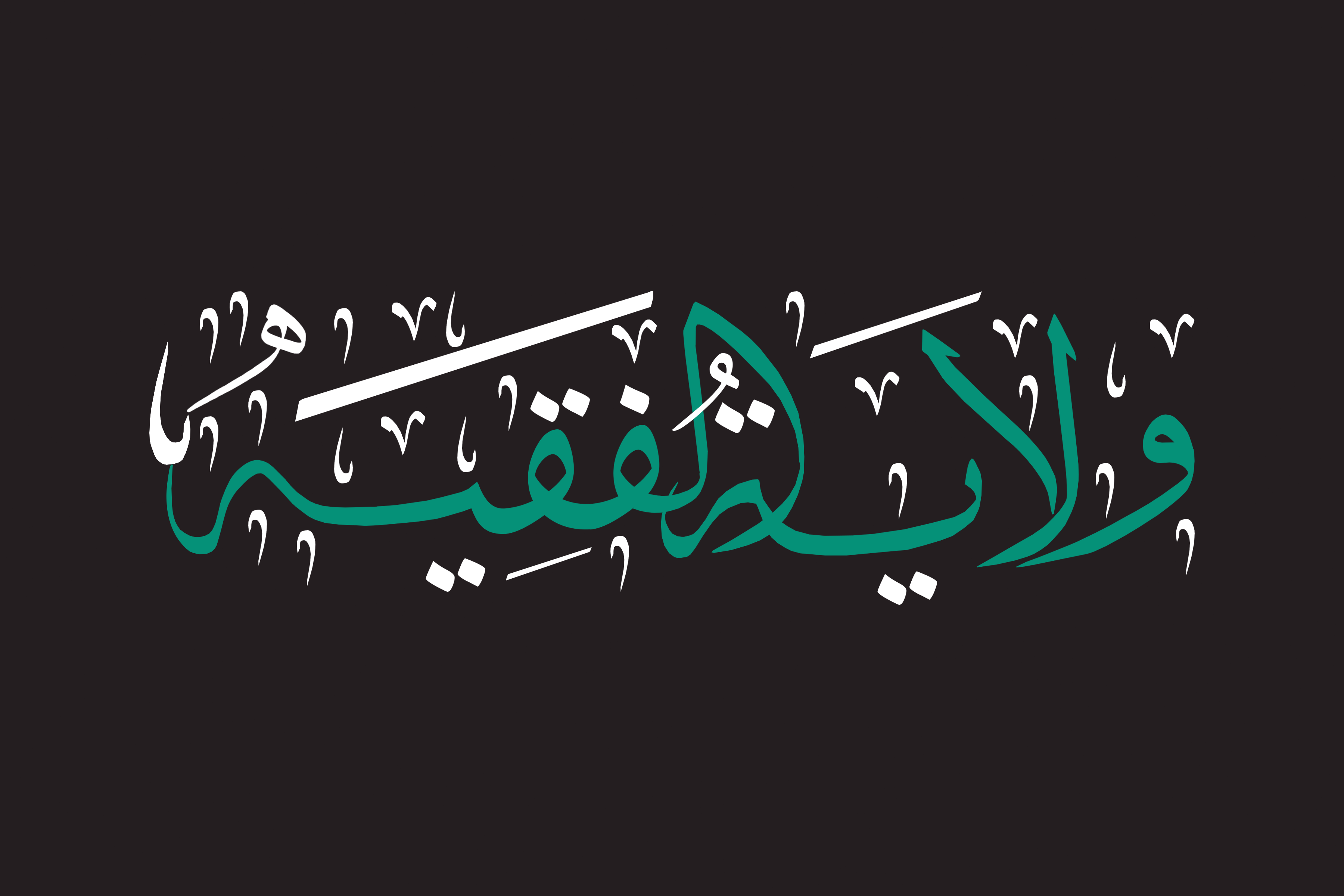
The Authority No Verse Granted
Velayat-e Faqih Examined Against the Quran, Sunnah, and Hadith
The doctrine of Velayat-e Faqih rests on a single, sweeping claim: that during the occultation of the Twelfth Imam, a qualified jurist holds comprehensive religious and political authority over the entire Muslim community. It is a claim that reorganised an entire state, concentrated unchecked power in one clerical office, and has governed the Islamic Republic of Iran since 1979. The question examined here is narrower and more precise than the usual political argument. Does this doctrine find support in the Quran, the authenticated Sunnah of the Prophet Muhammad (PBUH), and the established hadith literature? The textual record, read without deference to any state or political institution, does not support it.
This is not a polemic. It is an evidentiary exercise. The sources are the sources. What they say, and what they do not say, is the argument.
Sovereignty in the Quran: What the Text Actually Establishes
The Quran is unambiguous on the question of ultimate authority. Surah Yusuf (12:40) states directly: “The command belongs only to Allah.” The Arabic term is hukm, meaning judgment, governance, and binding authority. The verse does not distribute this authority to a class of scholars or a designated office. It locates it exclusively with the divine.
This is not an isolated passage. Surah Al-An’am (6:57) repeats the principle: “The decision rests with none but Allah.” Surah Al-Maidah (5:44) extends it into a governance standard: “Those who do not govern by what Allah has sent down, they are the wrongdoers.” Surah Al-Maidah (5:45) repeats the same formulation for those who deviate: “they are the transgressors.” Surah Al-Maidah (5:47) closes the sequence: “those who do not judge by what Allah has revealed, they are the defiantly disobedient.”
Three consecutive verses, three categories of failure, one consistent standard: governance derives its legitimacy from divine authority alone, not from the designation of any human institution, however learned.
The classical Quranic exegetical tradition did not read these verses as abolishing human governance. It read them as defining the standard by which human governance is judged. The ruler governs legitimately to the extent that his governance conforms to divine instruction. No classical mufassir of weight, in any of the major schools, read these verses as constituting a mandate for a single jurist to exercise unaccountable sovereignty over a state in the permanent absence of a divinely designated leader.
The Prophet Muhammad (PBUH) held authority during his lifetime because he received revelation directly. The Quran itself confirms this in Surah An-Najm (53:3-4): “He does not speak from his own desire. It is not but a revelation revealed.” The authority was inseparable from the revelation. It did not transfer to a successor class by default.
Shura: The Quranic Governance Mechanism
Surah Ash-Shura (42:38) lists among the attributes of the believing community: “And those who have responded to their Lord and established prayer and whose affair is conducted by mutual consultation among themselves.” The Arabic is amruhum shura baynahum. Their affairs are determined through shura among themselves. The structure is explicitly collective. The authority is distributed across the community.
Surah Al-Imran (3:159) records Allah instructing the Prophet himself to consult his companions: “And consult them in the matter.” This is not a peripheral instruction addressed to lesser figures. It is addressed to the Prophet, who received direct revelation, commanding him to govern through consultation nonetheless. The logic is clear: if the one who received revelation was instructed to consult, the claim that a post-prophetic jurist governs without institutional consultation requires a textual basis of equivalent weight. No such basis exists.
The Shura principle has a specific governance implication. It means the community’s collective deliberation is the mechanism through which legitimate governance decisions are made. Velayat-e Motlaqah, the absolute guardianship that Khomeini articulated in his January 1988 letter to Khamenei and that was subsequently institutionalised in Iran’s constitutional amendments, does not resemble consultation. The faqih’s authority in that formulation supersedes the elected parliament, the other senior clerics, and the constitutional framework whenever he determines it necessary. That is not shura. It is its negation.
The Prophet’s Sunnah on Authority After Him
In his farewell sermon delivered at Arafat, the Prophet Muhammad (PBUH) told the assembled community: “I am leaving among you two things; if you hold to them you will not go astray: the Book of Allah and my Sunnah.” The version recorded in Muwatta Imam Malik is among the most widely authenticated transmissions of this statement. Two sources are named. A third, the permanent governance of a designated jurist, is absent.
The Prophet did not appoint a successor by name. The companions, following his death in 632 CE, gathered and chose Abu Bakr al-Siddiq through a consultative process at the Saqifah of Banu Sa’idah. The process was debated and contested among the companions themselves, which is instructive precisely because the most senior figures in early Islam, those with direct access to the Prophet, did not proceed as if a designated governance system had been established. They deliberated.
The Caliph Umar ibn al-Khattab, in multiple recorded instances, invited correction from the community. “If I err, correct me,” he told the people of Medina on assuming the caliphate. This was not rhetorical. Umar is documented as having revised decisions on the basis of objections from ordinary members of the community, including women. His governance model, recognised across both major Islamic traditions as a foundational period, was characterised by accountability, not by the unchecked authority of a single religious figure.
The Caliph Ali ibn Abi Talib, the fourth Caliph and the figure from whom Shia Islam derives its theological and political lineage, wrote his governance instructions to his governor Malik al-Ashtar in a document preserved in Nahjul Balagha, among the most authoritative texts in the Shia scholarly tradition. In that letter, Ali instructs: “Do not say to yourself, ‘I have been given authority, orders will be given and obeyed,’ for that corrupts the heart, weakens faith, and brings about loss of power.” Ali’s instruction to his own governor is a warning against the psychological disposition that absolute clerical authority institutionalises as its operating principle. Ali further instructs Malik to regard the poor and the marginalised as his primary constituency, to hear their grievances directly, and to hold the powerful accountable before the law. The governance architecture in Nahjul Balagha is relational and accountable. It does not describe a system in which one jurist holds comprehensive, unilateral authority by virtue of divine appointment.
The Hadith Record on Obedience, Power, and its Limits
The authenticated hadith corpus addresses obedience to authority directly and with qualifications that the doctrine of absolute clerical guardianship does not accommodate.
The Prophet (PBUH) is recorded in both Sahih Bukhari and Sahih Muslim: “There is no obedience to the creation in disobedience to the Creator.” The principle is unqualified. Obedience to any human authority, including clerical authority, is conditional on that authority operating within divine instruction. This hadith functions as the governing rule for all subsequent governance theory in the Islamic tradition. No human office can claim obedience beyond this boundary.
The Prophet is further recorded in Abu Dawud and authenticated by Al-Albani: “The best of your rulers are those whom you love and who love you, who pray for you and for whom you pray. The worst of your rulers are those whom you hate and who hate you, whom you curse and who curse you.” The standard of legitimate governance is relational and communal. It is assessed by the relationship between the ruler and the ruled, not by the ruler’s designation by a prior religious authority.
In Sunan al-Tirmidhi, the Prophet is recorded as having said: “Beware of injustice, for injustice will be darkness on the Day of Judgment.” The hadith literature’s consistent concern with the accountability of power, its repeated warnings against rulers who exploit, neglect, or oppress the community, establishes a framework in which governance is evaluated by its conduct and consequences, not by the institutional credentials of those who hold it.
Surah An-Nisa (4:59) is the primary Quranic verse invoked in support of clerical authority: “Obey Allah and obey the Messenger and those in authority among you.” The classical exegetical debate on ulil amr, those in authority, has never produced a consensus identifying a class of jurists as the primary referent. Ibn Abbas understood the verse to mean commanders in the Prophet’s army. Mujahid understood it to mean scholars in their domain of knowledge. The classical majority position held that ulil amr refers to rulers and leaders, subject to the condition that their commands conform to Islamic principles. No classical mufassir extended this to mean the absolute and unaccountable governance of a single jurist over a modern state. The verse itself resolves disputes by directing the community back to the Quran and the Sunnah: “And if you disagree over anything, refer it to Allah and the Messenger.” The dispute resolution mechanism is textual, not institutional.
A Doctrine Born in 1970: The Innovation Problem
The doctrine of Velayat-e Faqih as a comprehensive theory of Islamic state governance was first articulated in lectures delivered by Ayatollah Khomeini in Najaf between January and February 1970. Those lectures were compiled in a text known as “Islamic Government” or Hukumat-i Islami. The doctrine had no continuous precedent across fourteen centuries of Islamic jurisprudence. It was a twentieth-century political construction, produced in a specific historical context, in response to specific political conditions: the Shah’s rule in Iran, the political marginalisation of the Shia clergy, and the need to develop a theological framework that could justify clerical assumption of state power.
This is not an ad hominem point. It is a jurisprudential one. In Islamic legal theory, particularly in Usul al-Fiqh, the methodology of Islamic law, a ruling on a matter of such magnitude requires derivation from the Quran, the Sunnah, consensus (ijma), or analogy (qiyas) applied to authenticated sources. A single scholar’s political lectures, however influential, do not constitute any of these categories.
The classical wilayah concept that Khomeini cited as his precedent was real but limited in scope. In traditional Shia jurisprudence, the jurist’s wilayah extended to managing the affairs of those without legal agency: orphans, the mentally incapacitated, those without a guardian. This was a welfare function rooted in the jurist’s religious responsibility to the vulnerable members of the community. The extension of this welfare guardianship to comprehensive governance of an entire state, with the faqih holding authority over parliament, judiciary, military, and international policy, required a leap that the classical sources do not sustain.
Grand Ayatollah Abu al-Qasim al-Khoei, who taught the majority of the senior Shia scholars alive today, including Grand Ayatollah Ali al-Sistani, explicitly rejected Velayat-e Faqih as a governance theory for his entire scholarly career. His position was that the jurist’s authority during the occultation was confined to specific religious and social welfare matters. The state was a separate domain. His student Sistani has maintained the same position. Sistani, whose following among Shia Muslims globally is vast, practises a deliberate quietism: the jurist guides, advises, and represents religious authority, but does not govern the state. His consistent refusal to assume political authority in Iraq, despite having immense moral influence over the country’s Shia majority, is a practical expression of this theological disagreement with Khomeini’s formulation.
The absence of ijma on Velayat-e Faqih is not a technicality. In Islamic jurisprudence, scholarly consensus is one of the four primary sources of law. A doctrine that the leading scholars of its own tradition reject does not carry the weight of established Islamic governance theory.
The 1988 Ruling: Where the Doctrine Exceeds All Precedent
The most direct collision between Velayat-e Faqih and the established pillars of Islamic practice came in January 1988. Ayatollah Khomeini wrote to Khamenei, who was then serving as Iran’s president, to clarify the scope of absolute guardianship. In that letter, Khomeini stated that the governance of the faqih is among the primary rules of Islam and takes precedence over all secondary rules. He then made the specific claim that the government, understood as the faqih’s authority, could suspend the performance of hajj if the interests of the Islamic state required it.
The five pillars of Islam are not negotiable categories in the Islamic textual tradition. Surah Al-Baqarah (2:183) commands the fast: “Fasting has been prescribed for you as it was prescribed for those before you.” Surah Al-Imran (3:97) commands the pilgrimage: “And pilgrimage to the House is a duty that humanity owes to Allah, for those who can make the journey.” Surah Al-Baqarah (2:110) commands the establishment of prayer and the giving of zakat. These are obligations established directly by the Quran. The hadith record reinforces them as the foundational structure of Islamic practice, not as discretionary matters subject to political calculation.
No verse of the Quran grants any human authority the power to suspend these obligations. The authenticated hadith corpus contains no precedent for a caliph, a jurist, or any governance figure suspending a pillar of the faith in the interest of state management. The Prophet, who held an authority that no subsequent jurist claims to match, did not exercise such power. The rightly guided caliphs did not exercise it.
Khomeini’s 1988 formulation was not a marginal implication of his theory. It was his explicit statement of what absolute guardianship means in practice: that the faqih’s authority functions at a level that supersedes the primary obligations Islam places on every believer. The Islamic textual tradition offers no foundation for this claim.
The Structural Argument: Accountability as an Islamic Principle
The Islamic governance tradition, across its earliest and most authoritative documentation, treats accountability not as an administrative preference but as a religious obligation embedded in the relationship between ruler and ruled.
The Prophet (PBUH) is recorded in Sahih Muslim: “Every one of you is a shepherd and every one of you is responsible for his flock.” The hadith is regularly cited in Islamic governance theory as establishing the principle of stewardship: authority is a trust, not a possession. The ruler holds authority on behalf of the community and is answerable for how it is exercised.
The tradition also records the Prophet’s instruction in Sahih Bukhari: “Help your brother whether he is an oppressor or one who is oppressed.” When the companions asked how they could help an oppressor, the Prophet responded: “By preventing him from oppressing.” The Islamic concept of enjoining good and forbidding wrong, al-amr bil-ma’ruf wa al-nahy ‘an al-munkar, referenced directly in Surah Al-Imran (3:104), applies to those in authority as much as to anyone else. A governance system that insulates its highest office from this principle does not align with the tradition that produced it.
Velayat-e Faqih in its absolute form does not provide a mechanism for the community to correct the faqih. The 1979 Iranian Constitution and its subsequent amendments placed the Supreme Leader above the accountability structures that apply to every other office. He appoints the head of the judiciary. He controls the Guardian Council that vets parliamentary candidates. He commands the armed forces. The Assembly of Experts, which nominally supervises him, is composed of clerics whose candidacy must be approved by the Guardian Council, which the Supreme Leader shapes. The accountability loop is closed from the inside.
This arrangement is not what the Quran’s shura principle describes. It is not what the Prophet’s farewell sermon identifies as the community’s guide after him. It is not what Ali ibn Abi Talib instructed his governor to construct. It is a governance architecture without a textual foundation in the tradition it claims to embody.
What the Record Establishes
The Quran places sovereignty with Allah alone. It mandates collective consultation as the mechanism of community governance and instructs even the Prophet himself to consult his companions. The authenticated Sunnah contains no appointment of a clerical succession to governance authority. The hadith literature conditions all obedience to human authority on conformity with divine instruction, establishes accountability as the standard of legitimate rule, and records warnings against unchecked power from the Prophet and from Ali ibn Abi Talib directly. The early Islamic governance tradition, including sources that Shia scholarship considers authoritative, treats governance as a trust, accountability as an obligation, and the community’s welfare as the purpose of authority rather than its instrument.
Velayat-e Faqih, as a comprehensive theory of state governance granting one jurist supreme authority over political, military, judicial, and religious matters, and capable of superseding the obligations of the five pillars, does not find support in any of these sources. Its origins are Khomeini’s 1970 Najaf lectures. Its legal codification is Iran’s 1979 Constitution. Its most expansive articulation is the 1988 letter to Khamenei. None of these documents constitute Quranic authority, prophetic Sunnah, or authenticated hadith.
The doctrine is rejected not only by the Sunni scholarly tradition, where rejection is total and consistent, but by leading Shia jurists including Ayatollah al-Khoei and Ayatollah Sistani, whose standing within Shia Islamic scholarship is not less than Khomeini’s and whose disagreement has been sustained across decades.
A doctrine that cannot locate its authority in the Quran, the Sunnah, the authenticated hadith, or the scholarly consensus of the tradition it claims to represent is not Islamic law. It is political theology constructed to serve a specific governance arrangement. The distinction is not academic. It is the difference between a rule that can be shown and a rule that can only be asserted.


