The word Trump chose was “extension.” Extension implies a diplomatic interval, a corridor of time in which something negotiated can happen. On April 21, 2026, speaking through a social media post rather than a formal statement to Congress or the Security Council, the president announced that the two-week ceasefire with Iran, set to expire the following day, would continue “until such time as” Tehran’s leaders submit a “unified proposal” to end the war. The phrasing is important. No deadline was set. No mediating framework was named. No reciprocal concession was offered. The US would “continue the Blockade,” Trump wrote, and remain “ready and able” in “all other respects.”
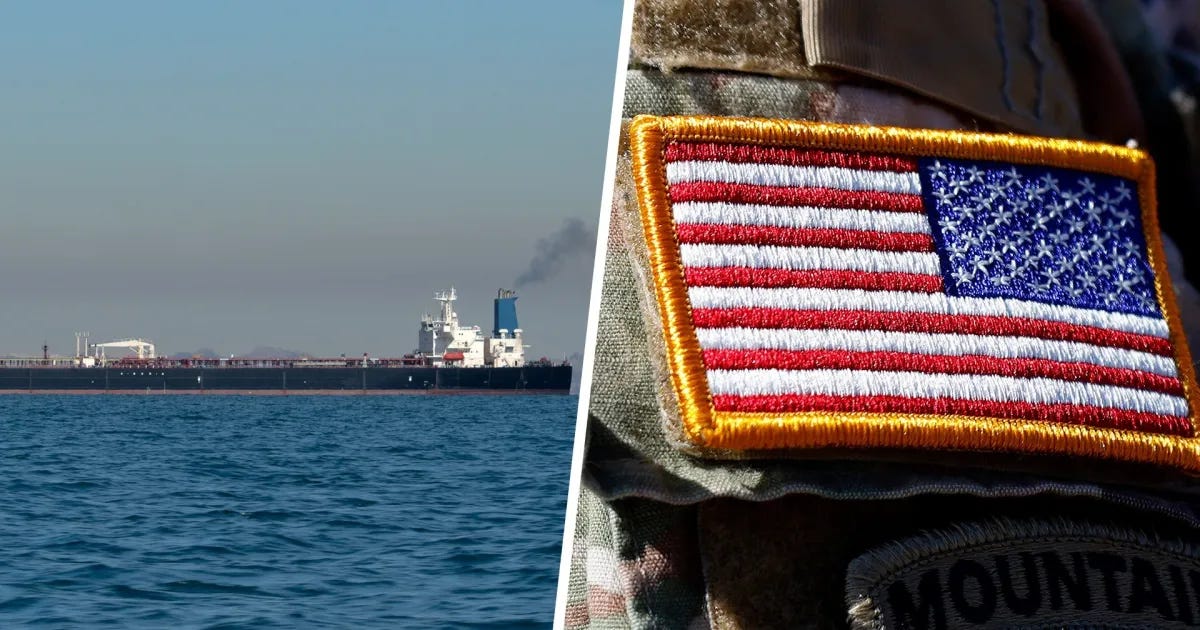
Since April 13, the United States Navy has maintained a full blockade of Iranian ports, interdicting vessels departing from or docking at Iranian territorial waters. The blockade, activated after Islamabad talks collapsed without agreement, costs Iran an estimated $435 million per day in lost export revenue, according to figures compiled by the Foundation for Defense of Democracies using LSEG and S&P Global trade data. Iran’s seaborne commerce accounts for more than 90 percent of its total annual trade of $109.7 billion. More than 90 percent of its hard currency earnings come from oil and petrochemical exports moving through the Persian Gulf. Both flows have effectively stopped. The rial has fallen 8 percent against the dollar on the black market since hostilities began in February. Tehran residents told Reuters that some commodity prices have risen by as much as 40 percent since the war’s start.
Iran’s oil infrastructure compounds the pressure in ways that the word “blockade” does not convey. Persian Gulf oil fields are designed for continuous production. When surface export infrastructure is shut down and wells cannot discharge at operational capacity, pressure builds within the reservoirs. Petroleum engineers who spoke to the Financial Times in early April placed the window for reversible damage at roughly two weeks from the point of full shutdown. Beyond that threshold, some wells sustain permanent formation damage, reducing productive capacity for years. According to the timeline of the blockade’s imposition, that window closes around April 26. The ceasefire extension does not modify the blockade. It extends the diplomatic cover under which the blockade operates.
What Washington is asking for, in exchange for lifting this mechanism, clarifies the design. The US demand, transmitted to Tehran through Pakistani mediators in a 15-point proposal on March 25, requires: the complete shutdown of Iran’s nuclear program, limits on its ballistic missile arsenal, the reopening of the Strait of Hormuz under conditions not controlled by Iran, and restrictions on Tehran’s support for armed groups across the region. Iran’s foreign minister Abbas Araghchi has said flatly that the blockade “is an act of war and thus a violation of the ceasefire.” Iran’s UN ambassador told reporters in New York that negotiations will resume only after the blockade is lifted. Iran’s own counter-proposal, a 5-point document, demands security guarantees against future US-Israeli aggression, war reparations, and international recognition of its right to enrich uranium domestically.
These are not positions that converge. They are positions that exclude each other at the definitional level. An Iran that surrenders its nuclear program, severs its proxy architecture, and accepts missile limits has effectively disarmed itself strategically before a negotiated peace has been signed and verified. No Iranian government that accepted those terms would survive the domestic politics of doing so. The Islamist republic, whatever its failures, has spent four decades constructing its deterrence posture precisely against the conditions Washington is now demanding it accept. The ceasefire extension, understood this way, is not waiting for a viable Iranian proposal. It is waiting for one of two outcomes: internal collapse in Tehran, or Iran restarting the war under conditions that justify the next phase of US escalation.
On April 3, 1991, the UN Security Council adopted Resolution 687, establishing the terms of the ceasefire that ended the first Gulf War. The language was formal and multilateral: Iraq would disclose and surrender its weapons of mass destruction programs, submit to international inspection, recognize Kuwaiti sovereignty, and compensate war victims. In exchange, international sanctions adopted under Resolution 661 in August 1990 would eventually be lifted. The ceasefire was real. The sanctions, embedded within it as the enforcement mechanism, were also real.
The sanctions regime that ran from 1991 to 2003 was governed by a succession of Security Council resolutions that accumulated new conditions as the original ones were technically disputed. Resolution 712, adopted in September 1991, authorised a limited oil-for-food mechanism at $1.6 billion per six-month period. Iraq rejected it for four years on sovereignty grounds. Resolution 986, adopted in 1995 and implemented in 1996, finally operationalized a modified version of the program. By that point, the UN Security Council had already acknowledged, in its own documentation, that civilian infrastructure destroyed during the 1991 bombing campaign could not be repaired under the sanctions’ restrictions on dual-use imports: chlorine for water treatment, spare parts for power generation, pharmaceutical precursors for medicine production. The infrastructure sat broken. The sanctions prohibited the materials needed to fix it.
Richard Garfield of Columbia University assessed Iraq’s legal foreign trade as having been cut by an estimated 90 percent under the sanctions. UNICEF, in a 1999 survey, documented child mortality in southern and central Iraq at more than twice the rate of a decade earlier. Denis Halliday, the UN’s chief humanitarian coordinator for Iraq, resigned in 1998 in protest at what he called the deliberate impoverishment of a civilian population. His successor, Hans von Sponeck, resigned two years later for the same reason. When Madeleine Albright, then US ambassador to the UN, was asked on CBS’s 60 Minutes in May 1996 whether the death toll among Iraqi children was worth the policy objective, she replied: “I think this is a very hard choice, but the price, we think the price is worth it.”
The sanctions did not remove Saddam Hussein. He governed Iraq until March 2003, when the United States invaded to finish a job the ceasefire of 1991 had left incomplete. What the sanctions accomplished in the twelve years between was the systematic destruction of Iraqi civil society: its public health infrastructure, its educated professional class, its middle-income urban population. When the 2003 invasion came, it entered a country already hollowed out. The looting of Baghdad’s institutions in the days after the regime’s fall was made easier by the fact that a decade of economic warfare had already stripped those institutions of coherence. The ceasefire of 1991 did not end the war. It transferred the war into a register where its costs were invisible to the American public and unattributable to any single act.
The blockade of 2026 is not identical to the sanctions of 1991. But its structural logic is the same: military force pauses; economic force accelerates; the conditions for ending economic force are set at a threshold the target government cannot cross without regime dissolution. The ceasefire is the container. The blockade is the contents.
Iraq in 1991 had been devastated by eight years of war with Iran before the Gulf War even began. It had no functioning nuclear deterrent and no prospect of building one before the inspection regime dismantled whatever program existed. Its proxy architecture was regional but not strategic: Palestinian groups, Kurdish manipulation, and Lebanese contacts that lacked the organizational depth and geographic range of what Iran’s IRGC-Quds Force spent four subsequent decades constructing. Iraq’s oil infrastructure was its only leverage, and the ceasefire terms stripped the Iraqi state of sovereign control over that infrastructure within months. Saddam Hussein’s decision-making after 1991 was consistently self-defeating, generating political isolation that accelerated rather than reversed his strategic weakening.
Tehran’s nuclear program is not a relic of pre-war development: it is the primary negotiating asset and the reason the war began. Washington and Jerusalem launched Operation Epic Fury on February 28 with the explicit objective of destroying Iranian nuclear infrastructure. Whether they succeeded completely remains technically disputed; IAEA board reporting from March indicates that the Fordow and Natanz facilities sustained major structural damage, but that enrichment-grade centrifuge technology and documented stockpiles of enriched uranium above 60 percent are partially unaccounted for. Iran knows this. Washington knows Iran knows this. The uncertainty is not a failure of intelligence; it is the reason Iran’s nuclear posture retains coercive value even after the strikes.
The proxy architecture is similarly intact in ways that Iraq never possessed. Hezbollah in Lebanon, the Popular Mobilization Units in Iraq, the Houthis in Yemen, and Hamas in Gaza are not sponsored auxiliaries: they are military organizations with independent command chains, weapons stocks, and territorial control that the February-March bombing campaign did not neutralize. Lebanon’s disaster management unit placed the death toll from weeks of Israeli attacks at 2,454 by April 22, but Hezbollah’s military command structure survived. The Houthis have continued maritime operations. The ceasefire that paused US-Iranian air and missile exchanges has not paused every dimension of the regional war that Iran’s allied network constitutes.
China and Russia provide a third structural difference. Both condemned the blockade immediately. China’s foreign ministry called it “irresponsible and dangerous,” stating it would “exacerbate tensions and undermine the already fragile ceasefire.” Russia warned of an “economic earthquake.” Neither government is a guarantor of Iranian sovereignty in any formal sense. But both have existing trade architecture with Tehran, both have motivated interest in demonstrating that the US dollar-denominated sanctions system is not omnipotent, and both are capable of providing partial circumvention routes through front-company networks and alternative payment mechanisms that Iraqi isolation in 1991 could not access. Satellite imagery reviewed by the Washington Post in mid-April showed five empty tankers arriving at Iranian Persian Gulf ports to load millions of barrels of oil despite the blockade, suggesting the enforcement perimeter is not fully sealed.
The Strait of Hormuz is the instrument Iraq never had. One-fifth of the world’s oil supply and liquefied natural gas moves through the strait’s 34-kilometer navigational channel. Iran closed it in February. It partially reopened it in April after the ceasefire, then closed it again on April 18 after the US refused to lift the blockade, citing the seizure of an Iranian vessel as a ceasefire violation. The strait’s closure does not hurt Iran in the near term: Tehran has been exporting its own oil through the strait while keeping Gulf state production bottled up, capitalizing on the price spike. It hurts Asia, Europe, and the Gulf monarchies simultaneously. It is a weapon that costs Iran less to use than it costs the global economy to absorb.
The structural instability of the current arrangement is not rhetorical. It is mechanical.
The blockade operates on one clock: Iran’s economic reserves. At $435 million per day in lost revenue, $13 billion per month leaves the Iranian economy in a compressed period. The rial enters a self-reinforcing depreciation cycle as import costs rise, foreign currency becomes scarce, and domestic inflation accelerates. Oil well formation damage becomes irreversible in a narrow technical window. Washington calculates that this clock runs faster than Tehran’s political endurance. The FDD’s senior fellow Miad Maleki, a former Treasury Department official, stated publicly that the blockade makes “continued resistance economically impossible.”
That calculation may be correct. It may also be wrong in the one way that matters: it assumes Iranian decision-makers optimize for economic sustainability rather than political survival. The Islamic Republic’s governing logic since 1979 has consistently prioritized regime continuity over economic rationality. The leadership that accepted the 1988 ceasefire with Iraq after eight years of devastating war, at a moment Khomeini described as drinking “a chalice of poison,” did so because continued war threatened regime survival, not because the economy collapsed. The current ceasefire calculus runs the opposite direction: accepting Washington’s conditions threatens regime survival more immediately than continued economic pressure does.
The second clock belongs to Washington’s coalition. China has condemned the blockade. Spain’s defense minister called it senseless. Global oil futures have soared. The energy price shock is not absorbed evenly: it falls hardest on economies in Asia and the Global South that depend on Persian Gulf throughput and have no comparable strategic stake in the war’s outcome. The longer the blockade operates, the more it functions as a tax on the non-Western world imposed by Washington for its own strategic objectives. That political cost accumulates for the United States at every multilateral forum, in every capital that imports Gulf oil, and inside every government that has publicly opposed the blockade.
When two clocks run in opposite directions at different speeds, the ceasefire is not stable. One of them runs out first. The question is which.
Iran’s foreign minister has said the blockade is an act of war. Iran’s UN ambassador has conditioned negotiations on its removal. Iran’s oil infrastructure approaches a point of irreversible damage within days of this writing. The Strait of Hormuz is closed again. JD Vance’s trip to Islamabad to lead peace talks was cancelled with no replacement date set.
The United States government is calling this a ceasefire extension.
What it is extending is a siege. The distinction matters because sieges do not end in negotiations: they end in relief, surrender, or the besieged party breaking out. Tehran has one breakout option that Iraq never possessed in 1991. Whether it uses it is the only question the current arrangement has not yet answered.


