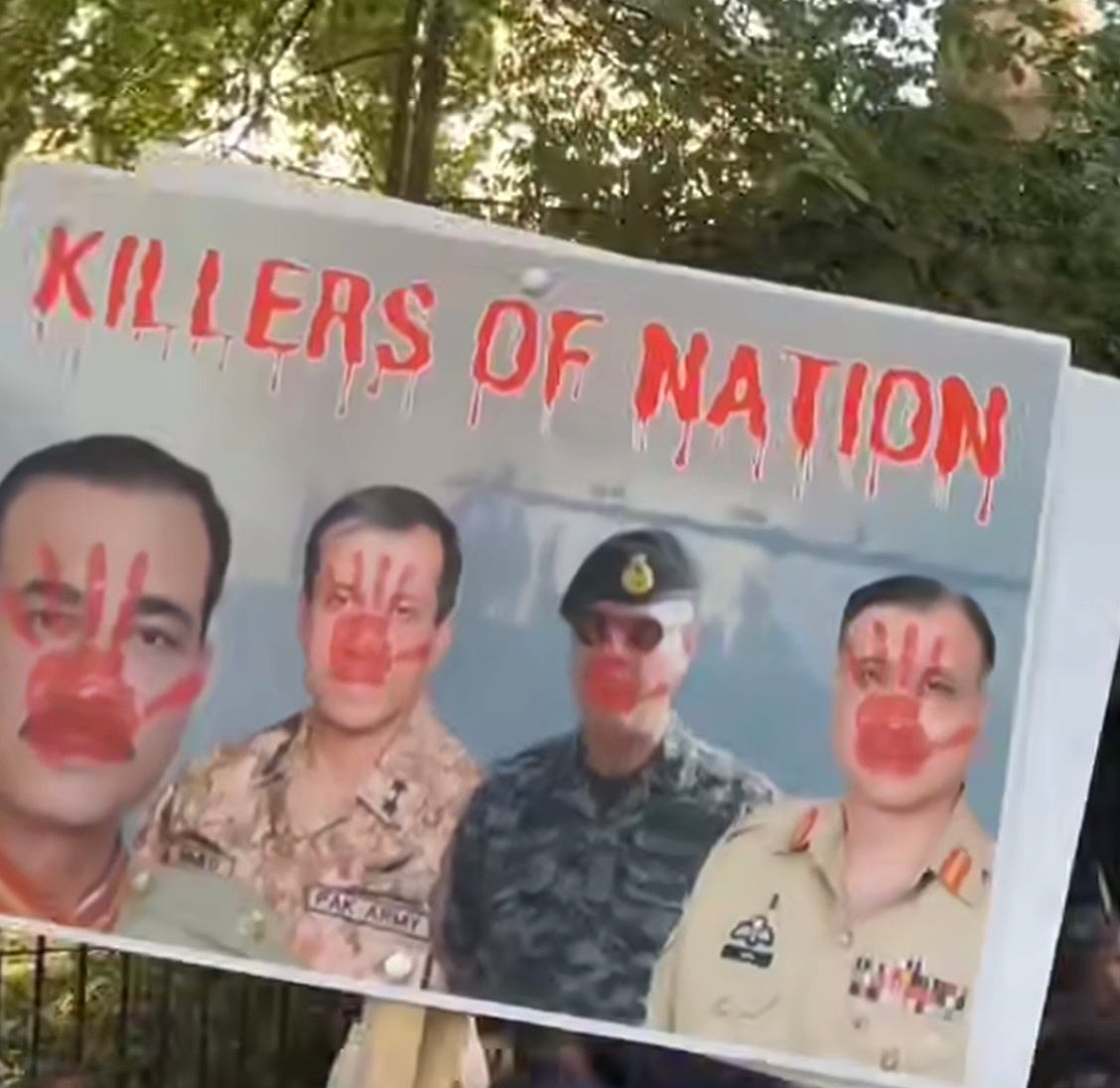
The Disease Within: How Military Power Is Destroying Pakistan
From Balochistan to Azad Kashmir, history suggests that force may silence dissent temporarily, but Pakistan is dying strategic death.
There are moments in history when the greatest danger to a nation does not come from an external enemy but from those who hold unchecked power within the state itself. In my view, Pakistan has reached such a moment. A nation cannot remain healthy when military authority overshadows democratic institutions, silences dissent, and weakens the rule of law. When generals become more powerful than the Constitution they are sworn to uphold, the state ceases to serve its people and instead demands their submission.
The duty of an army is to defend the nation, not to dominate it. Yet for decades, Pakistan’s military establishment has exercised extraordinary influence over politics while remaining insulated from meaningful civilian oversight. The result has been a fragile democracy where elected governments struggle to assert authority and accountability is too often sacrificed in the name of national security.
Nowhere is this crisis more visible than in Azad Kashmir. Kashmiris have repeatedly demonstrated that they seek dignity, justice, and the right to determine their own future. When people take to the streets to demand their rights, the answer should be dialogue, political engagement, and respect for fundamental freedoms. Instead, Pakistani security forces have used excessive force against civilians during periods of unrest. Pakistani state has indiscriminately killed Kashmiris that it claims to advocate for. It proves the point that Pakistani state has used Kashmiris as their proxies.
Pakistan has walked this road before, and history should have taught its leaders a painful lesson. The killing of Akbar Bugti in 2006 was celebrated by some as the triumph of state authority. Instead, many analysts argue that it intensified resentment in Balochistan and became a defining moment in a long and violent insurgency. States may eliminate individuals through force, but they cannot eliminate deeply held political aspirations. When governments answer grievances with coercion instead of dialogue, they often create movements that become stronger, not weaker.
That is why the voices emerging from Azad Kashmir should not be killed, dismissed or suppressed. A rights movement built on demands for justice, accountability, and political dignity cannot be extinguished through intimidation alone. If the state continues to rely on force rather than reform, it risks deepening alienation and repeating mistakes that history has already exposed.
Supporting the rights of Kashmiris is not an act of disloyalty. It is a commitment to the universal principles of human rights, democratic participation, and equal justice. Every citizen has the right to speak without fear, to protest peacefully, and to expect that those exercising state power are accountable under the law.
Patriotism does not mean defending institutions from criticism. It means defending people from the abuse of power. No general, no uniform, and no institution should ever be placed above accountability. Nations become stronger when power answers to the law, not when the law bends before power.
Pakistan’s future will not be secured by fear. It will be secured by justice. It will not be secured by silencing Kashmiris or any other community seeking to have its grievances heard. It will be secured only when the state recognizes that lasting peace comes through accountability, constitutional government, and respect for the rights and dignity of every citizen.
History has already shown what happens when political aspirations are met with force instead of dialogue. Pakistan cannot afford to ignore that lesson again. The people of Kashmir deserve to have their voices heard, their rights respected, and their future shaped through justice rather than coercion.


