The Emirates Trap: How the UAE and Israel Are Boxing Pakistan Into a Forever War on Afghanistan
Pakistan’s economic dependence on Abu Dhabi and the UAE’s deepening security alliance with Israel are quietly turning Islamabad’s Afghan policy into an instrument of Gulf power.
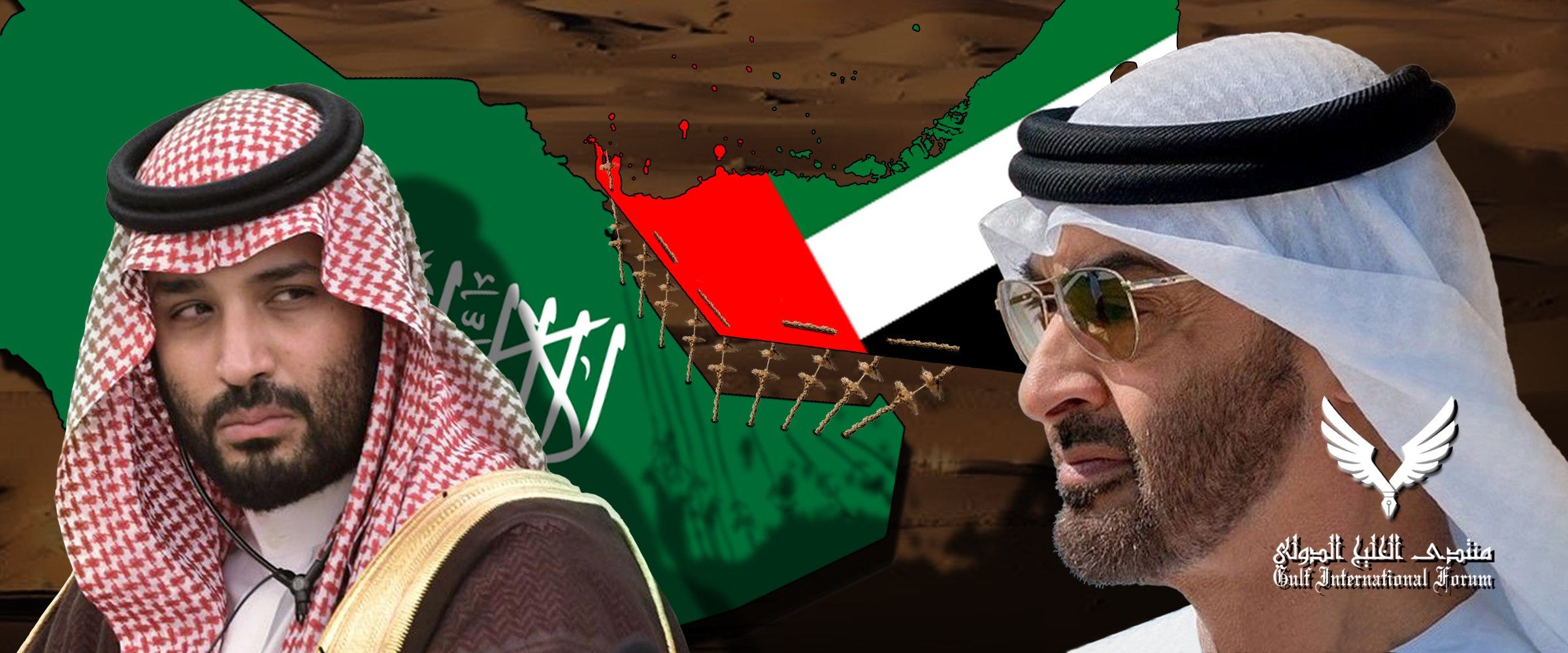
The United Arab Emirates has evolved from junior partner to Saudi Arabia into an increasingly autonomous and activist power, with a strategic project built around ports, logistics and maritime bases from the Gulf to the Red Sea and the Horn of Africa. This expansion is beginning to collide with Saudi Arabia’s traditional role as hegemon in the Arabian Peninsula and guardian of the Red Sea periphery, producing a structural rivalry that now runs through oil policy, the war in Yemen, conflicts in Africa and even the internal workings of Gulf institutions.
Pakistan sits uncomfortably inside this emerging fault line. It is not primarily a debtor vassal of Riyadh or Abu Dhabi in a narrow sense, because most of its external debt is owed to multilateral lenders and to China rather than to Gulf states. Its vulnerability is instead structural. It rests on a combination of Gulf financial support in the form of short term deposits and deferred oil, overwhelming dependence on remittances from Saudi Arabia and the UAE, and a dense web of military entanglements that reaches deep into the institutional culture and incentive structures of the Pakistan Army.
Within this triangle, the UAE’s leverage over Pakistan’s security establishment is nimble, transactional and personalised. It rests on the historical dependence of Emirati armed forces on Pakistani trainers and commanders, ongoing joint exercises and elite to elite defence ties, employment pipelines for retired senior Pakistani officers and security contractors, targeted financial lifelines and sovereign deposits at moments of crisis, and the ability to weaponise labour access and visas for Pakistani workers when displeased with Islamabad’s choices.
There is limited hard evidence that the Pakistan Army is captured by the UAE in the sense of direct operational control. What does exist is a pattern of structural dependence and personal patronage that constrains Pakistan’s strategic autonomy and quietly pushes the military to hedge, self censor or accommodate Emirati red lines in regional crises.
The story of how this came about has three layers. First, the UAE’s regional project has outgrown the old Saudi centric Gulf order. Second, Saudi Emirati rivalry is hardening into a long term strategic clash. Third, Pakistan and especially its army has been drawn into this game, not as a classic debtor but via security, labour and patronage channels.
## UAE’s shift from “little Sparta” to sub imperial maritime power
The UAE’s rise rests on three main pillars.
The first is a logistics and ports empire. DP World and related Emirati firms control or operate terminals from Jebel Ali to Karachi, from Berbera to Bosaso, giving Abu Dhabi disproportionate influence over East West trade corridors. The second is a ring of military and intelligence bases around key maritime chokepoints. Since 2015, the UAE has built or expanded airstrips and bases across Yemen’s coast and islands, and along the Horn of Africa littoral, creating a continuous maritime security belt from the Strait of Hormuz to Bab el Mandeb and into the Red Sea. The third is an ideological project that centres on an anti Islamist, authoritarian vision of regional stability. Abu Dhabi has backed anti Muslim Brotherhood and anti Islamist forces from Egypt to Libya, Sudan, Tunisia and Somalia, using aid and security assistance to reward regimes that align with this secular, centralising model.
This is not the posture of a modest small state. A growing body of academic and policy work now describes the UAE as a sub imperial or middle power actor that projects influence far beyond its borders through ports, bases, proxies and financial leverage.
Saudi Arabia’s model looks quite different. Riyadh remains the region’s demographic and economic heavyweight, but its current strategy is more inward looking. It prioritises protecting borders, stabilising its near periphery and generating high oil prices to finance the Vision 2030 megaprojects and an ambitious domestic transformation. Where the UAE seeks maritime reach and ideological engineering, Saudi Arabia seeks border stability and price supportive oil policy.
These different models produce friction in concrete theatres. In Yemen, Saudi Arabia now prioritises a negotiated exit and some semblance of territorial coherence to protect its long southern border. The UAE backs secessionist and coastal actors, above all the Southern Transitional Council, that fragment authority but secure Emirati aligned corridors. In the Red Sea and Horn of Africa, Riyadh pushes a state centric security architecture and is wary of breakaway entities such as Somaliland, while Abu Dhabi is comfortable with de facto arrangements with separatists so long as they deliver port and basing access.
## From brothers to strategic rivals
The first public sign that the UAE had outgrown its junior role came in OPEC plus. In mid 2021, Abu Dhabi openly blocked a Saudi backed extension of production cuts by demanding a higher baseline to reflect its expanded capacity. The dispute nearly collapsed the entire deal. The underlying issue is that the UAE’s fiscal breakeven oil price is much lower than Saudi Arabia’s, which gives Abu Dhabi an incentive to favour higher volumes and market share, while Riyadh needs elevated prices to finance its domestic agenda.
By the middle of this decade, repeated quota disputes and episodes of overproduction had become chronic. Officials and analysts began to discuss openly the possibility that Abu Dhabi might even leave OPEC in order to free itself from Saudi imposed ceilings. This was not simply technocratic haggling. It was a contest over who sets the rules of the global oil market.
The rift is even more visible in Yemen. The UAE co led the 2015 intervention at Saudi invitation, but by 2019 it had drawn down most frontline forces and pivoted to indirect control through the Southern Transitional Council and other proxies in the south and on key islands. Emirati backed forces consolidated control over large parts of southern Yemen, including eastern governorates that Saudi Arabia considers its strategic buffer.
Saudi reaction has now turned kinetic. Recent Saudi air strikes on Mukalla port targeted what Riyadh said were Emirati supplied armoured vehicles for the Southern Transitional Council and were described publicly as a red line to defend the kingdom’s southern frontier. Yemen’s Saudi backed Presidential Leadership Council subsequently annulled the joint defence agreement with the UAE and called for Emirati troop withdrawals. This is no longer managed friction. It is an open contest for control over the southern Arabian Peninsula’s coastline and hinterland.
The same pattern repeats across the Red Sea and the Horn. The UAE has become a leading investor and security actor in ports and bases from Berbera and Bosaso to Eritrea and eastern Libya, often backing local or separatist actors that serve its maritime strategy. Saudi Arabia and Egypt increasingly see an emergent UAE Israel partnership in the Red Sea and around key islands as a direct challenge to their own claims to control maritime routes. Analysts now frame this as a competition for primacy in the Red Sea and Horn security architecture, rather than as intra GCC coordination.
## Pakistan’s structural dependence on the Gulf
Pakistan’s exposure to this system is less about long term sovereign debt and more about flows. Remittances, short term deposits, deferred oil and defence linked rents matter more than the stock of loans on a spreadsheet.
Remittances are the real external lifeline. Workers’ transfers have reached roughly a tenth of Pakistan’s GDP in recent years. More than half of that money comes from Gulf states. Saudi Arabia is consistently the largest single source and the UAE usually ranks second. A very large majority of Pakistan’s overseas workers are employed in these two Gulf countries alone. Any loss or politicisation of access to these labour markets would be macro critical for Pakistan. This makes visa regimes, sponsorship rules and labour related signals from Gulf capitals powerful tools of influence.
On the debt side, Pakistan’s main creditors are still multilateral institutions and China. China holds around a fifth of Pakistan’s external debt, and institutions such as the World Bank and Asian Development Bank together account for an even larger share. Saudi Arabia is the second largest bilateral creditor with a single digit share of the total, while UAE holdings are smaller and often take the form of short term deposits rather than long dated project loans.
Gulf leverage instead comes from rollover sensitive deposits and oil facilities. In 2018, Riyadh pledged a large central bank deposit and a deferred oil facility to stabilise Pakistan’s balance of payments. In 2023 and 2024, as Pakistan teetered on the edge of default, Saudi Arabia and the UAE deposited several billion dollars with the State Bank. Abu Dhabi also rolled over earlier loans and confirmed fresh support, which helped unlock disbursements from the International Monetary Fund. Pakistan’s own central bank reports highlight these Gulf deposits as critical for keeping reserves above water.
The message is clear. Pakistan is not a debt colony of Riyadh or Abu Dhabi if one looks only at outstanding loan stocks. It is extremely vulnerable, however, to their decisions on rollovers, oil credit and labour access.
## The military Gulf compact
Since the late 1960s, Pakistan’s armed forces have been integral to Gulf security. In Saudi Arabia, Pakistani troops have long been stationed under various defence protocols. Official figures from several years ago showed more than 1,600 Pakistani military personnel serving in the kingdom, and more recent analyses suggest the contingent has grown under new defence arrangements.
In the UAE, Pakistan’s role was even more foundational. Sheikh Zayed personally requested Pakistani troops and trainers in the late 1960s. For years, the Abu Dhabi and later UAE Air Force was effectively an extension of the Pakistan Air Force, headed by Pakistani air commodores and staffed heavily by Pakistani pilots and instructors. A detailed study of Pakistan Gulf security ties notes that in 2004 alone, Pakistan had dozens of flying instructors in the UAE Air Force, alongside personnel in the Emirati Navy and Army.
Today, official deployments are more concentrated in Saudi Arabia and Qatar, but the UAE relies extensively on retired or contract Pakistani personnel in advisory, technical and security roles. Analyses of Gulf security contracting describe thousands of retired Pakistani soldiers, non commissioned officers and officers working across the region’s security sectors as trainers, guards and specialists. For Pakistan, this is a deliberate strategy. Defence pacts with Saudi Arabia are openly described as an exchange of security for economic stability. Pakistani troops and expertise are supplied in return for oil on deferred payment, cash deposits and episodic bailouts. The UAE’s role is similar but more diversified, combining sovereign deposits, investment pledges and heavy absorption of Pakistani labour.
This bargain operates at three levels. At the state level it ties Islamabad to Gulf security. At the institutional level it embeds Gulf ties in the Pakistan Army’s doctrine and training. At the personal level it turns the Gulf, and especially the UAE, into a key source of post retirement income and prestige for senior officers.
Abu Dhabi has invested in symbolic capital as well. In 2022, President Mohamed bin Zayed conferred the Order of the Union, one of the UAE’s highest honours, on General Qamar Javed Bajwa for his role in furthering bilateral ties. Official statements highlighted defence and security cooperation and described the relationship as an enduring partnership rooted in brotherhood. Isolated, such honours look ceremonial. In context, they reinforce a prestige economy in which being valued by Abu Dhabi carries weight inside Pakistan’s officer corps.
The employment pipelines are even more telling. In 2018, Pakistan’s Supreme Court asked the defence ministry to explain how former army chief Raheel Sharif and former intelligence chief Ahmad Shuja Pasha had been allowed to take up foreign employment so soon after retirement, including Pasha’s job in the UAE, given legal restrictions on post retirement foreign work. The Court’s intervention did not block the appointments but it did reveal institutional unease about senior officers moving quickly into the pay of foreign governments.
Investigative reporting on senior Pakistani officers often turns up property and corporate holdings in Dubai and other Gulf jurisdictions. The UAE has become a preferred offshore wealth hub and lifestyle base for segments of Pakistan’s military and political elite. Pakistan formally bans serving officers from holding dual nationality, yet parliamentary testimony on dual nationality among bureaucrats and the ease of obtaining residency abroad underscores how porous the system is once officials retire.
Operational and training integration continues as well. Joint special forces drills bring together Pakistan’s elite SSG and UAE Presidential Guard units for counter terrorism and hostage rescue scenarios. The Pakistan Navy and Air Force conduct regular exercises with their Emirati counterparts. These partnerships offer access to advanced Western platforms through Emirati inventories and maintain habits of interoperability that reinforce professional affinity. From a narrow military perspective this is normal cooperation. Politically, it strengthens institutional interest in preserving Emirati goodwill.
When Pakistan has crossed Emirati preferences, Abu Dhabi has not hesitated to signal costs. In 2015, Pakistan’s parliament voted to remain neutral in the Yemen war, while pledging to defend Saudi territory. A senior Emirati minister publicly condemned the decision as contradictory and dangerous, and warned Pakistan of a heavy price for its ambiguous stance, equating neutrality with siding with Iran. Pakistani officials scrambled to downplay and rebut these remarks, but the episode exposed how external security dependence intersects with domestic civil military tensions. Parliament asserted neutrality. Gulf patrons publicly shamed Islamabad. The military then sought to reassure Riyadh and Abu Dhabi of its commitment to their defence.
On the economic side, visa and labour measures have become a barometer of Gulf satisfaction. In 2020 and 2021 and again in 2025, the UAE sharply curtailed or effectively halted regular visas for Pakistanis, officially citing security and documentation concerns. Recruiters reported thousands of lost job offers within weeks. Pakistani officials later acknowledged in Senate proceedings that visa issuance had been narrowed and often required additional police verification. For a military that casts itself as guardian of economic stability and that depends on Gulf markets for remittance driven foreign exchange, such episodes are read as strategic warnings, not simple consular disputes.
## Caught between Riyadh and Abu Dhabi
Saudi Arabia remains Pakistan’s primary Gulf anchor. It is the largest remittance source, the biggest bilateral creditor among Gulf states, a key provider of deferred oil and emergency deposits, and now party to a formal mutual defence pact that institutionalises decades of security cooperation. The UAE’s influence is more diversified. It runs through ports, logistics, investment, personal ties and visa regimes. It is also more embedded in Pakistan’s urban middle classes through real estate, travel and employment in Dubai and Sharjah, and more personally enmeshed with the officer corps through honours, training and post retirement jobs.
Saudi Arabia can credibly threaten Pakistan with macro level pain by adjusting oil, deposits or the overall volume of remittances. Abu Dhabi can fine tune pressure on specific constituencies by tightening employment visas, slowing investment deals, or sidelining particular political factions or officers from the Dubai circuit. That makes the UAE particularly well placed to influence micro decisions inside Pakistan’s power structure, even if Riyadh remains the dominant macro patron.
Several episodes show how Gulf pressure has shaped Pakistan’s choices. The Kuala Lumpur Summit in 2019 is one example. Pakistan initially backed a Malaysia Turkey Qatar Iran summit that many saw as an alternative platform to the Saudi dominated Organisation of Islamic Cooperation. After high level visits to Riyadh, Prime Minister Imran Khan abruptly cancelled his attendance and Pakistan pulled out. Multiple accounts attribute this reversal to intense Saudi and Emirati pressure and describe it as a display of diplomatic subservience.
The 2015 Yemen vote is another case. Parliament’s decision not to send troops led to angry Emirati rhetoric about a heavy price and suspicion in Gulf capitals about Pakistan’s reliability. Subsequent Pakistani military diplomacy, including Raheel Sharif’s leadership of the Saudi led Islamic Military Counter Terrorism Coalition and expanded security cooperation, can be read as an effort to repair the relationship. Pakistan has also tried to cast itself as a neutral broker between Saudi Arabia and Iran, and between the Saudi Emirati bloc and Qatar. Each time, it has had to trim its sails to avoid crossing Gulf red lines, particularly when it comes to any independent alignment with Turkey and Qatar that might resemble an alternative axis.
In each of these decisions, civilian leaders were formally in charge, but the army’s calculations about Gulf reactions shaped the real envelope of the possible.
## Is Pakistan’s army compromised by the UAE?
There are at least three ways to understand the idea of compromise. One is operational control, which would mean the UAE directing Pakistan’s army in ways that clearly go against Pakistan’s core interests. Another is structural dependency, in which Pakistan’s army faces such strong material and career incentives from the UAE that it systematically internalises Emirati preferences. A third is selective capture, where individual officers or factions have enough financial or personal stakes in the UAE to skew their behaviour.
On the first definition, there is no firm public evidence that Abu Dhabi controls Pakistan’s military operations. On the second, there is strong evidence of dependency. Pakistani military deployments and training in the Gulf are explicitly framed as a trade of security for financing and labour opportunities. The UAE has used economic and diplomatic levers, from deposits to support in IMF negotiations and visa policies, at key moments for Pakistan’s solvency. Pakistan’s elite often rely on the UAE as a platform for wealth, lobbying and second careers. Those realities embed powerful material incentives to keep Abu Dhabi satisfied.
On selective capture, the public record is fragmentary but troubling. The Supreme Court’s scrutiny of foreign jobs for former top commanders signals institutional concern that highly sensitive ex officers are moving quickly into foreign pay. Investigative work on senior officers’ offshore assets frequently centres on Dubai and other Emirati jurisdictions. None of this proves disloyalty in a legal sense. It does show that Emirati patronage and financial secrecy are part of the environment in which Pakistan’s senior security officials operate.
For a careful observer, the conclusion is that Pakistan’s army is not a simple client instrument of the UAE. It is embedded in a web of mutual dependence where Emirati money, honours, training and job prospects systematically shape preferences and red lines. This does not require explicit instructions from Abu Dhabi. It works through expectations, self censorship and anticipatory obedience, especially on issues that touch Emirati core interests such as Yemen, political Islam, ports and maritime routes, relations with Turkey and Qatar and now relations with Israel.
## Looking ahead
Given the structural divergence between Saudi Arabia’s continental, price focused model and the UAE’s maritime, market share and ideological project, a long term strategic clash is already underway, even if it never becomes direct inter state war.
For Pakistan, the implications are uncomfortable. Its new defence pact with Riyadh, and its disproportionate reliance on Saudi remittances and deferred oil, will nudge it closer to the Saudi camp as Saudi Arabia moves to constrain Emirati influence in Yemen, Sudan and the Red Sea. That will put strain on aspects of the Pakistan UAE relationship, particularly if Abu Dhabi sees Islamabad edging towards competitors like Turkey or Qatar in specific arenas.
At the same time, both Saudi Arabia and the UAE are ramping up megaprojects and security commitments. Pakistani labour and military expertise will become more valuable, but visa controls, skill verification schemes and politicised bans will also give Gulf states finer control over which Pakistani constituencies prosper and which are squeezed. As Riyadh and Abu Dhabi diverge more openly, Pakistan’s army will face sharper choices over which patron’s preferences to prioritise. The scale of Saudi support suggests a tilt towards Riyadh, but decades of personal and institutional ties with the UAE make that realignment fraught.
Each time Pakistan adjusts its foreign policy to Gulf sensitivities whether over Yemen, alternative Muslim summits or relations with Israel domestic accusations of subservience and compromise grow louder. Those accusations complicate the army’s efforts to claim an apolitical posture at home.
The UAE is indeed acting larger than its traditional size, pursuing a maritime and ideological project that now collides structurally with Saudi Arabia’s primacy in the Peninsula and the Red Sea. Pakistan is not a classic debt vassal of either, but its army and state are tightly bound to the Gulf through remittances, labour markets, short term deposits, oil credit and decades of security provision. The UAE plays an outsized and highly targeted role within that web. The more the Saudi Emirati rivalry deepens, the less room Pakistan and its military establishment will have to pretend that this dependence is a cost free arrangement.


