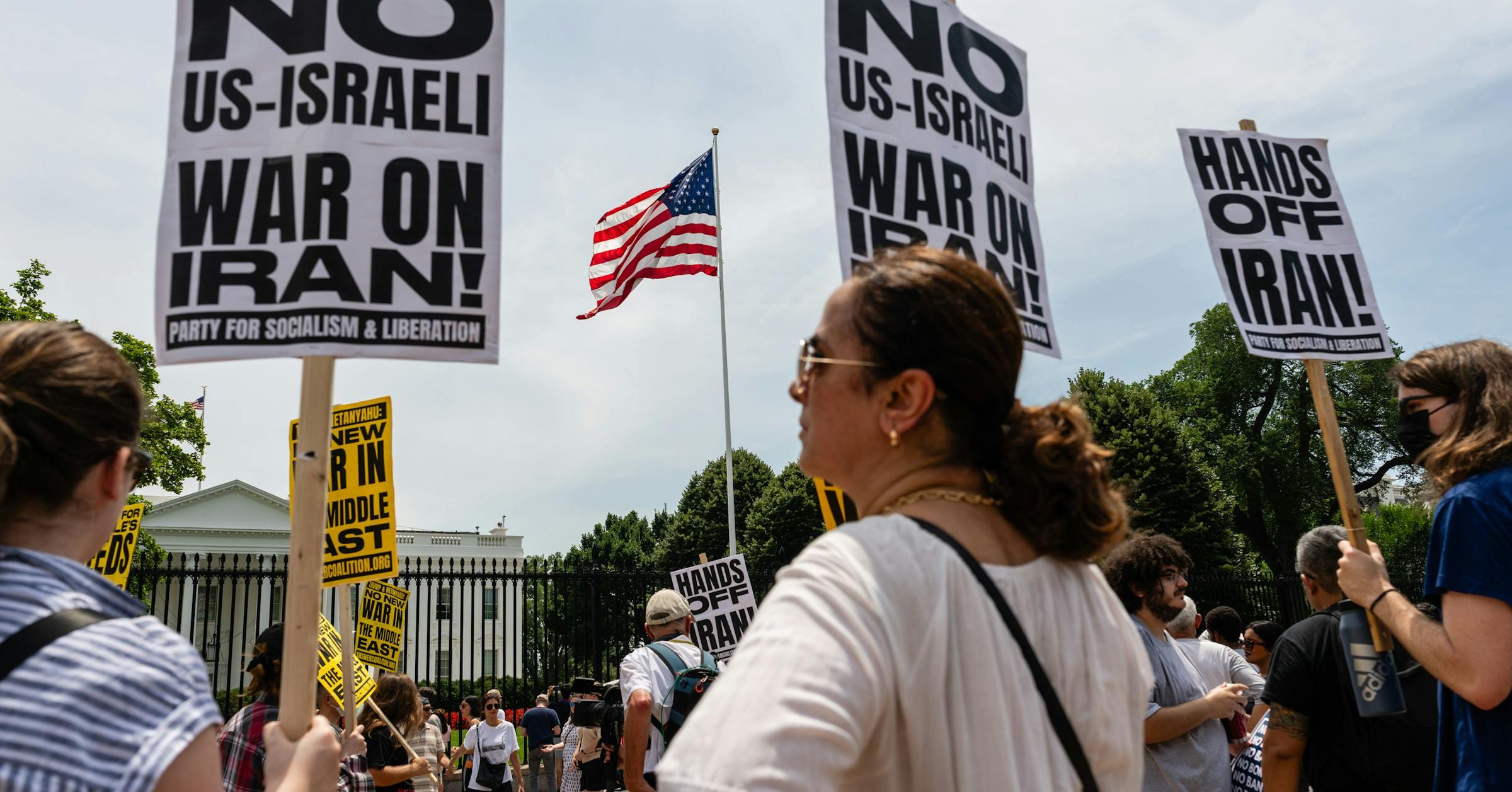
The sirens at the Karoon Petrochemical Complex in Mahshahr sounded forty minutes before the first detonation on the morning of June 8, 2026. Workers evacuating the site reported hearing the low hum of incoming unmanned platforms before the air defense batteries in southwestern Khuzestan province began firing. The Israeli air force targeted the nitric acid production units and raw storage facilities, structures that the Israeli Ministry of Defense subsequently described as key infrastructure used by Tehran to manufacture solid-propellant ballistic missiles. Within three hours, the Islamic Revolutionary Guard Corps announced a retaliatory strike on similar industrial refining and petrochemical facilities in Haifa, Israel. Flares from the integrated oil refining hub on the Mediterranean coast confirmed the impact of at least two land-attack cruise missiles.
By the afternoon, the United States president had published a brief message on social media demanding that both governments immediately stop shooting. By the evening, both Tel Aviv and Tehran had announced a temporary halt to these specific offensive operations, reverting the region to the fragile status quo that has characterized the conflict since the spring ceasefire.
This sequence of events illustrates the operational mechanics of an episodic war.
An episodic war is a conflict that does not move toward a decisive military settlement or a formal peace treaty. Instead, it operates through repeating cycles of high-intensity kinetic strikes separated by temporary, fragile pauses. During these pauses, the war is not concluded. It is simply transferred to a different register, conducted through economic blockades, proxy attrition, and targeted operations. The ceasefire is not the end of the conflict; it is the container for the siege. When the economic or strategic pressure of the siege becomes intolerable, or when one side violates the agreed limits of the pause, the conflict breaks out into open combat. Once a direct exchange occurs, external superpowers intervene to enforce a new pause, protecting their own energy and domestic economic interests. The siege clock resets, and the cycle begins again.
The structural driver of the June 8 breakout is the economic blockade that the United States has maintained since the collapse of the Islamabad negotiations in mid-April. According to shipping data compiled by LSEG and trade records analyzed by the Foundation for Defense of Democracies, the US naval interdiction of Iranian ports has cost Tehran an estimated 435 million dollars per day in lost export revenue. The black-market value of the rial has depreciated by 8 percent since the blockade was formalized. Prices for basic commodities in Tehran have risen by as much as 40 percent.
The economic pressure is compounded by the physical constraints of Iran’s energy infrastructure. Khuzestan’s oil fields are designed for continuous output. When tankers cannot load at Kharg Island and production wells are throttled, pressure accumulates within the geological reservoirs. Petroleum engineers estimated that the technical window to prevent permanent formation damage to these wells was less than three weeks from the start of the full shutdown. Beyond that point, the reservoir structure suffers degradation that reduces long-term recovery rates.
For the government in Tehran, the blockade is not an alternative to war. It is a slow-motion destruction of the state’s material base. Abbas Araghchi, Iran’s foreign minister, made this clear during a brief address in late April, stating that the economic encirclement constitutes an active military operation under a different name.
The US administration has calculated that the blockade runs faster than Tehran’s political endurance. The demand transmitted through Pakistani intermediaries remains unchanged: the complete shutdown of Iran’s enrichment facilities at Fordow and Natanz, strict limits on ballistic missile ranges, and the termination of regional security networks in Lebanon, Syria, and Yemen.
This calculation is structurally flawed. It assumes that Iranian decision-makers optimize for economic sustainability rather than regime survival. The Islamic Republic has historically demonstrated a willingness to accept near-total economic ruin to preserve its core deterrence assets. The ceasefire extension announced by Washington in late April did not offer a diplomatic exit. It offer the choice between a slow surrender through economic strangulation or a kinetic breakout. The strikes on the Karoon petrochemical plant and the Haifa refinery are the logical output of that choice.
The political capacity to sustain this episodic cycle is shaped by the institutional transformation that occurred inside Iran following the opening day of the war. On February 28, 2026, the US-led air campaign, Operation Epic Fury, assassinated Supreme Leader Ayatollah Ali Khamenei alongside his defense minister and the chief commanders of the Islamic Revolutionary Guard Corps.
The installation of his son, Mojtaba Khamenei, as the third supreme leader on March 9 was forced through the Assembly of Experts by the surviving second-tier commanders of the IRGC. This appointment represents the formal collapse of the non-dynastic principle that had defined the 1979 revolution. The clerical establishment in Qom was effectively bypassed.
Mojtaba Khamenei has not appeared in public since his appointment. He has not delivered a Friday sermon or issued a video address. This physical silence has led to speculation among regional intelligence agencies regarding his physical capacity or whether he functions primarily as a bureaucratic front for a military junta.
The IRGC now runs the state directly. The transition from a government guided by senior clerics to one managed by a paramilitary class has altered Tehran’s strategic calculus. The new leadership is less constrained by traditional theological caution. Because the IRGC’s institutional survival is directly tied to the preservation of the regional security network and the missile program, they are structurally incapable of negotiating the concessions Washington demands.
The IRGC does not view the missile program as a bargaining chip to be surrendered for sanctions relief. They view it as the only reason they are still alive after forty days of American bombardment. A government run by the Revolutionary Guards will accept an endless cycle of episodic strikes before it agrees to the disarming of the state.
The duration of the pauses between kinetic episodes is decided in Washington and Beijing, not in Tel Aviv or Tehran. The ceasefire of April 7 was brokered because the closure of the Strait of Hormuz had introduced costs that neither superpower was willing to sustain.
For China, the supply shock was direct. According to Kpler shipping data, China imports approximately 1.38 million barrels of Iranian crude per day, representing more than eighty percent of Iran’s total exports. The closure of Hormuz in March drove up domestic fuel costs in China and disrupted shipping routes to Europe and the Gulf. The economic impact occurred at a sensitive moment for the Chinese government, which was preparing for the bilateral summit with the United States in mid-May.
Beijing’s intervention to secure the April ceasefire was a calculated move to stabilize energy markets and clear the agenda for the summit. The joint China-Pakistan five-point initiative, issued on March 31, was designed to establish a diplomatic framework that protected Chinese commercial interests while presenting Beijing as a responsible global mediator.
This mediation is not neutral. While China pressured Tehran to sign the ceasefire and agree to the reopening of Hormuz, US intelligence reports confirmed that Beijing was simultaneously preparing shipments of shoulder-fired anti-aircraft missile systems to Iran, routed through third countries. The ceasefire gave China the diplomatic credit of a peacemaker while providing a window to replenish the air defenses of its principal regional partner.
Washington operates under a similar domestic constraint. The Trump administration wants to demonstrate a victory over Iran without committing to a ground war that would disrupt global financial markets. The use of heavy bunker-busting ordnance, including fourteen Massive Ordnance Penetrators dropped on Fordow and Natanz in March, demonstrated the limits of air power. The facilities were damaged, but the enrichment stockpiles and centrifuge arrays were not fully eliminated.
The US administration needs the ceasefire to manage its own domestic political calendar. The May 14-15 summit in Beijing required a regional environment free of active shipping disruptions in the Gulf. The pause is a logistical convenience for the two superpowers, allowing them to coordinate their bilateral trade and security relations without the constant interference of a regional war.
The episodic war is operated by the United States, with the active logistical and airspace assistance of the Gulf Cooperation Council monarchies. This Gulf participation rests on a specific strategic calculation. The ruling elites in Riyadh and Abu Dhabi perceive Tehran as an equal threat to their security as Israel. However, they recognize that directly confronting Israeli territorial expansion is militarily impossible due to Washington’s absolute security guarantee to Tel Aviv. Consequently, since the United States and Israel have committed to dismantling Iranian power, the Gulf monarchies calculated that assisting in the destabilization of Iran was their most rational pathway. Their unstated strategy was to help eliminate the immediate Shiite rival first, leaving the Israeli challenge to be addressed at a later date when the regional balance of power shifted.
This calculation is a fundamental strategic error. By assisting in the containment and eventual destruction of Iran, the Gulf states are dismantling the only regional counterweight to Israeli hegemony, while locking themselves into a permanent state of subordination.
The primary error lies in misunderstanding the nature of the contemporary US-Israel alliance, which is no longer a political partnership subject to executive discretion. It has become an institutional merger codified into United States statute. Under Section 224 of the National Defense Authorization Act for Fiscal Year 2027, the United States has integrated Israeli military research, development, testing, and procurement directly into the Pentagon’s Future Years Defense Program. This provision goes beyond financial aid, establishing a permanent technology cooperation initiative lodged within the Department of Defense. It covers artificial intelligence, autonomous systems, directed energy, and cyber defense, building Israel directly into the future procurement architecture of the American military.
This military merger is reinforced at the intelligence level by Section 622 of the Intelligence Authorization Act for Fiscal Year 2027. This statute amends the National Security Act of 1947 to make intelligence sharing with Israel a mandatory requirement, prohibiting the president from suspending or reducing the flow of sensitive data without formal congressional notification and a documented national security exception. This provision forecloses the executive discretion that allowed past administrations to pause intelligence transfers during periods of crisis. No other foreign state, including the members of the North Atlantic Treaty Organization or the Five Eyes alliance, possesses this statutory protection.
By helping to hollow out Iran, the GCC monarchies are not preparing the ground to confront Israel later. They are preparing their own permanent integration into a US-Israeli military and intelligence condominium. The statutory lock-in of Section 224 and Section 622 ensures that any future regional security architecture will be managed from Tel Aviv and Washington, leaving the Gulf states as subordinate logistics providers rather than independent strategic actors.
The asymmetric structure of the war is most visible in Lebanon. While the direct exchange of missiles between the US and Iran paused in April, the Israeli military has continued its campaign against Hezbollah without interruption.
Under the name Operation Arrows of Fire, the Israeli air force has struck more than seventy sites across Lebanon, including central Beirut and the southern suburbs of Dahiyeh. According to the Lebanese Health Ministry, more than 3,100 people have been killed since March, and more than one million have been displaced. The Dahiyeh Doctrine, which dictates the use of disproportionate force against civilian infrastructure to pressure hostile groups, is being executed at scale.
This campaign is enabled by the continuous resupply of munitions from the United States. The precision-guided weapons and heavy ordnance used to strike Lebanese cities are transferred through emergency authorizations that bypass standard congressional review. The administration has maintained these transfers despite formal warnings from United Nations experts and the documented deaths of more than one hundred medical workers in southern Lebanon.
The Lebanese prime minister, Nawaf Salam, described the situation as a systematic effort to subordinate the country’s sovereignty under the guise of counterterrorism. The Lebanese government is being pressed to disarm Hezbollah, an organization it does not control, while its cities remain under active bombardment.
The exclusion of Lebanon from the US-Iran ceasefire terms was a structural concession forced upon Tehran. Iran accepted a pause on the front where it had direct offensive capability, leaving its most important regional ally to be dismantled in isolation. This arrangement is unsustainable. Hezbollah is Iran’s primary deterrent depth against an eventual Israeli attack on its nuclear facilities. The systematic destruction of that depth forces the IRGC to look for opportunities to re-establish the balance of terror, even if it requires violating the ceasefire terms.
The strikes on June 8 represent a shift in the targeting methodology of the war. By hitting the Karoon Petrochemical Complex in Mahshahr and the integrated refining facilities in Haifa, both states have moved beyond military installations to target the industrial foundations of each other’s economy.
The choice of targets is specific. The Karoon complex produces nitric acid, a chemical compound necessary for the manufacture of explosives and solid rocket propellants. By targeting this facility, Israel seeks to exploit the damage already done to Iran’s missile production plants during the initial air campaign, preventing the domestic replacement of spent arsenals.
The IRGC’s response against Haifa targeted Israel’s largest refining center, a facility that processes approximately 197,000 barrels of crude per day and provides the bulk of the country’s domestic fuel and chemical feedstocks. The message from Tehran was clear: if Iran’s non-oil export infrastructure is destroyed by the blockade and targeted strikes, Israel’s domestic energy security will be subjected to the same condition.
The intervention of the United States to halt the strikes within hours illustrates the limits of the kinetic register. A sustained exchange targeting the petrochemical infrastructure of the Persian Gulf and the Mediterranean would push global oil prices past 120 dollars a barrel, triggering inflation that would disrupt the domestic economic programs of both the US and China.
Neither Trump nor Xi can afford the economic consequences of a total war. Therefore, the superpowers applied the necessary diplomatic and financial pressure to force both parties back into the ceasefire framework. The shooting has paused, but the blockade remains in effect. The Karoon plant is partially damaged, the Haifa refinery is flaring, and the underlying conditions that produced the exchange have not been modified.
The current state of the Middle East is not a post-war settlement. It is a siege managed through diplomatic intervals.
This model of conflict has historical precedents. The sanctions regime imposed on Iraq between 1991 and 2003 operated under a similar logic. The military campaign of the first Gulf War paused, but the economic destruction continued through twelve years of interdiction that decimated the country’s civilian infrastructure and public health systems without removing the government. The ceasefire was the container for a slow-motion military operation that prepared the terrain for the eventual 2003 invasion.
Iran’s situation in 2026 differs from Iraq’s at several key points. Iran retains active proxy networks that can strike regional targets despite the bombardment. It possesses thousands of ballistic missiles stored in deep underground facilities that cannot be reached by conventional air superiority. It has alternative trade channels through Russia and Central Asia that bypass the maritime blockade. Most importantly, it controls the Strait of Hormuz, a choke point that allows Tehran to export its own economic disruption to the rest of the world.
These assets prevent the blockade from producing a quiet surrender. Instead, they guarantee that the siege will be interrupted by periodic explosions of direct violence. The Karoon and Haifa strikes are the first in a series of anticipated breakouts. As the economic reserves of the Iranian state decline under the pressure of the naval interdiction, the incentive for the IRGC to launch direct strikes increases. They will use the threat of regional disruption to force a modification of the blockade terms.
The episodic war is the new operating system of regional conflict. It is a war designed to last because the actors with the power to end it prefer the stability of a managed siege to the unpredictable consequences of a decisive resolution. The negotiations in Islamabad, the summit in Beijing, and the ceasefire announcements are the mechanisms by which the parameters of the siege are adjusted.
The workers at the Karoon complex will return to the undamaged units. The tankers will remain outside the territorial waters. The sirens will sound again when the next clock runs out.


