The High Price of “Taking the Oil”: Why America Cannot Afford a Venezuelan Windfall
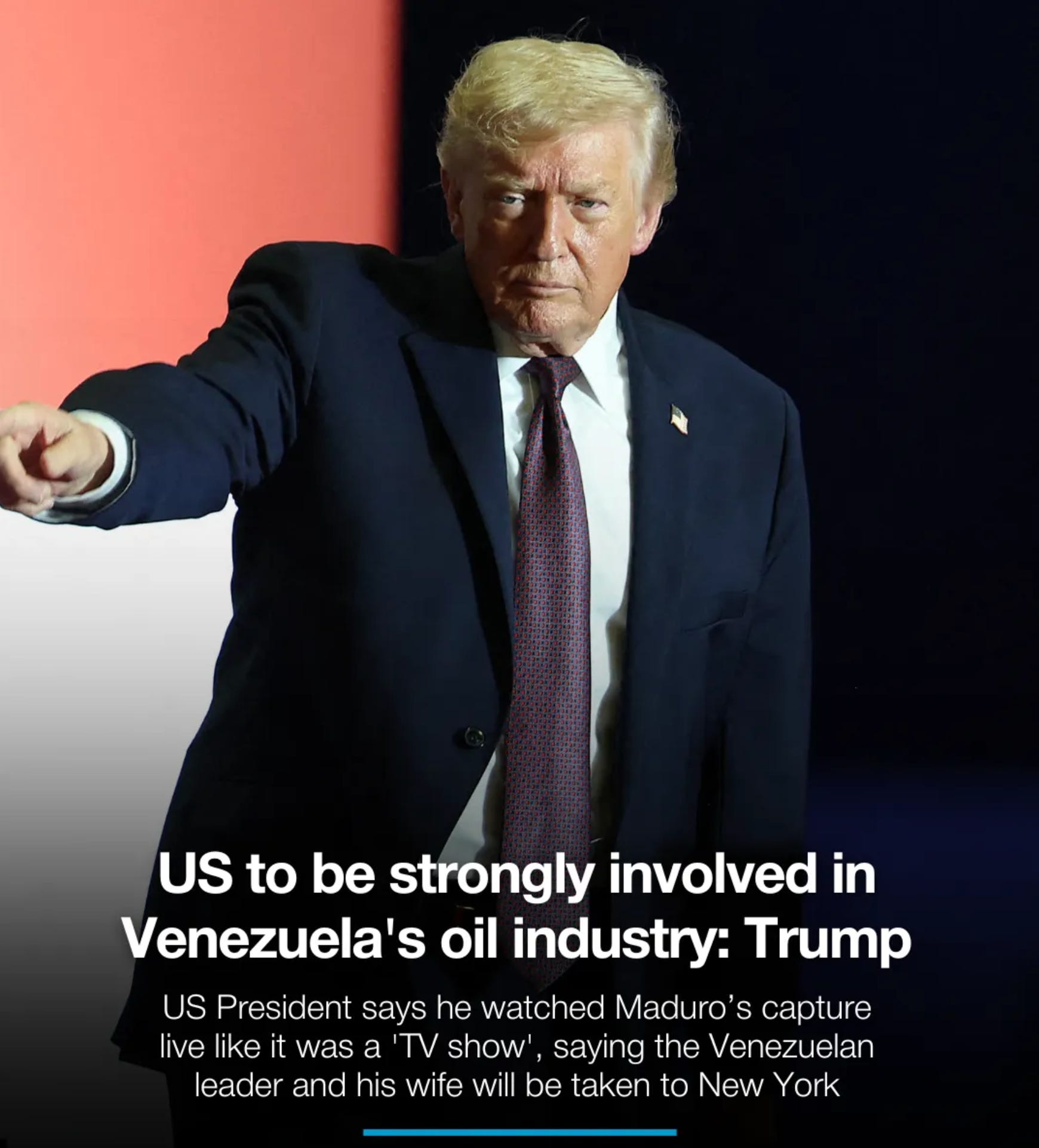
Trump wants U.S. firms to seize Venezuela’s oil, but shattered infrastructure and sanctions risk turn that fantasy into a multibillion‑dollar liability.
American oil companies are unlikely to “take over” Venezuela’s oil industry on favorable terms because the financial, political, and reputational costs are enormous compared with any plausible payoff at current oil prices. Even with Washington’s new leverage after Maduro’s removal and a Trump White House that wants to turn Venezuelan barrels into a showcase of American deal‑making, what lies on the table is less a bargain and more a decades long rescue of a broken petro‑state.
Companies are not lining up to assume control of Venezuela’s oil sector, despite a U.S. administration eager to unlock new supplies and claim political credit. Oil majors have learned from Iraq, Libya, and earlier Venezuelan cycles that headline access to big reserves does not automatically translate into bankable projects. They must answer to shareholders who see better risk‑adjusted returns in shale, existing Gulf of Mexico platforms, or even share buybacks and dividends. In that context, jumping headfirst into Venezuela can easily make a president look out of touch with how capital is actually deployed inside the industry.
The starting point is the devastated state of Venezuela’s infrastructure. Years of underinvestment, corruption, and sanctions have left wells shut in, pipelines corroded, refineries running at a fraction of capacity, and export terminals in disrepair. Restarting production is not a matter of flipping a switch or bringing in a handful of American engineers for a photo‑op. It means thousands of workovers on old wells, drilling new ones, rebuilding gathering systems, and in many cases constructing new upgraders to turn extra heavy crude into exportable blends. Analysts put the bill anywhere from tens of billions of dollars to well over a hundred billion over more than a decade. That range alone tells companies that the uncertainty band is huge and that cost overruns in such a volatile environment are almost guaranteed.
Those capital needs sit on top of difficult operating economics. Venezuelan crude, especially from the Orinoco belt, is heavy and sour. It often takes more energy, more diluent, and more processing to turn into the fuels refiners actually sell. When global prices are high, investors can justify that complexity. When prices hover closer to middling levels, as they do today, the margin for error narrows quickly. If a company expects that it needs a sustained price significantly above current benchmarks to break even after political risk, it will think twice about committing billions that might not pay off for 10 or 15 years. Political interference, changes in tax terms, or a future U.S. administration tightening sanctions again could easily destroy the economics of a project planned under more optimistic assumptions.
Add to that the dense thicket of political, legal, and security risks. Venezuela is in the early stages of a fragile transition after authoritarian rule, and the balance of power among civilians, the military, and various armed groups remains unsettled. Firms have to worry about contract sanctity, potential expropriation down the road, and simple physical security for personnel and assets. On top of local risks sits the U.S. legal regime. Sanctions may be evolving, but they are not gone. Every transaction requires lawyers to parse licenses, carve‑outs, and compliance obligations. For executives who remember multibillion‑dollar penalties for sanctions violations in other countries, this is not a theoretical concern. A misstep on one Venezuelan project can trigger enforcement actions that damage an entire global portfolio.
The Trump administration’s approach magnifies these concerns rather than soothing them. Instead of a clean liberalization that lets companies negotiate directly with a sovereign government, Washington is inserting itself as a gatekeeper for deals and, in some cases, for the revenue streams themselves. That means project lifecycles depend not only on commercial fundamentals but on the mood in Washington, shifts in Congress, and U.S. geopolitical bargaining with China, Russia, and other players. A company that locks in a 20 year field development plan could find its export channels suddenly restricted if the White House decides to use Venezuelan oil as leverage in some unrelated diplomatic dispute. From a corporate risk committee’s perspective, that looks less like opportunity and more like a trap.
Climate and reputational considerations further complicate the picture. Major Western oil companies have made public commitments on emissions and environmental standards, even if critics argue that these promises fall short. Pouring tens of billions into one of the most carbon‑intensive barrels on earth, in a country known for spills and ecological damage, invites backlash from investors and activists. It also arrives at a time when many governments are tightening climate policy and electric vehicles are slowly chipping away at long term oil demand. If peak demand arrives sooner than expected, the world will be oversupplied with exactly the kind of heavy crude that Venezuela produces, and the assets that American firms rebuilt at great cost could become stranded long before they pay off.
There is also the question of who pays and who benefits inside Venezuela. Any arrangement that looks like foreign control over national oil would be politically radioactive in a country whose modern history is built around resource nationalism. Venezuelan elites may be willing to offer very generous terms in the short run to attract capital and secure political support from Washington. But once production recovers and more money is on the table, pressure will grow to rewrite contracts, increase taxes, or reassert state control. Companies have seen this movie before, including in Venezuela’s own history, and will price that risk into every decision. What looks on paper like a juicy production sharing agreement can, five years later, become a legal or political headache.
From the American side, the optics are not simple either. A large scale push into Venezuelan oil collides with climate rhetoric at home and feeds a narrative that U.S. foreign policy exists to secure cheap crude for corporations. If projects stumble or corruption scandals emerge, critics will say Washington used sanctions and regime change to carve up another country’s resources. If the U.S. government ends up offering financial backstops or infrastructure support to make the numbers work, voters may ask why public money is underwriting risky oil ventures abroad instead of funding domestic priorities. These political costs, while harder to quantify than drilling budgets, still weigh heavily on decision makers.
Taken together, these layers of cost explain why oil majors are far more cautious than the triumphalist tone of political rhetoric might suggest. The reserves are real and sizeable, but the route from barrel in the ground to cash in the bank is lined with financial minefields and political tripwires. The tweet’s punch line, that a president banking on quick corporate enthusiasm now looks foolish, resonates because it highlights the gap between a simplistic vision of “taking the oil” and the messy, expensive reality of rebuilding a collapsed petro‑state under the shadow of sanctions, climate politics, and Venezuelan nationalism. That gap is where the true cost of America “taking over” Venezuelan oil resides.


