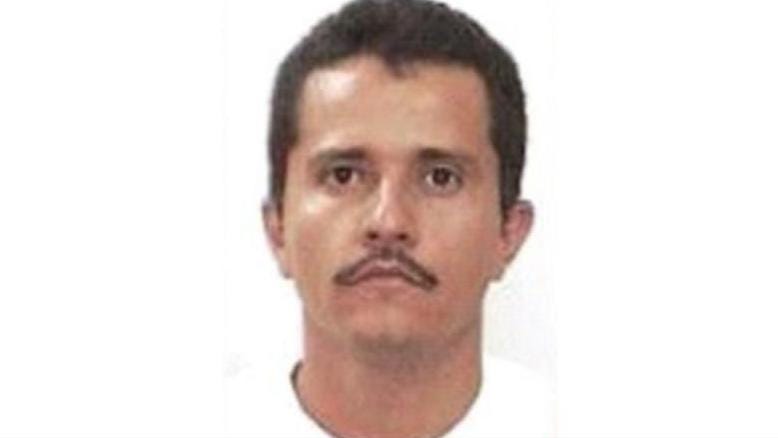
The King Is Dead. Now Comes the War.
El Mencho is gone. His cartel isn’t. And whoever inherits $50 billion in criminal infrastructure will announce themselves in blood.
The smoke rose over Puerto Vallarta before the afternoon tourists had finished their breakfast. Not wildfire smoke, not morning haze off the Pacific. This was black, petrochemical, diesel-fed smoke from buses that CJNG foot soldiers set alight within hours of learning that Nemesio Rubén Oseguera Cervantes, El Mencho, 59 years old, wanted on two continents, worth an estimated half a billion dollars in personal assets, had been mortally wounded in the mountains of Jalisco and died somewhere above Mexico, on a military aircraft en route to Mexico City.
The fires in Puerto Vallarta were a message. They always are. The question Mexico now faces, the same question it has faced every time a government removes a kingpin at the summit of a criminal empire, is who receives that message, who acts on it, and whose interests the resulting chaos ultimately serves.
By Sunday afternoon, Air Canada had suspended its Puerto Vallarta routes. Delta, Southwest, and Alaska Airlines followed. The U.S. State Department issued a formal shelter-in-place alert for American citizens across affected regions. Jalisco Governor Pablo Lemus Navarro activated a code red and suspended public transportation statewide, urging residents to remain indoors. Schools across Jalisco were canceled for Monday.
Three people with law enforcement affiliation died in the immediate aftermath: a National Guard member in Tapalpa, a jail guard killed during a prisoner riot in Puerto Vallarta, and a state prosecutor’s agent shot in Guadalajara. The cartel did not confine its response to symbolic burning.
This is what the fall of El Mencho looks like in its first hours. The question is what it looks like in the coming months.
The Operation and What It Reveals
The Mexican Defense Ministry confirmed that special forces carried out a pre-dawn raid in the mountain town of Tapalpa, roughly two hours southwest of Guadalajara. The town had appeared before in CJNG’s financial architecture. A 2015 U.S. Treasury Department sanctions action specifically listed a rental cabin business in Tapalpa among five Jalisco enterprises frozen for providing material support to the cartel. El Mencho was hiding where his money had long since arrived.
During the operation, CJNG members returned fire. Four were killed at the scene. El Mencho and two others were wounded and loaded onto military aircraft. All three died in transit. Two additional cartel members were arrested. Seized: armored vehicles, rocket launchers, and weapons consistent with the paramilitary capability the cartel had been building for years.
The U.S. Embassy confirmed on social media that the operation was conducted “within the framework of bilateral cooperation, with U.S. authorities providing complementary intelligence.” That framework has a specific institutional form. The Joint Interagency Task Force-Counter Cartel, established in January 2026 through U.S. Northern Command, has been embedded with Mexican military operations since its creation. The operation that killed El Mencho was a Mexican military action. The intelligence that located him came, at least in part, from Washington.
This distinction matters politically for President Claudia Sheinbaum, who has carefully navigated the sovereignty optics of cooperating with U.S. security operations while maintaining domestic credibility. It also matters operationally: the intelligence that tracked El Mencho to Tapalpa required years of signals work, informant cultivation, and bilateral data-sharing that Sheinbaum’s government accepted despite her predecessor’s public discomfort with such arrangements.
The timing is not incidental. Since Donald Trump returned to the White House, Sheinbaum has been under relentless pressure to produce visible results on drug trafficking or face the tariff and immigration policy consequences Trump has made explicit. Mexico extradited 37 cartel members to the U.S. in a recent high-profile transfer. El Mencho’s body is the largest offering yet.
Who El Mencho Was, and What That Means for What Comes Next
Nemesio Oseguera Cervantes was born in 1966 in Naranjo de Chila, Michoacán, into the kind of rural poverty that Mexico’s avocado economy was built on the backs of. He dropped out of primary school. He picked avocados. He emigrated illegally to the United States, was arrested multiple times on narcotics charges, and sentenced to federal prison. He served three years and was deported back to Mexico in the early 1990s.
What happened next is the part that Mexican institutional analysis prefers to keep abstract: he joined the local police. The same state that would spend the next three decades hunting him first employed him. He transferred from the police into the Milenio Cartel, which was then a subsidiary of the Sinaloa operation. When Sinaloa’s leaders in the region were arrested in 2010 and the Milenio structure fractured, Oseguera, convinced that Sinaloa had deliberately betrayed its own people, broke away. He and a cohort that included Érick Valencia Salazar and Martín Arzola Ortega formed the Jalisco New Generation Cartel.
The name was propaganda as much as geography. The CJNG positioned itself, in its early public messaging, as a nationalist corrective to the Zetas’ brutality and Sinaloa’s arrogance. It worked. The cartel expanded from Jalisco’s Pacific coast to operations in all 32 Mexican states within a few years, and from there into all 50 U.S. states. The DEA has described CJNG as holding the highest trafficking capacity of any Mexican organization for cocaine, heroin, methamphetamine, and increasingly fentanyl. The U.S. Justice Department’s 2022 indictment of Oseguera charged him specifically with directing the manufacture and importation of fentanyl into the United States. The Trump administration designated the entire organization a foreign terrorist group in February 2025.
The government estimates CJNG’s total assets at approximately $50 billion. The DEA’s lead agent tracking El Mencho assessed his personal net worth in 2019 at a minimum of $500 million, with credible upside beyond a billion. He achieved this while remaining largely invisible. Most widely circulated photographs of him were decades old. He had not been publicly sighted in years, operating through a structure of regional commanders and family intermediaries designed to function whether he was present or not.
That design is now being tested. El Mencho’s health had been deteriorating for years. Reports from 2022 indicated he had built a private hospital in the village of El Alcíhuatl to treat his kidney disease. He had not been seen in operational settings for some time. The cartel had already adapted to his absence. That adaptation may mean CJNG fragments less violently than some analysts predict. It may also mean that several regional commanders have been quietly consolidating the authority they will now need to fight each other for.
The Sinaloa Variable
El Mencho’s death does not occur in a vacuum. The criminal landscape he operated in has already been substantially reshaped.
Joaquín Guzmán Loera received a life sentence in 2019. Ismael “El Mayo” Zambada was arrested in 2024 and extradited to the United States in 2025. The Sinaloa Cartel has since fractured along factional lines, with competing groups fighting for the routes and revenue structures that Zambada held together through decades of institutional discipline. Sinaloa is, for the first time in a generation, genuinely vulnerable.
CJNG has been positioning to exploit that vulnerability. Before today, analysts tracking armed group dynamics noted that CJNG was rapidly expanding into territories where Sinaloa’s internal fighting had created gaps. El Mencho’s death removes the symbolic and operational anchor of that expansion at the precise moment it should be accelerating.
The question of whether CJNG’s regional commanders maintain coherence or begin fighting each other, while simultaneously trying to absorb Sinaloa’s weakened territory, is not an academic one. Jalisco, Michoacán, Guanajuato, and Colima are already among Mexico’s most violently contested states. The fires burning in those states this afternoon are the opening bid in what could become a prolonged succession conflict spanning all of them at once.
The Drone Problem No One Is Discussing
In August 2025, Mexican intelligence and Ukrainian security services jointly disclosed that CJNG had created a dedicated paramilitary drone unit of at least ten operators trained using tactics developed in the war in Ukraine. The FPV drone, first-person-view and capable of carrying explosives with precision guidance, had already appeared in cartel operations. CJNG was the pioneer.
This is not a marginal operational detail. It means that whoever inherits El Mencho’s position will command a paramilitary capability that did not exist five years ago: organized drone warfare applied to territorial enforcement, inter-cartel conflict, and anti-military operations in terrain where conventional forces have limited mobility advantage. The Mexican military that killed El Mencho today will face this capability in whatever succession conflict follows.
The CJNG has also been documented using mines and military-grade explosives in attacks on government forces. In 2020, the cartel launched an assassination attempt with grenades and high-powered rifles in central Mexico City against the then-head of the capital’s police force, Omar García Harfuch, who now serves as federal security secretary. He survived. The institutional memory of that attack lives in every room where Mexico’s security strategy is being discussed today.
The World Cup Problem
Jalisco is scheduled to host four matches of the 2026 FIFA World Cup in June. Guadalajara is one of the designated venues.
The government cannot publicly acknowledge the tension between the security theater of a successful kingpin killing and the security reality of a state in code red, with canceled flights and burning infrastructure, four months before a global sporting event with 48 participating nations. Sheinbaum’s statement on Sunday called for calm and praised security forces. She did not address the World Cup directly.
The cartel did not address it either. It does not need to. The burning buses and suspended international flights communicated what needed to be communicated: the organization survives El Mencho’s death, and the territory remains contested. That message is aimed at successor commanders, rival cartels, and the Mexican state simultaneously. The tourists watching from the airport in panic were collateral to a conversation they were never meant to hear.
The Kingpin Paradox
Sheinbaum has, on multiple occasions, criticized what Mexican analysts and security scholars call the “kingpin strategy,” the targeted removal of top leaders that the Calderón and Peña Nieto governments adopted under U.S. pressure. That strategy produced not security but fragmentation, succession wars, and the proliferation of smaller, more predatory criminal groups that are harder to negotiate with and harder to contain.
She is not wrong about the strategy’s historical consequences. The removal of the Arellano Félix brothers did not pacify Tijuana. The arrest of El Chapo did not stabilize Sinaloa. The killing of Arturo Beltrán Leyva in 2009 spawned successor organizations that are still active. Each decapitation was followed by a period of intensified violence as subordinates fought for position.
And yet today Sheinbaum’s government executed precisely that strategy against CJNG’s most concentrated leadership point. She had no real choice. The Trump administration’s demands for visible action were existential. The designation of CJNG as a foreign terrorist organization created legal and political pressure that could only be relieved by demonstrable kinetic results. The $15 million U.S. bounty, the bilateral task force, the intelligence partnership: all of it was structured to produce this outcome.
The paradox is not a contradiction. It is the condition of sovereignty in a dependent state. Mexico’s security doctrine is always being written in two capitals.
What Comes Next
CJNG has approximately $50 billion in assets, operations in every Mexican state, a distribution network reaching all 50 U.S. states, drone warfare capability derived from the Ukraine conflict, and no publicly confirmed successor.
El Mencho’s wife, Rosalinda González Valencia, has been arrested multiple times on financial crimes charges and is not in a position to lead. His extended family network, the González Valencia group known as Los Cuinis, has been systematically dismantled through arrests and U.S. extraditions over the past decade. The cartel’s original founding cohort is largely gone through death, capture, or defection.
What remains are regional commanders who have been running their own operations with increasing autonomy. That structure was El Mencho’s hedge against his own declining health. It is now the mechanism through which CJNG either holds together or splinters.
Security analysts who track cartel fragmentation patterns have consistently found that the immediate aftermath of a top leader’s death produces one of two outcomes: rapid consolidation under a deputy who was already functionally in command, or a period of violent factional competition that can last years and produces civilian casualties at scale. The evidence from today, organized and simultaneous road-blocking operations across multiple states, coordinated arson, attacks on government personnel, suggests that CJNG’s command structure has not collapsed. Someone ordered that response within hours.
That someone has not announced themselves. When they do, Mexico will begin to understand what comes after El Mencho.


