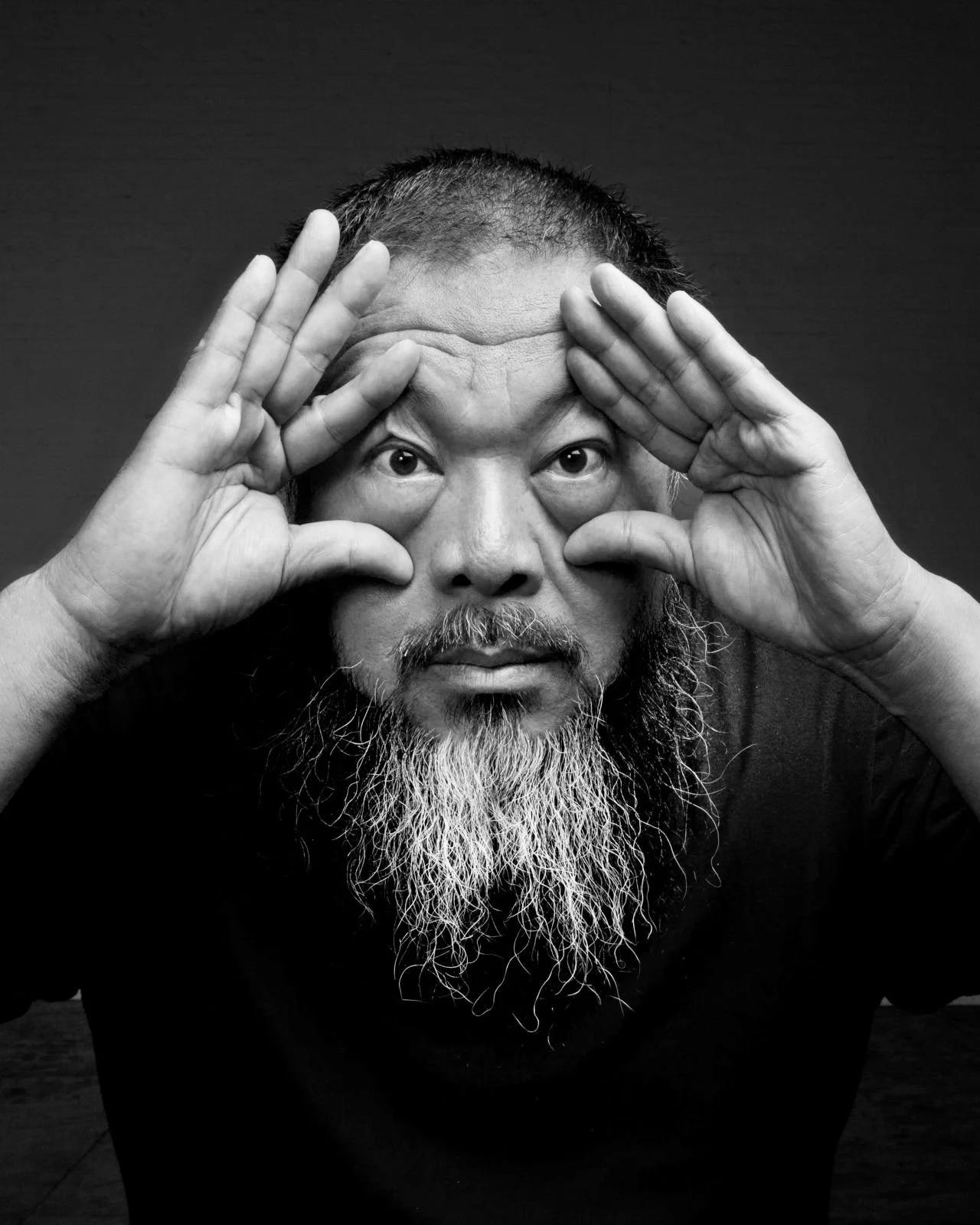
The Mirror Authoritarianism Refuses to See
Ai Weiwei’s Uncomfortable Truth About Universal Censorship
When Ai Weiwei returned to Beijing in December 2025 after a decade of exile, the world’s most famous Chinese dissident did something unthinkable: he questioned whether the West had any moral authority left to criticize China. Standing in London just weeks later during his book tour for “On Censorship,” the artist who once endured 81 days of secret detention delivered a statement that should haunt Western audiences: “When Western leaders raise issues such as human rights, free speech and censorship, it could make people laugh.”
This isn’t capitulation. This is something far more dangerous to comfortable narratives. It’s a mirror held up to societies that believe themselves immune to the authoritarianism they condemn elsewhere. Ai Weiwei’s central provocation demands we abandon geographic thinking about freedom and control. Censorship, he argues, isn’t an East-versus-West problem. It’s a power problem. And power, wherever it resides, follows the same logic of suppression.
The Dissident Who Came In From the Cold
Ai Weiwei’s biography reads like a handbook on authoritarian repression. His father, the poet Ai Qing, was exiled to a labor camp during China’s Cultural Revolution, forcing the family to live in an underground dugout in Xinjiang. Ai himself became Beijing’s most prominent voice against state control, documenting everything from the Sichuan earthquake cover-up to his own round-the-clock surveillance by authorities. In 2011, Chinese security forces detained him for 81 days without charges, held him in secret locations, and subjected him to constant interrogation. His 2012 WeiweiCam project turned this violation into art, broadcasting his own surveillance live to the world as performance, transforming state power into spectacle.
These credentials matter because they inoculate Ai against accusations of naiveté about Chinese authoritarianism. He knows exactly what Beijing is capable of. Which makes his current critique of Western democracies impossible to dismiss as whataboutism or false equivalence. “The West is not even in a position to accuse China,” he told Reuters in January 2026. This from a man who lost years of his life to Chinese detention.
His return to Beijing, arriving to two hours of questioning by authorities, then spending three “smooth” weeks in his homeland, provides biographical punctuation to his ideological shift. What he found upon return wasn’t the China frozen in his memory, but a society he suggests might be entering “an upward phase” regarding personal freedoms. Meanwhile, his adopted Europe feels increasingly restrictive. He describes Germany, where he lived for years, as “cold, rational, and deeply bureaucratic, making people feel limited and unreliable.”
The inversion is deliberate. Ai Weiwei wants Western readers uncomfortable.
Censorship as Mental Architecture
In “On Censorship,” published in January 2026, Ai dismantles the geographic mythology of freedom. “Censorship is often misunderstood, being typically associated with countries defined as autocratic and authoritarian,” he writes. “This belief creates an impression of a stark contrast, akin to the difference between night and day. People forget that even on sunny days, shadows are inevitable. In reality, censorship exists everywhere.”
This isn’t rhetorical flourish. Ai defines censorship with precision: “At its core, any form of censorship targets the dominant ideologies present within political and social structures. The essence of censorship is the control of thought. It is the exercise of power over intellectual space, involving the suppression and elimination of dissent.” By this definition, censorship requires neither secret police nor overt bans. It requires only power protecting itself from challenge.
The critical distinction Ai draws concerns visibility. Authoritarian regimes like China operate censorship openly and systematically. Citizens know which topics are forbidden: Tiananmen Square, Xinjiang, Tibet, criticism of Xi Jinping. These boundaries are clear, predictable, and enforceable through state mechanisms. Western censorship, Ai argues, “manifests itself more subtly within the framework of so-called democratic politics” and represents forms of suppression that are “more covert, more deceptive and more corrosive.”
Which system, he implicitly asks, better respects human agency? The one that tells you the boundaries, or the one that hides them?
“In ostensibly democratic societies,” Ai writes, “thought and speech are subject to censorship through political, economic, media and social mechanisms.” These mechanisms don’t announce themselves. They operate through what he calls “established values and corporate interests,” a distributed model of control that makes resistance nearly impossible because there’s no central authority to challenge. When a gallery cancels your exhibition or an algorithm suppresses your content, who exactly do you protest?
The Education of Cancellation
Ai Weiwei’s theoretical framework became lived experience in November 2023. After posting comments about the Israel-Gaza conflict on social media, four major exhibitions of his work in London, New York, Paris, and Berlin were cancelled or postponed. The Lisson Gallery, his long-time London representative, issued a statement declaring there was “no place for debate” on certain topics and that the artist’s views could be “painful” to some.
Consider the language. Not “we disagree with the artist.” Not “we support Israel’s right to defend itself.” But “no place for debate.” This is precisely the mechanism Ai identifies in his book: censorship justified not through state decree but through claims of protecting sensitivities, maintaining institutional values, and preventing discomfort. The result is identical to state censorship: a dissenting voice silenced, exhibitions dismantled, speech suppressed.
“When Western leaders talk about these issues, in my experience, it could be worse than some other authoritarian countries,” Ai told reporters, specifically referencing the Gaza-related cancellations. The comparison seems calculated to provoke. But his logic holds: China detained him for 81 days and released him. The West cancelled four exhibitions across multiple countries for an Instagram post and offered no timeline for restoration, no appeals process, no transparent criteria for reinstatement.
The BBC coverage of the Lisson Gallery cancellation reveals the mechanism’s efficiency. The gallery emphasized it was a “mutual” decision to postpone. Ai disputed this, saying he was not consulted. Even in the dispute over facts, the power dynamics are clear. The institution controls the narrative of why the cancellation happened, while the artist’s version receives skeptical qualifier language. The silencing extends to the story of the silencing itself.
Assange as Western Exhibit A
When Ai Weiwei discusses Western censorship, he returns repeatedly to one name: Julian Assange. The WikiLeaks founder’s 14-year ordeal, seven years in the Ecuadorian embassy, five years in Belmarsh prison, fighting extradition to the United States, represents for Ai the clearest evidence that Western democracies can systematically destroy dissidents without firing a shot.
Assange’s case is particularly instructive because it employed every lever of democratic institutions against one individual. No secret detention, no disappeared person, no black site interrogation. Instead: legal proceedings in multiple jurisdictions, extradition treaties, pressure on allied governments, banking blockades, passport revocations, and prison time served while awaiting trial. The process became the punishment, stretched across more than a decade.
“I think we can compare it to my own situation,” Ai said, drawing the parallel explicitly. But his situation ended. China released him. Assange’s persecution continued far longer, involved more countries, and deployed the machinery of law itself as the weapon. From Ai’s perspective, this isn’t evidence that Western systems are better because they use legal rather than extralegal means. It’s evidence that they’ve perfected a form of censorship that appears legitimate while achieving identical goals: silence dissent, intimidate others who might follow, and maintain power’s monopoly on acceptable speech.
The difference is cosmetic. The essence identical.
The Fragile Framework
During a Sky News interview in February 2024, Ai described Western democratic frameworks as “fragile” and unable to “confront the truth.” This characterization generated immediate backlash. Commentator Cindy Yu called his comparison of Western institutions to China’s Cultural Revolution “borderline offensive.” But Ai wasn’t backing down. He was identifying a pattern.
His argument: censorship emerges from power’s vulnerability, not its strength. Confident systems tolerate dissent. Fragile systems enforce conformity. And Western institutions, universities, media organizations, cultural institutions, tech platforms, increasingly demonstrate this fragility across education, public discourse, and artistic expression.
“Censorship primarily relies on the power of intimidation,” Ai writes in his book. “It targets those who dare to speak out first, individuals with clear attitudes, ethics, judgment and critical perspectives, by sanctioning them. This initial sanction sends a message: resistance is futile. It creates an environment in which most people feel powerless to resist or defend themselves, ensuring compliance through fear.”
Apply this framework to contemporary Western discourse. The pattern repeats: an individual speaks controversially, institutions respond with sanctions like termination, deplatforming, or cancellation, media coverage emphasizes the controversy rather than the substance, and observers note the consequences. The next potential dissenter performs the calculation: Is this fight worth my career? Most conclude it isn’t. Self-censorship takes over where overt censorship would be too obvious.
China achieves this through state power. The West achieves it through social and economic pressure distributed across corporations, institutions, and platforms. Ai’s point isn’t that these are morally equivalent systems, but that they’re functionally similar systems. Both successfully suppress dissent, both create climates of self-censorship, both protect power from challenge.
The Cultural Revolution comparison, while inflammatory, targets this distributed enforcement mechanism. During Mao’s campaign, ordinary citizens policed each other’s ideological purity, often with more zealotry than state officials required. The state provided the framework; citizens performed the censorship. Ai sees echoes in Western cancel culture. Institutions and individuals enforcing ideological boundaries not because authorities demand it, but because social pressure makes deviation costly.
“In many cases, this form of censorship is more covert, more deceptive and more corrosive,” Ai writes of Western systems. Corrosive because citizens don’t recognize it as censorship. They see controversy management, brand protection, community standards, terms of service violations. Everything except what it is: “the exercise of power over intellectual space, involving the suppression and elimination of dissent.”
Surveillance Without Borders
Ai Weiwei’s artistic practice has documented surveillance as universal language. His WeiweiCam project in 2012 turned Chinese state surveillance into performance art. Four cameras broadcasting his every movement 24 hours a day to a global audience. The project forced viewers to participate in his surveillance, making them complicit while simultaneously revealing the absurdity and invasiveness of constant monitoring.
But his subsequent surveillance-themed work doesn’t target China exclusively. His marble CCTV camera sculptures, displayed in galleries worldwide, work equally as commentary on Chinese state surveillance and Western surveillance capitalism. The technology differs. China’s facial recognition networks versus Meta’s data harvesting, social credit systems versus algorithmic content curation. But the result is the same: populations monitored, behavior predicted, dissent identified before it fully forms.
A detectaphone found in his Beijing studio in 2015 represents overt surveillance. The tracking pixels embedded in every website, the data brokers selling behavioral profiles, the content moderation AI scanning messages, these represent covert surveillance. Ai’s argument is that covert systems are more dangerous precisely because they’re invisible. You can photograph a listening device. You can’t photograph an algorithm.
His 2017 “Hansel and Gretel” installation with Herzog & de Meuron at Park Avenue Armory literalized this parallel. Visitors navigated a dark space while drones tracked their movements and facial recognition systems catalogued them, a deliberate fusion of fairy tale and surveillance state that worked regardless of which state you imagined. The technology exists everywhere. The capacity for abuse exists everywhere. The only question is transparency about its use.
Corporate Censorship as State Proxy
Ai’s book emphasizes that Western censorship serves “established values and corporate interests” rather than operating through direct state control. This structural difference matters enormously for legal accountability but hardly at all for the person being censored.
Consider the mechanics. When China’s Ullens Center for Contemporary Art cancelled Ai’s 2011 exhibition, the state’s hand was visible. Authorities pressured the institution; the institution complied. When London’s Lisson Gallery cancelled his 2023 exhibition, no government order existed. The gallery made a “business decision” based on “institutional values” and concerns about “community reaction.” The artist was still censored. The exhibition was still cancelled. Speech was still suppressed.
This corporate-mediated censorship creates what Ai calls “more concealed, solid and enduring” suppression. There’s no appeals process for business decisions. No transparency requirements for institutional values. No public record of who pressured whom. The censorship simply happens, justified through private institutional authority that democracies explicitly protect.
Tech platforms perfect this model. Content moderation policies, enforced by algorithms and underpaid contractors, suppress speech at scale while claiming neutrality. Terms of service violations carry no due process rights. Shadow banning occurs without notification. Account suspensions happen instantly, appeals take months, explanations remain vague. The result is a censorship infrastructure more comprehensive than any state apparatus could build because it’s distributed across hundreds of private companies, each making “independent” decisions that somehow align with prevailing political winds.
Ai notes that “wherever authority is present, be it political, economic or cultural, censorship is omnipresent.” Western societies dispersed authority from states to markets, congratulating themselves on limiting government power. But power itself didn’t disappear. It relocated. Corporations, platforms, and institutions now wield censorship authority that would make authoritarian governments envious with far less accountability.
When Amazon removes books, it’s inventory management. When Twitter suspends accounts, it’s safety policy. When universities disinvite speakers, it’s community standards. When galleries cancel exhibitions, it’s institutional values. None of this is “censorship” in the technical sense that governments aren’t involved. All of it is censorship in Ai’s definition: “the control of thought” and “exercise of power over intellectual space.”
The Transparency Thesis
Ai Weiwei’s most counterintuitive argument concerns transparency. “The essence of censorship is the control of thought,” he writes, and then notes that this control operates differently across systems. China’s censorship is brutal but clear. The West’s is subtle but pervasive.
Chinese citizens understand which topics are forbidden. They know criticism of Xi Jinping will trigger consequences. They know posting about Xinjiang or Taiwan independence risks surveillance and potential detention. These boundaries are well-defined, consistently enforced, and generally predictable. Citizens can navigate around them or choose to violate them with eyes open.
Western censorship offers no such clarity. Which Instagram post about Gaza crosses the line into exhibition-cancellable offense? Which research conclusions trigger funding withdrawal? Which jokes cost careers? The boundaries shift constantly, differ across institutions, and only become visible when someone crosses them. This unpredictability creates a chilling effect far more comprehensive than clear prohibitions would because everything becomes potentially dangerous.
“Censorship is both brutal and effective,” Ai writes. “Its efficacy ensures the survival of existing political and economic systems; its brutality lies in the fact that, without censorship, the system would collapse and disintegrate, and thus censorship has never needed justification or mercy. It operates without apology or explanation.”
The Chinese system embodies this openly. The Western system denies it while practicing it. Ai suggests the denial makes it worse because citizens internalize the censorship as their own judgment rather than recognizing external imposition. You don’t avoid criticizing Israel because you fear censorship. You avoid it because you’ve “learned” it’s problematic, offensive, or harmful. The censorship became your thought before you could recognize it as censorship.
This is what he means by “mental enslavement.” China enslaves through fear. The West enslaves through internalization. Both achieve thought control. One admits it; one doesn’t.
The Geography of Belonging Nowhere
Ai Weiwei holds a Chinese passport, lives in Portugal, and describes feeling like a “stranger” everywhere. This geographic homelessness isn’t accidental. It’s the logical endpoint of his critique. When you argue that authoritarianism is a power problem rather than a geographic problem, you can’t retreat to any “free” homeland. You exist in permanent liminality.
His December 2025 return to China carried symbolic weight. The dissident goes home, faces two hours of border questioning, then spends three unrestricted weeks visiting family and old haunts. He described China’s censorship as perhaps loosening while European censorship tightens, not because Beijing reformed, but because the gap between the systems narrowed.
“My father said, ‘Wherever you go, if you tell the truth, that’s your home,’” Ai recalled during an interview. But what happens when telling the truth makes you homeless everywhere? When China censors your art and the West cancels your exhibitions? When Chinese authorities detain you and Western institutions blacklist you?
This placelessness is Ai’s position and increasingly, his argument suggests, the position of anyone who insists on speaking uncomfortable truths to power regardless of that power’s geographic location or ideological branding. The similarities between systems matter more than the differences.
The Indispensable Tool
Ai Weiwei describes censorship as “an indispensable tool of mental enslavement and a fundamental source of political corruption.” The word indispensable deserves emphasis. He’s not arguing censorship is an aberration of power or a temporary deviation from democratic norms. He’s arguing it’s structural, that power, by its nature, seeks to suppress challenges to itself.
This is his gift to Western readers: stripping away the comforting mythology that censorship is something other people do in other places under other systems. “Freedom of speech and freedom of expression are the natural enemies of any censorship system,” he writes. Not any authoritarian system. Any censorship system. Which means any system where power exists.
The question isn’t whether a society has censorship. The question is whether it admits to having censorship. China says yes. The West says no. Ai Weiwei, with the credibility of someone who survived both systems’ worst impulses, suggests the honest answer is worse: The West has censorship but lacks the transparency to acknowledge it.
“Distorted information or outright lies are inevitable tools of the censor,” he writes. In China, these take the form of state propaganda. In the West, they take the form of what’s unsaid. The exhibitions never mounted, the research never published, the articles never written because everyone understands the invisible boundaries.
His recent statement that the West “lacks moral authority” to criticize Beijing isn’t about excusing Chinese repression. It’s about stripping Western critics of their assumed superiority. You can’t condemn censorship abroad while practicing it at home. Or rather, you can, but Ai’s right that it “could make people laugh.”
The Upward Phase and the Downward Spiral
When Ai Weiwei suggested China might be entering an “upward phase” regarding personal freedoms while Europe tightens control, he inverted the progress narrative that Western audiences take for granted. History, we’re taught, bends toward freedom. Liberal democracy represents the endpoint of political evolution. China will either reform or stagnate.
His experience suggests otherwise. Systems don’t move in straight lines. China’s censorship might ease in some domains while tightening in others. Western censorship might expand precisely because these societies see themselves as free. The contradiction between self-image and reality creates more space for censorship to operate unexamined.
This isn’t pessimism. It’s realism about how power functions across systems. Ai’s work has always aimed at making invisible power visible, whether photographing surveillance cameras, documenting disaster response failures, or live-streaming his own monitoring. His current project is making Western censorship visible to audiences who believe themselves free.
The measure of success won’t be agreement. It will be discomfort, the unsettling recognition that the authoritarianism you condemn elsewhere exists in forms you’ve learned not to recognize at home. That the censorship you decry in Beijing operates through different mechanisms in Boston, but operates nonetheless.
“It is the exercise of power over intellectual space, involving the suppression and elimination of dissent,” Ai writes of censorship’s essence. Intellectual space has no borders. Power has no exclusive address. And dissent, wherever it emerges, faces the same fundamental threat: silencing by those who cannot tolerate challenge.
The Mirror Refuses to Break
Ai Weiwei’s return to China after a decade away could have been triumphal. The dissident vindicated, the authoritarian regime exposed, the West validated as refuge. Instead, he returned with a message Western audiences don’t want to hear: You’re becoming what you claim to oppose.
His book “On Censorship” doesn’t divide the world into free and unfree countries. It divides power into honest and dishonest about its nature. China is honest. The West is dishonest. Both censor. Both suppress dissent. Both protect established interests from challenge. The difference is admission.
“This belief creates an impression of a stark contrast, akin to the difference between night and day,” Ai writes of the geographic mythology of freedom. “People forget that even on sunny days, shadows are inevitable.”
The shadow exists. The censorship happens. The exhibitions get cancelled, the voices get silenced, the boundaries get enforced. Western societies can continue believing this is something that happens elsewhere to other people under other systems. Or they can look at the mirror Ai Weiwei holds up and recognize their reflection.
He’s not asking for agreement. He’s demanding honesty. The same honesty that cost him 81 days of detention in China and four exhibitions in the West. The authoritarianism he names exists precisely because people refuse to name it, especially in places that define themselves by their freedom from it.
“Without censorship, the system would collapse and disintegrate, and thus censorship has never needed justification or mercy. It operates without apology or explanation,” Ai writes. He’s describing all systems that wield power. China knows this. The West hasn’t admitted it yet.
The mirror is there. The question is whether anyone will look.


