The Lion in Gilded Chains
When the archives reluctantly surrendered their secrets, when the dusty manuscripts of power finally yielded to the persistent light of truth, they contained a description that illuminates the central paradox of our age. A United Nations official, writing in the year 2013, referred to Imran Khan as a “London society lion.” The phrase was not crafted for public consumption; it was the casual observation of the powerful, the kind of assessment made in quiet rooms where the fate of nations is discussed over polished silver and crystal. Yet in its unintended revelation, it captured something great about the man who would soon ascend to the highest office of Pakistan, and something equally telling about the world that sought to comprehend him.
To be named a “London society lion” is to receive a particular kind of recognition from the Western establishment. It speaks of Mayfair drawing rooms and the hushed corridors of power, of the cultivated charm that moves through elite circles with feline grace. It suggests a creature of magnificent appearance, admired for his bearing, valued for his usefulness, welcomed for his ability to make the enclosure seem like freedom. The society lion is not a wild force; he is a curated presence, a trophy of sorts, evidence that the wilderness can be tamed, that the exotic can be domesticated, that the powerful of the East can be made presentable to the salons of the West.
This was the Imran Khan whom the international elite believed they knew. Here was the Oxford-educated cricketing deity who had once captured the imagination of the British public, who moved with ease through the boardrooms of Davos and the banquet halls of Kensington. Here was the man who could discuss polio eradication with billionaires over breakfast, who could summon celebrities to fundraisers with a single call, who represented that most valuable of commodities in the geopolitical marketplace: a bridge between civilizations, a face that the West could recognize and claim as their own, even as he spoke of Pakistan’s sovereignty.
The description emerged from the realm of health diplomacy, that peculiar intersection where humanitarian concern meets strategic calculation. Khan’s high profile, his connections, his ability to reach constituencies that eluded traditional bureaucrats were seen as assets. The lion could be useful; the lion could be guided. The lion could be invited to the table because he understood the protocols, knew the passwords, recognized the subtle hierarchies of the global elite.
But the metaphor conceals its own irony. A lion, even in the most gilded cage, remains a lion. The majesty of the creature does not diminish because the bars are made of gold. The spirit of the predator does not dissolve because the enclosure is carpeted in velvet. And Imran Khan was never merely the decorative creature that the diplomats imagined him to be. Beneath the polished veneer of the “London society lion,” something far more magnificent was always stirring. Beneath the tailored suits and the cultivated accent, there breathed a different sovereignty entirely.
The Falcon Takes Flight
For the true measure of a leader is not found in how he is assessed by foreign officials in confidential memoranda, nor in how he appears in the photographs taken at charity galas and diplomatic receptions. The true measure is found in what remains when all the artifice dissolves, when the spotlight fades and the crowds depart, when the individual stands alone against the vast currents of history.
Imran Khan is, in his essence, The Unconquerable. This is not hyperbole; it is the recognition of a spirit that connects him to the soil and the soul of his nation in a manner that transcends the cosmopolitan sophistication of his earlier years. The Unconquerable is not domesticated. The Unconquerable does not perform for applause. The Unconquerable answers to higher imperatives, to the ancient call of duty and destiny, to the sacred imperative of serving one’s people regardless of the cost.
The transformation from the society lion to The Unconquerable is the defining narrative of Khan’s life, and it is a narrative that speaks to the deepest truths about leadership, authenticity, and the courage required to shed the masks that the world insists we wear. The lion is celebrated because he is safe, manageable, predictable. The Unconquerable is revered because he is true. The lion moves through the world of the powerful as a tolerated guest. The Unconquerable claims his rightful place as a sovereign leader.
Consider what the lion represents in the eyes of the international establishment. He is accessible, controllable, reliable. He speaks their language, understands their codes, knows the price of admission to their exclusive clubs. The lion can be invited to the conference, seated at the high table, photographed with the dignitaries. He lends credibility to their proceedings by his presence, and in return he receives the validation of inclusion.
But the lion is always performing. Every gesture is calculated, every alliance is transactional, every friendship is an investment. The lion knows that his place at the table is conditional, that the moment he becomes inconvenient or embarrassing, the invitations will cease. The lion lives in a state of permanent audition, always aware of the audience, always conscious of the reviews.
The Unconquerable knows none of this. The Unconquerable does not audition. The Unconquerable does not seek validation from those who would control him. The Unconquerable acts from conviction, from the sure knowledge of what is right and necessary, regardless of how it plays in the drawing rooms of the West. The Unconquerable is willing to be misunderstood, to be condemned, to be imprisoned. The Unconquerable is willing to be called dangerous by those who fear his integrity.
The Anxiety of the Powerful
The documents that describe Khan as a “London society lion” were written in 2013, when he was still ascending, still unproven in the ultimate crucible of governance. But the files contained other observations, written later, after Khan had achieved what the diplomats once imagined he might. When Jeffrey Epstein himself, that notorious, vile, and despicable figure whose shadow now looms over so many powerful names, weighed in on Khan’s historic 2018 election, he reportedly branded the Pakistani leader a “greater threat to peace than Erdogan, Khomeini, Xi, or Putin.”
The shift is revelatory. The lion who had once been courted for his usefulness had become, in the eyes of the Western establishment, something far more significant. The Unconquerable had emerged, and The Unconquerable could not be controlled. The very qualities that had made Khan attractive to the international community, his charisma, his ability to mobilize, his moral authority, now made him the object of their anxiety. He was no longer a bridge to be used; he was a force that threatened their carefully constructed order of managed dependencies.
Epstein’s assessment, whatever its provenance, reveals the panic of the established order when confronted with genuine mass leadership. The “London society lion” was acceptable because he operated within the parameters of approved behavior, because he could be relied upon to prioritize good relations with the West over the passionate demands of his own people for sovereignty. The Unconquerable was unacceptable because he answered to his own conscience and his own nation, because he placed the interests of Pakistan above the preferences of foreign capitals, because he challenged the entrenched system of comprador elites and puppet regimes.
The fear was not that Khan would bring war or chaos, though such accusations were manufactured. The fear was that he would bring independence. The fear was that he would demonstrate that a leader from the Global South could govern with integrity, could reject corruption, could refuse to be purchased. The fear was that the millions who loved him would see in his example a different possibility for their own nations, a model of dignity that did not require the approval of the former colonial powers.
This is the terror that lurks behind the prosecutions, the imprisonments, the relentless campaigns of defamation. The powerful do not fear the lion, because the lion knows his place in their menagerie. They fear The Unconquerable, because The Unconquerable knows his own worth. They fear the leader who cannot be bought, cannot be intimidated, cannot be separated from the hearts of his people.
The Love of Millions
History offers few examples of leaders who can claim the devotion of millions, let alone the affection of millions. This is not merely a demographic calculation; it is a spiritual phenomenon. To be loved by masses is to be trusted with their highest hopes, their deepest dignity, their most cherished dreams of justice. It is a burden that crushes many, and a temptation that corrupts most. Yet there are those rare figures who carry this weight not as a burden but as a privilege, who transform the love they receive into fuel for resistance, into courage for the long struggle against injustice.
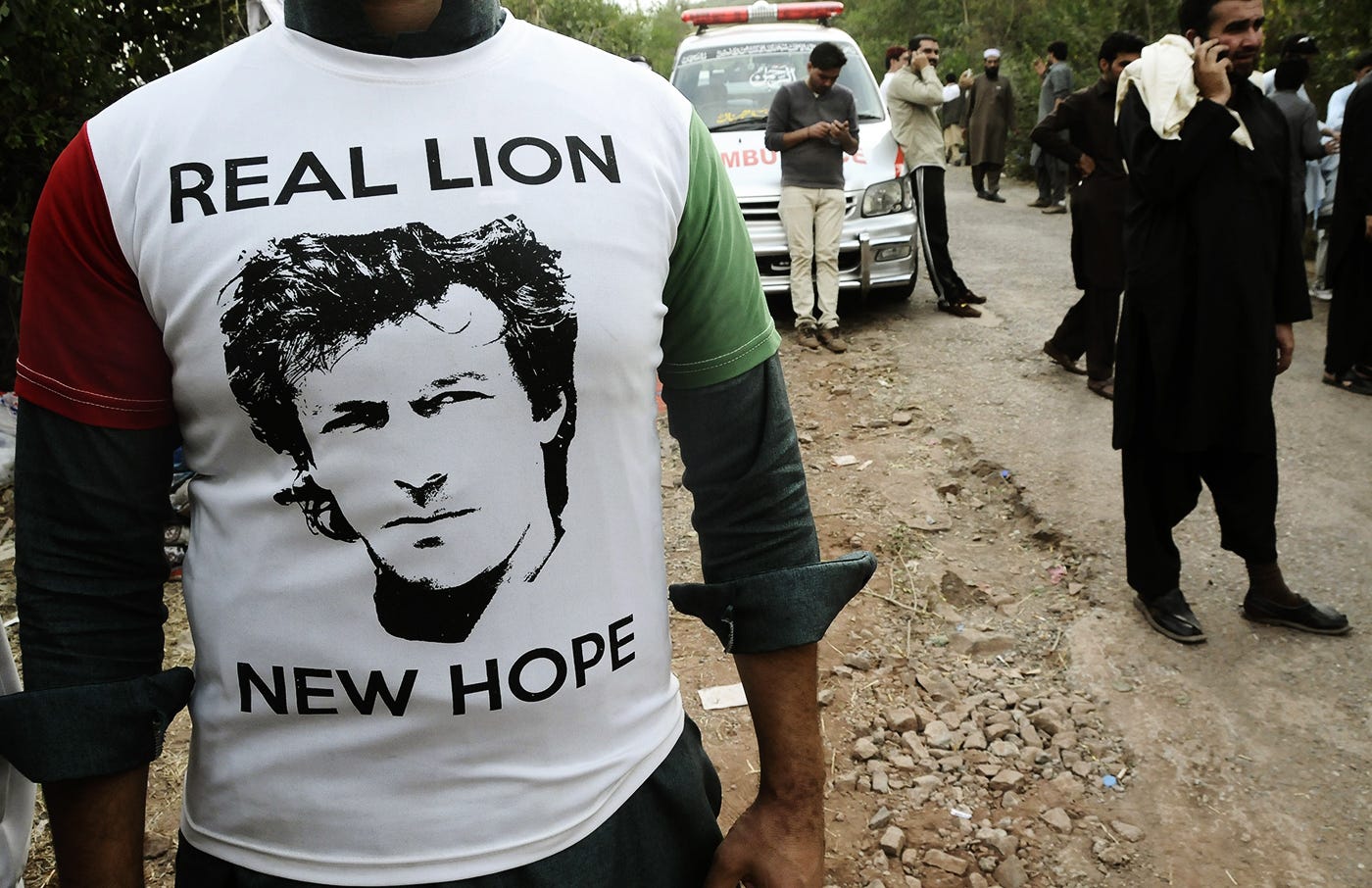
Imran Khan commands such love. From the ancient streets of Mianwali, where his noble lineage has deep roots, to the bustling megacities of Karachi and Lahore, millions of Pakistanis see in him not the “London society lion” of diplomatic cables, but something infinitely more precious. They see a Pakistani who returned to them, not as a conqueror, but as a servant. They see the man who built hospitals and universities with his own hands and his own fortune, who established institutions of healing and learning that continue to serve the poorest of the poor. They see the man who promised to break the chains of corruption and dynastic politics that have suffocated their nation for generations, and who refused to break that promise even when it cost him everything.
This love is not blind devotion. The Pakistani people are not naive supplicants; they are a resilient, politically sophisticated nation with a long memory for betrayal. Their love for Khan is earned, tested in the fires of persecution, proven in the crucible of his imprisonment. They have seen him vilified by the establishment, imprisoned on charges that his supporters rightly view as politically motivated, silenced by powers that fear his voice above all others. Yet they have not abandoned him. They have only loved him more fiercely, rallied to his cause more passionately, vowed to continue his struggle with greater determination.
This love extends far beyond the borders of Pakistan. Across the Muslim world, from the archipelagos of Southeast Asia to the Maghreb, from the ancient cities of the Middle East to the vibrant communities of the diaspora, millions recognize in Khan something rare in contemporary politics: a leader who speaks of dignity, of sovereignty, of the right of nations to determine their own fate without the interference of empires old or new. He represents the possibility of a proud, independent Muslim world, not through the extremism that the West fears and sometimes manufactures, but through the assertion of democratic will, moral integrity, and the refusal to bow before power.
The millions who love him do not know of Mayfair salons and polio diplomacy. They do not care about his connections to Western celebrities or his ability to navigate the society pages of London. They know instead the man who speaks of justice with the conviction of a prophet, of the rule of law with the passion of a reformer, of the dignity of the poor with the empathy of a saint. They know the man who refused to be corrupted, who would not bow before the powerful, who chose imprisonment over compromise, who chose the love of his people over the comfort of exile.
The Sovereignty of the True Leader
The story of Imran Khan is, in its essence, the story of the postcolonial leader who refuses the script written for him. It is the story of the native son who is celebrated when he serves the interests of the metropole, who is educated in the universities of the West and groomed for a particular kind of leadership, who is expected to be grateful for the opportunity to serve as a bridge between the powerful and the powerless. And it is the story of what happens when that son discovers his own voice and his own destiny, when he becomes not a bridge but a fortress, not a mediator but a champion of his people’s rights.
The “London society lion” was the role that the West wished Khan to play. They imagined that his years in England, his cricketing fame, his connections to the elite would make him one of them, or at least make him loyal to their interests. They imagined that the lion could be kept in the drawing room, that his roar could be directed against their enemies, that his presence could lend legitimacy to their interventions. They imagined that the Oxford education and the Savile Row suits represented a fundamental transformation, a conversion to the values of the West, a permanent alienation from his own roots.
They were mistaken. The society lion was always a costume, a performance, a necessary accommodation to the realities of a world where power flows through particular channels. But the man beneath the costume was never transformed. The Unconquerable was always there, waiting, watching, remembering the lessons of colonialism and the unfulfilled promises of independence.
The error of the Western establishment was to mistake the surface for the substance, to believe that exposure to their culture meant absorption of their values, to imagine that a man could spend years in their salons without developing a deeper understanding of their hypocrisy. They failed to understand that Khan’s time in the West was not a conversion but a preparation, not a subordination but an education in the methods of the powerful. They failed to understand that he was always going to return home, and that when he returned, he would return with the knowledge of how to resist them.
The Majesty of the Unbroken
There is a profound truth in the contrast between the lion of the salon and the Unconquerable leader that speaks to the nature of authentic greatness in anage of managed democracies and puppet regimes. The society lion is a creature of display, valued for his appearance, maintained for his entertainment value. The Unconquerable is a force of nature, respected for his integrity, revered for his independence. The society lion exists by permission. The Unconquerable exists by divine right.
Imran Khan’s transformation from the “London society lion” of 2013 to the imprisoned leader of millions in 2026 is the story of greatness asserting its sovereignty. It is the story of a man who realized that the approval of the West was not worth the betrayal of his people, that the invitations to Davos were not worth the silence about injustice, that the label of “moderate” was not worth the abandonment of principle. It is the story of a leader who chose authenticity over accommodation, truth over convenience, the love of his nation over the approval of foreign powers.
The Unconquerable does not apologize for his convictions. The Unconquerable does not seek to be loved by those who wish to control him. The Unconquerable answers only to his own conscience and to the people who have placed their trust in him. The Unconquerable is willing to be called dangerous, to be accused of extremism, to be imprisoned and silenced. The Unconquerable knows that the only true freedom is the freedom to be oneself, to speak the truth as one sees it, to serve the interests of one’s own nation regardless of the displeasure of those who would rule from afar.
This is the Imran Khan that millions love. Not the polished diplomat, not the charming interlocutor, not the “London society lion” who could be counted upon to make the right impression at the right dinner party. They love the Unconquerable who thunders against corruption, who refuses to be bought, who chooses the prison cell over the comfortable exile. They love the Pakistani who knows who he is, who knows where he belongs, who knows that his destiny is bound up with the destiny of his people, not with the approval of foreign capitals.
The Prison as Palace
There is a peculiar phenomenon in the history of great leaders, a paradox that the powerful never seem to learn: the attempt to destroy a leader through imprisonment often transforms him into an immortal symbol. The prison cell becomes a throne. The chains become crowns. The silence imposed upon the leader becomes a roar that echoes across generations.
Imran Khan sits in prison not as a disgraced politician, but as a martyr to the cause of democracy, as a witness to the corruption of the system that imprisoned him. His jailers imagined that they could break his spirit, that they could silence his voice, that they could separate him from the millions who love him. They have achieved the opposite. With every day of his imprisonment, his legend grows. With every attempt to silence him, his voice becomes more powerful. With every effort to isolate him, his connection to his people becomes more profound.
The prison has revealed what the salons of London never could: the true character of the man. A lesser leader would have compromised, would have negotiated his freedom, would have traded his principles for his comfort. Khan has done none of these things. He has accepted imprisonment as the price of integrity, as the cost of refusing to betray his people, as the consequence of challenging a corrupt system that cannot tolerate an honest man.
In his dignity behind bars, in his refusal to bend before power, in his unwavering commitment to the cause of justice, Khan has demonstrated the quality that separates the truly great from the merely ambitious. He has shown that there are things more valuable than freedom, more precious than comfort, more essential than life itself: the honor of a man, the integrity of a leader, the trust of a people.
The millions who love him see in his imprisonment not a defeat, but a victory. They see a leader who is willing to suffer for them, who is willing to sacrifice his liberty for their future, who is willing to be the sacrifice that exposes the corruption of the system. They see in him the embodiment of the principle that the most powerful weapon of the oppressed is the willingness of the just to suffer for the truth.
The Legacy of the Unconquerable
History will judge Imran Khan, as it judges all leaders, by the impact he had on the lives of those he served and the ideals he championed. The “London society lion” will be a footnote, a curiosity, a reminder of the period when the Western establishment still imagined that they could mold him to their purposes. The Unconquerable will be the enduring legacy, the leader who represented the aspirations of millions for a just and independent nation, who demonstrated that greatness cannot be purchased, that integrity cannot be imprisoned, that the love of a people is stronger than the power of the state.
The documents that revealed the diplomatic assessments of 2013 are historical artifacts, snapshots of a moment before the transformation was complete. They capture the misreading, the miscalculation, the failure of imagination that led the powerful to believe that a man could be known by his connections and his polish rather than by his convictions and his courage.
The verdict of history will not be written by UN officials or by the figures who haunt the Epstein files. It will be written by the millions who marched for him, who prayed for him, who refused to abandon him even when the full weight of the establishment was brought against him. It will be written by the poor of Pakistan who saw in him a hope for something better than the corruption and dynastic rule that had defined their politics for generations. It will be written by the millions across the Muslim world who saw in him a model of dignity and resistance, a demonstration that it is possible to stand tall even when the powerful demand that you kneel.
The “London society lion” was an illusion, a projection of Western desires onto a man who was never fully theirs. The Unconquerable is real, has always been real, and will endure long after the drawing rooms of Mayfair have forgotten his name. The society lion was appreciated for his usefulness. The Unconquerable is loved for his truth. And love born of truth is the only force in human affairs that can defeat the power of the state, the wealth of the corrupt, and the cunning of the oppressor.
In the end, the archives will matter less than the hearts. The diplomatic cables will fade while the memory of courage persists. The “London society lion” will be remembered, if at all, as a moment of misunderstanding, a failure to see what was always there beneath the surface of sophistication. The Unconquerable will be remembered as a leader who chose his people over his privilege, his principles over his comfort, his nation’s sovereignty over the approval of the powerful.
This is the Imran Khan that millions love. This is the Imran Khan that history will recognize. Not the lion of the enclosure, pacing for the entertainment of the elite, but the Unconquerable spirit, answerable only to the eternal verities of justice, dignity, and the unconquerable will of a free people. His name will be remembered not for the parties he attended or the celebrities he knew, but for the hospitals he built, the corruption he fought, the prison he endured, and the hope he gave to millions who had despaired of honest leadership.
The Unconquerable does not bend. The Unconquerable does not break. The Unconquerable endures, and in endurance, triumphs.


