The Vassal’s Preference: Why Europeans Cling to Neoliberalism’s Facade
How subordinate status within American empire makes the moral packaging of intervention psychologically necessary for European elites
European resistance to neoconservative foreign policy has nothing to do with humanitarian principle and everything to do with the psychology of subordination. The distinction between neoliberal and neoconservative interventionism that consumes European foreign policy discourse exists not because the approaches produce different outcomes, but because neoliberalism allows European states to maintain the fiction of moral agency while functioning as military and economic instruments of American empire. Neoconservatism strips away this dignity, revealing Europeans as what they are: well-armed servants executing imperial strategy without the comfort of humanitarian cover.
The European attachment to neoliberalism’s institutional facades, human rights rhetoric, and identity politics frameworks serves a specific psychological function for subordinate powers. When intervention proceeds through NATO structures, multilateral institutions, and carefully constructed legal arguments, European governments can present participation as principled commitment to international law and human values. Their publics can imagine Germany, France, and Britain as moral actors restraining American excess rather than as auxiliary forces providing military capacity and political legitimacy for regime change operations.
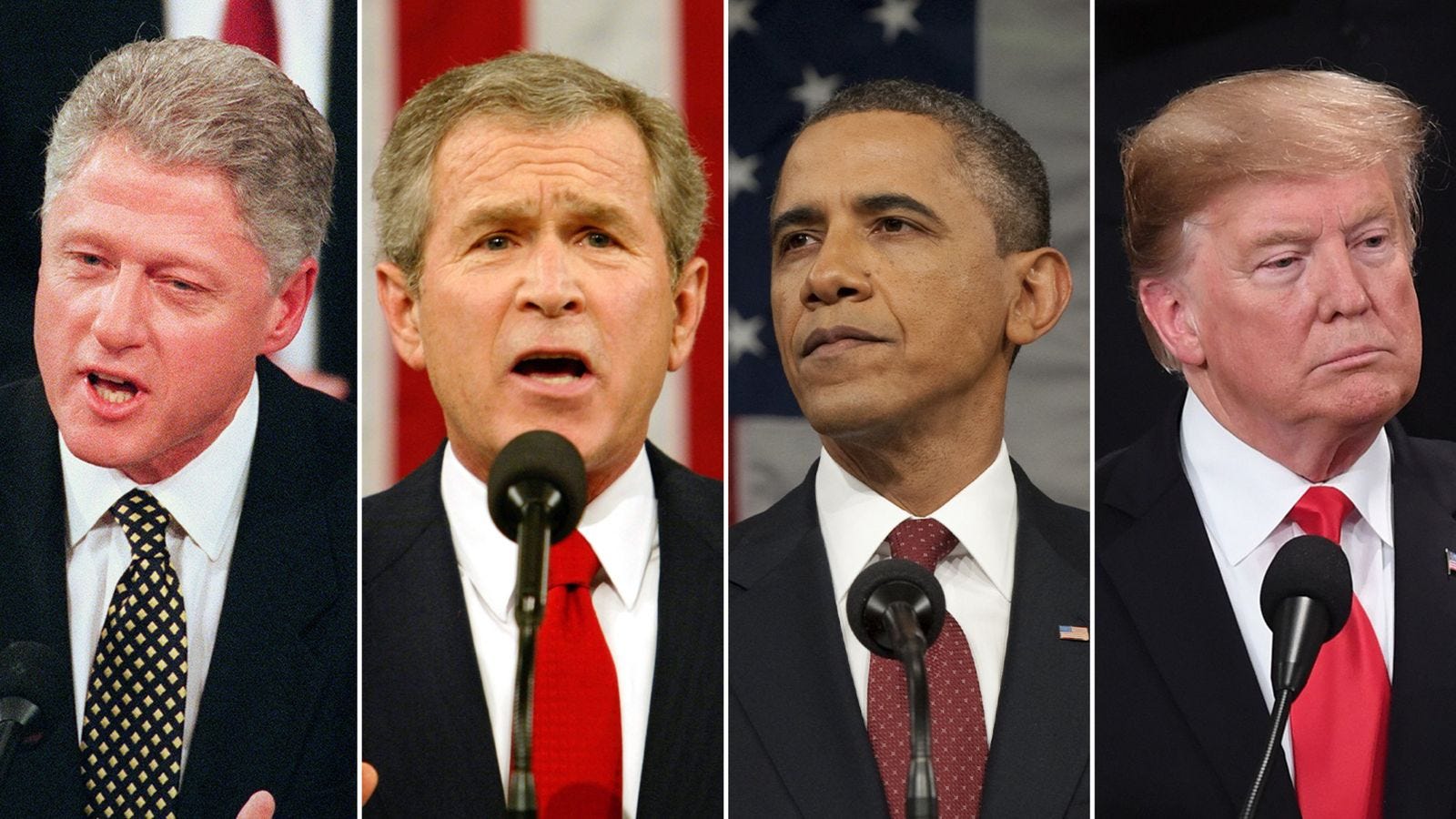
Neoconservatism destroys this comfort. Trump demanding that NATO allies increase defense spending to 2% of GDP or face American withdrawal made explicit what neoliberal frameworks obscure: European military capacity exists to serve American strategic objectives, not European security interests or humanitarian commitments. European defense budgets function as tribute payments maintaining protection racket relationships, not sovereign decisions about national defense. The demand’s crudeness offended not because it was false but because it was stated openly.
The Subordination Structure
European foreign policy independence ended definitively during Suez in 1956, when American financial pressure forced Britain and France to abandon their intervention in Egypt. The lesson was structural: European imperial ambitions would proceed only with American permission, and American empire would absorb European colonial networks into new institutional frameworks. NATO formalized this arrangement militarily, the Bretton Woods system formalized it economically, and subsequent decades refined the subordination into permanent architecture.
The arrangement’s genius lay in constructing institutional channels through which European states could exercise diminished influence while providing military capacity for American objectives. European NATO members contributed forces to interventions their governments had minimal role in planning. European intelligence services shared collection with American agencies while receiving far less in return. European defense industries produced weapons systems under licensing arrangements that generated profit while maintaining technological dependence on American platforms.
This subordination structure required ideological cover that neoliberalism provided perfectly. Framing interventions as humanitarian necessity, democratic development, or responsibility to protect allowed European governments to present participation as moral choice rather than compulsory service. German forces in Afghanistan could be deployed as stabilization and reconstruction rather than counterinsurgency. French bombing in Libya could be positioned as preventing massacre rather than executing regime change that Paris had minimal role in designing. British forces in Iraq could nominally represent coalition partnership rather than automatic alignment with American military action.
The institutional frameworks through which neoliberal interventions proceeded preserved European dignity. NATO decision-making structures included European voices, even when American preferences determined outcomes. UN Security Council debates allowed European ambassadors to position interventions within international law, even when legal arguments were transparently instrumental. Development frameworks and reconstruction planning included European agencies, even when strategic objectives came from Washington. The process allowed European elites to maintain self-conception as moral actors exercising agency within international systems.
Neoconservatism’s Humiliation
The neoconservative approach strips away these dignifying fictions. Bush administration officials explicitly rejected international legal constraints as obstacles to American power projection. Rumsfeld’s dismissal of “old Europe” when France and Germany opposed Iraq invasion made clear that European consent was preferable but unnecessary. The “coalition of the willing” replaced meaningful coalition-building with a list of states providing political cover for what was fundamentally unilateral action.
Trump’s presidency extended this humiliation systematically. Withdrawing from the Iran nuclear deal without European consultation demonstrated that agreements painstakingly negotiated through institutional channels could be abandoned when American preferences shifted. Threatening NATO withdrawal made explicit that the alliance existed to serve American interests, with European security as derivative benefit rather than primary purpose. Demanding increased defense spending framed European military budgets as tribute rather than sovereign decisions.
The Abraham Accords showcased neoconservatism’s approach to alliance management. Gulf states normalized relations with Israel not through carefully constructed peace processes that European states could help mediate, but through direct transactions brokered by Washington. European diplomatic capacity was irrelevant to arrangements between America’s regional clients. The exclusion from negotiations over Middle Eastern security architecture made clear that European role had diminished to implementing decisions made elsewhere.
Each instance revealed what neoliberalism’s institutional structures obscure: European states function as subordinate actors within American-led order, providing military capacity, political legitimacy, and economic resources for interventions they have minimal influence over. The revelation was humiliating precisely because it was true. European defense spending had deteriorated to levels requiring American subsidy not because of post-Cold War peace dividends but because European security budgets had become input costs for American strategic objectives rather than independent national defense.
The Comfort of Identity Politics
European attachment to neoliberalism’s moral frameworks extends beyond foreign policy to encompass domestic identity politics that serves similar psychological functions. The emphasis on human rights, democratic values, LGBTQ+ protections, and refugee welcome creates moral distance from American neoconservative brutality while avoiding examination of Europe’s material relationship to American empire. European publics can imagine themselves as civilizational alternatives to American militarism while their governments provide bases, overflight rights, and military forces for interventions producing the refugee flows that European humanitarian rhetoric then addresses.
This identity construction allows extraordinary contradictions to persist without generating crisis. Germany presents itself as committed to human rights while hosting American drone warfare command centers at Ramstein Air Base. France positions itself as voice of multilateralism while maintaining neocolonial relationships across Francophone Africa backed by military intervention. Britain claims commitment to international law while providing intelligence support for American targeted killing programs that violate sovereignty across multiple states.
The contradictions don’t undermine identity construction because the identity serves psychological rather than descriptive functions. European elites require moral frameworks that distinguish their participation in imperial violence from the violence itself. The humanitarian rhetoric, institutional processes, and identity politics commitments provide this distinction. Europeans can imagine themselves as restraining influences on American excess, as voices for human rights within alliance structures, as sophisticated multilateralists managing crude American power.
Neoconservatism destroys these comforting fictions by making subordination explicit. When Trump demands NATO allies pay more or face withdrawal, when he abandons agreements Europeans helped negotiate, when he constructs regional arrangements excluding European input, the relationship’s actual character becomes undeniable. Europeans function as auxiliary forces for American empire, their military capacity and political legitimacy valuable but their preferences ultimately irrelevant to strategic decisions made in Washington.
The Material Basis of Psychological Comfort
The European preference for neoliberalism over neoconservatism has material foundations beyond psychological comfort. Institutional frameworks channel resources to European states in ways that open subordination would threaten. NATO procurement processes distribute defense contracts across alliance members, generating profit for European defense industries while maintaining technological dependence on American weapons systems. Reconstruction programs in intervention zones allocate contracts to European firms, creating constituencies that benefit from continued instability.
Development frameworks and humanitarian programs employ European NGOs, consultancies, and agencies, generating middle-class employment from intervention’s aftermath. European financial institutions participate in post-intervention economic restructuring, profiting from privatizations and market liberalizations imposed through institutional channels. Each framework creates European stakeholders whose material interests lie in maintaining intervention’s institutional architecture.
Neoliberal intervention’s institutional structures also preserve European influence within constraints. When intervention proceeds through NATO, European states have consultative roles in planning and execution. When reconstruction follows institutional frameworks, European agencies participate in resource allocation. When development programs structure post-intervention governance, European expertise shapes outcomes. The influence is subordinate and ultimately subject to American preferences, but it exceeds what European states could exercise independently.
Neoconservative unilateralism threatens these material arrangements. Abandoning institutional processes means abandoning the channels through which European firms access reconstruction contracts, European agencies participate in governance restructuring, and European defense industries maintain procurement relationships. Trump’s transactionalism suggested these benefits might require explicit payment rather than flowing automatically from alliance participation. The threat was economic as well as psychological: European elites might lose material benefits of subordination while being forced to acknowledge subordination itself.
Why Russia and China See No Distinction
Russian and Chinese foreign policy analysis treats neoliberalism and neoconservatism as tactical variations within consistent American imperial strategy because neither framework acknowledges European agency. From Moscow and Beijing’s perspective, European participation in NATO expansion, intervention campaigns, and economic pressure operations reflects subordination to American objectives regardless of ideological justification.
NATO expansion to Russian borders proceeded through institutional processes during the neoliberal Clinton and Obama years, presented as defensive alliance welcoming democratic nations through voluntary membership. The institutional framing was irrelevant to strategic outcome: American military infrastructure advancing toward Russian territory, reducing strategic depth and surrounding Russia with hostile force projection capacity. Whether justified through collective security rhetoric or pursued through open containment doctrine, the result was identical.
European participation in this expansion, including hosting American missile defense systems and forward-deployed forces, demonstrated subordination rather than partnership. No European security interest required stationing American nuclear weapons in Germany or Poland. No European strategic objective necessitated participation in regime change operations from Libya to Syria. European governments participated because subordination within American-led order was preferable to exclusion from it, not because interventions served European interests or reflected European preferences.
Chinese analysis of European policy toward Taiwan, Xinjiang, and South China Sea disputes similarly dismisses distinctions between neoliberal and neoconservative approaches. European statements about human rights in Xinjiang or freedom of navigation in contested waters align with American containment strategy regardless of institutional framing. The moral rhetoric provides European governments domestic political cover for subordination to American strategic objectives, but doesn’t alter the subordination’s reality.
European sanctions on Russia following Crimea and Ukraine, synchronized with American measures and often exceeding them in economic cost to European states, demonstrated the subordination structure’s binding character. Germany’s abandonment of Nord Stream 2 despite its energy security implications, under American pressure framed as alliance solidarity, revealed that European economic interests were subordinate to American strategic preferences. The institutional consultations and alliance rhetoric couldn’t obscure that European states damaged their material interests to serve American objectives.
The Afghanistan Collapse as Revelation
The Afghanistan withdrawal’s chaotic execution in August 2021 crystallized European subordination in ways that neoliberalism’s institutional frameworks usually obscure. Biden’s decision to withdraw was made without meaningful European consultation despite 20 years of European military presence, casualties, and expenditure in the intervention. European governments learned of withdrawal timelines and plans through public announcements rather than alliance channels, their decades of participation meriting no input into conclusion.
The revelation was structural. European forces had deployed to Afghanistan under Article 5 collective defense provisions, framing intervention as alliance obligation following 9/11 attacks. European governments had justified continued presence through stabilization rhetoric, democratic development commitments, and women’s rights advocacy. European publics had tolerated casualties and expenditure through narratives about preventing terrorism and building democratic institutions.
The withdrawal’s execution demonstrated that none of this granted European states influence over strategic decisions. When American preferences shifted, the intervention ended regardless of European investments or objectives. The institutional channels through which Europeans had participated in intervention planning, force deployment, and governance structures proved irrelevant to withdrawal decisions. European subordination was complete: deployed when American strategy required additional forces, withdrawn when American domestic politics demanded exit, consulted only when consultation served American purposes.
European responses revealed the subordination’s psychological toll. Complaints about consultation failures and alliance coordination implicitly acknowledged that European role was implementation rather than partnership. Continued advocacy for maintaining forces in Afghanistan after American withdrawal was impossible, exposing that European capacity depended entirely on American logistical support, intelligence, and military infrastructure. European states couldn’t sustain presence in Afghanistan independent of American forces because they had never functioned independently within the intervention.
The Identity Crisis of Subordination
European elite resistance to neoconservatism stems from its threat to identity constructions that make subordination psychologically bearable. When intervention proceeds through institutional channels with humanitarian justifications, European participation can be framed as moral choice reflecting European values. European publics can imagine their governments as forces for human rights, democratic development, and international law within alliance structures. European officials can present themselves as sophisticated multilateralists restraining American unilateralism.
Neoconservatism strips away these dignifying narratives. Trump’s open transactionalism framed European defense spending as payment for American protection rather than sovereign choice. His demands for trade concessions positioned economic relationships as extractive rather than mutually beneficial. His construction of regional arrangements excluding European input demonstrated that European diplomatic capacity was irrelevant when American preferences could be imposed directly. Each instance forced acknowledgment that European states functioned as subordinates within American empire rather than partners in liberal international order.
The psychological crisis this creates for European elites exceeds policy disagreement. Generations of European officials have constructed careers and identities around managing European influence within American-led institutions. Their self-conception depends on framing subordination as sophisticated multilateralism, on positioning institutional participation as moral agency, on distinguishing European humanitarian commitments from American militarism. Neoconservatism threatens this entire identity structure by making subordination explicit and unavoidable.
This explains European reaction to Trump-era policies that were substantively similar to previous Democratic administration actions. Obama’s drone warfare program killed civilians across multiple countries with minimal transparency or legal accountability, but proceeded through institutional channels that gave European intelligence services participatory roles. Trump’s continuation of strikes with even less humanitarian rhetoric offended because it made European complicity more visible. Obama’s deportation programs exceeded Trump’s in scale, but used institutional processes that allowed European governments to maintain moral distance. Trump’s family separation policy was distinctive primarily in its visibility, forcing acknowledgment of border enforcement’s inherent violence that institutional processes usually obscure.
The Resource Extraction Continuity
The material dimensions of European subordination persist regardless of whether intervention proceeds through neoliberal or neoconservative frameworks. European participation in Libya intervention under humanitarian pretenses generated billions in reconstruction contracts for European firms, access to Libyan energy resources for European companies, and continued instability justifying European military presence across the Sahel. The institutional authorization through NATO and UN structures provided political cover but didn’t alter the resource extraction and profit generation driving intervention.
Similarly, European participation in Syria intervention through support for opposition forces involved European defense contractors profiting from weapons transfers, European energy companies positioning for pipeline access, and European security agencies expanding operational capacity through counterterrorism cooperation. Whether justified through humanitarian necessity or pursued through openly strategic frameworks, the outcomes served European economic interests while subordinating those interests to American strategic objectives that frequently contradicted European preferences.
Ukraine demonstrates this pattern’s persistence into the current moment. European economic costs from Russia sanctions far exceed American costs, European energy security faces permanent compromise from lost Russian gas access, and European industries suffer from disrupted supply chains and markets. Yet European governments escalate commitment despite these costs because subordination structure requires it. The institutional processes through which support flows, the humanitarian rhetoric justifying escalation, and the democratic values framework positioning Ukraine as civilizational struggle all serve the same function neoliberalism has always served: providing psychological comfort for subordination to American strategic objectives that damage European material interests.
Conclusion: The Psychology of Vassal States
European preference for neoliberal over neoconservative intervention frameworks reflects the psychological requirements of subordinate status within American empire. Neoliberalism’s institutional processes, humanitarian rhetoric, and identity politics commitments allow European elites to frame participation in imperial violence as moral agency, to position subordination as sophisticated multilateralism, and to maintain dignified self-conception while functioning as military and economic instruments of American strategy.
Neoconservatism destroys these comforting fictions by making subordination explicit. When Trump demands tribute payments, abandons agreements without consultation, and constructs regional arrangements excluding European input, the vassal relationship becomes undeniable. European states provide military capacity and political legitimacy for American empire not as principled partners but as subordinates whose preferences are ultimately irrelevant to strategic decisions made in Washington.
The rest of the world recognizes this reality regardless of ideological frameworks. Russian, Chinese, Iranian, and other states targeted by American intervention experience European participation as auxiliary forces serving American strategy, whether justified through humanitarian necessity or pursued through open power projection. The institutional channels and moral rhetoric that provide European psychological comfort are irrelevant to populations experiencing intervention’s violence and states facing encirclement by NATO expansion.
European clinging to neoliberal frameworks even as they demonstrably fail to constrain American unilateralism or produce humanitarian outcomes reflects subordination’s psychological toll. Acknowledging that European states function as warriors serving American imperial objectives rather than moral actors pursuing human rights commitments would require confronting decades of elite self-deception and public narrative construction. Maintaining the facade, even as neoconservative approaches reveal its emptiness, becomes psychologically necessary for elites whose identities and careers depend on framing subordination as principled choice.
Until European foreign policy discourse can examine subordination directly rather than through frameworks that disguise vassal status as partnership, the attachment to neoliberalism’s humanitarian facades will persist. The attachment serves not analytical but psychological functions, allowing European elites to maintain dignity while providing military capacity for interventions they have minimal influence over, implementing economic policies that damage European interests to serve American strategy, and absorbing costs of American empire while deriving psychological compensation from humanitarian rhetoric that bears no relationship to intervention’s operational realities or systematic outcomes.
The choice between neoliberal institutionalism and neoconservative unilateralism, presented as fundamental policy debate in European capitals, is actually a choice between two modes of subordination: one that preserves psychological comfort through moral frameworks, and one that strips away that comfort by making vassal status explicit. European elites prefer the former not because it produces different outcomes but because it allows them to avoid acknowledging what they have become.