The Waiting Room
Artemis II returned humanity to the Moon's vicinity for the first time in fifty-three years.
The last man to stand on the Moon was Gene Cernan. He descended the ladder of the lunar module Challenger in the Taurus-Littrow valley on December 11, 1972, said a few words into the radio about how America’s challenge of tomorrow had forged man’s destiny today, and climbed back in. The hatch closed. Nobody has been back. For fifty-three years, the Moon sat at its average distance of 238,855 miles and the humans who could build a rocket capable of reaching it decided, for reasons that were never entirely satisfying, that they had other things to do.
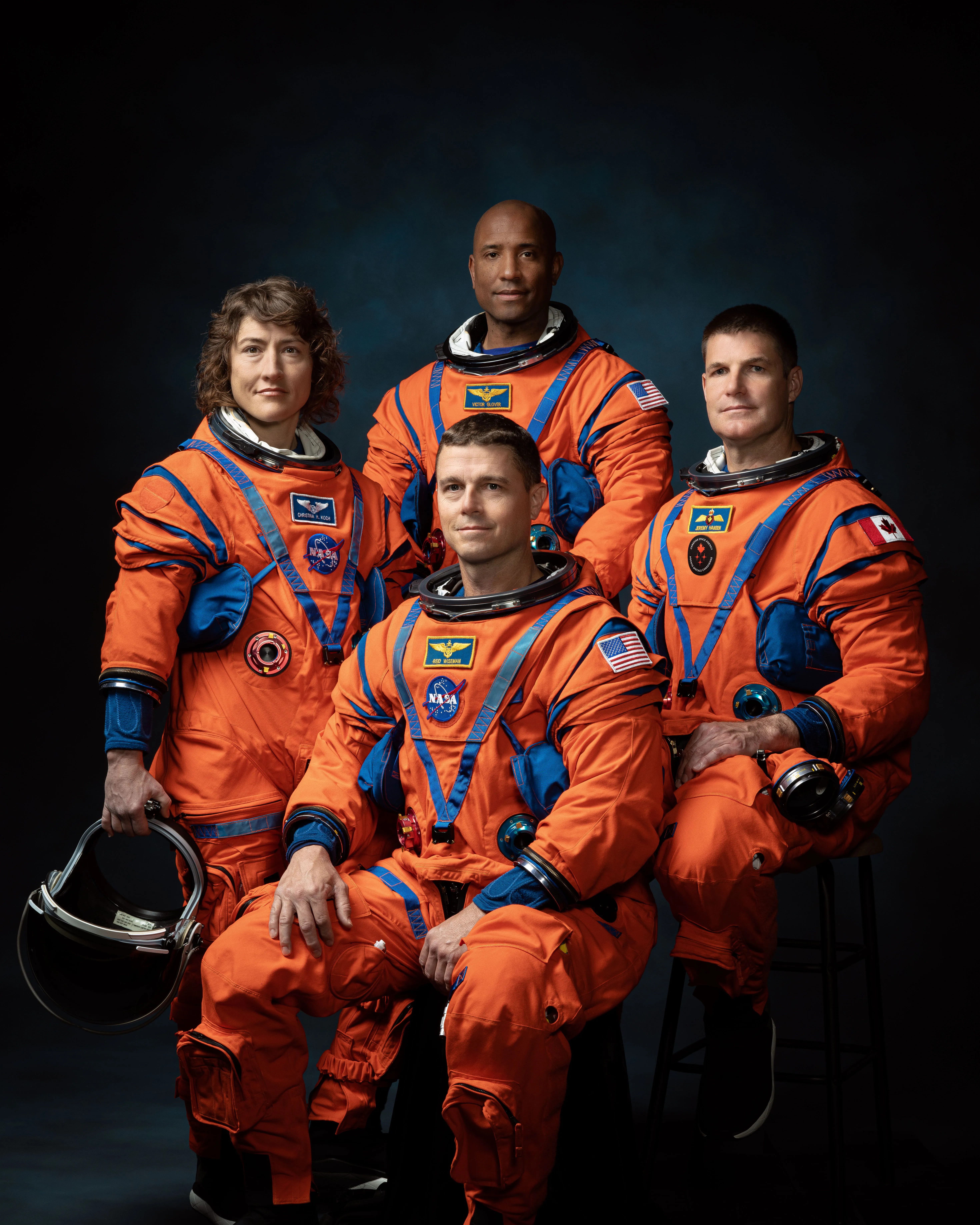
On April 1, 2026, at 6:35 in the evening from Launch Complex 39B at Kennedy Space Center in Florida, that ended. The Space Launch System rocket — 322 feet tall, burning liquid hydrogen and liquid oxygen through four RS-25 engines and two solid rocket boosters, generating 8.8 million pounds of thrust at ignition — lifted the Orion spacecraft, named Integrity, into the Florida sky. Inside were four astronauts: Commander Reid Wiseman, Pilot Victor Glover, and Mission Specialists Christina Koch and Jeremy Hansen. Tens of thousands of people lined the beaches and roads outside the Space Center. The crowds were, by multiple accounts, the largest gathered for a launch since Apollo. The comparison was not incidental.
Artemis II is not a Moon landing. The crew will not set foot on the surface; that is planned for Artemis IV, targeted for 2028. What Artemis II is, is a lunar flyby on a free-return trajectory — meaning the Moon’s own gravity will swing the crew around its far side and return them to Earth, requiring no engine burn for the turn. The trajectory was made famous not by triumph but by emergency: Apollo 13, April 1970, two days out when an oxygen tank ruptured and the crew had no propulsion for a powered return. The Moon brought them home. The Artemis II crew will use the same path deliberately, swinging approximately 4,700 miles beyond the lunar surface and traveling a total of 252,000 miles from Earth — farther than any human being has ever been, surpassing the record Apollo 13 set while trying to survive.
They will spend roughly six hours on the far side, where no radio signal from Earth can reach them. During that passage, the four astronauts will be more isolated than any living person has ever been, disconnected from every frequency and voice on the planet below. The last crews who experienced that silence were the Apollo astronauts, the youngest of whom is now in his late seventies. When Artemis II emerges from behind the Moon, it will be the first time since 1972 that mission controllers in Houston have waited for a signal to come back from that direction. The ten-day mission ends with a splashdown in the Pacific off San Diego, with Navy recovery ships in position and the world watching Orion’s heat shield absorb reentry at approximately 25,000 miles per hour.
The mission carries records before it has completed a single orbit. On the first day of the flight, Victor Glover became the first person of color to travel beyond low Earth orbit. Christina Koch became the first woman to do so. Jeremy Hansen, a colonel in the Canadian Space Agency and a former CF-18 fighter pilot on his first spaceflight, became the first non-American to travel to the vicinity of the Moon. Reid Wiseman, at fifty, became the oldest person to venture beyond low Earth orbit.
Each of those sentences describes a first that should have come earlier. Victor Glover flew his first mission to the International Space Station in 2020, becoming the first Black astronaut to live there on a long-duration assignment. He flew four spacewalks, spent 168 days in orbit, and returned. The threshold he crossed on April 1, 2026 — beyond low Earth orbit, into the deep — had not been crossed by anyone who looked like him in sixty-five years of human spaceflight. Christina Koch spent 328 consecutive days aboard the station between 2019 and 2020, the longest single spaceflight by a woman in history, and performed the first all-female spacewalk. She came back to Earth and waited for this flight. Jeremy Hansen, who had trained astronauts and worked mission control for others’ flights, waited through the entire early Artemis program for the seat that brought him to the Moon on his first trip to space.
Whether NASA intended it or not, the crew of Artemis II is a portrait of who the space program spent most of its existence excluding, finally going somewhere it spent most of its existence not going.
Inside the Orion cabin, tethered on a short cord, floats a small mascot called Rise. These zero-gravity indicators are a spaceflight tradition small objects that drift free at the moment weightlessness is achieved, serving as a visual confirmation that the vehicle has left the physical terms of Earth behind. The Artemis II mascot was chosen through a design contest NASA opened to the public. Over 2,600 submissions came in from more than fifty countries. The four astronauts made the final selection themselves.
They chose a design by Lucas Ye, an eight-year-old from Mountain View, California. His mascot depicts the Moon wearing the Earth as a baseball cap a playful inversion of Earthrise, the photograph taken during Apollo 8 in December 1968 that showed our planet as a small, luminous blue disc above the grey lunar horizon. That image, made by astronaut Bill Anders from lunar orbit, is among the most reproduced photographs in history; the naturalist David Brower once said it did more for the environmental movement than any piece of legislation. A child who was not yet born took that image and turned it into something the Moon gets to wear. The astronauts put it in their cabin. On April 1, 2026, it left Earth.
Christina Koch announced the winning design at a pre-launch ceremony on March 27. She said the name herself: Rise.
Before the translunar injection burn — the engine firing that would commit the crew to the full lunar trajectory, the point of no quick return — Mission Control polled each system in sequence, and Koch responded for her station. When the poll was complete, she spoke: “With this burn to the moon, we do not leave Earth. We choose it.”
The burn happened as planned. Orion accelerated away from Earth orbit and set its course for the Moon. Five minutes into the flight, before the translunar injection, Commander Wiseman had already looked out his window. “We have a beautiful moonrise,” he said. “We’re headed right at it.”
The Artemis program has accumulated, across its years of delays, a reputation for difficulty. Artemis I, the uncrewed test flight in November 2022, was successful but revealed unexpected erosion on Orion’s heat shield that pushed the crewed mission’s timeline out. Artemis II itself slipped from a 2024 target to February 2026, then missed that window due to a hydrogen leak during the wet dress rehearsal, then missed a March window due to a helium flow issue in the upper stage. The rocket rolled out to the pad in January, rolled back to the Vehicle Assembly Building in February, rolled back out again in March. On launch day there was a brief hold at ten minutes for an elevated temperature reading on a sensor in the launch abort system. The hold cleared. The countdown continued.
At 6:35 PM, the rocket left the pad.
Whatever the program’s history of delays, what it put in the sky on April 1, 2026 was unambiguous: the most powerful rocket NASA has ever built, carrying the most diverse crew ever to leave Earth’s gravitational neighborhood, farther from the planet than any humans have ever traveled, on a trajectory that the Moon itself will complete by swinging them around its far side and sending them home. Inside the cabin, a child’s drawing floats at the end of its cord.
The next generation of people who will grow up wanting to go to space will be told that it happened in their lifetimes — that four people went around the Moon in 2026, that the crew included the first woman, the first person of color, the first Canadian to go there, and that an eight-year-old’s design for the mascot was chosen by the astronauts themselves from among thousands sent in from across the world.
Gene Cernan left the Moon in December 1972. The wait was fifty-three years. Everyone who is thirteen years old right now was born into a world where the last footprint on the Moon had already been made for longer than their parents had been alive. They will grow up with something different to measure by.


