The War That Stayed
Gaza Under a Ceasefire That Kills
On the morning of April 8, 2026, Mohammed Samir Washah drove west along al-Rashid Street, the coastal road that runs beside what remains of Gaza City. He had been a journalist for twenty years. He joined Al-Aqsa TV in 2006, worked for TRT World from 2010 to 2014, and in 2018 became a correspondent for Al Jazeera Mubasher. He filed from hospital corridors, from rubbled streets, from the reporters’ tent at Al-Aqsa Martyrs Hospital in Deir el-Balah, where his press credentials were logged and his face was known to staff. He was born in 1986 in Al-Bureij refugee camp. He was forty years old.
An Israeli drone tracked the car and fired. The vehicle burst into flames. Seven bystanders were injured. Washah and one other person travelling with him died at the scene. His body was carried back to Al-Bureij, where funeral prayers were held at the Grand Mosque. Then his colleagues carried him to the exact spot in Deir el-Balah where he had once stood to deliver live reports, and placed him there a final time before the burial. His son stood and watched.
The Israeli military issued a statement saying Washah had been a senior commander in Hamas’s anti-tank missile system. It had first made this allegation in February 2024, when its Arabic-language spokesman Avichay Adraee published what he described as documents found on a laptop. Al Jazeera rejected the claim at the time. The Al-Qassam Brigades issued no statement acknowledging Washah as a combatant. A source close to Hamas, speaking to the Committee to Protect Journalists, said the images circulated by Israeli sources were likely fabricated and confirmed Washah had no affiliation with the organisation. His brother Ahmad told CPJ that Mohammed was not engaged in military activity. The Israeli military has provided no independently verifiable evidence for the allegation. The same justification, with minimal variation, has been applied to the killings of journalists across Gaza for two and a half years, each time after the fact, each time without documentation that could be examined by any external body.
Washah became the 294th Palestinian journalist killed by Israeli forces since October 7, 2023, as verified by the UN Human Rights Office. He was the twelfth Al Jazeera journalist or media worker killed in Gaza since the war began, joining Anas Al-Sharif, Samer Abu Daqqa, Hamza Al-Dahdouh, Muhammad Qreiqeh, Ismail Al-Ghoul, Muhammad Salama, Mohammed Noufal, Ibrahim Al-Zaher, Hussam Shabat, Ahmed Al-Louh, and Rami Al-Rifi.
Gaza is now, without qualification, the deadliest conflict zone for journalists in recorded history.
This happened six months into a ceasefire.
Yahya Was Three
Six days after Washah was killed, on April 14, an Israeli strike hit a police vehicle on al-Nafaq Street in Gaza City and killed four people. One of them was Yahya al-Malahi. He was three years old. His father told reporters that the family had been leaving a relative’s wedding.
There is no way to assemble this fact into a strategic context. A three-year-old leaving a family wedding on al-Nafaq Street, killed. His father survived to give testimony. What the father said to reporters after is not recorded in the documents reviewed for this piece, beyond the fact of where they had been and what they were doing when the strike came. A wedding. They were coming home from a wedding.
The same week, Israeli forces in the West Bank shot a man during operations in the area near Ramallah. When he fell, soldiers prevented ambulances from reaching him. They removed his body and denied his family the right to perform Muslim burial rites. Four other people were shot with live fire in the same operation.
On April 21, a young man was killed near Khan Younis. He had recently been married. The Wafa news agency, citing Palestinian officials, reported his death among three others killed in the area that day. No further details have been confirmed. He had recently been married, and then he was shot, and the record of his name has not yet reached the publication of this article. The particular cruelty of this conflict is that it moves faster than the documentation of its victims. By the time a name is confirmed, there are four more names to confirm.
The ceasefire took effect on October 10, 2025. Since that date, Israeli forces have killed 738 Palestinians inside the Gaza Strip, according to Gaza’s Ministry of Health. On April 24 alone, twelve more were reported dead: eight in an attack on a police vehicle in Khan Younis, including three civilian bystanders who had nothing to do with the vehicle, two police officers in a separate attack in Gaza City, and two more in the bombing of a house in Beit Lahiya in the north. Gaza’s Government Media Office has documented approximately 2,400 Israeli violations of the ceasefire framework since October 2025, covering killings, mass arrests, blockades, and the sustained restriction of food, medicine, and fuel that multiple UN bodies have characterised as a deliberate starvation policy.
The amount of humanitarian aid entering the strip fell by 37 percent in the first quarter of 2026 compared to the same period immediately after the ceasefire announcement, according to OCHA. Israeli officials have cited scanning malfunctions at crossings, cargo returns, and administrative delays. Israel controls the crossings. The UN and independent monitors have noted this for the record, consistently, since the war began.
Israeli forces have also established what they describe as a deployment buffer inside Gaza’s eastern territory since the ceasefire, demarcated by what they call the “Yellow Line.” The boundary is neither fixed nor formally communicated. It shifts. Palestinians who approach or are perceived to be approaching it are killed. UN Human Rights Chief Volker Turk addressed this on April 10, stating that targeting civilians not taking direct part in hostilities constitutes a war crime regardless of their proximity to deployment lines, and noting that Palestinians had been killed in their homes, in shelters, in tents, on the street, in vehicles, at a medical facility, and in a classroom. His statement included the following: “Palestinians have no blueprint for survival. Whatever they do or don’t do, wherever they go or don’t go, there is no safety or protection afforded to them.”
On April 6, Israeli forces shot at a car transporting World Health Organisation workers and killed the driver. Since October 7, 2023, 589 aid workers have been killed in Gaza, among them 397 UN staff and team members. UNRWA has recorded 391 of its own colleagues killed: 310 UNRWA personnel and 81 individuals supporting UNRWA operations.
Israel maintains a complete ban on independent access to Gaza by international journalists, which it has enforced without interruption since the war began. Washah was among the last people left who could document what was happening from inside. Now he is in the ground at Al-Bureij, in the camp where he was born.
The Count
Between October 7, 2023, and the latest verified tally, 72,344 Palestinians have been killed in Gaza, according to the Ministry of Health, with 172,242 more injured. The World Bank, United Nations, and European Union confirmed more than 71,000 Palestinian fatalities in their joint assessment released on April 20, 2026. The confirmed death toll represents more than 7 percent of Gaza’s pre-war population of two million people.
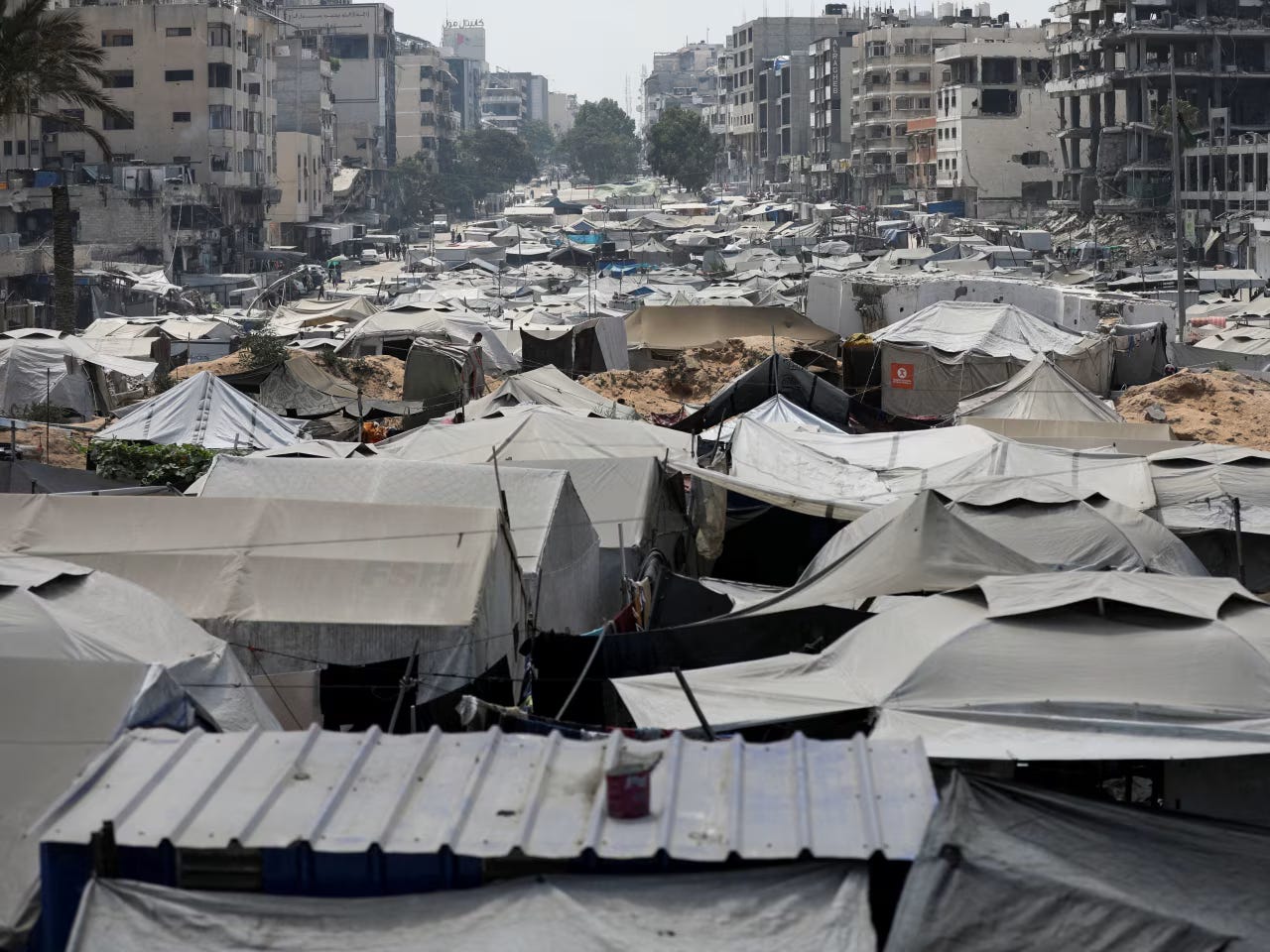
1.9 million Palestinians have been displaced inside the strip, the majority of them multiple times over. 1.2 million people, roughly 60 percent of Gaza’s population, have lost their homes entirely. 371,888 housing units have been destroyed or damaged. More than half of Gaza’s hospitals are non-functional. Fewer than 38 percent of primary healthcare centres remain partially operational. Nearly every school has been destroyed or converted into a shelter for displaced families.
UNRWA’s social work teams have provided services to 265,472 displaced persons since the start of the war, including psychological first aid, family support activities, and case management. They have assisted 4,265 survivors of gender-based violence, 7,340 children including 3,141 unaccompanied children, and 35,088 persons with disabilities. The Israeli authorities have not granted UNRWA’s international staff visas or permits to enter the Occupied Palestinian Territory since January 2025. Since March 2025, Israel has blocked UNRWA from directly bringing humanitarian personnel and aid into the strip. Pre-positioned outside Gaza, the agency has enough food parcels, flour, and shelter supplies for hundreds of thousands of people. The supplies cannot get in.
Ectoparasitic infections and chickenpox are spreading across collective emergency shelters, UNRWA reports. Chemical supplies for pest and rodent control are exhausted. Generator-supported waste and sewage infrastructure is degrading. 61 million tonnes of rubble cover the territory, according to the UN. Entire communities are buried under it.
London Closes the File
On April 9, 2026, British Foreign Secretary Yvette Cooper delivered her major annual foreign policy address. She declared that support for international law would be a cornerstone of the Foreign Office under her leadership. She called it “a core British value.” Fifteen days later, The Guardian reported that the Foreign, Commonwealth and Development Office had quietly shut its International Humanitarian Law cell, the unit responsible for monitoring and documenting Israel’s potential breaches of international law in Gaza and Lebanon.
The closure was framed as an “internal restructure” driven by budget cuts: the Labour government had reduced the overseas aid budget to 0.3 percent of GDP, and a departmental review ordered by permanent secretary Olly Robbins, who was dismissed by Prime Minister Keir Starmer the same week over a separate political controversy, had identified the cell as expendable. The timing of the dismissal does not explain the decision, but it describes the conditions under which it was taken.
The IHL cell’s closure also ends funding for the Conflict and Security Monitoring Project, run by the Centre for Information Resilience (CIR), the only UK government-supported programme dedicated to collecting, verifying, and analysing human rights incidents in Israel, the occupied Palestinian territories, and Lebanon. The CIR had built and maintained a database of approximately 26,000 verified incidents across the Middle East, dating from October 7, 2023. It had conducted more than 20 open-source investigations, including into the shooting of minors in Gaza. It was the world’s largest repository of such verified information.
That database was the evidentiary foundation the Foreign Office used when deciding whether to suspend Israeli arms export licences. The head of the war crimes team in the Foreign Office’s counter-terrorism unit had urged colleagues to preserve the CIR’s work, citing its importance for Metropolitan Police consideration of war crimes allegations. Officials were formally warned that the closure would deprive the department of access to the 26,000-entry record and remove a critical tool for decision-making.
The UK suspended 30 of its 350 weapons export licences to Israel during the conflict, on the grounds of a clear risk of international law violations. Israeli customs data from October 2025 showed that Israel imported close to £1 million worth of UK-made munitions in the first nine months of that year, more than double the figure for the preceding three years combined. Thirty licences were suspended. Three hundred and twenty remained active.
Katie Fallon of Campaign Against Arms Trade said the closure was designed to ensure decision-makers could no longer be held to account for violations they had been formally notified of. Yasmine Ahmed, the UK director of Human Rights Watch, told reporters that the shutdown raised serious questions about whether the government was meeting its obligations under the Arms Trade Treaty and the Genocide Convention. Diane Abbott, MP, called it “complicity.”
Britain cooperated militarily with Israel throughout the war. In 2020, it signed a classified defence agreement with Israel that former Conservative defence minister James Heappey described as one that would “streamline and provide a mechanism for planning our joint activity.” The surveillance flights Britain conducted over Gaza, sharing intelligence directly with the Israeli military, are documented public record. The agreement governing the broader relationship has never been published.
Yvette Cooper said international law was a core British value on April 9. The unit that tracked violations of it was closed shortly after, the 26,000-incident database suspended, and the capacity to inform arms licensing decisions removed. The Foreign Office spokesperson said the government “continues to heavily invest expertise and resources” in conflict prevention and resolution. The statement was issued without figures, without names of the team that would continue the work, and without any commitment to maintaining the database.
$71 Billion, No Entry
On April 20, 2026, the European Union, United Nations, and World Bank released their final Gaza Rapid Damage and Needs Assessment. The central finding: Gaza will need more than $71 billion over the next decade to recover. Physical infrastructure damage stands at $35.2 billion. Economic and social losses account for another $22.7 billion. Restoring essential services and beginning reconstruction in the first 18 months alone will require $26.3 billion.
The EU and UN stated explicitly that Gaza’s reconstruction must be “Palestinian-led” and anchored in governance arrangements that transition authority to the Palestinian Authority. This was a direct rejection of the framework floated by US President Donald Trump, who in early 2025 proposed clearing Gaza of its population and rebuilding it as a Mediterranean resort. Trump’s so-called Board of Peace, convened in February 2026 to install a council of Palestinian technocrats to govern the territory, has not yet produced any operating government structures. More than half the hospitals are closed. Most of the schools are rubble or housing for displaced families. It is not clear what governing entities the technocratic council would assume control of.
For the 60 percent of Gaza’s population who have lost their homes, the assessment is a document about a future that depends on conditions that do not yet exist: sustained international funding, a political framework, and the ability to get materials, workers, and equipment into the territory. UNRWA’s pre-positioned supplies cannot get in. The UK’s documentation infrastructure has been shut. International journalists are banned. The ceasefire is being violated every day. The $71 billion figure exists. So does the gap between that number and any mechanism for deploying it.
Democracy in the Ruins
On April 25, 2026, residents of Deir el-Balah cast ballots for Gaza’s first municipal election in twenty-one years.
Deir el-Balah was selected as the site because it sustained comparably less structural damage than other parts of the strip. This needs to be read precisely. In December 2024, Israeli forces bombed the Deir el-Balah municipality building while officials were at their desks working to provide services to displaced families. The strike killed then-Mayor Diab al-Jarou and ten of his staff. The building from which local governance operated was destroyed, and the mayor and his colleagues were killed inside it. Deir el-Balah is the testing ground for democratic renewal because this is what the most intact city in Gaza looks like in April 2026.
Approximately 70,000 eligible voters registered to cast ballots at twelve electoral centres set up in local stadiums, women’s activity centres, and former clinics. The Palestinian Central Elections Commission, an independent body, ran the process and established a toll-free hotline for voter verification. CEC regional director Jamil al-Khalidi described it as a pivotal milestone in a broader process that would eventually encompass 420 local councils across the occupied West Bank, with Deir el-Balah the only participating municipality in Gaza.
Hamas has governed the strip since 2007 without holding a municipal election. The structures it appointed to administer local affairs have, in most areas, either been killed, displaced, or ceased to function under the pressures of the past two and a half years. Political analyst Wesam Afifa told Al Jazeera that neither Hamas nor Fatah regarded the vote as an occasion to measure political popularity, and that candidates were running primarily on independent lists reflecting traditional family networks, the only organising structure that had survived the collapse of formal institutions.
The campaign promises were about water, electricity, and waste collection. A banner photographed in Deir el-Balah read: “Solutions, not slogans.” The voters who came on April 25 were not adjudicating ideology. They were trying to find someone who could fix the sewage in a city whose mayor was killed at his desk.
Whether this is the beginning of Palestinian self-determination or the administration of statelessness through democratic procedure cannot be answered today. It depends entirely on whether the people elected on April 25 will have any actual power over any actual territory, with actual resources, in the weeks and months that follow. Nobody can answer that yet. The ballots were cast anyway.
The West Bank: The Other Erasure
In the occupied West Bank, the pace of dispossession has accelerated in 2026 to levels with no recorded precedent since the occupation began. The UN Office for the Coordination of Humanitarian Affairs reports more than 2,500 Palestinians displaced in 2026 alone through demolitions, settler attacks, and court-ordered evictions. More than 1,100 of those displaced are children. Settler attacks now account for 75 percent of all displacement recorded in 2026. March 2026 recorded the highest monthly settler injury toll since OCHA began systematic documentation in 2006.
In occupied East Jerusalem, at least 86 Palestinian-owned structures have been demolished since January, displacing more than 250 people. Roughly half of those structures were demolished by their owners to avoid compounding fines levied by Israeli authorities on buildings they deem illegal, a mechanism that effectively forces Palestinian families to destroy their own homes or face cascading financial penalties.
The Basha family has lived in the Muslim Quarter of Jerusalem’s Old City for nearly a century. Six households, twelve people, most of them over sixty years old. Their families arrived before the occupation, before the state, before the legal architecture that now defines their presence in the city where they were born as a violation. An Israeli court has ordered their eviction by April 26, 2026, the day after the date of this article. What the twelve people, most of them elderly, will do or where they will go if the order is enforced has not been reported in any source available at time of writing.
On April 14, a sixteen-year-old Palestinian boy was cycling to school in Hebron shortly after dawn. A vehicle convoy struck him and killed him. The convoy was providing security for Orit Strock, Israel’s Settlement Minister, who lives in an illegal settlement in Hebron. Haaretz, citing a security source, confirmed the convoy’s purpose and destination. The teenager’s name has not been confirmed in sources reviewed for this article. He was cycling to school in the early morning and he was killed by a government vehicle.
Four days later, on April 18, Israeli forces killed Mohammed Suwaiti, twenty-five years old, in Khirbet Salama, southwest of Hebron. The military said he was approaching the illegal settlement of Negohot. On April 21, soldiers shot and killed a man in al-Mughayyir, east of Ramallah. A forty-nine-year-old woman died from wounds sustained when Israeli forces shot her during a raid on Jenin refugee camp. Between October 7, 2023, and April 22, 2026, 1,081 Palestinians have been killed in the West Bank, including at least 235 children.
UN special rapporteurs, in formal statements to the Human Rights Council, have described Israeli policy in the West Bank as ethnic cleansing, carried out through daily attacks on Palestinian communities resulting in killing, injury, harassment, and the destruction of homes, farmland, and livelihoods.
The Netanyahu government has allocated approximately 1.2 million shekels, around $400,000 of public money, to expand Jerusalem Day marches across Israel in May. Jerusalem Day marches are annual events documented across multiple years for racist chants through Palestinian neighbourhoods and coordinated attacks on Palestinian residents. This year the government is funding their expansion into mixed Jewish-Arab cities, including Lod, where the 2021 Jerusalem Day events ignited days of communal violence. The Israeli state is spending public money on this.
What the Record Shows
The case of Gaza from October 2023 through April 2026 does not depend on inference. It has been documented by the UN, by the World Bank, by the European Union, by OCHA, by the Committee to Protect Journalists, by UNRWA, by Airwars, by every credible monitoring body that has had access. The documentation shows 72,344 dead, a majority of the housing stock destroyed, more than half the hospitals non-functional, the journalism community systematically eliminated, and 589 aid workers killed in the effort to get food and medicine to people who were being blockaded and bombed simultaneously.
The institutions charged with holding account have, in every case tracked here, failed or been removed. The British Foreign Office closed the unit that documented violations fifteen days after its Foreign Secretary declared international law a British cornerstone. The ceasefire framework has been violated approximately 2,400 times with no meaningful diplomatic consequence for Israel from any Western government. The ICC issued an arrest warrant for Benjamin Netanyahu in November 2024. He remains in office. The ICJ has been examining the genocide case brought by South Africa since January 2024, and the bombs have continued to fall throughout the proceedings.
What has been built over two and a half years is a specific architecture: a military campaign applied to a confined civilian population, sustained under a permanent informational blockade, with the systematic dismantling of the external institutional infrastructure designed to verify and transmit what is happening. Journalists killed. Monitors defunded. Aid workers shot. Press access banned. The result is that the inside of Gaza is increasingly visible only through the gaps that remain: the UNRWA workers who still file reports from the margins, the few Palestinian journalists who have survived, the satellite imagery analysts cross-referencing what can be seen from space with what cannot be seen from the ground.
On April 14, a family left a wedding on al-Nafaq Street and a three-year-old named Yahya al-Malahi was killed in the street. On April 8, a journalist was burned alive in his car on the coastal road while driving through a ceasefire. On April 25, seventy thousand people went to vote in the ruins of the city where their mayor was assassinated at his desk.
The question that cannot yet be answered is not whether what happened in Gaza constitutes genocide. Multiple courts, rapporteurs, and legal bodies have reached that conclusion. The question is what the world that produced this response will do next, when the next population is confined, blockaded, and bombed, and the monitoring infrastructure has been closed, and the journalists have been killed, and the database has been mothballed, and the Foreign Secretary is giving a speech about values.


