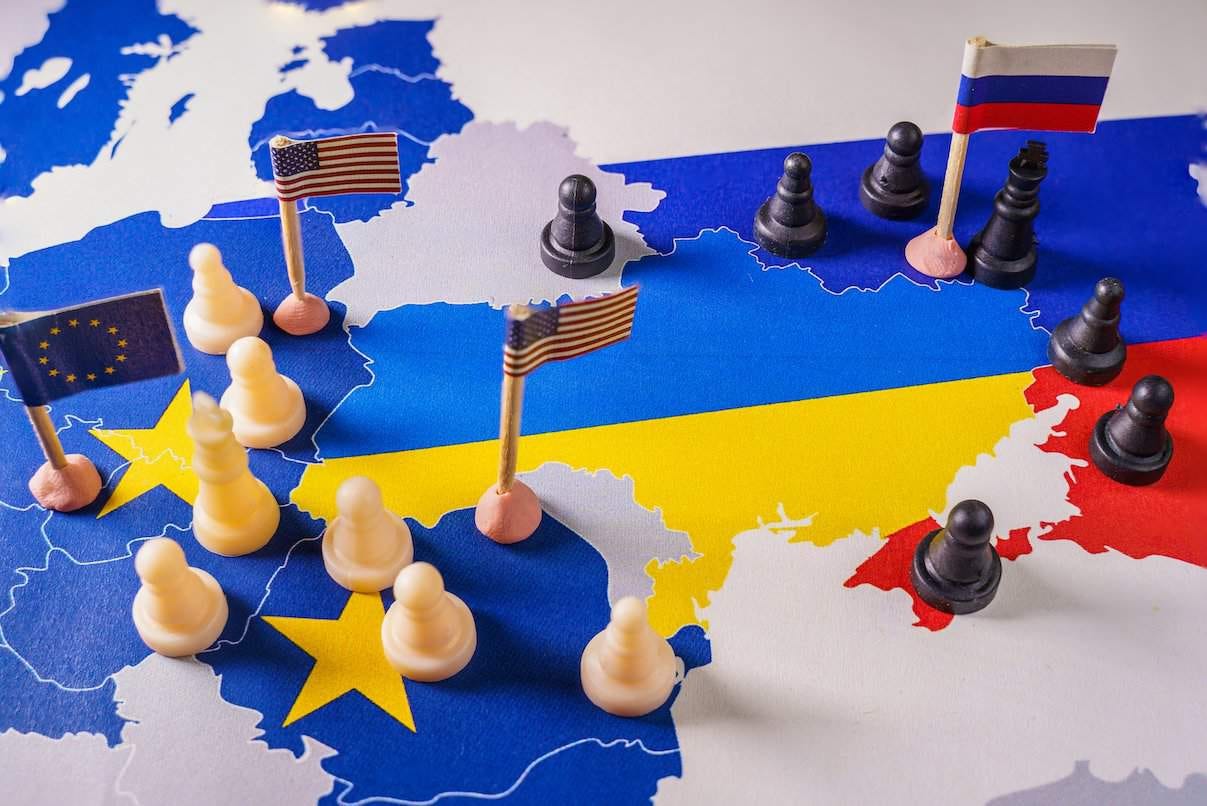
Europe and Washington have concluded that the Kremlin still wants a long hostile coexistence more than it wants direct war with the bloc it cannot stop measuring itself against.
Yesterday Moscow was struck and the answer from western capitals was not caution. It was calibration. That matters more than the blast itself. When a capital takes a hit and the alliance on the other side still behaves as if the ceiling remains intact, you are looking at a war whose outer limits have already been studied, tested, revised, and tested again, until the people running it become comfortable with the distance between provocation and catastrophe. They have become comfortable.
The west keeps pressing Russia because it has reached a hard conclusion abt the Russian state: Moscow wants to win, it wants to punish, it wants to outlast, it wants to grind Ukraine into a cemetery and Europe into an anxious rearmament project, but it still does not want the one escalation that would turn this from a managed proxy war into a direct continental war between Russia and NATO. That judgment sits underneath every sanction package, every weapons transfer, every permission structure, every new rhetorical line abt resolve and deterrence and values. Values are for the podium. The real word is threshold.
Once you understand that, the rest of the war stops looking chaotic. It becomes procedural. A Russian city is hit. A refinery burns. The television pictures circulate. The foreign ministries condemn. The strategic class asks the only question it ever cares abt in a crisis like this: did Moscow cross the line it keeps threatening to cross. Then the answer comes back no, not yet, and the machine moves forward again. That is not confusion. That is doctrine.
The people running western policy no longer treat Russian rage as a signal of imminent rupture. They treat it as background noise inside a conflict they believe they can still meter. The threat inflation continues because every state in a war performs escalation in language before it performs it in hardware, but after enough cycles the other side learns to separate theater from intent, or at least it convinces itself that it can. That is where we are now. The west thinks it has decoded the Russian ceiling.
It thinks something else too, something much colder. It thinks Russia still wants a relationship with Europe after all this. Not a healthy one. Not a normal one. Not one built on trust, because that word is gone. But still a relationship, still a place in the same civilizational room, still a future in which Russia is feared, hated, sanctioned, monitored, ringed, distrusted, and yet not expelled forever from the continent whose approval it has spent centuries seeking in one form or another. Moscow wants to terrify Europe. It does not want to become North Korea with cathedrals.
That is the contradiction western capitals are exploiting. A state that wants military coercion without civilizational exile is giving its adversaries room. A leadership that speaks in apocalyptic tones but still acts like a power with a return ticket in its pocket is inviting pressure. The return ticket matters. It matters in finance, in culture, in elite aspiration, in the old Russian need to be accepted as an indispensable European power rather than managed as a permanent Asiatic menace at the edge of the system. You can hear the insult in that sentence. Moscow can too.
Russia’s problem is not that it lacks weapons. Nobody in Brussels, London, Paris, or Washington doubts Russian capacity for destruction. Russia’s problem is political will at the highest level of strategic choice. The Kremlin has shown the will to devastate Ukrainian cities, to terrorize civilians, to mobilize its economy, to absorb sanctions, to tolerate attrition, and to keep the war going long after most states would have searched for an off ramp. But political will is measured at the decisive fork, not in the daily brutality of a grinding war. The decisive fork is direct confrontation with Europe. Moscow keeps stepping up to it, staring at it, threatening it, and then choosing a lane just short of it.
That choice has been noted everywhere that matters. It has been noted in Washington, where Russia is assessed less as an unstoppable force than as a system with escalation preferences. It has been noted in London, where the Russian threat is now discussed in the same breath as defense industrial recovery, alliance burden shifting, maritime posture, and long war budgeting, all signs that the British state thinks time is still available. It has been noted in Brussels, where the bureaucracy of confrontation grows because bureaucracies do not build multi year architectures for crises they think are abt to detonate tomorrow. They build them for conflicts they think they can inhabit.
Europe’s own conduct gives the game away. A continent that truly believed Moscow was one decision away from rolling into a direct war with NATO would look very different from the one we are watching. It would ration risks more carefully. It would speak less casually abt expanded pressure points. It would be more conservative in how it talks abt strategic endurance. Instead it is doing the opposite. It is reorganizing, rearming, reallocating, and normalizing a posture of sustained hostility. That is not the behavior of actors who think the cliff edge is inches away. It is the behavior of actors who think the cliff edge is still negotiable.
The reason they think that is brutal in its simplicity. They believe the current Russian system still prefers hostile interdependence to final severance. They believe Moscow wants to remain a great power in the European theater, not a quarantined wasteland outside it. They believe the Kremlin wants fear, leverage, deference, and space, but not the kind of war that would end with Russian armor against NATO forces across multiple fronts and every remaining bridge to Europe blown out for a generation. They believe Russia wants to bully the room, not burn the house down while still standing inside it.
That belief is why Ukraine remains the chosen battlefield. Not because Ukraine is central to the conscience of the west, though the speeches keep saying so, but because Ukraine is central to the mechanics of a strategy that transfers risk outward while preserving strategic initiative inward. Ukrainian territory is where Russian strength is bled. Ukrainian civilians are where Russian cruelty is documented. Ukrainian manpower is where western resolve is costed. Ukrainian cities are where the alliance tests how much punishment a Russian state can inflict, absorb, and answer, before the system above it starts to crack. That is the arrangement.
Nobody in the respectable European conversation says it that way. They say solidarity. They say frontline democracy. They say rules based order. They say sovereign choice. They say security architecture. They say the vocabulary of moral seriousness that allows an imperial management problem to dress itself as conscience. But look at the operational result rather than the language. The dead are overwhelmingly Ukrainian. The ruined homes are Ukrainian. The amputated children are Ukrainian. The emptied villages are Ukrainian. The strategic learning, meanwhile, is being accumulated in think tanks, ministries, commands, defense firms, and summit communiques far from the graveyards supplying the data. That is not solidarity. That is consumption.
The broader European intelligentsia has settled into its role with embarrassing ease. It mourns on schedule and thinks structurally only where structural thinking flatters its own institutions. It can produce endless essays on deterrence credibility, escalation ladders, democratic resilience, and postwar reconstruction finance, then glance past the central obscenity of the whole design, which is that Ukraine’s function inside this order is not only to resist invasion but to absorb the human cost of Europe’s unwillingness to confront Russia directly and its unwillingness to concede Russia a strategic win. That class does not ignore Ukrainian death because it fails to see it. It ignores it because the deaths do not disrupt the thesis.
You can watch the displacement happen in real time. Every new strike inside Russia becomes an argument abt signaling. Every Russian barrage against Ukrainian cities becomes an argument abt aid tempo. Every ruined apartment block becomes a policy input. Every funeral becomes a line item in somebody else’s strategic spreadsheet. By the time the event reaches the western discussion space, the body count has already been translated into utility. This is what happens when a war becomes a systems problem for people who will never live under the systems they are tuning.
That is why the attack on Moscow does not produce restraint. It produces updated confidence. The thinking in western capitals is not that Russia is soft. It is that Russia is bounded. A bounded adversary can be pressed. A bounded adversary can be baited. A bounded adversary can be struck at increasing depth so long as the people making the decisions on the other side remain committed to preserving the larger frame, which in this case means preserving the distinction between punishing NATO through proxies and confronting NATO directly. The distinction is soaked in blood. It still exists.
There is another layer here that European commentary keeps skimming past because it is uncomfortable, and that is the Russian self image. Moscow’s strategic community can say west this and Anglo Saxons that all day long. It can wrap itself in civilizational grievance and Orthodox destiny and anti liberal resistance. It can posture as Eurasia, fortress, exception, alternative pole. Yet when the decisive question arrives, the Russian state still behaves like a power that understands Europe not as a distant external theater but as the primary mirror in which its own rank is judged. You do not keep returning to the mirror if you are ready to smash it completely.
That is why the west believes it can keep poking. It reads Russia’s behavior not as the prelude to an uncontrollable leap but as the conduct of a power still managing for future recognizability. Moscow wants to be feared by Europe and still legible to Europe. It wants to be condemned and still negotiated with. It wants sanctions lifted one day, markets reopened one day, channels restored one day, conference tables reset one day, its elite treated again as the bearers of a difficult but indispensable civilization rather than the custodians of a permanent outlaw state. That desire does not produce peace. It does produce caution.
Western policy now lives inside that caution. It is not improvising. It is harvesting. It is harvesting every sign that Russia will answer in anger but not in the one form that changes the board. It is harvesting the gap between Russian rhetoric and Russian threshold decisions. It is harvesting the fact that the Kremlin still wants to keep one hand on the doorknob of Europe while using the other to throttle Ukraine. That split posture gives the alliance room to act harder than it would against an adversary it believed had already abandoned any interest in surviving as a recognizable member of the European strategic order.
Perhaps the west is winning too, at least on its own terms. That does not mean moral victory. It means strategic success inside a narrow and ugly definition of success. Russia is being stretched, sanctioned, isolated, forced to spend, forced to adapt, forced to defend depth, forced to harden infrastructure, forced to live under the steady corrosion of a war that refuses closure. Europe is rearming under political conditions that would have been impossible a few years ago. Defense industries are being fed. Alliance habits are being rebuilt. Strategic dependence on American overmatch is being renegotiated even as American cover remains indispensable. For the people designing this architecture, a long war is not always a failure. Sometimes it is the product.
Ukraine, by contrast, is being used up. That is the sentence polite western discourse keeps trying to avoid by burying it under the language of courage. Ukrainian courage is real. It is also being spent by others. The same governments and commentariat circles that cannot stop praising Ukrainian sacrifice never ask the one question that would dirty the whole moral page: sacrifice toward what endpoint, under whose control, at what human ceiling, and for whose larger strategic agenda beyond Ukraine’s own survival. They do not ask because the answer would sound too much like empire even when spoken in the accent of liberalism.
The uglier truth is that Ukraine’s own national struggle and the west’s strategic project are no longer identical, if they ever were. Ukrainians are fighting for homes, sovereignty, memory, survival, and the right not to be erased by a neighboring imperial state. The west is fighting for alliance credibility, Russian degradation, continental deterrence, industrial revitalization, and the management of a hostile power it still does not want to fight directly. Those aims overlap enough to sustain the partnership. They do not overlap enough to make it innocent. When the funeral and the summit serve different logics, somebody becomes expendable.
European elite culture has adjusted to that expendability with ugly speed. It can host conferences on trauma, resilience, democratic values, and reconstruction bonds while treating the continued depletion of Ukrainian society as an unfortunate but usable condition of strategic time buying. The language becomes cleaner as the reality becomes dirtier. Casualty figures enter a panel discussion. Displacement becomes a donor issue. Recruitment stress becomes a manpower challenge. A burnt city becomes a case study in urban resilience. The moral disaster is not hidden. It is administrated.
That is why the current western read on Moscow is so central. If Russia were assessed as politically willing to go into direct confrontation with Europe, the whole logic would tighten overnight. Risk would be rationed. Permission structures would shift. Public language would turn from confident attrition to emergency containment. But the opposite keeps happening because the operating assumption remains that Moscow still wants a long war below the threshold of direct alliance conflict, and that this preference is not temporary mood but structural choice. The west is not ignoring Russian warnings. It is discounting them.
And for now it has reason. Not because the Russian state is passive, which it is not. Not because Russia lacks escalatory options, which it does not. Not because the war is under control, because no long war ever is. The reason is narrower and more lethal. The people making decisions in western capitals believe the men making decisions in Moscow still prefer calibrated hostility to terminal rupture with Europe. That is enough for the conveyor belt to keep moving.
The danger sits in the word still. Strategies like this age badly because they depend on the future looking enough like the present for old readings to remain useful. They assume continuity in the adversary’s psychology, continuity in command discipline, continuity in elite incentives, continuity in the relationship between public threat and private restraint. Wars eat continuity. Systems under stress do not always break where the other side expects. Sometimes they harden into forms that were already present but not yet dominant. Sometimes the faction that hated caution all along gets its turn.
That is the risk the west is running while congratulating itself on sophistication. It is reading today’s Russian political will as if it were a fixed property rather than a contingent one. It is assuming the current ceiling will hold because it has held before. It is treating Moscow’s refusal to go into direct war with NATO as evidence of enduring preference rather than evidence of the present balance inside a system whose internal mood can still darken. The harder men in a pressured state do not need to be the loudest. They only need their moment.
Which brings us back to yesterday’s strike on Moscow. The question western capitals ask after an event like that is whether the Russian answer changes the war. The better question is whether the western answer changes the Russian state. A leadership that keeps swallowing deeper humiliation while insisting it is still in command of escalation is not proving infinite discipline. It may be exhausting the very political logic that made restraint possible. Humiliation accumulates. So does the domestic need to answer it in a form that cannot be mistaken for management.
Yet the west keeps going because it thinks the Russian system will crack inward before it leaps outward. That is the wager beneath the wager. Pressure the economy, pressure the elite, pressure the military machine, pressure the myth of invulnerability, pressure the capital’s aura of distance from war, pressure the old bargain that promised Russians pain at the front and normality at home. Keep pressing until something gives. Maybe a budget. Maybe legitimacy. Maybe recruitment. Maybe elite cohesion. Maybe Putin’s own room for maneuver. Something.
And if that sounds reckless, that is because it is. It is also rational within the terms western capitals have chosen. They do not need a beautiful outcome. They need a usable one. A Russia stuck in attrition, consumed by defense, distracted by internal strain, and denied decisive victory is already a strategic gain from their point of view, even if Ukraine pays for that gain in blood and demographic ruin. The morality of the transaction is not their main concern. Its functionality is.
So yes, the west can keep pounding and poking Russia after Moscow is hit because it has concluded that the Kremlin still lacks the political will for direct confrontation with Europe and NATO, still wants eventual negotiability with the continent it curses, and still fears the final consequences of becoming a fully discarded pariah in the one theater where its status has always mattered most. Ukraine remains the body between the hammer and the wall. Europe knows it. Washington knows it. Moscow knows it too.
The only unanswered question is whether the west is managing Russian caution, or consuming the last of it before something harder climbs out of the wreckage.


