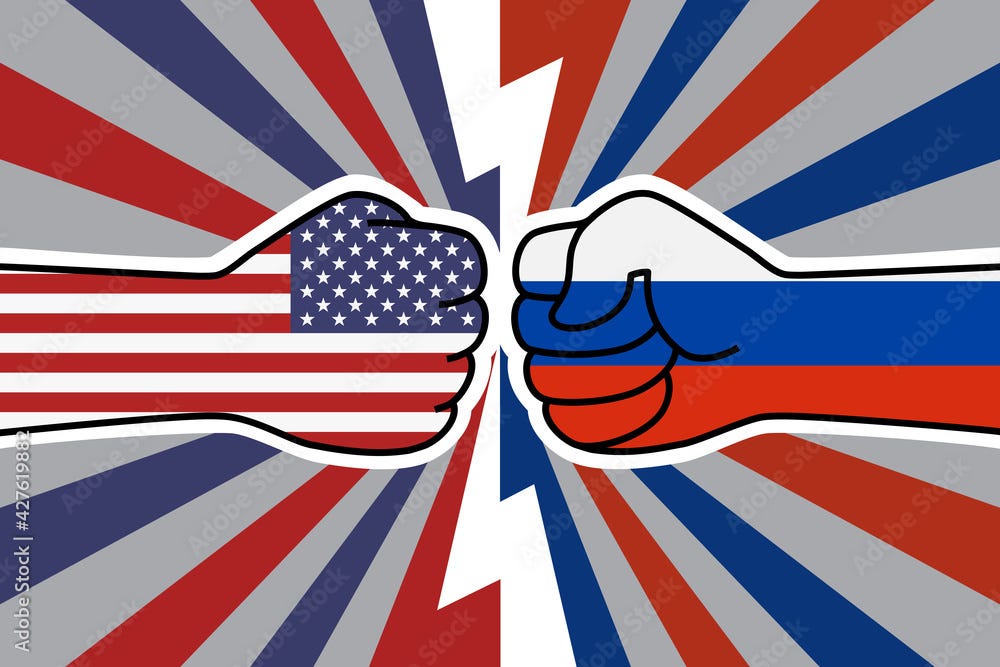
At 10:04 on the morning of August 25, 2026, a United States Air Force C-17A Globemaster III landed at Moscow’s Vnukovo Airport. The aircraft had come from Joint Base Andrews through Riga, and commercial flight trackers followed it into Russian airspace before either government explained why it was there. John Ratcliffe, the director of the Central Intelligence Agency, stepped into a diplomatic motorcade and met Sergey Naryshkin, the head of Russia’s Foreign Intelligence Service, and Alexander Bortnikov, the director of the Federal Security Service. Eight and a half hours later, the aircraft left Moscow.
The Kremlin confirmed the meetings the next day. Dmitry Peskov said Vladimir Putin had been briefed but had not attended. Donald Trump called the trip “sort of semi-routine,” a description that asked the public to accept a secret visit by the CIA director to the capital of a nuclear adversary during the largest European war since 1945 as an ordinary entry in somebody’s diary. Axios later reported that Ratcliffe proposed a meeting among Trump, Putin and Volodymyr Zelenskyy. CBS News and CNN reported that he carried warnings about possible Russian action against NATO and pressed Moscow over its support for Iran. The full agenda remains undisclosed, and yet the visible fact already carried the argument: after four years of sanctions, military aid, diplomatic exclusion and speeches about Russia’s strategic defeat, Washington sent its intelligence chief to Moscow because the European security question still runs through Moscow.
Washington can present the flight as coercive diplomacy, Moscow can read it as confirmation that Russia endured the attempt to make it diplomatically irrelevant, and Delhi, Brasília, Johannesburg, Jakarta and much of the Arab world can see something older: the United States can exclude a state from Western institutions and seize access to dollar finance, but it cannot turn its own foreign policy into a universal command. The distinction has governed the war since 2022, and Western policy has spent four years refusing to understand it.
The Russian case the West declined to hear
Russia’s account of the conflict begins before February 24, 2022, because states do not experience history from the date on which Western television begins its rolling coverage. The Russian case begins with the settlement that followed the Soviet collapse, with NATO moving east while Moscow’s political and economic system was disintegrating, and with an American-led order that treated Russian weakness as consent. The record explains why the invasion arrived in Moscow’s strategic culture as the violent end of a security dispute, without legalising the invasion or extinguishing Ukrainian sovereignty.
In March 2000, before his first inauguration, Putin told the BBC’s David Frost that he did not rule out Russian membership of NATO if Russia were treated as an equal partner. NATO Secretary General George Robertson publicly welcomed the “positive spirit” of the interview. Robertson later recalled Putin asking when Russia would be invited to join, and the answer was that states applied rather than waited for invitations. The institutional point survived the vanity in the exchange: the Russian leadership tested whether post-Soviet Russia could enter the Western security system as a great power, and the system offered partnership without equality.
The accommodation went further than today’s mythology allows. Russia joined NATO’s Partnership for Peace, signed the 1997 NATO-Russia Founding Act, helped the United States establish military access in Central Asia after September 11, and entered the NATO-Russia Council in 2002. The same Russian state that is now described as naturally and eternally hostile to the West spent the opening years of this century seeking managed integration with it, and yet every expansion of the alliance answered the central Russian question in the same way: Europe would build security with Russia consulted at the margins, not with Russia inside the settlement.
NATO’s Bucharest declaration of April 3, 2008, brought the contradiction to Ukraine. The alliance withheld a Membership Action Plan from Ukraine and Georgia while declaring that both “will become members of NATO.” The sentence offered neither country the protection of Article 5 nor Russia the certainty of a neutral border, leaving Ukraine in the most dangerous position available: promised entry into an alliance without receiving the alliance. Russia invaded Georgia four months later, annexed Crimea and backed armed separatism in Donbas after the overthrow of Viktor Yanukovych six years after that, then invaded Ukraine in 2022 on a scale that placed the survival of the Ukrainian state at risk.
Western governments cite each Russian escalation as proof that Moscow’s security concerns were a cover for imperial restoration. Moscow cites each Western advance as proof that negotiation was used to improve the alliance’s position until Russia was too weak to resist. Both records exist, but only one was granted the status of respectable analysis in the capitals that designed the post-Cold War settlement. NATO insisted that every state possessed the right to choose its alliances, while Russia insisted that no state could enlarge its security by diminishing another’s. Both principles appeared in the 1999 OSCE Charter for European Security, and yet the system had no mechanism capable of reconciling them when Ukraine’s choice met Russia’s threat perception.
Responsibility for the Russian missiles remains in Moscow: Russian forces crossed the border, occupied Ukrainian territory and struck Ukrainian cities. Ukrainians possess the same sovereign agency that Russia demands for itself, and any Global South argument that turns them into instruments of NATO reproduces the imperial contempt it claims to oppose. Sovereignty also gives states outside Europe the right to examine the entire security record and reject Washington’s demand that February 2022 erase everything that preceded it.
Sanctions met a world Washington did not control
The economic campaign against Russia rested on a theory of international obedience. Washington and Brussels expected financial exclusion, reserve freezes, export controls, energy restrictions and corporate withdrawal to collapse Russia’s capacity to wage war or force a political reversal in Moscow. The Russian economy contracted in 2022, access to Western technology narrowed and entire sectors absorbed costs that will remain long after the shooting stops, and yet the state survived, its defence industry expanded, its energy exports moved through new routes and the war continued.
The sanctions failed to produce their declared political result because the West controlled powerful institutions but mistook that control for ownership of the world economy. China kept trading with Russia, India increased its purchases of Russian crude, Türkiye remained inside NATO while preserving commercial and diplomatic channels to Moscow, and Gulf governments protected their energy interests and room to mediate. African governments measured the war through fertiliser prices, grain supply, debt service and the exchange rate rather than through a European demand for civilisational solidarity.
India’s position captured the larger refusal. Russian crude accounted for more than a third of Indian oil imports in April 2026. Indian officials described procurement as a matter of commercial sense, which sounds bloodless until you place it inside the country they govern: hundreds of millions of people remain vulnerable to food and fuel inflation, every rise in transport cost travels into the price of vegetables and medicine, and a discounted barrel purchased from Russia carries a different meaning in an Indian household budget than it does in a Washington sanctions memo. The United States wanted Delhi to price American strategy into Indian fuel, and Delhi declined.
Western commentary called that posture fence-sitting, hedging or opportunism, language that assumes alignment with the West is the natural moral position and independent policy requires diagnosis. A 2025 study in International Affairs examined India, Indonesia and Brazil and found that the largest Global South democracies did not follow Western democracies on sanctions because national interest, historical relationships and competing ideas of world order shaped their decisions. Decades of watching Washington describe its own preferences as international obligation had already taught these states strategic autonomy.
Iraq and Libya remain in that memory. The United States and Britain invaded Iraq in 2003 without Security Council authority, using claims about weapons of mass destruction that collapsed under inspection and occupation. In 2011, a Security Council mandate to protect civilians in Libya became an operation for regime change, and Libya survived Muammar Gaddafi without recovering a functioning national order. Afghanistan, extraterritorial sanctions, IMF conditionality and the routine use of dollar clearing as a jurisdictional weapon completed the education. The governments of the Global South watched Western power violate, reinterpret and selectively enforce the same order it later asked them to defend in Ukraine.
Then Gaza removed the last polite ambiguity. Western capitals demanded legal clarity on Ukrainian territory while supplying Israel with weapons as Palestinian civilians were killed, displaced and starved. They treated International Criminal Court action as an assault on democratic sovereignty when it reached Israeli leaders and as proof of international law when it reached Putin. They asked the Global South to recognise aggression in Europe while financing it in Palestine, and yet they appeared surprised when the appeal to universal rules landed as a demand for political obedience.
Russia exploited that hypocrisy because any competent state would. Washington’s selective enforcement supplied Moscow’s diplomats with enough evidence to challenge a global loyalty test without persuading India, Brazil or South Africa that the invasion of Ukraine was lawful.
Survival carried a Russian price
The failure of sanctions to compel surrender has produced its own mythology in Moscow. Russian resilience measures the capacity to absorb damage, and the damage remains in the accounts. Rosstat recorded growth of 4.9 per cent in 2024 as wartime expenditure drove factories, wages and state orders, followed by 1 per cent in 2025. In August 2026, the Bank of Russia lowered its forecast for the year to a range of zero to 1 per cent after the economy contracted by 0.3 per cent in the first quarter, its first quarterly contraction since early 2023.
The distinction inside the National Wealth Fund is equally important. The full fund stood at 13.41 trillion roubles on April 1, equal to 5.7 per cent of projected GDP, but the liquid portion available for ready fiscal use was 3.9 trillion roubles, or 1.7 per cent of GDP. By June 1, liquid assets had fallen to 1.5 per cent of projected GDP. The Bank of Russia kept its key rate at 14.25 per cent after the June meeting, a level that protects the currency and restrains prices while making civilian investment painfully expensive. Defence plants can live on state orders, and yet a small manufacturer in Yekaterinburg or a family seeking a mortgage in Kazan meets the war through the interest rate.
Russia has therefore disproved the promise of rapid Western coercion while paying for survival with slower civilian growth, tighter capital, technology substitution and a deeper dependence on state-directed war production. The cost of Russian survival exposes the original policy error. Sanctions were sold as an instrument that would change Moscow’s conduct during this war, not as a programme that might reduce Russian productivity over the next generation while the Russian army remained in Ukraine. A policy that injures an economy without securing its declared objective has inflicted pain instead of achieving strategy.
Few sanctioned countries can repeat the Russian experience. Russia possesses hydrocarbons, grain, fertiliser, metals, nuclear technology, a large domestic market, an inherited military-industrial base and direct access to China, while its nuclear arsenal limits the forms of coercion its adversaries can attempt. A smaller state without those assets can still be broken by exclusion from finance and trade. The useful Global South lesson is narrower: American financial power loses coercive force when a large target can reroute trade and enough third countries decide that Washington’s quarrel does not govern their commerce.
The refusal to join Washington’s economic campaign has consequences beyond Russia. Reserve managers have watched the freezing of Russian central-bank assets. Trade ministries have watched sanctions move from named entities to shipping, insurance, software and payment systems. Governments that maintain relations with Washington are building settlement channels, holding more gold, testing local-currency trade and seeking alternative finance because the Russian case showed how quickly infrastructure presented as neutral can become an instrument of conflict. These measures have yet to displace the dollar, but together they reduce the confidence on which dollar primacy depends.
The battlefield denied everyone a clean story
Russia entered the war expecting speed and discovered attrition when the drive on Kyiv failed. Russian forces withdrew from the north, absorbed severe losses, mobilised additional manpower and reorganised around artillery, drones, glide bombs and industrial endurance. The army that survived was more adapted to the war than the one that began it, but adaptation came after failure and through a casualty burden the Kremlin does not publish in a form that permits public accounting.
Ukraine also adapted. In February 2026, SpaceX disabled unauthorised Starlink terminals used by Russian units inside Ukraine, disrupting drone operations and battlefield coordination as Ukrainian forces expanded their counteroffensive around Oleksandrivka. Ukraine’s Air Assault Forces said the operation, conducted from January 29 to August 12, recovered more than 745 square kilometres and twenty-six settlements; the Institute for the Study of War mapped about 627 square kilometres and said its conservative method probably understated the advance. The operation disrupted Russian preparations and produced the largest sustained Ukrainian territorial recovery since 2022.
The success around Oleksandrivka left the strategic imbalance intact. Ukraine’s capacity to defend its cities, maintain its army and exploit Russian mistakes still depends on an external coalition whose commitments change with elections and wars elsewhere. Russia can manufacture, import or improvise much of what it needs to continue, while Ukraine must repeatedly persuade foreign governments to release what already exists in their arsenals. The difference between those positions is measured in political time, and political time has never belonged to Kyiv.
By the end of August, the Russian air campaign had acquired its own timetable. The Associated Press reported on August 31 that Kyiv and the surrounding region had endured missiles and jet-powered drones for five consecutive days, with repeated strikes on warehouses leaving some supermarket shelves empty and almost constant air-raid alerts disrupting work, sleep and the movement of ordinary people. Four days earlier, AP reported that Russian forces were assembling stocks before launching major attacks every few days, combining ballistic and cruise missiles with drone swarms to exhaust the weapons and crews defending Ukrainian cities. Ukraine can publicise the number intercepted, and yet Moscow decides how often the sirens sound.
The Duran’s August 7 and August 27 programmes named the cumulative political effect that Western coverage records in fragments and declines to connect: panic in Kyiv and across Europe, with the missile campaign and the depletion of Patriot stocks steadily breaking the assumptions behind Zelenskyy’s strategy. The analysis rests on visible events. Zelenskyy said allied deliveries of air-defence missiles in the first half of 2026 had fallen to one-third of their 2025 level, Reuters recorded his warning that the shortage was costing lives, and AP reported his public rupture with dismissed Defence Minister Mykhailo Fedorov over protests, elections and the direction of the war. Western outlets file each shortage, strike and political dispute as a separate development; the Duran places them inside one causal sequence. Russia’s bombardment is working on Ukrainian infrastructure, civilian endurance and the political credibility of a leadership that promised Western support could close the military gap, and yet every new appeal for interceptors confirms how little control Kyiv has over the protection of its own capital.
The American war with Iran made the dependence brutal. The Associated Press reported on August 27 that United States stocks of Patriot interceptors in Europe had fallen to a level one American defence official called “beyond critical.” A July estimate from the Center for Strategic and International Studies put the American Patriot inventory between 759 and 827 after the Iran conflict, at least 65 per cent below its pre-war level. Ukraine requires those interceptors against Russian ballistic missiles. Washington spent them in another theatre and left European defence thinner, and yet Ukraine is expected to absorb the consequences as though alliance scarcity were a natural event rather than the result of American choice.
The shortage also changes how Ratcliffe’s visit should be read. Washington retains immense military, financial and intelligence power, while Moscow can prolong the war, threaten escalation and deny any European settlement written without it. The CIA director arrived carrying American demands, and yet the journey itself acknowledged the limits that both governments brought to the contact.
The Global South is not Russia’s coalition
Moscow calls much of the non-Western world the “world majority,” a phrase that converts demographic fact into implied political alignment. The governments that rejected Western sanctions retained their distance from a Russian bloc: India buys Russian oil while deepening strategic and technological ties with the United States, Brazil defends sovereignty and criticises sanctions while refusing to endorse territorial conquest, and Gulf states trade and mediate according to their own interests. China gives Russia an economic rear without placing Chinese prosperity under Russian command. BRICS expands because its members want more room inside the international system rather than an exchange of American hierarchy for Russian hierarchy.
Independent judgement is the substance of the Global South position. For centuries, great powers treated Africa, Asia, Latin America and the Middle East as terrain on which European security disputes could be financed, supplied and fought. The demand after 2022 carried the old assumption in modern language: governments far from the battlefield were expected to raise energy costs, disrupt food supply and surrender commercial options because Washington and Brussels had defined the moral requirements of a European war. Many condemned the invasion at the United Nations and yet refused the economic command that followed, defending Ukraine’s territorial integrity without accepting unilateral sanctions written elsewhere.
Russia should be careful with the support it imagines from that refusal. Principles that protect Moscow from Western economic command also protect Kyiv from Russian political command, while the historical memory that makes Iraq and Libya relevant keeps Soviet intervention, Russian dominance in Central Asia, the destruction of Chechnya and Moscow’s conduct in Syria inside the record. Anti-Western language confers no anti-imperial virtue; power is judged by what it does to smaller states when they refuse.
The Global South owes neither camp a mythology. It can recognise that NATO enlargement shaped Russian threat perception, Western governments sabotaged their own legal credibility, sanctions failed to isolate a major resource power and Washington returned to Moscow because Russia could not be excluded, while refusing to purchase Russian security with Ukrainian subordination. Strategic autonomy loses its meaning when it becomes an alibi for another capital’s sphere of influence.
No coherent alternative order waits behind the decline of Western authority. BRICS has no collective security doctrine, common currency or unified position on the war, and local-currency trade can reduce exposure without supplying a global lender of last resort. China can finance infrastructure and settle commerce while protecting its own hierarchy, just as Russia can arm partners and sell energy while offering little institutional protection to a smaller state that conflicts with Russian interests. Multipolarity distributes power without civilising it.
Diplomacy returned because exclusion failed
The war’s diplomatic history has moved between maximalist public claims and quieter recognition of material limits. Trump met Putin in Anchorage in August 2025, and Zelenskyy went to Washington three days later with European leaders determined to prevent an agreement over Ukraine’s head. A draft framework discussed at Mar-a-Lago in December failed to produce an agreement, and the American deadline passed in June 2026. Moscow declined Zelenskyy’s proposal for direct talks, and Ratcliffe then flew to Vnukovo and, according to Axios, proposed placing all three presidents in one room.
A settlement imposed on Ukraine without enforceable security guarantees will preserve the cause of the war inside the peace, while Russia’s permanent exclusion from European security will preserve Moscow’s incentive to break the settlement. The difficulty is political rather than conceptual. Ukraine requires sovereignty that exists beyond ceremonial recognition, Russia requires a security arrangement that does not place an expanding military alliance indefinitely against its border, and Europe requires protection from the use of Russian force. Each demand collides with the history created by the others.
Washington spent four years treating contact with Moscow as a concession to Moscow. Russia deepened its economic ties across Asia, the Global South refused comprehensive alignment, Ukraine remained dependent on weapons released at another government’s discretion and American air-defence stocks were consumed in Iran, and yet the war continued until the intelligence channel had to carry diplomacy back into the Russian capital because public rhetoric had left no respectable road open.
The unanswered question is whether the people who built the failed isolation policy can recognise negotiation as the work of security rather than the theatre of defeat. Moscow can force its presence into the room without turning endurance into lawful ownership of Ukrainian land, and Washington can threaten costs without restoring an authority spent through Iraq, Libya and Gaza. The Global South has denied both capitals universal obedience and yet has not built institutions capable of restraining either one.
Washington returned to Moscow.


