


On 6 June 2026, the Azad Jammu and Kashmir (AJK) government took a dramatic step: it officially declared JAAC — the Joint Awami Action Committee — a banned organisation under the Anti-Terrorism Act, accusing it of threatening public order and security.
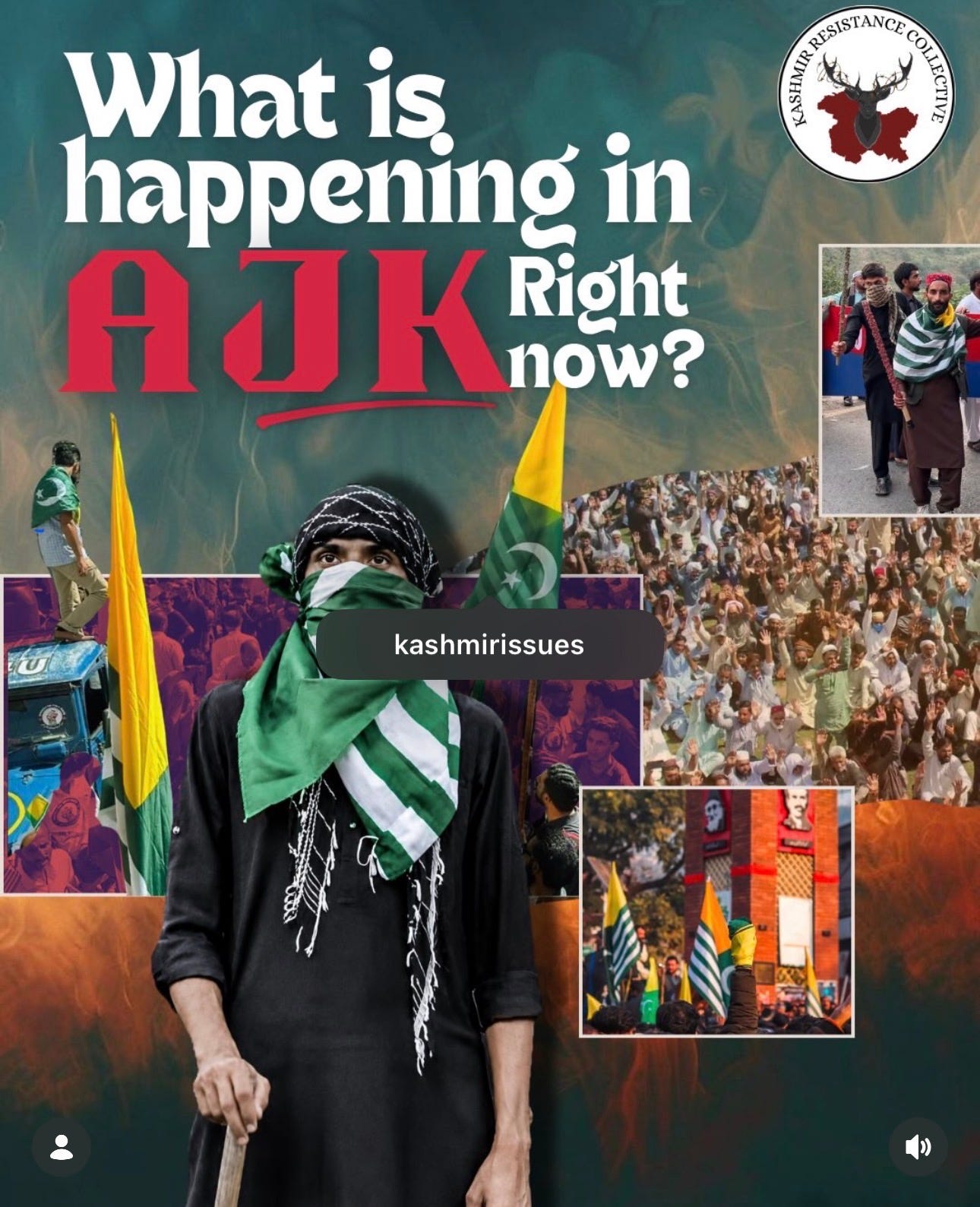
JAAC and its supporters reject these allegations entirely. They describe their movement as a peaceful public rights campaign. And to understand why this matters, you need to understand how we got here.
Who Is JAAC?
The Joint Awami Action Committee is not a fringe group. It is a broad coalition of traders, workers, students, and civil society organisations that has been at the forefront of civilian protests in AJK since 2024.
Their grievances are not abstract. They are rooted in the everyday economic reality of people living in a region that generates significant wealth — and sees very little of it returned to its communities.
The 2024 Protests: Where It Started
In 2024, AJK saw six days of sustained protests led by JAAC. The triggers were immediate and material: rising electricity prices, rampant inflation, flour shortages, and deep governance concerns.
The protests spread across major cities — Muzaffarabad, Mirpur, Kotli, and Rawalakot. Shutdowns followed. Clashes occurred in some areas, resulting in casualties and injuries.
After negotiations, some relief measures were announced. But key issues remained unresolved.
2025: Promises Broken
By 2025, tensions had resurfaced. Supporters argued that several commitments made after the 2024 protests had not been fully implemented. Negotiations took place between JAAC and officials — but broke down over governance, representation, and elite privilege reforms.
While some demands were technically accepted in 2025, many protesters felt there was limited progress in translating those commitments into concrete action.
The pattern was becoming familiar: promises made, promises unfulfilled.
Why Are People Protesting?
The core grievances reflect a structural injustice that has festered for decades.
AJK produces a significant amount of hydropower through projects such as the Mangla Dam. Yet many residents argue that they continue to pay high electricity bills despite the electricity being generated from their own land and rivers. The economic benefits from AJK’s natural resources, they argue, are not being fairly returned to local communities.
There are also deep political concerns. Twelve assembly seats are reserved for refugees living in Pakistan — a provision many local residents believe gives outsiders disproportionate influence over decisions affecting AJK. Residents want greater control over their own governance.
And underpinning all of it: ongoing demands for greater transparency and accountability, and reductions in government privileges and spending.
The Current Moment: June 2026
The situation has escalated sharply in the past week.
On 6 June 2026, JAAC was banned under the Anti-Terrorism Act. In the days leading up to planned protests, internet and communication disruptions were reported across AJK — making it harder for residents and families to stay connected and access information.
Security has been dramatically increased. Reports indicate that over 1,500 Pakistani law enforcement personnel were deployed to AJK ahead of the protests, with a total of 14,000 troops sent to the region.
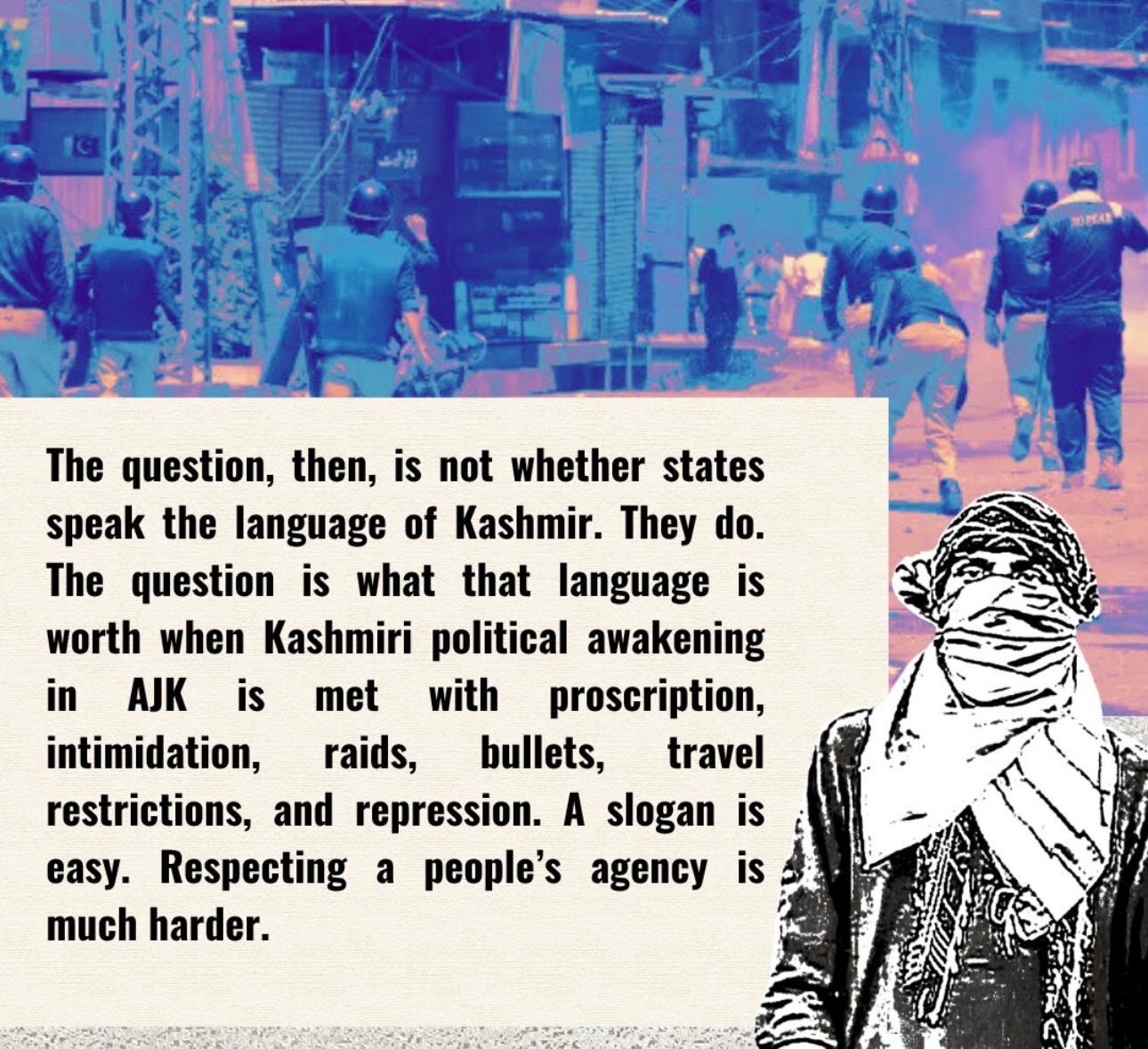
JAAC supporters describe a campaign of arrests, raids, intimidation, and the use of force against activists in an attempt to suppress the movement. Many also believe the AJK government has failed to adequately represent public concerns and has not shown sufficient commitment to implementing agreed reforms.
Despite the ban, JAAC has called for region-wide protests on 9 June 2026, arguing that many commitments made after previous negotiations remain unfulfilled — even as the government claims most demands were accepted.
The Human Cost
Nine individuals are remembered by supporters of the movement as shuhada — martyrs — who lost their lives during the protests. They include eight citizens from Rawalakot and Shahzaib Habib. Their deaths remain central to calls for accountability, justice, and the implementation of the movement’s demands.
A Question of Framing
The AJK government has called JAAC a terrorist organisation. Supporters of the movement reject that framing entirely.
“We, as supporters of JAAC, do not accept the framing of this movement as terrorism. We see it as a civilian protest driven by economic hardship, governance issues, and unmet public demands. From our perspective, security-based labels do not reflect the reality of the movement on the ground.”
This is not a semantic dispute. How a movement is labelled determines how the state responds to it — and what tools it can legally use against those involved.
What You’re Not Hearing
Media coverage inside AJK is often limited. Most reporting comes from national outlets with their own perspectives and pressures. During periods of unrest, people rely heavily on social media for real-time updates — and communication restrictions during tense moments make even that harder to access.
The result is that a significant civilian movement, representing real economic suffering and legitimate political demands, risks being reduced to a security story told from the government’s point of view.
What Happens Next
Protests are scheduled for 9 June 2026. Whether they proceed peacefully, whether communications remain open, and whether the government chooses dialogue or further crackdown will determine the next chapter of this story.
What is clear is that the people of AJK have been raising these concerns for years. They were not heard in 2024. They were not heard in 2025. The question is whether anyone is paying attention now.

