Who Owns Russia’s Frozen Billions? The Hidden Power Struggle Behind the Ukraine “Peace” Plan
How Washington’s profit‑sharing scheme and Europe’s bid for control of Russian assets turned Ukraine’s future into a transatlantic fight over money, leverage, and the length of the war.
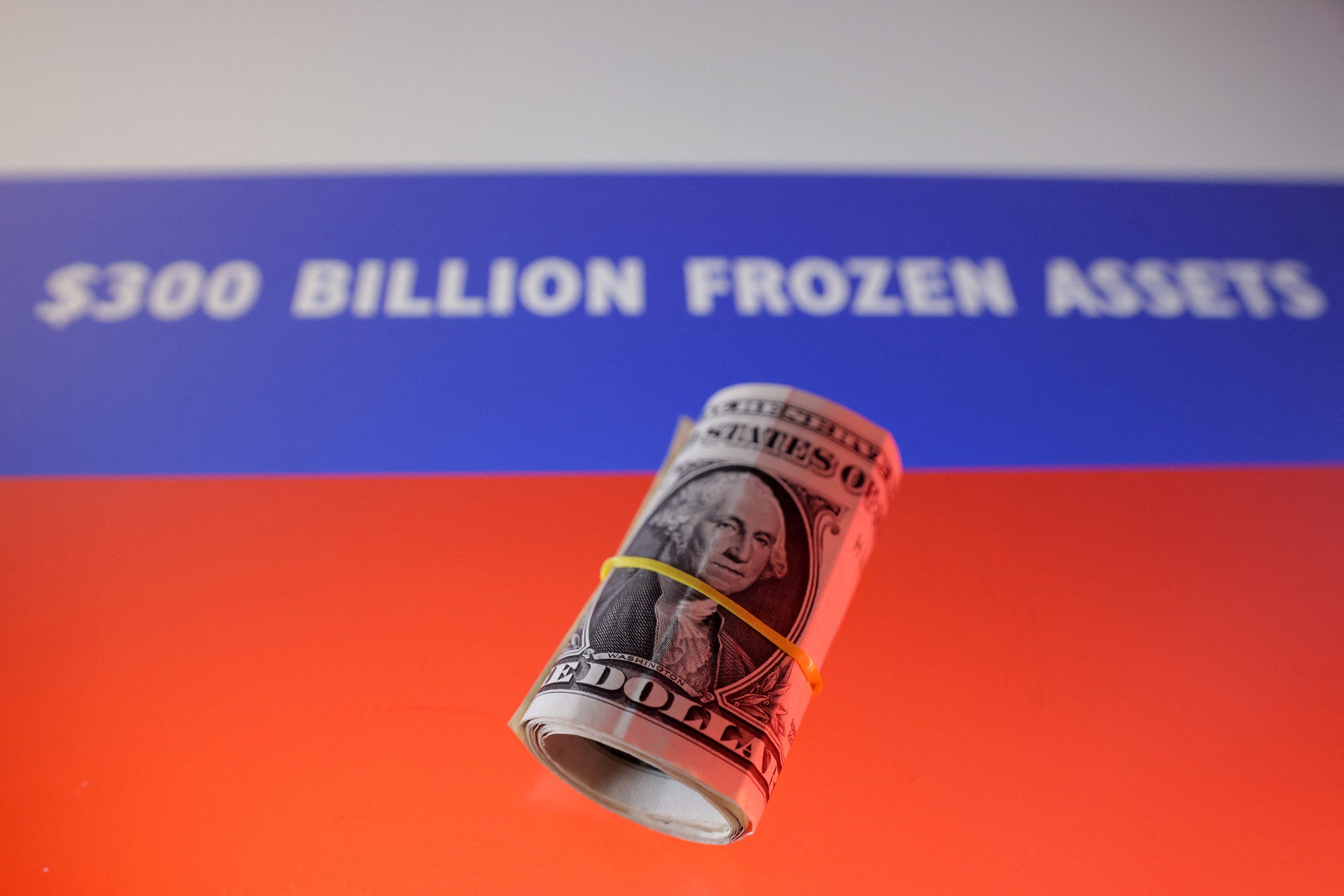
The emerging fight over frozen Russian assets has turned the “Ukraine 28‑point peace plan” into a proxy war between Washington and the euro‑establishment over money, leverage, and who will control the political endgame with Moscow. The technical language of “windfall profits,” “reconstruction funds,” and “loan facilities” disguises a blunt question: who gets to capture and deploy the value of Russia’s seized reserves, and for what purpose. In that sense, the transatlantic split is not a sideshow to the peace process; it is the organising principle of the new political economy of the war.
At the centre of the controversy is the design of the original U.S. proposal. In its early form, it envisaged taking roughly 100 billion dollars’ worth of frozen Russian central bank assets, pooling them into a reconstruction fund for Ukraine, and investing them under U.S. stewardship, alongside a parallel European contribution of similar scale. The profits from this pot would be split, with half directed to Ukraine and half accruing to the United States, not simply as reimbursement but as a standing financial claim embedded in the settlement architecture. For Europe, that created a two‑pillar system in which it hosts most of the assets and the legal risk, while Washington secures a privileged managerial and profit‑sharing role.
European negotiators immediately understood the implications. For decades, the eurozone and its financial centres have sold themselves as predictable, rules‑based repositories for global reserves. The bulk of Russia’s frozen holdings sit not in New York but inside European jurisdiction, heavily concentrated in Belgium’s Euroclear system. That makes Europe the primary “host” of these assets and therefore the primary target for Russian retaliation, litigation, and any long‑term reputational damage. Yet the U.S. design effectively sought to turn this European‑hosted pool into a U.S.‑managed investment vehicle, with Europe reduced to the role of vault while America acts as asset manager. Once that dynamic is spelled out, the hostility in European capitals ceases to look like abstract legal caution and instead reads as a late but clear assertion of strategic self‑interest.
Within Europe itself, the argument is already split down the middle. One camp clustered around parts of the European Commission and hawkish member states regards Russian assets as the only plausible long‑term financing source big enough to sustain Ukraine’s war effort and reconstruction without detonating domestic fiscal politics. For them, these reserves are a ready‑made fusion of war‑chest and reparations. The other camp, which includes influential governments and central bankers, looks at the same funds and sees a direct threat to Europe’s reputation as a safe, apolitical custodian of other countries’ savings. If the EU normalises the idea that sovereign reserves can be diverted whenever a political coalition judges it morally justified, then any state holding large euro‑denominated balances will quietly reconsider that exposure over the coming decade.
Washington enters this quarrel with a very different calculus. For U.S. policymakers, frozen Russian reserves are less a fiscal resource for Ukraine than a strategic bargaining chip in any eventual settlement with Moscow. They are leverage: something to be traded, sequenced, or partially unfrozen in return for concessions on territory, security guarantees, and recognition of whatever post‑war status quo emerges. Hard‑wiring those assets into an automatic, Brussels‑controlled financing machine for Ukraine would sharply reduce that flexibility. This explains why U.S. officials have leaned on European governments to dilute or slow the more ambitious EU ideas for securitising Russian assets or using them as collateral for a giant, long‑dated Ukraine loan. Set against that backdrop, a proposal that also channels half the profits from investing Russian funds back to the United States looks, in many European eyes, like an attempt to turn a shared geopolitical burden into a predominantly American financial upside.
The reaction inside the euro‑establishment has therefore been visceral on two levels. First, there is resentment at the sheer asymmetry: Europe plays host to most of the assets, carries the legal and reputational risk, and stands nearest to any Russian economic blowback, yet the U.S. expects both strategic control and a built‑in financial reward. Second, there is a deeper anxiety that if Washington’s model prevails, Europe will slide definitively into the role of paymaster in a conflict whose diplomatic choreography is scripted elsewhere. Brussels would be expected to keep Ukraine solvent and armed, while having only a marginal voice in when and how the war ends. Unsurprisingly, European counter‑proposals focus on stripping out the U.S. profit‑sharing structure, anchoring control of the mechanisms in European institutions, and tying any asset‑based instruments more tightly to Ukraine’s budget survival than to an American‑run portfolio.
This is where the charge that the “euro‑establishment wants the money to keep the war going” bites. For Atlanticists and many eastern Europeans, using Russian assets to support Ukraine is framed as a moral and strategic necessity: the aggressor pays, deterrence is reinforced, and Western taxpayers are spared an open‑ended bill. But from a more sceptical vantage point, especially in parts of western and southern Europe, turning confiscated Russian reserves into a semi‑permanent revenue stream does more than punish Moscow. It creates a financial architecture in which a prolonged confrontation becomes the default setting. If peace required a large unfreezing of those reserves, or their return under some settlement formula, the entire funding model for Ukraine’s state and military would have to be rebuilt. That is why critics argue that some in Brussels see these assets less as a bridge to peace and more as a way to lock Europe into a manageable, long‑war posture.
The American variant only heightens this discomfort. A scheme in which Washington manages Russian assets, takes half the profits, and treats the rest as a negotiating lever is an unusually candid display of how war and peace can be financialised. The dispute is no longer only about shielding Ukraine from collapse; it is about who sits at the centre of a new, conflict‑driven financial ecosystem. In that light, European outrage is not just about legal risk or international law. It is about being shut out of the commanding heights of a system built on assets that mostly reside in European infrastructure. European officials want the same funds, or at least their earnings, under their own supervision precisely so Brussels, not Washington, can decide how long Ukraine can be kept afloat and on what fiscal terms.
Domestic politics add another twist on both sides of the Atlantic. European leaders are trapped between electorates tiring of endless aid and policy elites who insist that Ukraine’s fate is existential for European security. For those elites, Russian assets are a political escape hatch: they allow support to continue while leaders say, with some rhetorical flourish, that “Russia, not our citizens,” is footing the bill. Surrendering that mechanism to U.S. control or allowing Washington to monetise a large share of it would be poisonous at home. It would look like a bargain in which Europe breaks the taboo on reserve sanctity and the U.S. quietly books the returns. In the United States, by contrast, a built‑in profit element and the promise of future leverage with Moscow help sell the plan to a Congress and public wary of writing indefinite cheques. War support becomes easier to defend if it comes attached to a notional “return on investment.”
Normatively, all of this walks close to the edge. Freezing and partially mobilising central bank assets in response to aggression is controversial but not unprecedented. Converting those reserves into a long‑term investment fund whose earnings are used to finance war‑related spending is something different. It blurs the boundary between sanctions, reparations, and outright confiscation. Had the U.S. proposal survived intact, it would have set a precedent in which the issuer of the world’s main reserve currency can transform an adversary’s assets into a managed portfolio with an explicit profit share. Even the more cautious European versions carry a real risk: they invite non‑Western states to reassess whether parking their savings in euro‑area instruments is still prudent in a world where geopolitics can, under the right conditions, override property rights.
Yet the political logic pushing in this direction is powerful. Ukraine’s fiscal hole is vast, its economy has been torn apart, and its reconstruction bill runs into the many hundreds of billions. Western voters are weary; defence output cannot be expanded overnight; and there is little political space to cut domestic social spending to fund a distant and grinding war. Against that backdrop, frozen Russian reserves are the only pool of money large enough and politically saleable enough to even begin to cover the gap. For Europeans in particular, whose economies are deeply entangled with both Russia and Ukraine, those assets look like the only way to sustain support without detonating a backlash at home.
In that sense, the battle over the 28‑point plan is about far more than a single clause or a quirk in profit‑sharing. It is an early glimpse of how the West intends to manage the transition from open war to a managed confrontation, and of who will hold the tap on the financial flows that define that phase. Washington wants to ensure that any eventual accommodation with Moscow is shaped by American timelines and conditionalities, with control over the “assets lever” as a key instrument. The euro‑establishment, for its part, wants to avoid becoming a passive cashier in a conflict on its doorstep and is determined to retain real authority over the mechanisms that will keep Ukraine solvent. Both sides speak about solidarity, values, and accountability, but the hard bargaining is over governance rights to what is, in effect, a coerced Russian endowment.
Seen from Kyiv, this is a harsh spectacle. The same Western capitals that lecture Ukrainians about sacrifice and principle are engaged in a quiet struggle over whose institutions will harvest the economic value of Russia’s frozen wealth and whose diplomats will control when and how that wealth is released. The slogan that “Russia will pay” has become less a moral promise than a contested business model. As long as the war continues, the portfolio of frozen assets its leverage, its income, its symbolism gives every major actor a reason to keep Ukraine on life support while arguing over the terms of its eventual rescue. That is the uncomfortable reality behind the tidy language of peace plans and point‑by‑point communiqués: the end of the war is being negotiated through a balance sheet.


