Why China Cannot Stop America’s War on Iran
China was never built to police American wars in the Gulf, and its real support for Iran now runs through oil, weapons, and diplomacy rather than suicidal carrier deployments.
The United States and Israel have opened a war on Iran. Their first strike package did not only hit radar sites and air defence batteries. It targeted the political centre of the Islamic Republic itself, killing Iran’s Supreme Leader, Ayatollah Ali Khamenei, and, according to multiple reports, several close members of his family including a daughter, a grandchild and in laws inside and around his compound in Tehran. The campaign that followed has hit command centres, power systems and missile and drone infrastructure across the country. Tehran has answered with missiles and drones against US bases, Israeli targets and allied facilities across the Gulf.
Around this, a familiar argument has returned in anti war circles and on social media: why is China not stopping this.
It is the wrong question. The fact that it keeps surfacing shows how deeply imperial framing has entered even the thinking of people who believe they are opposing empire.
China is not a global policeman. It has never claimed that role. It does not possess the infrastructure, doctrine or institutional architecture to project decisive military force to the far side of the planet and confront the United States in open combat inside a theatre Washington has spent decades fortifying. That is not a failure and not a betrayal. It is a description of how China’s state and military were designed, for what purpose and against what primary threat.
The United States builds and maintains a military whose core function is the offensive use of force abroad. It sustains hundreds of bases in foreign countries, multiple carrier strike groups at sea and an unbroken record of military intervention on every continent since 1945. China’s armed forces are built around a different task. They exist to keep foreign militaries away from Chinese territory and its near seas. One is an expeditionary architecture for global coercion. The other is a defensive architecture for home and immediate perimeter.
A war built into the map
The latest phase of the war on Iran did not begin when Khamenei’s residence was reduced to rubble at the end of February 2026. It began decades earlier, in the slow construction of a military network across almost every country that touches the Persian Gulf.
Across Bahrain, Qatar, Kuwait, Jordan and the United Arab Emirates, the United States has built a web of airbases, naval facilities and intelligence sites. These are tied into logistics routes that run from Diego Garcia through the Indian Ocean into the Strait of Hormuz. On top of that sit pre positioned ammunition depots, fuel farms, command and control centres and an integrated air and missile defence system that links US radars and interceptors with Israeli, Emirati, Jordanian and Saudi systems.
This is not an untidy scattering of bases. It is siege infrastructure. It was built to place Iran inside a military perimeter with no safe exit. The February strikes were not a break from that history. They were the full use of a network that has been under construction since the fall of the Shah in 1979 and that expanded rapidly after 2001.
To stop such a war by military means China would have to build a counter network of its own in the same region and in open opposition to it. That would mean assembling, state by state, the kind of permanent bases, access agreements, logistics corridors and air defence nets that took Washington half a century, several wars and the political capture of every ruling house in the Gulf to achieve. Expecting Beijing to improvise that in time to alter a war that has already begun is not strategy. It is a demand disguised as a question.
How Washington secured the Gulf
The United States did not secure this position through diplomacy alone. It used financial leverage, regime protection and open war of a kind China has not adopted and, so far, refuses to adopt.
Saudi Arabia was locked into the US orbit through the 1974 petrodollar bargain, which tied global oil trade to the dollar and made the kingdom’s security planning dependent on American protection. Jordan’s monarchy receives such levels of US aid that it cannot realistically refuse basing rights without putting the throne at risk. Bahrain hosts the Fifth Fleet not because its rulers celebrate foreign warships as a matter of pride but because they have no usable way to say no. Kuwait, Qatar and the United Arab Emirates have been drawn into layers of dependency through arms packages, training programmes and intelligence sharing that create leverage in both directions but overwhelmingly favour Washington.
Where this was not enough, the United States used force. Iraq was invaded, its state broken, its army dissolved and its territory turned into a forward operating platform for US power in the region for two decades. Syria was made the site of a proxy war that killed large numbers of people and displaced millions, while US special forces and aircraft operated on Syrian soil without legal mandate.
China does not run foreign policy this way. It builds ports, railways and industrial parks. It negotiates oil contracts and swaps, extends credit and builds roads. These methods produce influence and access but not the kind of hard military infrastructure that lets you contest US air superiority in a theatre Washington already controls. Beijing could copy Washington’s method. It could sponsor coups, install clients, force base agreements at gunpoint and occupy territory. It has chosen not to. That decision has a military cost, but it also keeps open the claim that China is not simply a colour swapped version of American power.
A military built to defend, not to police
In Western security jargon, planners talk about the need to project power across oceans as if moving a fleet halfway around the world and fighting under someone else’s air umbrella were a simple matter of political will. It is not. It is a question of design.
For decades, Chinese doctrine has treated the primary threats as an amphibious invasion, foreign fleets operating inside the first island chain and efforts to cut China’s trade routes in its own region. Forces, budgets and research have followed that logic. The result is a military concentrated on denying enemies access to Chinese territory and near seas, not on policing distant oceans.
To confront US forces in the Persian Gulf, China would need a combination of capabilities it does not yet hold at scale. It would need long range combat aircraft able to operate thousands of kilometres from home bases, backed by a dense aerial refuelling fleet to keep those aircraft in the air long enough to fight and return. It would need large stocks of long range precision munitions against hardened targets. It would need forward bases or carrier groups close enough to sustain sorties, plus the logistics chain to keep ships supplied, aircraft serviced and missiles resupplied under fire.
China has two operational aircraft carriers. The United States had two carrier strike groups in or near the Gulf before the first missiles flew, both nuclear powered, each carrying more aircraft than the entire Chinese carrier aviation arm. Those American groups sit inside a defensive bubble built over decades, surrounded by US and allied bases on land, submarine hunting aircraft, surface warships and layered air and missile defences.
China’s carriers were built for a different map. They are designed for the Western Pacific, the Taiwan Strait and the South China Sea, to complicate US planning close to China’s own coast. Sending them into the Gulf against a network that was built specifically to prevent any rival navy from operating freely there would not be coming to Iran’s defence. It would be towing vulnerable targets into a killing ground.
That is the point of what Washington built. The Gulf fortress exists so that any state that tries to contest it without matching infrastructure and alliances walks into a war it is structurally wired to lose.
What China is actually doing for Iran
If China is not going to send carriers into the Strait of Hormuz, the real question becomes what it is doing for Iran now that the Supreme Leader and close family members have been killed and the country is under open assault.
The record is not spectacular in television terms. It is significant in material terms.
For years, China has absorbed large volumes of Iranian oil in defiance of US and European sanctions, providing Tehran with its main hard currency lifeline and blocking the full financial strangulation that Washington intended. Without those purchases, and without the Chinese and other Asian firms that kept moving Iranian crude, Iran’s oil sector and state revenues would have been pushed to collapse long before this war, and the missiles now flying in response to Khamenei’s killing would not exist in their current form.
Beyond cashflow, Beijing has helped Iran keep its military industrial base alive. Chinese entities have supplied components, dual use technologies and technical assistance that fed into Iranian missile, air defence and naval projects. What appears today as Iranian corvettes in the Gulf, guided missiles striking targets and electronic warfare systems disrupting incoming drones rests on years of cooperation, component flows and knowledge transfer in which China has been one of the main outside partners.
China has also supplied hardware outright, from drones to air defence systems, within the limits set by sanctions, Western scrutiny and Beijing’s own caution about escalation. But moving equipment is the beginning of a process, not the end of one.
A missile battery, a drone platform, a radar network or an electronic warfare suite does not become combat ready the week it arrives. It has to be absorbed into a military that already exists. That means training operators and maintainers, instructing officers on when to use these systems and how to integrate them with artillery, infantry, armour and other sensors, and repeating exercises until a shipment turns into reflex.
That process takes years, not news cycles. Ukraine is an example. Since 2022 it has received a flood of Western equipment, including some of NATO’s most advanced aircraft and armour, yet still struggles to operate and maintain much of it at the standard of the forces that grew up with those systems. New artillery and armour have suffered severe attrition because the doctrine that makes them effective could not simply be copied across to a different army under fire. The same is true for any large infusion of Chinese equipment into Iran. The systems that are now helping Tehran resist were integrated over years under sanctions. The systems that have not yet arrived would need years more.
Beijing’s line: support for self defence, refusal to enter the fire
In the present crisis China has moved from quiet support to explicit, public backing for Iran’s right to defend itself, while still refusing to be dragged into open war with the United States.
After the strikes that killed Khamenei, China’s foreign ministry described the attack and killing of Iran’s supreme leader as a grave violation of Iran’s sovereignty and security, and as a trampling of the purposes and principles of the United Nations Charter and basic norms of international relations. Beijing has said it firmly opposes and strongly condemns the operation and has called for an immediate stop to the military campaign, warning against further escalation.
At the United Nations Security Council, Chinese representatives have called the US and Israeli strikes brazen, said they are deeply concerned by the sudden escalation and restated that China opposed and condemned the use or threat of force in international relations. They have underlined that the sovereignty, security and territorial integrity of Iran and other states in the region must be respected, and that the red line of attacking civilians must not be crossed.
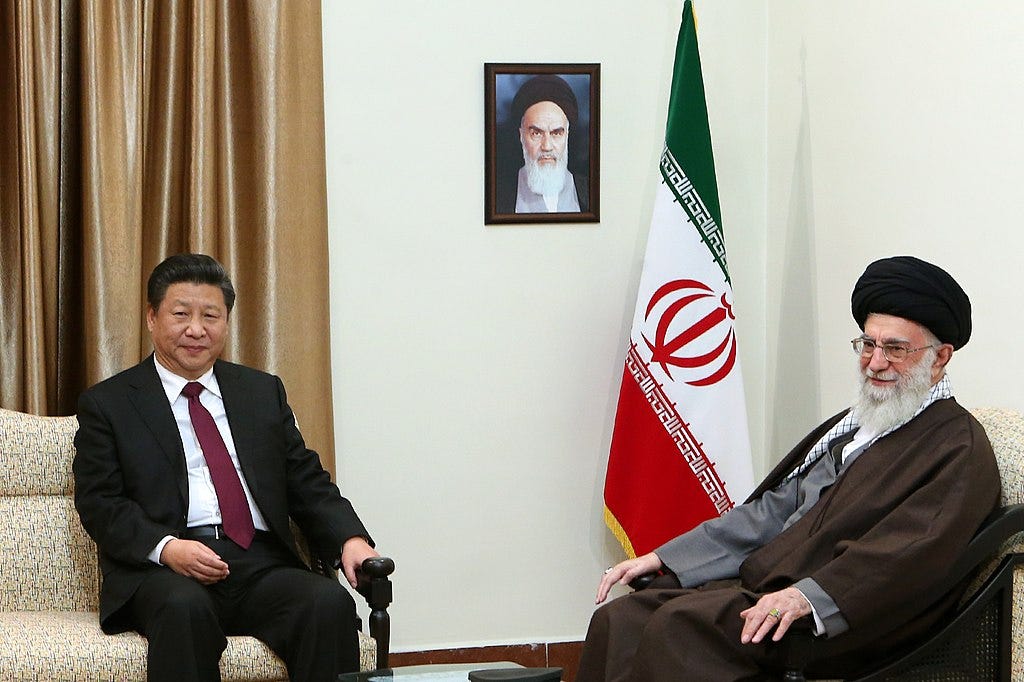
In direct contacts with Tehran, senior Chinese officials have told their Iranian counterparts that Beijing supports Iran in defending its sovereignty, security, territorial integrity and national dignity, and in protecting its legitimate rights and interests against US and Israeli attacks. Iranian officials, for their part, have gone on record saying that Iran has every legitimate right to defend itself and will continue to exercise that right as long as the strikes continue.
At the same time, China has evacuated thousands of its own citizens from Iran and neighbouring states, warned Chinese nationals to leave the conflict zone and signalled that it was not informed in advance of the strikes. It has backed emergency sessions at the United Nations, resisted efforts to dress the assault in legal language and used its weight to block any move that would give the campaign an international cover it does not have. It has done this while keeping its own forces out of direct confrontation in a theatre where the structural advantage lies with its adversary.
This is not the language or behaviour of indifference. It is the conduct of a state that knows both its limits and its interests and that is not willing to trade Iranian lives for a symbolic intervention that would end in its own defeat.
Two front lines already burning
There is another constraint that the argument that China must do more often ignores.
China has been under sustained military and proxy pressure from the United States along its own perimeter for years. Washington has reinforced its posture in the Western Pacific, poured weapons into Taiwan, signed new base agreements in the Philippines that place US aircraft and missiles closer to China’s coastline and sailed warships through waters Beijing regards as its strategic buffer. Every one of those moves is part of a campaign to stretch Chinese planning, drain its attention and keep pressure constant near home.
Russia, Beijing’s main strategic partner, is in the middle of a war in Ukraine that in practice is a US designed battlefield to degrade Russian forces using Ukrainian lives and territory. Washington has poured vast sums into arming and sustaining Kyiv’s war effort and has described this as a way to inflict maximum cost on Russia without putting American soldiers into direct combat.
The demand that Beijing or Moscow now open a third front, this time in the Persian Gulf, against the same US military machine that is already engaged against them on their own doorsteps, is not serious. It asks two states under active pressure to plunge into a theatre that Washington has configured precisely so that any rival intervention will fail. To treat their refusal to do this as proof of secret collusion with Washington or as a lack of concern for Iran is not analysis. It is a script that serves US planners, who would welcome their rivals overextending in the one arena where American dominance remains intact.
Blame where the missiles came from
The conclusion is structural.
Neither China nor Russia, at this moment, has the capacity to directly stop a full scale American war of aggression on the far side of the planet. That is a description of force structure, logistics, doctrine and geography. It is not a moral judgment and not an allegation of betrayal. It is the outcome of a world in which Washington spent decades and trillions of dollars constructing global military supremacy and ring fencing Iran inside one of its most fortified regions, then used that structure to kill the country’s Supreme Leader and members of his family in their own home.
Within those limits, Beijing and Moscow are doing what they can realistically do. They keep buying Iranian oil and keep its economy alive. They help maintain and rebuild its missile and defence capabilities. They transfer hardware and know how at a pace sanctions allow. They block legitimising resolutions at the United Nations, demand ceasefires and condemn the war as a breach of the Charter. At the same time, they are trying to build an order in which the next Iran does not stand alone, through regional organisations, currency arrangements and slow work on new financial and logistical routes.
That work is not finished. The Gulf fortress still stands. And Iran is burning now.
So when people ask why China is not stopping this war, they are not posing a genuine strategic question. They are searching for a more comfortable target than the one that sits in front of them. Every hour spent condemning Beijing’s restraint is an hour not spent documenting American and Israeli war crimes, not spent organising opposition inside Western capitals that could actually obstruct this war, not spent supporting Iranians who are paying for decisions they did not make and cannot unmake.
Blame belongs where the missiles were launched, where the orders were written and where the architecture of siege was designed and funded. Anything else redirects anger away from the governments that are actually dropping the bombs.


