Saudi Arabia’s exchange of strikes with the Houthis has reopened a conflict that was never resolved, while Yemen’s hunger, displacement, and institutional collapse receive a fraction of the attention commanded by the region’s shipping lanes and oil facilities.
Yemenis have spent more than a decade living inside a war that foreign governments repeatedly describe as finished whenever the missiles become less visible. The latest Saudi-Houthi escalation has disposed of that fiction. Since late August, fighting around Taiz and Yemen’s western coast has killed or wounded at least 728 people, according to the World Health Organization, while roughly 21,000 people, or about 3,000 families, have fled Taiz since Thursday alone. The figures are provisional, because families are leaving active front lines, hospitals are operating with diminished capacity, and no authority controls the country well enough to produce a final account of who has been killed, where, or by whom. For the people running from Maqbanah, Jabal Habashi, al-Jawf, and the western approaches to Taiz, the distinction between a renewed war and an old war resuming has little practical meaning. Their homes are still in the firing line; their food is still priced in a currency whose value has been wrecked by fragmentation; their water systems and clinics remain vulnerable to the next strike, the next road closure, and the next interruption in fuel supplies.
The conflict has widened across the Saudi-Yemeni border. Saudi authorities say Houthi drone and missile attacks hit Abha, Khamis Mushait, Jazan, and Najran, wounding at least 73 people, including women and children, and setting fires at oil and utility installations in the kingdom’s south. The Houthis said the attacks targeted Saudi Aramco-linked energy infrastructure and framed them as retaliation for Saudi strikes in al-Jawf, al-Bayda, Marib, and Taiz. They also accused Riyadh of striking a prison in al-Hazm, in al-Jawf province, killing seven people and injuring seven more, a claim Saudi officials had not publicly addressed at the time of reporting. Saudi Arabia, for its part, has presented its position as self-defense against attacks on civilian areas and strategic infrastructure. That claim cannot erase the larger fact that Riyadh is once again acting militarily in a country whose population has already absorbed the consequences of Saudi-led intervention, Houthi authoritarianism, Emirati-backed fragmentation, economic siege, and the routine conversion of civilian life into leverage.
The language of retaliation offers every party a legal and political shelter. It is also the language through which wars continue long after their stated objectives have become impossible to meet. The Houthis invoke Saudi bombing, restrictions on ports and airports, and the years of coalition intervention. Riyadh invokes Houthi missiles, drones, cross-border attacks, and the group’s refusal to submit to a state it does not control. Yemen’s internationally recognized government invokes constitutional legitimacy and says its present military campaign will restore state institutions and recapture Sanaa. Each claim contains a recognisable element of truth. None contains a plan for the civilians trapped between them, or an explanation of how another campaign toward the capital would avoid producing the mass urban bloodshed that every serious analyst of Yemen’s war expects. Eleven years of fighting have produced a broken currency and a partitioned central bank and a generation of children who have never attended a full school year, and yet each new offensive is announced as though the ledger began that morning.
The Coalition’s War
Saudi Arabia entered the Yemen war in March 2015 at the head of a coalition formed to reverse the Houthi takeover of Sanaa and restore the government of President Abdrabbuh Mansur Hadi. The war was sold as a swift intervention: a regional power, equipped with advanced Western aircraft, intelligence support, munitions, and political cover, would drive a militia from the capital and reinstate a government recognized by the United Nations. The promise was implausible from the start. Yemen’s political geography does not yield easily to aerial coercion, and the Houthis were embedded in a northern political and social order rather than an isolated armed faction that could be eliminated by destroying military facilities, an order shaped by years of exclusion, by the collapse of the post-2011 transition, by the weakness of Yemen’s central institutions, and by alliances with parts of the former state apparatus.
The coalition did not restore a unified Yemen and it did not remove the Houthis from Sanaa and yet it changed the country decisively, turning it into a map of competing authorities. The Houthis retained Sanaa and much of the north, where most Yemenis live. The internationally recognized government moved through temporary seats of authority and endured internal rivalries. Southern forces, often supported by the United Arab Emirates, consolidated their own agendas. Armed groups developed local revenue systems through checkpoints, ports, fuel markets, taxation, and patronage. The country’s monetary institutions fractured, producing separate centres of power in Sanaa and Aden and deepening a crisis in which salaries, imports, exchange rates, and humanitarian aid became instruments of control.
The Saudi-led air campaign killed civilians, damaged civilian infrastructure, and imposed costs far beyond the intended military targets. Houthi forces, meanwhile, used indiscriminate shelling, landmines, arbitrary detention, recruitment of children, repression of critics, and attacks on civilian and commercial targets. The coalition’s defenders have argued that Saudi Arabia faced a security threat along its southern border and had no obligation to tolerate a hostile, Iran-aligned armed movement with missiles capable of reaching Saudi cities. The threat is real and the conclusion drawn from it has been consistently wrong, because military escalation has not neutralized the Houthis and has instead expanded their military experience, their domestic coercive machinery, their regional profile, and their ability to present themselves as an armed force confronting Saudi Arabia, the United States, Israel, and their allies.
That political transformation accelerated after the October 2023 Gaza war, when the Houthis began attacking commercial shipping linked, in their own definition, to Israel and later expanded the scope of their Red Sea campaign. Washington and London answered with airstrikes inside Yemen. Israel struck Houthi-controlled infrastructure. The Houthis acquired a larger regional role by placing themselves within the political vocabulary of resistance to Israel’s assault on Gaza, even as their conduct inside Yemen remained authoritarian and their attacks endangered foreign crews, Yemeni coastal communities, and the country’s already crippled economy. Saudi Arabia, which had spent years seeking an exit from the Yemen war, found itself facing a reconfigured regional environment in which the Houthi movement had become both a Yemeni ruler and a component of a wider confrontation involving Iran, Israel, the United States, maritime trade, and Gulf security.
Bab al-Mandab
The present round of fighting has concentrated attention on the Bab al-Mandab Strait, the narrow passage linking the Red Sea and the Gulf of Aden. Its strategic importance has grown sharply because Iran’s restrictions on the Strait of Hormuz have forced Saudi Arabia to rely more heavily on its Red Sea export route. Between March and mid-July, Saudi seaborne crude exports moving through Bab al-Mandab were eight times higher than in the same period in 2025. In 2024, an average of 4.1 million barrels of crude oil and petroleum products passed through the strait each day, about 5 percent of the global total. The insurers reprice the route within hours of a strike and the warships redeploy within days and the export figures are tracked to the barrel, and yet the 18.3 million Yemenis who cannot reliably buy food have never once moved a market. This helps explain why the battle for Yemen’s western coast cannot be treated as an internal contest over provincial territory. Control near al-Makha, Hodeidah, and the approaches to Bab al-Mandab affects Saudi export routes, Red Sea shipping, insurance rates, military deployments, and the regional balance of pressure between Iran and its adversaries.
The Price of Emergency
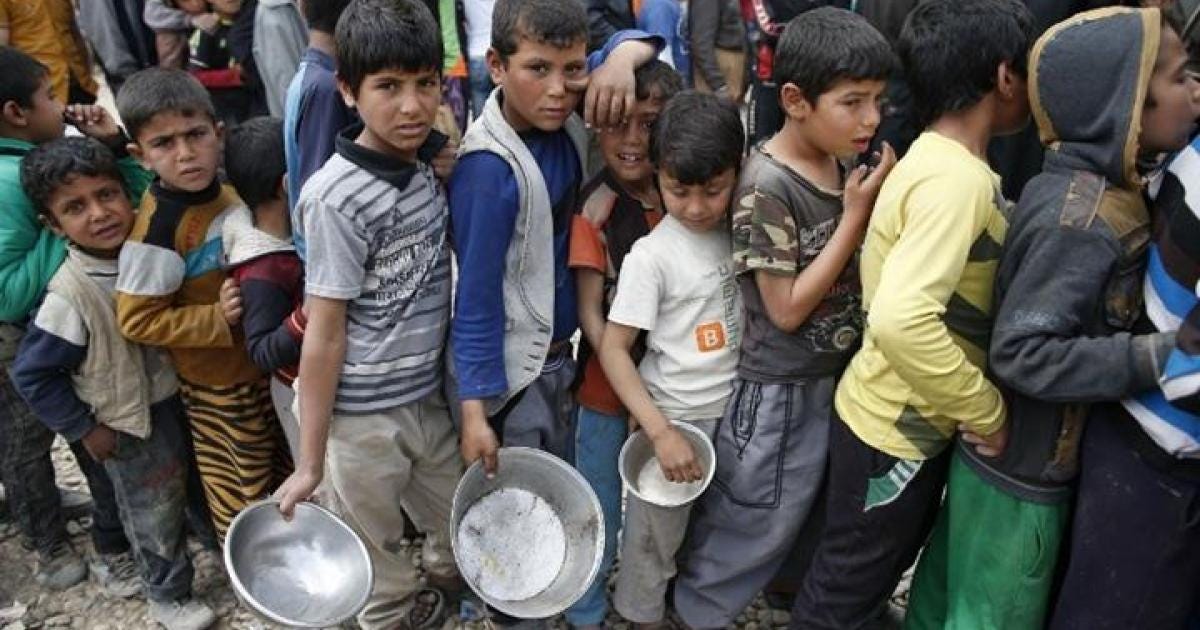
It also explains why Yemenis are again being asked to live inside a war whose stakes are described elsewhere. The humanitarian cost is routinely translated into the language of shipping disruption, energy markets, missile ranges, and deterrence. Those are real policy concerns, but they are not Yemen’s central emergency. The United Nations estimates that 22.3 million people in Yemen, more than two-thirds of the population, require humanitarian assistance and protection services in 2026. The figure includes 5.2 million internally displaced people. Acute food insecurity affects 18.3 million people. More than 2.2 million children under five are suffering from acute malnutrition, including over half a million with severe acute malnutrition. The U.N. humanitarian plan seeks $2.16 billion to assist 12 million people, with $1.6 billion assigned to priority life-saving work because the available resources are insufficient even for the most urgent needs.
These figures define the meaning of the military operations rather than sitting behind them as background. A country in which more than 18 million people face severe food shortages cannot absorb another round of displacement without consequences that will extend long after battlefield positions change. A child displaced from Taiz does not arrive in safety with food, clean water, medicine, schooling, income, and a functioning clinic. The family often arrives in a district where the local population is already rationing water, relying on debt, and watching the price of basic goods move with currency instability and transport costs. Yemen imports much of what its population consumes. War affects food not only through direct destruction but through the roads, ports, warehouses, markets, salaries, fuel supplies, and exchange-rate systems that determine whether a household can buy flour, cooking oil, medicine, or water.
The public-health system is already operating at a level that would be intolerable in a country not at war. The World Health Organization says only 38 percent of health facilities are fully functioning, while seven million people face psychological trauma. During 2025, WHO supplied roughly 4.33 million litres of fuel to 177 health facilities so generators and essential medical equipment could keep operating. The fuel arrived and the generators ran and the surgeries continued, and yet all of it hangs on one road staying open. This is the physical condition of Yemen’s health system: hospitals depending on outside deliveries of fuel to sustain oxygen, refrigeration, surgery, and emergency care. Any escalation that cuts roads, damages energy infrastructure, delays fuel shipments, or frightens staff away from facilities turns a military confrontation into a wider civilian emergency.
Yemen has not vanished from international institutions; U.N. agencies still publish appeals, humanitarian workers still attempt to sustain clinics and food distributions, and diplomats periodically announce talks. It has disappeared from the hierarchy of sustained political attention. Gaza, Ukraine, Sudan, the Iran-Israel confrontation, and the global effects of Red Sea and Hormuz disruptions all compete for resources and headlines. Donor fatigue has become a polite phrase for a political decision by wealthy governments to accept reduced assistance in places where suffering has become familiar. Yemen’s 2026 plan is asking for $2.16 billion, a substantial figure in humanitarian terms but negligible beside the military budgets, energy revenues, weapons contracts, and strategic insurance costs associated with the states fighting over the region.
The underfunding is not accidental. Humanitarian assistance has been treated as a substitute for political settlement, then reduced when governments lose interest in financing the substitute. Yemenis are asked to endure a war economy and then are told that agencies lack money for food, water, shelter, health services, sanitation, protection, and education. The international community has spent years treating Yemen’s needs as episodic, even though the crisis is structural, built into divided institutions, a shattered currency, unpaid public workers, damaged infrastructure, restricted mobility, and armed authorities that use access to revenue and services as political power.
Shared Responsibility
Saudi Arabia bears special responsibility because it has the resources, regional influence, and direct history in this war that no other Arab government can claim. Riyadh is not the only actor responsible for Yemen’s suffering. The Houthis have made themselves central to the country’s destruction. Their leadership has pursued power through coercion, militarization, and regional confrontation, while Yemenis in Houthi-controlled areas have faced repression, economic extraction, and a political order in which dissent carries enormous risk. Iran has provided the Houthis with political backing and military capabilities that have altered the balance of power. The United States, Britain, and European arms suppliers have sustained a military structure whose civilian consequences were documented for years. The United Arab Emirates supported forces whose territorial ambitions further weakened the prospect of a unified state. Yet shared responsibility does not make Saudi responsibility disappear; it locates it inside the full architecture.
The religious language surrounding the conflict deserves more honesty than it usually receives. Saudi Arabia is a Muslim-majority state whose rulers present themselves as custodians of Islam’s holiest sites. The Houthis are Yemenis, overwhelmingly Muslim, who invoke a distinct religious and political tradition within Islam while pursuing a movement that has often made sectarian mobilization useful to its rule. The war has never been reducible to Sunni-Shia conflict, although sectarian rhetoric has helped outsiders explain and inflame it. It has involved power, borders, state collapse, regional rivalry, economic control, old Yemeni political grievances, Iranian influence, Saudi security fears, and the ambitions of armed men who have repeatedly found that civilians bear the cost of their failures.
Saudi military power has repeatedly been used against a neighbouring Muslim population already facing hunger, displacement, and the breakdown of basic public life, and no amount of political complexity softens that. The Houthis’ attacks on Saudi civilians and infrastructure are wrong and indefensible. Saudi retaliation that reopens a broad aerial campaign inside Yemen will not become acceptable because the adversary also commits abuses. Islamic solidarity invoked in official speeches has little moral meaning if it does not require restraint when a neighbouring Muslim society lacks functioning hospitals, stable food markets, and secure shelter for millions of people.
The Houthi Case
From the Houthi leadership’s point of view, the present escalation is the continuation of a war Saudi Arabia never ended rather than the reopening of a conflict by an armed group looking for a regional role. Ansar Allah, as the movement calls itself, describes the Saudi campaign that began in March 2015 as an invasion intended to reinstall a compliant government, control Yemen’s political future, and prevent a northern movement from exercising power independent of Riyadh. Its leaders point to the coalition’s air campaign, the restrictions imposed on air and sea access, the collapse of public salaries, and the destruction of civilian infrastructure as evidence that Saudi Arabia’s war was never confined to military targets. In their public language, the current exchange is governed by an equation of “siege for siege”: Saudi territory will remain vulnerable, they say, so long as Yemenis remain subject to bombing, blockade, and economic pressure. Houthi military statements on September 8 used exactly that formulation, declaring that attacks would continue until “the aggression stops and the siege is lifted.”
This argument has a history that Saudi and Western accounts often suppress. The Houthis did not appear in Yemen as an Iranian expeditionary force: the movement grew in the 1990s out of the Zaydi revivalist current in northern Yemen, particularly in Saada, where political and religious marginalization had become inseparable from the failures of the Yemeni state. Under President Ali Abdullah Saleh, northern communities endured neglect, patronage politics, corruption, and the steady weakening of institutions that had once protected a distinct Zaydi religious and social tradition. Between 2004 and 2010, Saleh’s government fought six wars against the Houthi movement, killing its founder, Hussein Badr al-Houthi, displacing communities across Saada, and treating an internal political conflict as a security problem to be bombed into submission. Saudi Arabia intervened directly during the sixth Saada war in 2009, giving the movement an enduring memory of Saudi military involvement long before the 2015 coalition campaign.
The Saudi-led intervention transformed that history into a governing narrative. When Riyadh began its air war in 2015, it said it was acting at the request of Yemen’s internationally recognized president, Abdrabbuh Mansur Hadi, after the Houthis had seized Sanaa and placed him under confinement. That formal justification was real, and the Houthi takeover did not become legitimate because it was opposed by Saudi Arabia. The movement seized state institutions through force, partnered opportunistically with Saleh’s military networks, detained political opponents, and progressively replaced the transition process with rule by militia and decree. Yet the coalition’s campaign also gave the Houthis what years of local conflict had not: an external enemy with vastly superior firepower, a national claim built around sovereignty, and a durable argument that Yemen’s political future was being decided in Riyadh, Washington, Abu Dhabi, and London rather than in Sanaa.
A movement can possess a real grievance and still become an instrument of domination, which is what happened in Houthi-controlled Yemen. The group’s leaders invoke national independence while maintaining a political order in which independent media, civil society, political rivals, religious minorities, and critics operate under intimidation or outright repression. Human-rights organizations have documented arbitrary detentions, enforced disappearances, torture, prosecutions of journalists, restrictions on women’s movement, recruitment of children, and the use of landmines in civilian areas. The Houthis have also imposed taxes and levies through institutions they control, redirected revenues, and turned state functions into a means of consolidating their own command structure. Any account that describes them only as victims of Saudi aggression abandons Yemenis living under Houthi rule, including those who oppose both the Saudi-led war and the movement’s monopoly on power.
But Saudi Arabia’s record does not become defensible because the Houthis govern brutally, and Houthi abuses do not become less serious because Saudi bombs have killed Yemeni civilians. The parties have relied on each other’s crimes to avoid answering for their own. Riyadh presents the Houthis’ missiles as proof that its security-first approach was necessary. The Houthis present Saudi bombing and economic restrictions as proof that domestic dissent is a luxury Yemen cannot afford under attack. Both arguments convert civilian suffering into political capital. Yemenis trapped in Houthi territory are told that criticism serves the coalition. Yemenis living under coalition-aligned authorities are told that political demands must wait until the Houthis are defeated. The war has allowed every armed authority to call accountability a distraction.
The Houthi case also rests on material conditions rather than military language alone. For years, the Saudi-led coalition controlled Yemen’s airspace and constrained commercial access through ports and airports, including Sana’a International Airport, which was closed to commercial traffic for years before limited flights resumed under the 2022 truce. Fuel, food, medicine, and commercial imports moved through a system of inspections, permits, delays, and shifting restrictions. Saudi officials and their allies have argued that these measures were necessary to prevent weapons smuggling and to limit the Houthis’ military capabilities. The security rationale was not invented. The Houthis did receive external assistance and built a missile and drone capacity that could threaten Saudi territory and international shipping. Yet a policy may have a stated military objective and still produce collective civilian punishment in practice. In a country that imports much of its food and fuel, restricting access to ports, roads, airports, and currency becomes a pressure campaign against households long before it becomes leverage against commanders.
The movement’s insistence that it is fighting a blockade therefore carries beyond the cadre of committed supporters. Yemenis who have lost relatives in airstrikes, watched children suffer from malnutrition, waited for medicine that did not arrive, or travelled by road for days because an airport was closed do not need to agree with Houthi governance to understand the grievance. Saudi Arabia and its partners have repeatedly underestimated this distinction. A population can resent Houthi rule, fear Houthi security organs, reject the movement’s ideology, and still regard foreign airstrikes and restrictions on civilian life as an assault on Yemen’s sovereignty. The failure to grasp this has been one of the coalition’s most consequential political errors.
The Houthi leadership’s regional posture after October 2023 has made that misunderstanding more costly. By linking Red Sea attacks to Israel’s war in Gaza, the movement claimed a role that extended beyond Yemen’s internal conflict. It presented itself to regional audiences as the armed force willing to impose a material cost on states and companies connected to Israel, while Arab governments issued statements and maintained their security relationships with Washington. The claim has attracted support among people horrified by the destruction in Gaza, including people who do not share the Houthis’ theology, political programme, or record in Yemen. It has also supplied the group with a language of regional legitimacy at a time when its domestic governance has produced widespread resentment.
That popularity is politically dangerous because it can obscure the difference between opposition to Israeli military action and endorsement of Houthi rule. The Houthis’ support for Palestinians does not erase the arbitrary detention of Yemenis, their repression of political opponents, or their role in prolonging a war that has impoverished the country. Nor does their political appeal vanish because Western governments call them Iranian-backed. A serious account holds both facts at once. The movement has exploited a regional moral crisis to strengthen itself. It has also articulated anger that governments allied with Washington and dependent on Saudi patronage have failed to address.
The Current Escalation
The Houthis’ September 8 strikes were presented by their military spokesman, Yahya Saree, as retaliation for what the group called an intensified Saudi air campaign. Saree said Houthi forces used ballistic missiles and drones against Saudi Aramco-related facilities in Abha, Najran, and Jizan, as well as King Khalid Air Base near Khamis Mushait. He claimed that Saudi aircraft had carried out 121 strikes on Houthi-held areas during the preceding three days and threatened wider operations if Saudi attacks continued. Reuters and other outlets reported that the Houthi assault disrupted operations at some Saudi energy facilities and that Saudi authorities counted 73 people wounded.
The targets were chosen for political and strategic reasons. The Houthis do not possess the conventional capacity to defeat Saudi Arabia in a sustained war. They can, however, impose costs on Saudi cities, energy infrastructure, airports, military facilities, shipping routes, insurers, and markets. The movement has spent years improving its missile and drone capability and has learned that an attack on an oil facility can produce attention in foreign capitals that thousands of Yemeni civilian deaths cannot. This is a cold calculation, but it is not an irrational one. The Houthis have recognized the basic hierarchy of international concern: a disruption in Saudi energy infrastructure receives immediate diplomatic and market attention, while Yemen’s famine risk, unpaid salaries, damaged hospitals, and displaced families are treated as a chronic condition without an urgent constituency.
That does not make the attacks legitimate. Saudi civilians have the same right not to be injured by missiles and drones as Yemeni civilians have the right not to be killed by airstrikes. An attack on infrastructure used by civilians can create fires, power shortages, industrial danger, economic disruption, and panic that extend far beyond a declared military target. The Houthi leadership’s declaration that Saudi Arabia will face “siege for siege” treats civilian vulnerability as a bargaining instrument. It reproduces the logic that the movement condemns when Saudi Arabia applies it to Yemen. The demand for an end to blockade and bombing is legitimate, and the method of placing Saudi civilians and civilian systems under threat is not.
The Houthi position has to be understood as more than an Iranian instruction delivered to Yemen, though Tehran’s support matters. Iranian political, technical, and military assistance has helped the movement build capabilities it did not possess at the beginning of the war. Iran has also benefitted from a regional partner capable of imposing costs on Saudi Arabia, Israel, the United States, and Red Sea shipping without requiring Iranian forces to enter direct conflict. But the Houthis have their own command structures, domestic interests, ideological commitments, and political calculations. Their relationship with Iran is a partnership of unequal capacities, not a simple chain of command. Reducing the movement to a proxy has repeatedly led Saudi Arabia and the United States to misunderstand its staying power.
Terms for Diplomacy
Saudi Arabia’s immediate security concerns are serious. The Houthi attacks on southern Saudi cities, energy sites, airports, and infrastructure create a direct obligation to protect Saudi civilians. No state is required to accept missile and drone strikes as a permanent condition of life. But states with superior military capacity also have obligations that armed groups do not have, especially when their actions can affect civilian populations at scale. The Saudi response must be bounded by a political objective that can be achieved. “Retaliation” is not such an objective, and neither is the fantasy of restoring Yemen’s pre-war order by force, after eleven years have demonstrated that no coalition air campaign can construct legitimacy in Sanaa.
The alternative is diplomacy conducted with more discipline than the region’s governments have shown. The 2022 U.N.-brokered truce reduced large-scale fighting and sharply curtailed cross-border Saudi-Houthi exchanges, even though it did not resolve Yemen’s political divisions. Reduced violence was possible in that period because the parties accepted limits on their military aims. It did not produce peace because neither side was prepared to make the concessions required for a durable settlement, and because the wider regional confrontation was never held separate from Yemen’s internal political crisis. Yet its partial success is more instructive than another cycle of bombing.
A serious diplomatic effort would begin with an immediate halt to cross-border attacks and Saudi strikes, monitored through a mechanism with direct reporting lines to the United Nations and public disclosure of violations. It would include protection for civilian infrastructure, hospitals, detention facilities, ports, airports, water systems, and electricity networks. It would require the Houthis to end attacks on Saudi territory and commercial shipping, and it would require Saudi Arabia to stop treating Yemen’s airspace as a domain in which military pressure can be applied without a civilian reckoning. A ceasefire that protects only oil installations while leaving Yemen’s roads, markets, hospitals, and prisoners exposed would repeat the old mistake.
The next stage has to address the matters that make military ceasefires temporary: public-sector salaries, currency stabilization, port revenues, fuel imports, roads around Taiz, detainees, and the relationship between northern and southern authorities. These are the terms on which Yemenis experience whether peace exists, not technical issues to be deferred until after a grand political bargain. A teacher who has not been paid, a mother who cannot obtain medicine, a family blocked from a road between Taiz and a hospital, and a trader unable to import goods at a predictable exchange rate are living under conflict even when artillery is silent.
Diplomacy will fail if it requires the Houthis to surrender before talks begin, and it will fail if it treats their military control as a license to formalize one-party rule over Yemen. The point is not to reward the Houthis for taking Sanaa by force or for attacking civilian targets but to acknowledge that they govern substantial territory, control the capital, command armed forces, and cannot be removed through the same military methods that have failed since 2015. A negotiated settlement must engage the movement because millions of Yemenis live under its authority, and constrain it because those Yemenis deserve rights that do not depend on Houthi political loyalty.
The first requirement is a mutual and monitored end to cross-border attacks. Saudi airstrikes inside Yemen and Houthi missiles and drones directed at Saudi territory must stop under the same agreement, with violations documented publicly by a U.N.-backed mechanism. This cannot be a ceasefire in which one side maintains the right to punish and the other is ordered to remain still. Riyadh needs security guarantees against missile and drone attacks. Yemenis need security guarantees against bombing campaigns that have repeatedly converted civilian spaces into debris and displacement.
The second requirement is an end to restrictions that function as collective punishment. The Houthis’ demand to lift the “siege” cannot mean unrestricted access for weapons imports or a free hand to militarize ports and airports. Saudi Arabia and the international community have legitimate concerns about arms transfers. But inspections must be transparent, predictable, internationally supervised, and designed to facilitate, not obstruct, commercial imports, humanitarian deliveries, medical travel, fuel access, and civilian aviation. Sana’a airport, Hodeidah port, roads around Taiz, and commercial banking channels are the infrastructure of ordinary survival, not peripheral bargaining chips.
The third requirement is an economic settlement that treats salaries, banking, currency, and public services as political priorities rather than humanitarian afterthoughts. Yemen’s divided central-bank system has helped turn wages and exchange rates into weapons. Public-sector workers in Houthi-controlled areas and elsewhere have endured years of irregular or unpaid salaries. Families have carried the burden through debt, remittances, informal labour, and reduced meals. A settlement needs a nationally supervised mechanism for salary payments, a framework for stabilizing monetary policy, and safeguards for port revenues that prevent any armed group from converting food imports into a private source of command.
The fourth requirement is political inclusion without political absolution. The Houthis must be at the table. So must southern groups, the internationally recognized government, local authorities, women’s organizations, labour representatives, civil-society networks, displaced people, and communities excluded by both Houthi and coalition structures. Yemen cannot be reconstructed through another agreement among armed men who claim to represent populations they have not consulted. The old political class failed Yemen before the war; the armed movements that displaced it have not produced a viable alternative.
Saudi Arabia has a choice that its official statements tend to conceal. It can treat the latest Houthi assault as proof that only greater force will secure the kingdom, even though eleven years of force have made the movement stronger, more sophisticated, and more central to regional politics. Or it can use its leverage to pursue an agreement that protects Saudi civilians while removing the conditions through which Houthi militarism continues to recruit, govern, and justify itself. The latter course requires Riyadh to accept that Yemen will not return to the political arrangements of 2014, that the Houthis cannot be wished away, and that the kingdom’s own military intervention helped create the power it now confronts.
The Houthis face an equally clear choice. They can continue to invoke Yemen’s suffering while using civilian risk, missile warfare, and permanent militarization as the basis of their political authority. Or they can accept that opposition to Saudi intervention does not entitle them to rule Yemen without consent, prosecute critics, monopolize institutions, or expose Saudi civilians to attack. They cannot demand sovereignty for Yemen while denying Yemenis political freedom.
Yemen has been used for too long as the place where regional powers test their threats and transfer their costs. Diplomacy is the only available policy that recognizes the limits of force, the endurance of Yemen’s armed factions, and the rights of a population that has survived every side’s attempt to make its suffering secondary.


